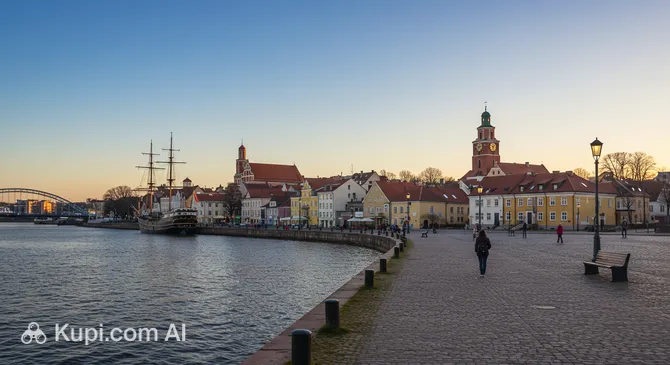
Klaipėda is a true maritime gateway to the Baltic Sea, a city with a special character and unique charm. Nestled comfortably on the western coast where the Danė River meets the Curonian Lagoon, it offers travelers a unique blend of maritime romance and urban comfort. As the third largest city and the main port that Lithuania takes pride in, Klaipėda harmoniously combines the energy of a modern center with a population of about 164,000 and the tranquility of a coastal resort.
Klaipeda. Illustration.
Source: Kupi.com AI
The atmosphere here is infused with a light breeze and the cries of seagulls. Walking along the cobblestones, it's impossible not to notice how centuries of Klaipėda's history are reflected in its appearance: the German neatness of the Old Town's half-timbered houses stands alongside modern buildings. This is a place where traditions of seafaring and international trade have shaped a unique cultural landscape for centuries, distinct from other regions of the country.
The city is famous for its street sculptures, which can be found in the most unexpected places — from the famous cat with a gentleman's face to a tiny magic mouse. Moreover, its unique geographical position makes Klaipėda an ideal starting point for visiting a natural wonder — the Curonian Spit. It is worth coming here for long walks along the embankments, the fresh wind, and the chance to see the country from an unusual, maritime perspective.
Weather Overview
The climate in Klaipėda has a distinct maritime character: there is no exhausting heat, and winters are much milder than in the interior of the continent. The proximity of the Baltic Sea smooths out temperature fluctuations, creating conditions where summer brings comfortable warmth. The warmest month is usually August, with an average temperature of around 18.7°C and daytime highs up to 22.0°C, perfect for long walks along the coast.
During the off-season and winter, the weather becomes more unpredictable. In winter, the thermometer rarely drops deep into the negatives: in January and February, average values hover around 0.5°C. However, high humidity and winds should be taken into account: January leads in the number of inclement days (about 19 per month). Spring arrives gradually, and by May the air warms up to a pleasant 12.2°C.
When planning your wardrobe, expect a moderately warm summer with occasional rain and cool, damp winters. Since the Baltic is unpredictable, we recommend checking the detailed weather in Klaipėda before your trip to choose the best dates for your visit and pack appropriate clothing.
Average monthly temperature
Average monthly precipitation
Interesting Facts
Beyond the obvious tourist routes, this port city holds many fascinating secrets and legends that reveal themselves only to the most curious travelers. Klaipėda knows how to surprise with its combination of ancient history and playful modern culture.
A Double Name and German Heritage. Klaipėda is the oldest city in the country, founded by the knights of the Livonian Order back in the 13th century. For centuries, it was known to the world as Memel. This past has left a vivid mark on the streets: here, unlike other Lithuanian cities, half-timbered (Fachwerk) architecture is widespread, giving the center a special Western European charm.
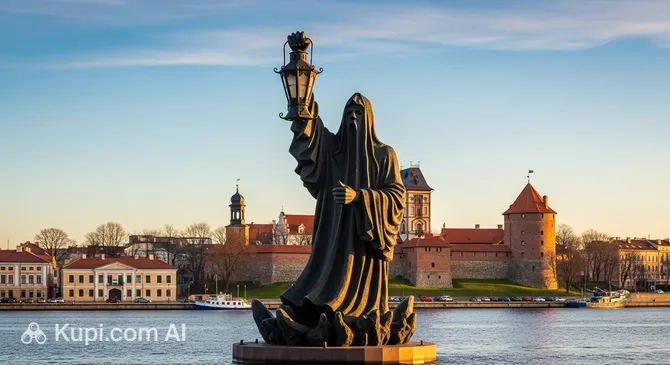
A Mystic Guardian from the Water. One of the most unusual and photographed sculptures is the Black Ghost. The bronze hooded figure with a lantern in hand literally climbs out of the water onto the shore by the swing bridge. Legend has it that in the 16th century, this ghost appeared to a guard and warned the city of a coming shortage of grain and firewood, thereby saving the residents from hunger.
A Granter of Wishes. As you walk through the Old Town, look closely at your feet: a tiny Magic Mouse lives here. This miniature bronze and stone sculpture is surrounded by a kind superstition: they say if you whisper your most cherished wish into the mouse's ear, it will surely come true.
A Symbol of Eternal Love. The heart of the city is Theater Square, home to the famous Simon Dach Fountain. It is crowned by a sculpture of a young girl — Ann from Tharau, the heroine of a well-known German folk song. This monument has become a symbol of romance and devotion, attracting couples in love.
The Capital of Festivals. Klaipėda lives by the sea even outside of working days. In summer, the grand Sea Festival takes place here, gathering hundreds of thousands of guests. The city turns into a huge stage with fairs and parades, and the port area fills with magnificent sailing ships from all over the world.
Black Ghost. Illustration.
Source: Kupi.com AI
Traveler photos:
How to Get There
Planning a trip to Klaipėda is the start of an exciting journey to the Baltic Sea. Thanks to the region's well-developed transport infrastructure, you can get here in various ways, choosing the route that best fits your time and budget. You can study all ways to get to the city in advance to plan the perfect logistics.
For most tourists, the most convenient and fastest way to reach the city is by air. The nearest hub is Palanga International Airport (PLQ), located in the resort town of Palanga, just 30 km from Klaipėda. This is a compact but modern airport that accepts flights from several European countries. The journey from there to the center of Klaipėda by taxi or bus takes about 30–40 minutes, making it a favorite among travelers.
If you can't find a direct flight to Palanga, an excellent alternative is Riga International Airport (RIX) in Latvia. It is located about 221 km from the city but is the largest aviation hub in the Baltics with a huge selection of flights. Comfortable buses and shuttles run regularly from Riga Airport to Klaipėda; the journey usually takes about 3.5–4 hours. It is also worth considering Kaunas Airport (KUN), located 204 km away, which is often served by budget airlines.
For clarity, here is a summary of the main airports:
Regarding rail connections, it is important to note the geographical features of the region. The list of nearest stations includes hubs located in the neighboring Kaliningrad region. Geographically, one of the closest major stations is the Southern Railway Station in the city of Kaliningrad (about 120 km from Klaipėda). However, keep in mind that this route involves crossing a state border, so it is necessary to carefully check visa requirements and entry rules before the trip. The travel time from the station to Klaipėda by road (excluding border crossing time) would be about 2–2.5 hours.
Below is a table with data on the nearest railway stations according to available information:
Station
Passenger traffic
Distance
Zelenogradsk-Novy Railway Station
750 000
95 km
Gurevsk-Novyy Station
75 000
109 km
Gvardeysk Railway Station
250 000
119 km
Kaliningrad South Railway Station
4.5 mln
120 km
Chernyakhovsk Station
1 mln
127 km
Main Attractions
Klaipėda's attractions are a harmonious mix of maritime romance, medieval history, and modern art. The city is compact, so many iconic spots can be explored on foot while enjoying the cozy port atmosphere. However, to see the region's main gem, you will need to take a short ferry trip across the water to the Curonian Spit.
The undisputed leader in popularity among tourists is the Lithuanian Sea Museum and Dolphinarium. Located in the old defensive fortress of Kopgalis, this complex introduces guests to the mysterious underwater world and the history of shipping. Here, you can not only see rare marine life in giant aquariums but also attend exciting performances with dolphins and sea lions that delight both children and adults.
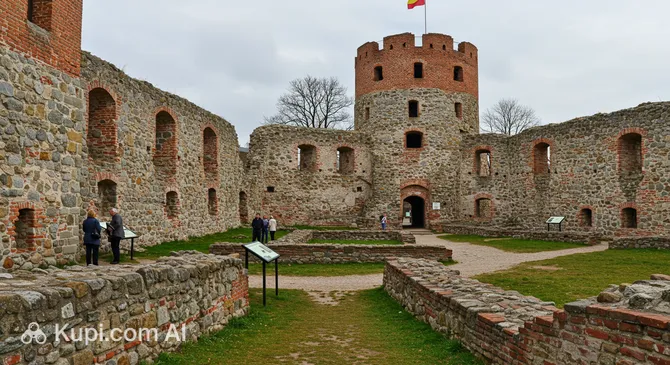
To immerse yourself in the city's past, visit Klaipėda Castle. From the once-mighty stronghold of the Teutonic Order, bastions and part of the buildings have survived to this day, now housing a museum. The exhibition is interactive and engaging: you can literally walk through the streets of medieval Memel, learn about the life of knights, and see archaeological finds telling the story of the city's birth.
Klaipėda Castle. Illustration.
Source: Kupi.com AI
Traveler photos:
In the heart of the city, in a beautiful 19th-century mansion, you'll find the unique Museum of Clocks. This is one of the rare places in Europe entirely dedicated to the history of time measurement. The halls display exhibits ranging from ancient water and sun clocks to elegant mechanical masterpieces. The museum's inner courtyard with a sundial park adds a special charm, offering a quiet place to rest.
If you want to enjoy nature and the sea, head to Smiltynė Beach. This is not just a place for swimming, but a wide strip of white sand framed by dunes and pine forests. The beach is awarded the Blue Flag for cleanliness and safety. You can spend the whole day here walking along the shore, collecting amber, or simply listening to the sound of the Baltic waves far from the city bustle.
Local Cuisine
Klaipėda's gastronomic scene is a mirror of its seaside character, where Lithuanian peasant traditions harmoniously intertwine with German influence. The sea always plays the leading role here, so your introduction to local cuisine should start with fish. Smoked fish is a particular pride of local masters: fragrant hot-smoked eel, bream, or mackerel, bought at the market or in the port, will provide one of the most vivid taste impressions of the trip.
Among the starters, the hearty Lithuanian fish soup is an absolute favorite; cream and plenty of fresh herbs are often added for tenderness. If you arrive in summer, be sure to try šaltibarščiai — the famous cold beet soup with kefir and pickled beets, traditionally served with hot boiled potatoes. For those looking for unique regional flavors, local chefs prepare fish-filled zeppelins — a maritime variation of the classic Lithuanian potato dumplings.
Street food in Klaipėda is simple but incredibly tasty. Walking along the embankment, it's impossible to pass by the kiosks with golden pastries or fresh poppy seed buns, which pair perfectly with herbal tea. Among cold drinks, natural kvass remains the king of the table, excellently quenching thirst. Lithuania is also famous for its beer culture: in Klaipėda, high-quality varieties are appreciated, almost always ordered with "kepta duona" — dark bread croutons with garlic and cheese.
The choice of establishments in the city is vast: from affordable stalls to restaurants in historical buildings. To soak up the spirit of old Memel and try home cooking, you can stop by Cafe Klaipėda Old City, where a nostalgic atmosphere reigns. If you're looking for a place for an evening out with a good selection of drinks and snacks, visit the popular gastrobar B-house or the atmospheric bar Herkus Kantas, where both locals and tourists love to gather.
Travel Tips
Preparing for a trip to Klaipėda doesn't require complex efforts, but knowing a few local nuances will make your holiday much more comfortable and peaceful. This port city has its own unique rhythm and rules, and understanding them will help you feel like a welcome guest and avoid typical tourist mistakes.
Clothing and Climate. The Baltic weather is changeable and windy even in the height of summer. The main wardrobe principle here is layering: be sure to bring a windproof windbreaker or a light jacket. For walks along the cobblestones of the Old Town and the forest paths of the Curonian Spit, choose the most comfortable shoes with flat soles.
Transport Nuances. The historical center is compact and best explored on foot. For trips to outlying areas, it's convenient to use city buses (tickets are cheaper at newsstands than from the driver). If you plan to visit Smiltynė or the Maritime Museum, you'll need a ferry. Note: the old crossing in the center is for pedestrians and cyclists only, while the new crossing is for vehicles.
Finances and Payment. The Euro is the currency used in the country. Bank cards are accepted almost everywhere: from museums to small cafes. However, having a small amount of cash is necessary for paying for small souvenirs at street fairs or for tipping. In restaurants, it's customary to leave about 10% of the bill if you liked the service.
Health and Nature. Klaipėda is a safe city, and tap water here is considered some of the cleanest in Europe and is drinkable. However, if you go for a walk in the pine forests or dunes, be sure to use repellents and check your clothes: ticks are active in the region's forests during the warmer months.
Language and Communication. The official language is Lithuanian. Young people and staff in tourist areas usually speak English well. The older generation often understands Russian. Locals value politeness: learning a few simple words like "Labas" (Hello) or "Ačiū" (Thank you) will immediately endear you to your conversation partner.
Social Etiquette. Lithuania is a country with a reserved temperament. In public places, it's not customary to speak loudly or express emotions too boisterously. When entering small shops or cafes, it's polite to greet the staff. Be attentive on bike paths: local cyclists ride fast and follow the rules, so pedestrians should avoid walking in designated lanes.
What to Avoid. The strictest rule concerns nature: never walk on the dunes in unauthorized places, especially on the Curonian Spit. Dunes are a fragile natural barrier, and destroying them can lead to serious fines. Also, avoid consuming alcohol in public places (parks, streets, beaches) — it's prohibited by law.
Buying Amber. If you want to bring back "Baltic gold" as a souvenir, buy amber only in specialized stores where they can provide a certificate of quality. At street stalls, tourists are often offered fakes made of plastic or pressed resin at the price of natural stone.
Klaipėda reveals itself to those who take their time and respect its traditions. By following these simple tips, you can focus on the main thing — enjoying the fresh sea air, unique architecture, and the hospitality of this amazing city.
Entertainment & Nightlife
Entertainment:
As the sun sets, Klaipėda changes its calm port persona for a more dynamic and lively rhythm. The nightlife here is not as loud or large-scale as in major capital cities, but it possesses its own unique charm and coziness. The epicenter of evening attraction is traditionally the Old Town and the Danė riverfront, where the concentration of pubs, bars, and music clubs is highest. Žvejų (Fishermen's) Street becomes particularly lively, turning into one continuous open-air terrace during the warmer months.
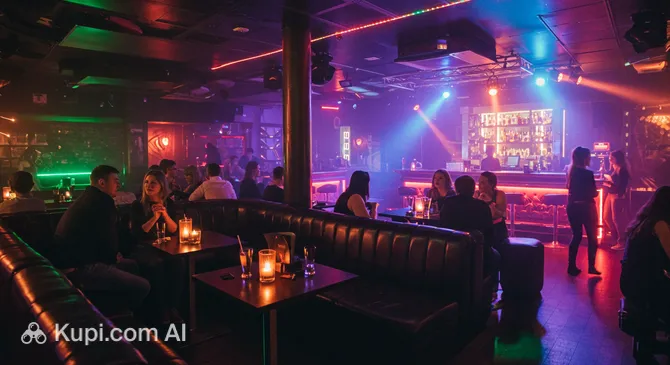
Fans of live music and high-quality sound should look for venues with a history. A legendary spot on the city map is the jazz club Kurpiai. This establishment with long-standing traditions attracts an intellectual crowd and connoisseurs of jazz, blues, and rock. The vintage-style interior and intimate atmosphere are perfect for long evenings with a glass of wine accompanied by professional musicians.
Kurpiai. Illustration.
Source: Kupi.com AI
Traveler photos:
For those seeking a more modern and informal setting, the cultural space HOFAS is an excellent choice. Located in former port hangars, this venue combines a bar, a concert stage, and an art gallery. It draws a creative young crowd and hosts trendy parties, film screenings, and alternative band performances. If you're in the mood for dancing and classic clubbing, check out Jazzpilis — a popular club that frequently hosts famous Lithuanian performers and DJ sets until dawn.
Practical tips for night owls:
Opening hours: Bars are usually open until 1:00–2:00 AM, while nightclubs stay open until 4:00–5:00 AM, especially on Fridays and Saturdays. Life quiets down earlier on weekdays.
Dress code and prices: Most places have a relaxed atmosphere; smart casual is appropriate everywhere. Prices for cocktails and entry tickets are moderate by European standards.
Safety and transport: Klaipėda's center is well-lit and safe for night walks. However, to get back to your hotel, it is more convenient and reliable to use popular ride-hailing apps (such as Bolt), as hailing a taxi on the street is not common practice here.
Daytime leisure in Klaipėda is equally diverse. Families and shopping enthusiasts should visit the Akropolis Klaipėda shopping and entertainment center, which features a cinema, an ice rink, and restaurants alongside shops. Culture lovers can enjoy performances at the Drama Theater or attend concerts by international stars, which are regularly held at the modern Klaipėda Arena.
Parks & Museums
Klaipėda is not just about the port and the sea; it's a city that carefully preserves history in museum halls and creates cozy green oases for relaxation. The cultural landscape here is diverse: from quiet squares filled with art to unique exhibitions telling the story of the naval past and spiritual life of the region.
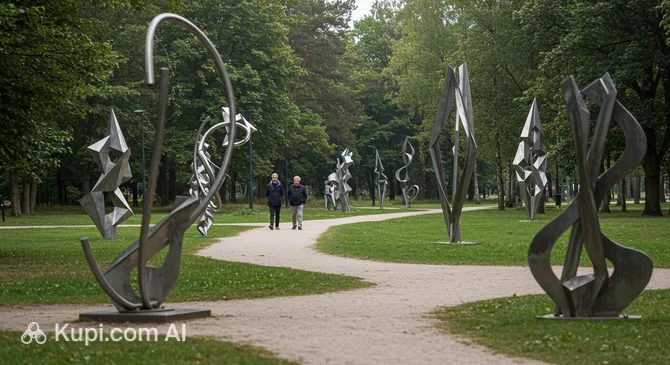
Among the green zones, the Klaipėda Sculpture Park holds a special place. This is a true open-air museum located in the city center on the site of an old cemetery. Today, among centuries-old trees, more than 100 granite sculptures created by Lithuanian masters are installed. It is an ideal place for peaceful walks, reflection, and getting to know modern Lithuanian art in a natural setting.
Klaipėda Sculpture Park. Illustration.
Source: Kupi.com AI
Traveler photos:
For those who prefer more active outdoor recreation, Minimelts Park is a great fit. This space is focused on family leisure and adventure, featuring rope courses in the trees of varying difficulty. It's an excellent opportunity to stretch your legs and get an adrenaline rush without traveling far beyond the city limits.
The city's museum map would be incomplete without mentioning its maritime glory. A unique object is the Sūduvis Ship Museum, moored on the Danė River. This is a former minehunter of the Lithuanian Navy, which is now open to visitors. Guests can go down into the cabins, inspect the engine room, touch the instruments in the bridge, and learn how naval sailors lived and served.
While we mentioned the castle territory in previous blocks, the Klaipėda Castle Museum deserves a separate highlight. Its exhibitions, located in the underground galleries of the bastions, detail the city's development from a Curonian settlement to the Memel fortress. Interactive stands and archaeological finds allow you to literally touch medieval history.
Speaking of architectural landmarks, one cannot fail to notice the majestic Mary, Queen of Peace Church in Klaipėda. This building with its high tower has a dramatic history: built during the Soviet era with funds from believers, it was confiscated and turned into a philharmonic hall, only later returned to the parish. Today, it is not only a spiritual center but also a monument to resilience. Another symbol of the city's engineering is the Biržos Bridge swing bridge. Rebuilt after the war, it connects two parts of the center and is an excellent vantage point for watching passing yachts.
Insider tip: If you find yourself by the Biržos Bridge, wait for the moment it opens (usually on a schedule to let ships through). The sight of the steel spans rising against the backdrop of old buildings and the masts of the "Meridianas" sailboat is one of the most photogenic in Klaipėda.
Getting Around
The public transport system in Klaipėda is organized logically and conveniently, allowing tourists to easily move around the city without unnecessary expense. Since there is no metro or tram system here, the main means of transport are modern buses and shuttle taxis. The city is elongated along the lagoon, and the bus network densely covers all areas, from the historical center to the southern residential blocks and northern beaches. Transport runs strictly according to the schedule, which is followed with high precision.
An important and unique part of the city's transport system is the ferries. Since part of Klaipėda (the Smiltynė district) is located on the Curonian Spit, it can only be reached by water. There are two crossings: the Old (in the very center, at the mouth of the Danė River) serves only pedestrians and cyclists, while the New (slightly to the south) is also intended for vehicle transport. The ferry is not just transport, but a short scenic journey essential for visiting the Maritime Museum and the beaches.
For paying fares, it's most economical not to buy tickets from the driver (this is the most expensive option, costing about 1 Euro) but to use the electronic ticket system (e.bilietas). You can purchase a plastic card at any newsstand (for example, "Narvesen" or "Lietuvos spauda") and top it up with money or trips there. It's also very convenient to use the e.Ticket Klaipėda mobile app, which allows you to buy tickets online and scan them from your phone screen.
Don't forget the rules: the ticket must be validated immediately upon entering the vehicle by placing the card against the reader or scanning the QR code. Entry into buses is usually through the front door. Fines for fare evasion are substantial, and ticket inspections on lines are frequent. Most routes run from 5:00 AM to 11:00 PM, but for real-time trip planning, it's best to use the popular Trafi app or Google Maps.
As an alternative to public transport, taxi services work excellently in Klaipėda, the most popular being the Bolt app. This is a fast and inexpensive way to get to your destination, especially at night. Car-sharing services (such as CityBee and Spark) and bicycle rentals are also well-developed in the city. Klaipėda is a very bicycle-friendly city with flat terrain and high-quality bike paths, including those leading along the sea.
Accommodation
Where to stay:
Klaipėda offers travelers a decent choice of accommodation options that will satisfy both budget tourists and those accustomed to a high level of comfort. The hotel sector here is developed harmoniously: you will find cozy family guest houses breathing with history, modern chain hotels, and inexpensive youth hostels. In recent years, renting private apartments has become particularly popular, which is especially convenient for families with children or groups of friends planning a long stay by the sea.
When choosing an area to stay, you should consider the purpose of your visit. The Old Town remains the most atmospheric and sought-after location. By staying here, you'll be within walking distance of the main restaurants, bars, and the Danė riverfront. Living surrounded by half-timbered buildings and hearing the chime of bells is a special kind of pleasure. Theater Square serves as a landmark for central life: hotels within a few blocks of it are considered the most convenient for walking.
If you are looking for privacy and maximum proximity to nature and beaches, consider staying in the Smiltynė area, located on the Curonian Spit. There is less urban bustle here, surrounded by pine forest and dunes, but you must consider the logistics: to get to the center of Klaipėda for shops and entertainment, you will have to use the ferry every time.
Pricing policy and booking:
In general, accommodation prices in Klaipėda are more affordable than in the resorts of Neringa, but they can be slightly higher than in non-tourist cities in Lithuania.
Budget segment: Hostels and inexpensive guest houses offer overnight stays at affordable prices, especially if booked in advance.
Middle class: Most three- and four-star hotels and apartments fall into this range, offering an optimal price-quality ratio.
Luxury: The city has several high-level hotels, often located in renovated historical buildings or offering panoramic views of the lagoon.
Booking tip: Klaipėda is a popular destination, especially during the height of the summer season (July-August) and during the Sea Festival. During this period, the demand for housing is enormous, and prices reach their peak. To guarantee yourself a good option at a reasonable price, we strongly recommend booking your accommodation 2–3 months before your trip. For your search, it is most convenient to use major international online booking platforms, which are widely represented in the region.
Nearby Cities
For those who want to explore the surroundings, Klaipėda serves as an excellent starting point for day trips to several interesting nearby places:
Just 25 kilometers to the north lies the country's main resort — Palanga. This is an ideal place for those who want to swap the port atmosphere for the relaxed rhythm of a resort town. People come here to walk along the famous Basanavičius Street, visit the magnificent Botanical Park, and the Amber Museum in the Tiškevičius Palace. And, of course, a mandatory ritual is watching the sunset on the long pier extending far into the Baltic Sea.
If you drive a bit further inland, you can visit Šiauliai — the City of the Sun. The main point of attraction in its vicinity is the famous Hill of Crosses — a unique sacred site where hundreds of thousands of crosses of all sizes are installed. The city itself is interesting for its museums, such as the Rūta Factory Chocolate Museum or the Bicycle Museum, as well as its pedestrian boulevard, which is considered one of the oldest in Europe.
Ethnography enthusiasts and lovers of picturesque landscapes should head to Telšiai, the unofficial capital of the Samogitia (Žemaitija) region. The city is situated on seven hills by the beautiful Lake Mastis. Here you can get acquainted with the original culture of the Samogitians, walk along the well-kept embankment, and see many small architectural forms, including the "Samogitian Globe" sculpture.
These nearby destinations provide an insight into the diverse culture and landscapes of the region.
Shopping & Souvenirs
General Overview. Shopping in Klaipėda is a calm and pleasant activity, devoid of the bustle of huge metropolises. The city offers a balanced combination of modern shopping complexes with familiar European brands and cozy small shops in the historical center where you can find unique products by local artisans. You shouldn't look for world-class high fashion here, but there are plenty of opportunities for buying high-quality clothing, authentic souvenirs, and Lithuanian delicacies.
Main Shopping Districts. The heart of tourist shopping is the Old Town and its main arteries — Tiltų and Turgaus streets, as well as H. Manto Avenue. Strolling along the cobblestones here, you will find many clothing boutiques, art galleries, antique shops, and souvenir stalls. This is the ideal place for those looking for something special: from designer linen dresses to original amber jewelry.
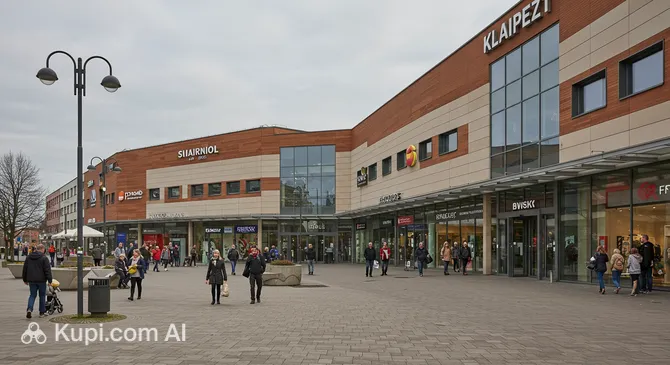
Shopping Centers. The undisputed leader and center of attraction for all shopping lovers is Akropolis Klaipėda. This is the largest shopping and entertainment center in the region, a true "city within a city" where hundreds of clothing, shoe, cosmetics, and electronics stores are gathered under one roof. People come here not only for shopping but also for entertainment: there is an ice rink, a cinema, and many restaurants. If you are interested in home goods or specialized stores, you can check out Liepu 81 Shopping Park, located slightly away from the center.
Akropolis Klaipeda. Illustration.
Source: Kupi.com AI
Traveler photos:
Markets. To get a real taste of the city, visit the Old Market (Senasis turgus) in the city center. It's a colorful place where local farmers sell fresh seasonal vegetables, fruits, berries, honey, and homemade cheeses. You can and should haggle here, and you can also sample products before buying. The market becomes especially lively on weekends and in the run-up to holidays.
Souvenirs. Tourists traditionally bring back "Baltic gold" — amber — from Klaipėda. The choice is huge: from inexpensive raw stones to exquisite jewelry in silver and gold. The second most popular item is Lithuanian linen: tablecloths, napkins, and clothing made from it are characterized by high quality and stylish design. Gourmets should look for the famous šakotis cake, which looks like a branched tree, hard "Džiugas" cheeses, smoked fish, and strong herbal or honey liqueurs.
Opening Hours and Payment. Large shopping centers like "Akropolis" are open daily and late, usually from 10:00 AM to 9:00 PM or 10:00 PM. Small shops in the Old Town close earlier — around 6:00 PM or 7:00 PM, and on weekends they may have shorter hours or be closed on Sunday. The main currency is the Euro. Bank cards are accepted almost everywhere, but it's better to have cash at the market or in small souvenir kiosks.
Tax Free. Tourists residing permanently outside the European Union can take advantage of the tax refund system (Tax Free). To do this, you must make a purchase of at least 55 euros in one store marked with a special sign (usually Global Blue) and fill out the corresponding check. Refunds can be obtained when leaving the EU, for example, at the airport or at border points.