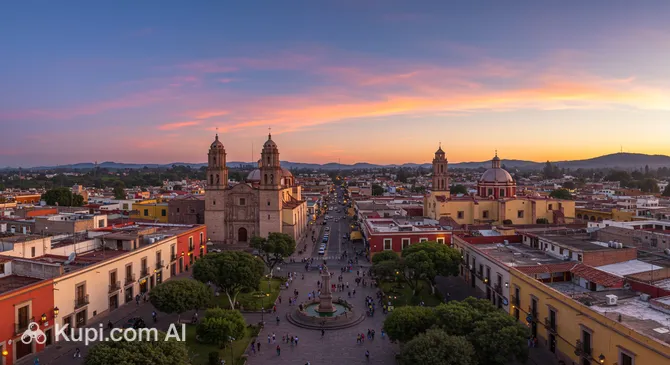
Celaya is a true Mexican surprise, located in the heart of the state of Guanajuato. The city is nestled in the fertile plains for which central Mexico is famous. Thanks to its favorable geographical position and a warm, sunny climate that prevails most of the year, it has become an important transport and commercial hub for the region, without losing its historical charm.
With a population of almost half a million inhabitants, Celaya is a large and dynamic city where the rhythm of modern life coexists with provincial coziness. It is easy to feel at home here: an atmosphere of hospitality is felt on every street, and the architectural appearance is striking in its diversity — from colorful squares where life is in full swing to majestic buildings of past eras.
Celaya. Illustration.
Source: Kupi.com AI
The city center is ideal for leisurely walks. Wandering through the shady alleys and looking at the old facades, you will notice how harmoniously different eras intertwine. The rich history of Celaya has left its mark in elegant Baroque churches and unique monuments, creating a unique city image that inspires photographers and history buffs alike.
Travelers can look forward not only to architectural beauty but also to a rich cultural life: museums, art galleries, and colorful markets with local souvenirs. Celaya is an excellent choice for those seeking authentic experiences, wishing to immerse themselves in local traditions, and discover new facets of the Mexican soul to the sound of street musicians.
Weather Overview
The climate in Celaya can be characterized as pleasant and temperate, typical of the country's central highlands. There is a clear division into dry and wet seasons, which makes it easy to plan a trip based on your preferences. Expect a warm, sometimes hot spring, a summer with frequent refreshing rains, and dry, comfortable winters with cool evenings.
The hottest period falls in April and May, when the average temperature reaches 23.5°C, and daytime highs often exceed 31°C. With the arrival of June, the rainy season begins, lasting until September. The wettest month is July, when up to 21 rainy days are recorded. However, rainfall is usually short-lived and brings welcome coolness. To pack correctly, we recommend finding out in advance what weather in Celaya is expected for the dates of your trip.
The winter months, from December to February, are characterized by dryness and clear days. In January, the average temperature is about 16.1°C. During the day, the air warms up to a comfortable 23-24°C, but nights can be quite cool, with temperatures dropping to 8°C. This is an ideal time for long walks around the city, provided you don't forget to bring a warm sweater for evening outings.
Average monthly temperature
Average monthly precipitation
Interesting Facts
Beyond its main attractions, Celaya holds many fascinating secrets and stories that are revealed only to curious travelers. This city is not just a point on the map, but a place with deep traditions and a unique character.
Basque Roots of the Name. There is a beautiful legend, confirmed by linguists, that the city's name comes from the Basque word Zalaya, which translates as "level land" or "plain." This name perfectly describes the geographical position of the city, spread across the spacious and fertile lands of the Bajío region, often called the "breadbasket of Mexico."
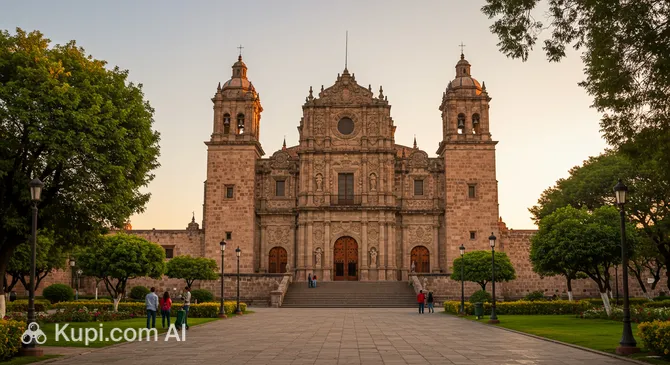
City of the "Mexican Michelangelo." Celaya is considered an architectural treasure trove thanks to the works of Francisco Eduardo Tresguerras — an outstanding architect, artist, and poet born here. His neoclassical masterpieces defined the city's appearance. The most striking example of his genius is the majestic Church of San Francisco, which impresses with the purity of its lines and harmony of proportions.
The Sweet Capital of the Country. The city is officially recognized as the capital of production for the traditional Mexican treat — cajeta (thickened goat's milk). An interesting fact: the word "cajeta" itself comes from the name of small wooden boxes (cajetes) in which this sweet was originally packed for transport and sale. Today, this dessert is a symbol of the city and a coveted gift throughout the country.
A Unique Collection of Mummies. Few people know that the Mummy Museum in Celaya possesses one of the most significant collections in the country, rivaling the more famous museum in Guanajuato. The peculiarity of the local exhibits is that the mummification process occurred naturally due to the specific composition of the soil and the dry climate, making this collection a true phenomenon.
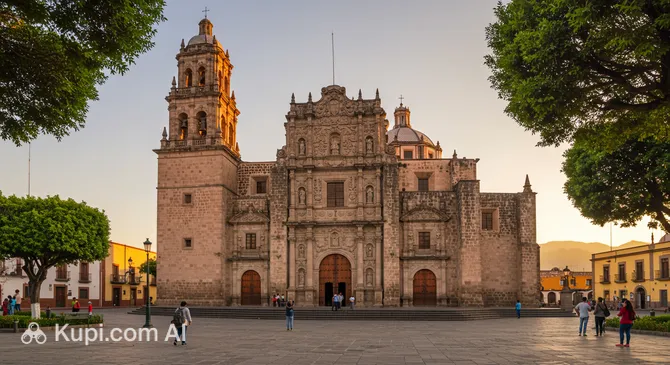
San Francisco Temple. Illustration.
Source: Kupi.com AI
Traveler photos:
How to Get There
When planning a trip to this colorful Mexican city, it is worth thinking through the route in advance. Since the city does not have its own civil airport, travelers will have to use the transport hubs of neighboring cities. You can find out more details about how to get to Celaya to choose the most convenient transfer option for you.
One of the most convenient options is Querétaro Airport (IATA: QRO). Note that it is not located in Celaya, but in the city of Querétaro, which is about 66 km away. This is a fairly busy transport hub that handles many flights. The journey from here to the destination by taxi or bus will take approximately 2 hours.
Another popular choice is Guanajuato International Airport (IATA: BJX), also known as Del Bajío Airport. It is located in the city of León, at a distance of about 87 km from Celaya. This is a large international airport with high passenger traffic serving the entire state. Travel time by ground transport will be approximately 2.5 hours.
You could also consider flying into Morelia Airport (IATA: MLM), located in the city of Morelia (about 78 km from Celaya). This is a medium-sized airport, and the trip from it will take about 2 hours and 20 minutes.
For clarity, here is a summary of the main airports:
The historical center of Celaya is a true treasure trove of colonial architecture and iconic monuments that tell the story of the region's rich past. Most of the main attractions are located close together, making the city ideal for exploring on foot. Here, majestic temples stand alongside cozy squares, and unique engineering structures have become symbols of the city.
The undisputed architectural dominant is the Church of San Francisco. This majestic neoclassical cathedral is considered a masterpiece by the famous architect Francisco Eduardo Tresguerras, a native of these parts. Its construction took place in the early 19th century, and today it impresses with its harmonious proportions, elegant columns, and magnificent interior. It is not just a religious building, but a true source of pride for the locals and a must-see on any tourist's itinerary.
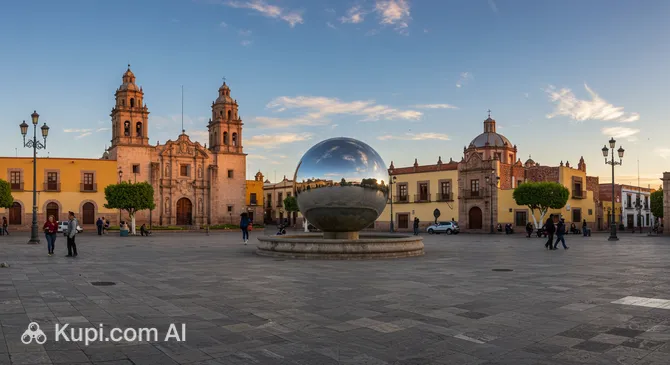
Walking through the city, it is impossible not to notice a unique structure — the Bola del Agua. This huge spherical water tower, installed more than a hundred years ago, has become Celaya's most recognizable symbol. Interestingly, according to legend, a box of wine from that era is still kept inside the sphere, although no one has ever been able to verify this. The tower is not only a monument of industrial engineering but also a favorite meeting point for city residents.
Bola del Agua. Illustration.
Source: Kupi.com AI
Traveler photos:
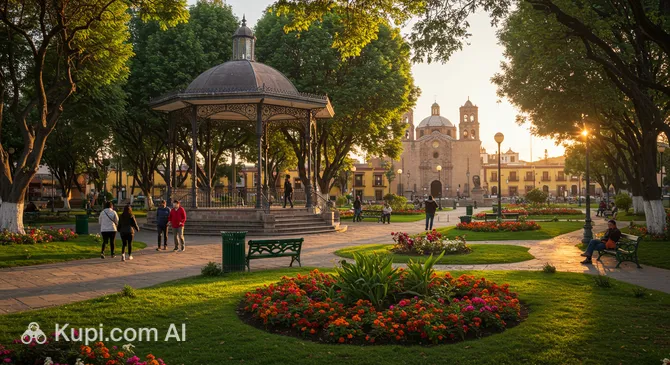
The heart of the city's social life is the Celaya Main Garden (Jardín Principal). This picturesque central square is surrounded by historic buildings with beautiful arcades, under which cafes and small shops are located. It is pleasant to relax here in the shade of the trees, listen to music performed by a local orchestra in the gazebo, and observe the steady rhythm of city life.
Fans of unusual exhibitions should visit the Mummy Museum in Celaya. Although it is less famous than the similar museum in neighboring Guanajuato, the local collection is no less impressive. It is located next to the city cemetery and displays bodies that have been naturally mummified due to the dry climate and the special composition of the soil. A tour here allows you to look at the Mexican attitude toward death and ancestral memory from a different perspective.
For those who want to dive deeper into the history of the region, the doors of the Regional History Museum of Celaya are open. The museum's exhibition covers various eras: from pre-Hispanic times to the period of the struggle for independence and the revolution. It brings together artifacts, documents, and everyday objects that help to better understand how the culture and identity of this important Mexican city were formed.
Local Cuisine
Celaya's culinary scene is a vibrant reflection of the culinary traditions of central Mexico, where ancient recipes are interwoven with modern trends. For many travelers, getting to know the city begins with its flavors. Here, food is not just a way to satisfy hunger, but an important part of the culture and a source of pride for the locals, who happily share their culinary secrets.
The undisputed king of local cuisine and the sweet symbol of the city is cajeta (cajeta de Celaya). This is a delicate nougat or liquid caramel made from goat's milk according to ancient recipes. Its taste differs from usual condensed milk by its special smoky notes. Cajeta is eaten by the spoonful, spread on bread, or added to desserts. You can only taste real, authentic sweetness here, so don't miss the chance to appreciate this gastronomic phenomenon.
However, Celaya's kitchen is not just about sweets. Traditional dishes of the Bajío region are widespread in the city. Be sure to try enchiladas with various sauces (from green to mole) and tamales — corn dough with a filling wrapped in leaves. A cult of freshly prepared food reigns on the city streets: in small kiosks, you will be offered juicy tacos with various types of meat, seasoned with spicy salsa, onions, and cilantro. This is a fast, inexpensive, and incredibly tasty way to snack.
Morelos Market. Illustration.
Source: Kupi.com AI
Traveler photos:
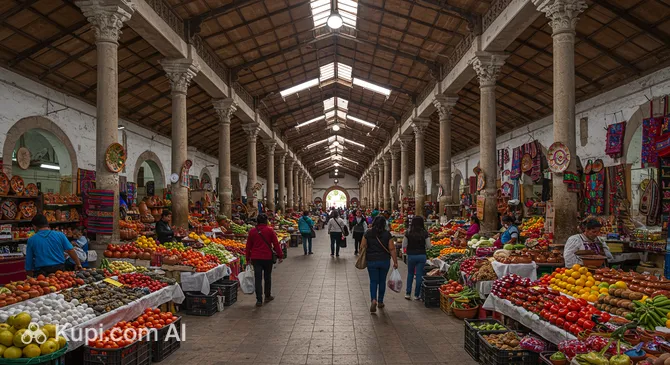
To immerse yourself in the atmosphere of a real Mexican feast, you should visit Morelos Market. This place is a real adventure for a foodie. Here, among the stalls with fresh farmhouse cheeses, fruits, and honey, small eateries (fondas) operate, where home-style cooking is the norm. This is where you can see how the locals have breakfast and lunch, and try the freshest dishes made from local products.
For a more substantial dinner in a comfortable setting, Celaya has excellent restaurants. Since the region is famous for its livestock farming, they prepare meat exceptionally well here. For example, the Beef Capital restaurant will offer you high-quality steaks and meat dishes that will appeal to lovers of hearty cuisine. This is a wonderful option for evening relaxation after a busy day.
As for drinks on a hot day, locals prefer aguas frescas — refreshing drinks based on fruit, hibiscus flowers (jamaica), or rice (horchata). They quench thirst perfectly and soften the spiciness of the dishes. If we're talking about alcohol, the proximity to the state of Jalisco ensures an excellent choice of tequila, as well as traditional mezcal, which is usually sipped slowly, savoring every drop.
Travel Tips
A trip to Celaya promises to be rich and memorable, but as in any Mexican city, knowing the local nuances will make your trip much more comfortable and safe. We have collected the most important recommendations for you that will help you easily navigate the city and avoid common tourist mistakes.
Seasonal Clothing and Comfort. The climate in the Bajío region, where Celaya is located, is temperate but contrasting. During the day, the sun can be strong, so be sure to bring a hat and sunglasses. However, evenings, especially during the winter period (from November to February), can be chilly, so a light jacket or sweater in your backpack is essential. Since the historic center is best explored on foot, opt for the most comfortable footwear with flat soles — cobblestones are common.
Transport Nuances. For tourists, the safest and most convenient way to get around is by using mobile apps such as Uber or DiDi. This will save you from having to explain yourself in Spanish to the driver and guarantees a fixed price. City buses are cheap, but their routes can be confusing for a newcomer, and they are often overcrowded during rush hours. If you decide to take a regular taxi on the street, always agree on the price before getting in, as meters are rarely used.
Financial Matters. The official currency is the Mexican peso, and cash will be your main means of payment. Cards are accepted in hotels, large restaurants, and shopping malls (for example, Galerías Celaya), but at the famous Morelos market or in shops selling cajeta, you will need small denomination cash bills. Tips (propina) in restaurants are usually left in the amount of 10–15% of the bill if you liked the service.
Health and Safety. The main rule in Mexico is never to drink tap water; only buy bottled water for drinking and brushing your teeth. Regarding safety, stick to the tourist zones in the city center and avoid walking in remote areas after dark. Pharmacies (Farmacias) are common, and large chains like Farmacias Guadalajara are open 24/7 and offer a wide range of medications.
Language and Connectivity. The primary language is Spanish. English is not understood everywhere, so download an offline translator and learn a few basic phrases. For connectivity, it's best to buy a local SIM card (for example, Telcel) at any OXXO convenience store — this will provide you with stable internet for maps and calling taxis. Free Wi-Fi is available in many cafes and in the main squares, but its speed is not always stable.
Local Etiquette. Mexicans are very polite and appreciate this in others. When entering a shop, elevator, or getting into a taxi, be sure to say hello ("Buenos días" or "Buenas tardes"). If you see people dining, it is customary to wish them a pleasant meal with the phrase "Buen provecho" (or simply "Provecho") — this shows your respect for the local culture and will elicit a smile.
Things to Avoid. Do not take photos of people (especially indigenous people or children) without their explicit permission — this can be perceived aggressively. Also, strictly avoid consuming alcohol on the streets and in public places (outside of bars and restaurants) — this is prohibited by law and can lead to a fine or detention by the police.
Advice for Sweet Tooths. When buying the famous cajeta (thickened goat's milk), don't just grab the first jar you see in the supermarket. Go to specialized shops in the center and ask to try different types: envinada (with added wine) or quemada (burnt). Locals will proudly tell you about the differences, and you will buy a truly authentic product rather than a factory substitute.
Celaya is a city with an open soul, ready to give a warm welcome to everyone who shows respect for its traditions. By following these simple tips, you can relax and enjoy the unique atmosphere of the "Golden Gate of Bajío," feeling confident in any situation.
Entertainment & Nightlife
Entertainment:
Nightlife in Celaya has its own unique, authentic character. Unlike noisy beach resorts, you won't find endless raves until dawn here, but you will be able to immerse yourself in the atmosphere of a real Mexican fiesta. Evening leisure in the city is closely intertwined with gastronomy and music: locals love to gather in large groups for a delicious dinner, listen to live music, and have a few cocktails in a cozy setting.
The epicenter of evening activity is the zone along Boulevard Adolfo López Mateos and the Campestre district. This is where the most popular venues are concentrated, and where life begins to bustle closer to the weekend. The crowd in these establishments is diverse, ranging from students to respectable families, but everyone is united by friendliness and a love for fun. The dress code in most places is democratic — casual style will be appropriate almost everywhere, although you might want to dress up a bit more for trendy clubs.
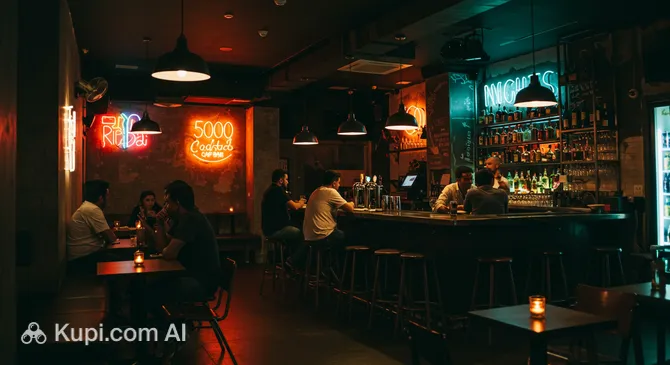
If you are looking for a place with a soulful atmosphere and good music, check out Café-Bar 500 Noches. This establishment is popular for its bohemian atmosphere inspired by the work of Joaquín Sabina. Live music, trova, and acoustic performances are often heard here, making it an ideal place for a romantic date or a quiet evening with friends over a glass of wine.
500 Nights Café Bar. Illustration.
Source: Kupi.com AI
Traveler photos:
For those who prefer a livelier setting, Bar-Restaurant Grotto is an excellent choice. This place combines the features of a classic bar and a restaurant, offering a wide selection of drinks and snacks. The atmosphere here is conducive to long conversations and making new acquaintances. On weekends, the city's bars often fill with the sounds of traditional banda or mariachi music, making it impossible to sit still.
In addition to nightlife, there is plenty to do in Celaya during the day. Cultural life is concentrated around the city's theaters and venues where concerts and plays are held. For fans of cinema and modern leisure, it is worth stopping by shopping centers like the aforementioned Galerías Celaya, which houses modern cinemas, bowling, and game zones for the whole family.
Practical Tips and Safety:
Opening Hours: The main fun in clubs and bars starts after 10:00 PM and continues until 2:00–3:00 AM. The "hottest" days are Friday and Saturday.
Prices: The cost of cocktails and club entry in Celaya is significantly lower than in Mexico City or Cancun. The average bill in a bar will be a pleasant surprise for a tourist.
Transport and Safety: At night, it is strongly recommended to travel exclusively by taxi. The safest option is to use the Uber or DiDi apps. Avoid walking alone on unlit streets and in the outskirts of the city. The center and the area around Boulevard López Mateos are considered relatively safe, but you should still remain vigilant.
Parks & Museums
The city of Celaya offers its guests a harmonious combination of green oases for relaxation and a rich cultural program. After getting to know the architectural masterpieces of the center, it's pleasant to take a breather in shady parks or delve into studying the region's rich past in local museums. Here everyone will find a place to their liking, be it a quiet alley for a walk or an exhibition hall with unique exhibits.
A favorite vacation spot for citizens and tourists is the historic Alameda Park. This is the city's oldest green zone, which has preserved the charm of past centuries. The park is ideal for leisurely strolls among century-old trees, well-kept paths, and sculptures. Here you can often meet local artists and families enjoying the peaceful atmosphere in the heart of a busy city.
Alameda Park. Illustration.
Source: Kupi.com AI
Traveler photos:
For more active leisure, head to Xochipilli Park, Second Section. This vast space, named after the Aztec god of flowers and song, is the true "lungs" of the city. The park attracts visitors with its artificial lake, sports fields, and picnic areas. It's a great place for a morning run or just to relax on the grass by the water.
Another popular corner of nature is Parque Celaya. It is oriented toward family vacations and offers many activities for children, as well as cozy barbecue areas. Tourists value it for its cleanliness, safety, and the opportunity to see how locals spend their weekends.
Cultural immersion is impossible without visiting the Regional History Museum of Celaya. The museum's exhibition is located in a beautiful historic building and covers the key moments of development of the city and the Bajío region. It presents archaeological finds, colonial-era objects, and documents from the times of the struggle for independence, which help to better understand Mexican identity.
For lovers of unusual and even mystical experiences, the Mummy Museum in Celaya is open. The collection of this museum, located next to the city cemetery, is smaller than the famous exhibition in Guanajuato but no less interesting. Here you can see bodies mummified naturally due to the region's dry climate and learn more about Mexican traditions regarding death and ancestral memory.
Insider Tip: If you have time left, look for the Octavio Ocampo Art Museum in the city center. Although less well-known than the main history museums, its exhibition of works by the famous surrealist artist, a master of metamorphosis, leaves an indelible impression and allows you to look at Celaya's art from a new angle.
Getting Around
The main form of public transport in Celaya is buses, which connect the historical center with residential areas, shopping centers, and the outskirts. There are no metros, trams, or trolleybuses in the city, so the entire transport load falls on an extensive network of bus routes. Buses run frequently, and the route number and key stops are usually written in large letters on the windshield, which helps with navigation.
The fare payment system is as simple as possible: most often, payment is made in cash to the driver upon entry. The cost of a single trip is about 10–11 pesos. The city also has a system of SIB prepaid transport cards, used by locals for discounted fares, but for tourists on a short-term stay, it is more convenient to use cash. It is highly recommended to always carry small coins with you, as drivers often do not have change for large bills.
Transport starts operating early in the morning, around 6:00 AM, and stops running around 10:00 PM. In the evening, headways may increase, so it's better to plan trips with time to spare. Official stops are marked by signs, but in practice, boarding and alighting are often done on request. To get off, you must press the bell button by the doors in advance or notify the driver loudly.
As a comfortable alternative to public transport, taxis and mobile ride-hailing services such as Uber and DiDi are popular. Using apps is especially recommended for tourists as it guarantees safety, the ability to track the route, and a fixed cost without the need to haggle. Regular city taxis are also available everywhere, but the price of the trip should be agreed upon before boarding, as meters are rarely used. Renting a car will be convenient for traveling around the area, but in the city itself, especially during rush hours, traffic can be quite heavy.
Accommodation
The choice of accommodation in Celaya is quite wide and varied, which is not surprising for a city that is an important commercial and industrial center for the region. Here you can find options for every taste and budget: from modest guesthouses and economical hostels to comfortable international chain hotels. Since the city is often visited for business purposes, the level of service in most hotels is maintained at a decent level, and prices remain more attractive compared to purely tourist centers like San Miguel de Allende.
For tourists wishing to soak up the atmosphere of old Mexico, staying in the Historic Center (Centro Histórico) is an ideal choice. By staying here, you will be within walking distance of the main architectural monuments and colonial squares. This will allow you to take evening walks along pedestrian streets without spending time on transportation.
Temple of La Merced. Illustration.
Source: Kupi.com AI
Traveler photos:
If you are traveling by car or prefer modern amenities, you should consider hotels located along the main transport arteries, especially in the area of Boulevard Adolfo López Mateos and near shopping complexes. In this zone (Zona Hotelera), modern buildings with their own parking, pools, and spacious rooms are concentrated. This is a strategically convenient place for heading out on excursions to neighboring cities.
Booking Tips and Prices:
Price Range: Overall, accommodation in Celaya can be described as budget and mid-range. A night in a good 3-4 star hotel will cost less than the national average. There are practically no luxury "all-inclusive" resorts here, as the city is not a beach destination.
Seasonality: Although sharp price jumps are not usually observed, it is recommended to book accommodation in advance if your trip falls on major holidays (for example, Holy Week or the Day of the Dead) or periods of large agro-industrial exhibitions.
How to Book: Most hotels are listed on popular international booking platforms. However, for small family hotels in the center, it is sometimes more profitable to contact them directly or book on the spot, although the online option is more reliable for guaranteed check-in.
Nearby Cities
For those who want to explore the surroundings, Celaya serves as an excellent starting point for day trips to several interesting nearby places:
Just a few dozen kilometers away is Querétaro — a city with a rich historical heritage and magnificent colonial architecture. Its historical center is a UNESCO World Heritage site. Tourists come here to see the monumental aqueduct, stroll through cozy squares, and enjoy the atmosphere of old Mexico.
A little further is the state capital — picturesque Guanajuato. This city is famous for its colorful houses climbing the hillsides and its unique network of underground tunnels. It is the cultural heart of the region with many theaters, museums, and its famous University, where a spirit of students and romance prevails.
It is also worth paying attention to Irapuato, which is often called the "strawberry capital of the world." It's worth stopping by here to try the famous local desserts made from fresh berries and stroll through the beautiful historical center with its musical fountains.
City
Population
Distance
Cortazar
61 658
17 km
Villagran
27 079
19 km
Apaseo el Alto
64 443
21 km
Juventino Rosas
79 214
23 km
Jaral del Progreso
36 584
32 km
These nearby destinations allow you to get a sense of the region's diverse culture and landscapes.
Shopping & Souvenirs
General Overview. Shopping in the city of Celaya is a harmonious combination of modern retail spaces and colorful traditional bazaars. The city does not claim to be a fashion capital, but you can find everything you need here: from branded clothing and electronics to unique handcrafted items. A feature of local trade is a strong emphasis on regional products, particularly on the sweets for which this region is famous, so gastronomic shopping often comes to the fore here.
Main Shopping Areas. The Historic Center is traditionally considered the heart of trade. Walking along the pedestrian streets around the main squares, tourists will find many small shops, shoe stores, and jewelry workshops. Another important commercial artery is Boulevard Adolfo López Mateos, which crosses the city from east to west. Along it are located large supermarkets, car dealerships, furniture stores, and various commercial spaces connecting the old part of the city with the new districts.
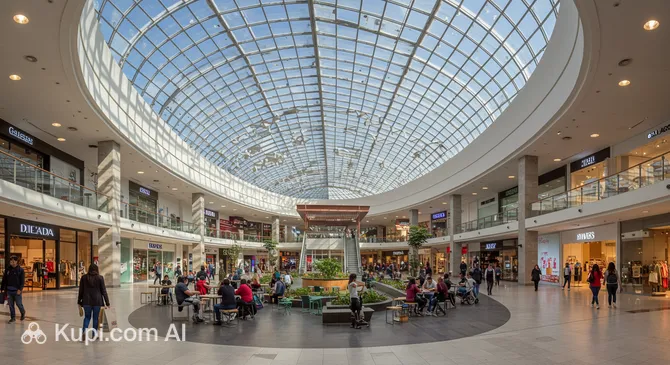
Shopping Centers. For those who prefer comfortable shopping in a modern format, the main point of attraction is Galerías Celaya. This is the largest and most modern mall in the city, where famous international and Mexican clothing brands are represented, and there is a cinema and an extensive food court area. It is a great place to hide from the heat and make purchases in a familiar setting. The Parque Celaya shopping complex is also popular; despite its name, it is a commercial center with a supermarket and various boutiques, convenient for family shopping.
Galerías Celaya. Illustration.
Source: Kupi.com AI
Traveler photos:
Markets. To feel the real spirit of Mexico, you must visit Morelos Market. This is not just a place of trade, but a cultural center of the daily life of the townspeople. Here the counters groan with fresh fruits, vegetables, flowers, and handicrafts. The market is the best place to look for authentic goods at affordable prices, try local street food, and observe the lively interaction between sellers and buyers.
Souvenirs. The main souvenir brought from Celaya is, undoubtedly, cajeta. This famous goat's milk caramel is sold everywhere: in souvenir shops, supermarkets, and specialized confectioneries. It is worth paying attention to cajeta in traditional wooden boxes. Besides sweets, leather goods, textiles with national embroidery, and handmade wooden toys, which are often found in local bazaars, are popular.
Opening Hours and Payment. Large shopping centers and chain stores are usually open seven days a week from 10:00–11:00 AM until 9:00 PM. Traditional markets open early in the morning, around 8:00 AM, and wind down trading by 5:00–6:00 PM. Small private shops in the center may close for a siesta in the middle of the day or have reduced hours on Sunday. Credit cards are accepted everywhere in malls and supermarkets, but for purchases at markets and street kiosks, it is necessary to have cash pesos with you.
Tax Free. Mexico has a tax refund system (Moneyback) for foreign tourists making purchases in affiliated stores for an amount of at least 1,200 pesos. To take advantage of this opportunity, look for the "Tax Free" logo at the store entrance and be sure to save your receipts and vouchers. You can arrange a refund at special kiosks in major international airports before departing the country, by presenting your passport, migration card, and the purchased goods.