Support

Viewpoint of the Arches

About

The Aqueduct Viewpoint, known as Mirador de Los Arcos, is one of the most iconic spots in the city of Queretaro, offering magnificent panoramic views of one of colonial Mexico's greatest engineering works. This viewpoint allows you to fully appreciate the scale and beauty of the famous Aqueduct, which is the symbol of the city and part of the historic center included in the UNESCO World Heritage list.

The aqueduct itself is a monumental hydraulic structure built in the 18th century (between 1726 and 1738) to supply the city with clean drinking water from nearby springs. Its impressive construction, stretching over 1,280 meters, consists of 74 majestic arches reaching heights of up to 23 meters. This imposing structure is visible from many points in the city and is an integral part of the urban landscape.
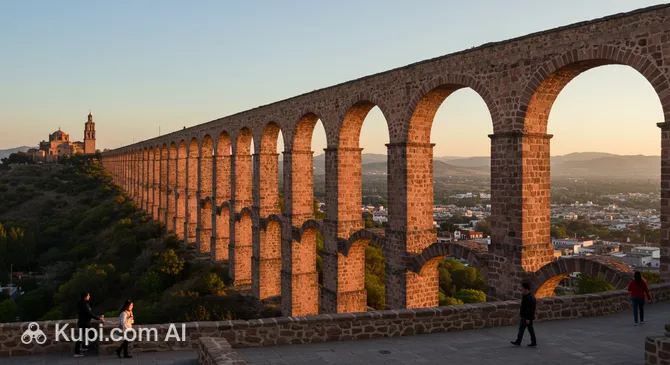
Viewpoint of the Arches. Illustration.
Source: Kupi.com AI

Traveler photos:

From this vantage point, tourists and locals alike can take stunning photographs and enjoy a panorama of not only the historical monument itself but also the surrounding neighborhoods. The views are particularly picturesque at sunset or at night when the aqueduct is illuminated, creating an unforgettable sight. Visiting the viewpoint is a great opportunity to touch history and see how harmoniously the majestic past fits into the modern face of Queretaro.

Contacts

Since the Aqueduct Viewpoint (Mirador de Los Arcos) is a public urban space, it has no separate administration or direct contact details. You can reach the viewpoint on foot from the historic center of Queretaro; it is located on Ejército Republicano Street. For additional visitor information, it is recommended to contact local tourist information centers or visit the city's official tourism website.

How to contactContact
AddressEjército Republicano 47, La Santa Cruz, La Pastora, 76025 Santiago de Querétaro, Qro., Mexico
Websitem.facebook.com

What to Do

Visiting the Aqueduct Viewpoint is, first and foremost, an opportunity to enjoy the panoramic view of the historic structure and the city of Queretaro. It is an ideal spot for photographers and anyone wanting to capture the grandeur of colonial architecture. The views are especially picturesque at sunset, when the soft lighting paints the arches in warm tones, creating a truly magical atmosphere.

The viewpoint offers a wonderful opportunity to examine the architectural features of the aqueduct in detail and appreciate the grand scale of 18th-century construction. You can see the masonry and the shape of the arches up close and imagine the colossal effort put into creating this engineering marvel, which supplied the city with water for many years and remains its main symbol today.

Furthermore, the viewpoint serves as an excellent starting point for further exploration of the city. From here, you can set off on a walk through the historic center of Queretaro, which is famous for its abundance of colonial-era religious buildings and perfectly preserved architectural monuments. Such a walk will be a natural continuation of your introduction to the rich history and culture for which this part of Mexico is so well known.

Getting There

Reaching the Aqueduct Viewpoint is quite simple, as it is located in the city of Queretaro, which boasts excellent transport links. The city is situated approximately 200 kilometers northwest of Mexico's capital, Mexico City. From Mexico City, you can reach Queretaro by comfortable intercity bus—the journey takes about three hours. You can also travel by car via the federal highway.

Once in Queretaro, there are several ways to get to the viewpoint itself. One of the most convenient options is taking a taxi or using local public transport. Additionally, if you are staying in the historic city center, walking to the aqueduct will be a pleasant addition to your trip, as it is easily accessible on foot. Since the aqueduct crosses a significant part of the city, its arches serve as an excellent landmark.

Nearest city: Querétaro

History & Facts

The history of the famous Aqueduct in Queretaro is a story about solving a vital problem. The construction of this grand structure took place between 1726 and 1738 with one primary goal: to provide the growing city with clean drinking water following cases of residents being poisoned by contaminated water. At that time, Queretaro was developing rapidly, and old water sources could no longer meet the population's needs. The result was this impressive engineering feat stretching 1,280 meters, which became a lifesaver for the townspeople.

Behind the creation of the aqueduct lies not only engineering ingenuity but also a human story steeped in romance. The main benefactor of the project was a wealthy Spanish aristocrat, Juan Antonio de Urrutia y Arana. There is a beautiful legend that the Marquis was secretly in love with a nun from the Convent of Santa Cruz (according to other sources, from the Order of Poor Clares Capuchins). This is why, according to tradition, the aqueduct was designed to end in an elegant fountain right in the convent's orchard, quenching the thirst of both the city and the lover's heart.

Beyond its practical function, the aqueduct quickly became a symbol of prosperity and high status for Queretaro in colonial Mexico. At that time, the city was considered one of the most important in the country, and such a large-scale project only emphasized its significance. Today, the Queretaro Aqueduct is not just a monument of the past, but one of the country's best-preserved historical landmarks and part of a UNESCO World Heritage site that continues to inspire with its monumentality and beauty.

Time Needed

To explore the Aqueduct Viewpoint in Queretaro and see the structure itself, it is recommended to set aside about 1-2 hours. This will be plenty of time to take memorable photos without rushing, examine the majestic construction of the aqueduct from different angles, and enjoy the panoramic views of the city that open up from this spot.

If you want to dive deeper into the atmosphere of colonial Mexico, visiting the viewpoint can be combined with a walk around the surrounding area. For example, you can explore the historic center of Queretaro, which is within walking distance and listed as a UNESCO World Heritage site. You should allow an additional 2-3 hours for such an extended walk, turning a short visit into a fascinating half-day journey.

Working Hours

Since the Aqueduct Viewpoint is a public urban space, it does not have strict opening hours. Access to the viewpoint is open to everyone 24/7 and all year round, allowing you to enjoy the views at any convenient time. Because of this, no prior booking or ticket purchase is required—entry to the viewpoint is absolutely free.

It is recommended to visit during daylight hours to better see the architectural details and enjoy the city panorama. The views are particularly picturesque at sunset, when the setting sun paints the arches in warm tones. Night visits are also popular, as the aqueduct is beautifully illuminated after dark, creating an unforgettable atmosphere. Despite being open 24/7, it is always a good idea to check with local tourist centers for the most up-to-date recommendations.

Open 24 hours

Nearby

Visiting the Aqueduct Viewpoint is just the starting point for discovering the rich heritage of Queretaro. To fully experience the atmosphere of this colonial city, it is worth taking the time to explore its surroundings. Within walking distance, you will find numerous historical monuments, museums, and squares, each telling its own unique story.

A stroll through the nearby streets will allow you to discover the charm of the historic center, which is deservedly included in the UNESCO World Heritage list. There are many interesting sites near the viewpoint that will make your trip through Mexico even more enriching and memorable.

NameDistance
Querétaro Tank0.3 km
Founders' Square0.5 km
Santiago Carbonell Museum0.7 km
Aqueduct of Querétaro0.8 km
Puerta La Victoria Mall0.8 km
Aqueduct of Querétaro0.9 km
Casa de la Zacatecana Museum0.9 km

Have you reached the end of the page?

So the route has been studied inside and out