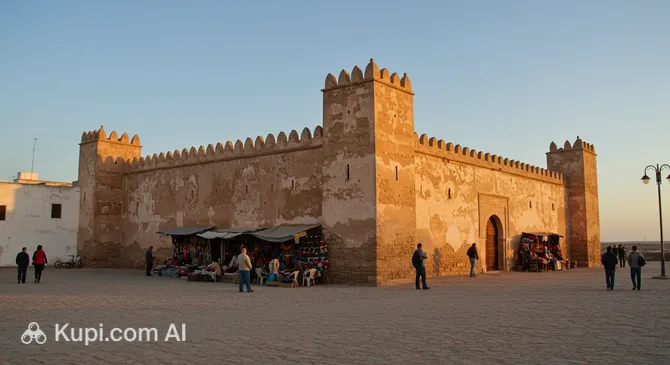
When traveling through the southern regions of Morocco, you should definitely pay attention to such an iconic landmark as the Kasbah of Laayoune. This historical fortress, located in the heart of the city of Laayoune, is a striking example of a fortified settlement characteristic of Moroccan architecture.
Laayoune Kasbah. Illustration.
Source: Kupi.com AI
Traveler photos:
The Kasbah is a harmonious blend of architectural styles—from classic Moroccan forms to elements inherent to the Sahel regions. It is not just a fortification, but a true cultural hub that has long served as a center for the social and educational life of the local population.
Today, the site holds the status of an active tourist attraction (OPERATIONAL), drawing guests with its authentic atmosphere. Situated in the region's largest oasis, the kasbah allows you to see how traditional Saharan culture intertwines with the country's historical heritage.
Contacts
For convenience in planning your route and finding the site, use the following contact details.
Visitors are invited to take a fascinating walk through the fortress grounds, where you can examine the massive fortress walls, watchtowers, and cozy courtyards in detail. The architecture here deserves special attention: it wonderfully combines traditional Moroccan motifs and European influences, creating a unique visual experience for photography enthusiasts.
Beyond exploring the fortifications, take in the local atmosphere of the Saharan oasis. You can observe artisans at work or browse small nearby shops, which often feature ceramics and other handmade souvenirs. For a deeper understanding of each architectural element, it is recommended to hire a professional guide who can share stories about the daily life and traditions of the people who lived here.
After your stroll through the kasbah, it is pleasant to relax in the shade of the palms or stop by one of the nearby cafes to try local cuisine. The picturesque cityscapes and proximity to the river make this place ideal for a peaceful break and a leisurely immersion into the region's history.
Getting There
Finding the attraction in the city is quite easy, as it is located in its central part. If you are arriving by car from Tan-Tan or Boujdour, look for signs for Route de Tan-Tan to avoid getting lost in the web of city streets.
From Laayoune International Airport (EUN), a taxi ride takes just 10–15 minutes. The city itself is quite compact and clean, so you can easily reach the fortress on foot from the main streets or the bus station where intercity buses arrive, or take an affordable local taxi.
For those using navigation apps, the exact location can be found using the coordinates POINT(-5.2619952 35.1685246). Parking spaces are available near the site, making it convenient for independent travelers.
Nearest city: Laayoune
History & Facts
The historical roots of kasbahs in this region date back to the 19th century, when they were built as vital defensive and administrative hubs. One of the key events was the founding of the Zaouia of Sheikh Maalainine in 1888, which served not only as a sanctuary and a court but also as the largest scientific center of its time.
The architectural appearance of the structures was shaped under the orders of sultans, with materials brought from afar and the use of local stones and elements of the Andalusian style. This gives the fortress a unique character, making it stand out against typical Saharan buildings.
Interestingly, a mosque was built on the grounds in 1969, featuring symbols of the three major world religions—Islam, Christianity, and Judaism—in its design. This fact highlights the historical tolerance and multifaceted cultural ties in Laayoune. Despite modern restorations, the kasbah carefully preserves the spirit of Moroccan civilization from centuries past within its walls.
Time Needed
To leisurely explore the fortress grounds, study the architectural details, and take memorable photos, most travelers need about 1–2 hours. This is plenty of time for an introductory walk.
About 30–45 minutes should be set aside for touring the fortifications and inner courtyards, while the remaining time can be dedicated to relaxing in the shade or taking in the surrounding views. If you decide to hire a guide for a deeper dive into the history, the visit may take an additional half hour.
Working Hours
The attraction welcomes visitors daily, making it easy to include in any travel itinerary. The site's operating hours remain consistent throughout the week:
Monday — Sunday: from 09:00 to 17:30 without breaks.
9:00 – 17:30
Nearby
Exploring the surroundings of the fortress will allow you to fully experience the atmosphere of the old city and discover its hidden corners. Historical gates, ancient squares, and the colorful medina are all within walking distance.