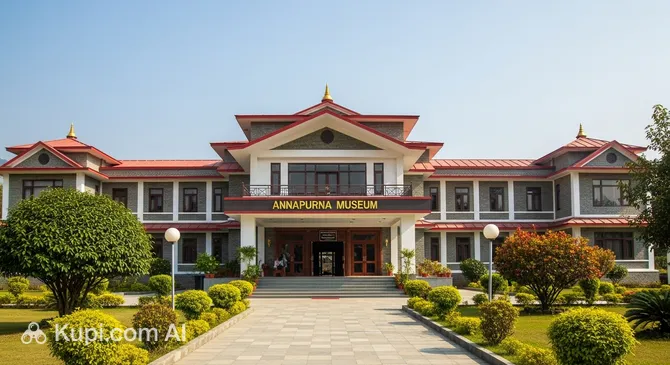
Imagine a place that gathers all the natural majesty of the Himalayas in miniature. The Annapurna Museum, also frequently referred to as the Natural History Museum, is a true treasure trove for those wishing to discover the hidden life of this mountain region. It is nestled in the city of Pokhara within the grounds of the Prithvi Narayan Campus.
Annapurna Museum. Illustration.
Source: Kupi.com AI
Traveler photos:
The museum's main pride is its incredible collection of butterflies and insects, which is striking in its variety of shapes and colors. Here you can see thousands of specimens found in Nepal, as well as explore exhibits dedicated to birds, wildlife, and unique geological finds. Samples of volcanic rocks and gemstones tell the story of the formation of the planet's highest mountains.
A visit to this museum is not just a stroll past display cases, but an educational journey that allows you to understand the delicate balance of the Annapurna massif's ecosystem. Thanks to its scientific foundation, the museum has become a must-visit for tourists seeking a deep study of the biological diversity of the Nepalese Himalayas.
Contacts
To clarify current information before your visit, you can use the following contact details for the museum:
Within the walls of this museum, a fascinating dive into the world of entomology and geology awaits you. Be sure to take the time to explore the vast collection of butterflies—it is one of the most vivid impressions. Numerous displays with detailed descriptions allow you to learn about rare species that are extremely difficult to encounter in the wild during a regular trek.
Mineralogy enthusiasts will be interested in exploring the halls with geological treasures. Here you will find samples of rocks and crystals that have formed over centuries under the pressure of the Himalayan ranges. This is an excellent opportunity to see the "skeleton" of the great mountains without climbing to their peaks.
For travelers planning a trek around the Annapurna Circuit, a visit to the museum is excellent preparation. Here you can study photographs and information stands about local ecosystems, which will make your future trek much more informed and interesting. Don't forget to bring your camera—the academic atmosphere of the university campus and the neat museum displays provide a wonderful backdrop for educational photos.
Getting There
Finding the Annapurna Museum is easy: it is located on the grounds of the Prithvi Narayan Campus, east of the colorful Old Bazaar. If you are staying in the popular tourist area of Lakeside by Phewa Lake, the journey to the museum is about 2–3 kilometers. This distance is easily covered by taxi or a colorful local rickshaw in just 10–15 minutes.
For those who prefer public transport, buses heading to the Mahendra Pul area are suitable. From there, you can walk to the university campus following the signs. If you have just arrived in the city, the trip from Pokhara Airport will take approximately 15 minutes by car.
Outdoor enthusiasts might consider renting a bicycle. Pokhara is a city with relatively calm traffic in this part, so such a ride will be a pleasant outing, allowing you to get a better look at the daily life of the locals on your way to learning about the region's nature.
Nearest city: Pokhara
History & Facts
The history of this place is inextricably linked to the development of science and education in the region. The Annapurna Museum operates within the city's largest educational institution—the Prithvi Narayan Campus. The creation of the museum was a significant step in systematizing knowledge about Himalayan biodiversity, turning educational halls into a treasury of natural history.
The city of Pokhara itself has long served as an important trade hub on the route between India and Tibet. With the growth of interest in mountaineering and trekking in the second half of the 20th century, there was a pressing need for a place that could visually demonstrate the fragile ecosystem of the Annapurna massif. The museum took on the role of an educational center for researchers and travelers.
The museum's collections have been formed over decades based on meticulous scientific research. Every exhibit here is the result of expeditions to remote mountain areas. The museum emphasizes Pokhara's status not only as a tourist hub but also as a serious base for studying ecology and preserving the natural heritage of Nepal.
Time Needed
For a thoughtful and leisurely tour of the exhibition, most visitors need between 2 to 4 hours. This is plenty of time to study the detailed insect collections and carefully examine specimens of rare minerals found in the depths of the Himalayas.
True natural history enthusiasts and photographers often spend a full day here, immersing themselves in the study of specific species of flora and fauna. If your goal is a brief introduction to the region's nature before a major trek into the mountains, then an hour and a half to two hours will be quite enough for a general impression.
Working Hours
The museum follows the standard working hours of the city's educational institutions. You can visit the exhibition on the following days:
As opening hours may vary depending on Nepal's public holidays or university events, it is recommended to check the information on-site or with local guides before planning your visit.
Day
Working hours
Monday
10:00–16:00
Tuesday
10:00–16:00
Wednesday
10:00–16:00
Thursday
10:00–16:00
Friday
10:00–16:00
Saturday
Закрыто
Sunday
10:00–16:00
Nearby
After immersing yourself in the world of natural history, it is worth spending time at other interesting places in the area. Exploring the surroundings of the campus will allow you to see Pokhara from different perspectives—from quiet natural corners to modern amusement parks.
A walk around the area will help balance educational leisure with active recreation or visits to local shrines. Below is a list of sites located near the museum: