Support

Sterrebos Groningen

About

Located in the south of Groningen, the historic Sterrebos Park is a true gem that the Netherlands is proud of. Established back in 1765, this site is a rare example of ancient landscape architecture. Its main feature is its star-shaped layout: eight straight alleys converge at a single center, giving the park its poetic name, which means "Star Forest."
\n\n
Sterrebos Park
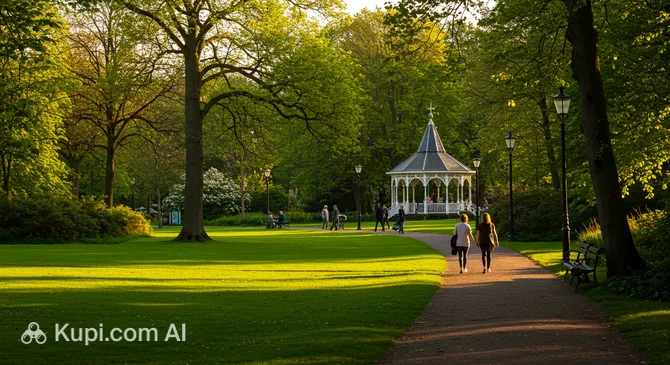
Sterrebos Park. Иллюстрация. Источник: Kupi.com AI
\n\n

Originally created as a place for aristocratic hunting, over time the park transformed into a public space for recreation. In the late 19th century, elements of the English landscape style were added to its strict geometric design, including winding paths and a picturesque pond. Today, the park is divided into two parts by a city road, but it still maintains its integrity and status as a protected municipal monument.

\n\n

Sterrebos attracts not only nature lovers but also architecture enthusiasts. Here, you can see the elegant Tea Dome from the early 19th century and the unusual Music Dome, built in the Amsterdam School style. It is a place where history, art, and tranquility meet in the heart of a modern city.

Contacts

If you're planning to visit this cozy corner of nature, you'll find the following contact information useful:

\n\n
How to contactContact
AddressHereweg 91, 9721 AA Groningen, Нидерланды
Websitewww.visitgroningen.nl

What to Do

For those seeking solitude and tranquility, a stroll along the winding paths of Sterrebos is the perfect choice. Here, you can wander for hours among ancient trees, enjoying the silence and watching the birds by the local pond. The park is ideal for picnics on the grass, morning jogs, or leisurely reading on one of the many benches.

\n\n

Be sure to check out the architectural features. The Tea Dome (Theekoepel) at Hereweg 122 impresses with its historical elegance, while the Music Dome in the center of the park serves as a reminder of past cultural traditions. On the outskirts of the park, there is also a significant focal point—the Jewish Monument, a touching sculpture of hands symbolizing various human emotions.

\n\n

Thanks to its atmosphere and convenient location, the park is popular with both locals and tourists. This place is equally suited for family walks with children as it is for thoughtful contemplation of architecture and open-air art.

Getting There

Finding this green oasis in the Netherlands is easy, as it is located at Hereweg 91, northwest of the Helpman district. The park is very convenient to reach on foot or by bicycle directly from the city center—the journey takes between 10 to 30 minutes depending on your pace.

\n\n

For those who prefer public transport, city buses stop near the park on Hereweg. The bicycle ride from Groningen Central Station is very comfortable and takes only about 10–15 minutes, making the park accessible even for a short excursion.

\n\n

If you plan to arrive by car, please note that the park does not have its own parking lot. You can leave your car at the nearby public parking areas along Hereweg or in the Helpman residential area. However, due to city traffic and excellent infrastructure, cycling remains the most convenient way to get around.

Ближайший город: Groningen

History & Facts

The history of this picturesque spot began in 1765. On the initiative of then-mayor Hendrik van Sijsen, city gardener Jan Godfried Becker designed the park, which was originally intended as hunting grounds. It received the name "Sterrebos" (meaning "Star Forest") due to its unique layout: eight alleys radiate from a single central point, resembling the rays of a star. This structure allowed hunters to easily spot game crossing the clearings.

\n\n

In the 19th century, the area's purpose and appearance began to change. In 1818, the famous Tea Dome (Theekoepel) was added, built by Sebastiaan de Ranitz as a summer pavilion for receptions. Later, in the 1880s, the park was expanded southwards, taking on features of the then-fashionable English landscape style, with its winding paths, artificial hills, and ponds.

\n\n

The 20th century brought new transformations. In 1964, the construction of the southern bypass road split Sterrebos into two parts, necessitating the careful relocation of the Tea Dome to a new site. During the same period, the park was graced with a Music Dome, designed by architect Siebe Jan Bouma in the Amsterdam School aesthetic. Today, the entire park complex is recognized as a municipal monument and is carefully protected as part of the city's cultural heritage.

Time Needed

It usually takes 1 to 2 hours to explore the park. This is plenty of time to leisurely walk through all the historical alleys, reach the central "star," and admire the still waters of the pond.

\n\n

If you plan to study the architectural elements in detail, such as the Tea and Music Domes, or spend time at the Jewish Monument, set aside a bit more time. The park is also perfect for a long break with a book or a small picnic in the shade of century-old trees.

Working Hours

One of the park's main advantages is its accessibility. Sterrebos Park is open 24/7, allowing you to enjoy a walk in the early morning hours or during evening twilight.

\n\n

Admission is free. Before visiting, it's recommended to check the city's official website or tourism portal to learn about any temporary events or concerts that are occasionally held near the Music Dome.

Круглосуточно

Nearby

A walk through the park can easily be combined with visits to other interesting city sites. Exploring the surrounding area will allow you to dive deeper into the architectural history and culture of Groningen.

\n\n
NameDistance
Groninger Museum1.1 km
St. Joseph Cathedral1.2 km
The Stockroom1.5 km
Nachtcafé Warhol1.5 km
Block & Barrels1.5 km
Partycafe de Doos1.6 km
Akerk1.7 km

Reached the end of the page?

That means the route is fully explored