Support

Koog aan de Zaan

About

Koog aan de Zaan is a picturesque and cozy town located in the province of North Holland. Stretching along the banks of the Zaan River, it is situated just a few kilometers northwest of bustling Amsterdam, offering travelers a completely different, leisurely pace of life. This is a wonderful place for those who want to see the authentic Netherlands: with its famous canals, ancient bridges, and endless green fields.

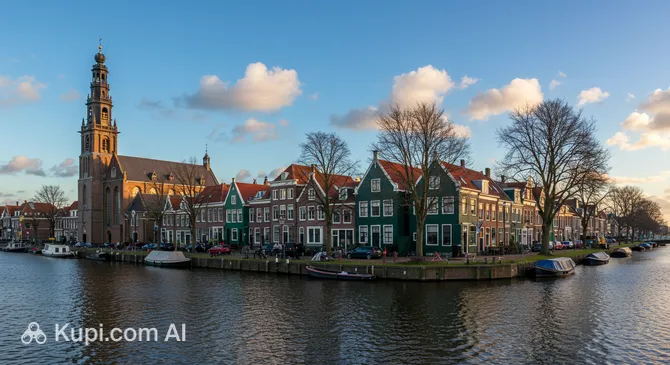
Koog aan de Zaan. Illustration.
Source: Kupi.com AI

The town is characterized by its compactness and intimate atmosphere, with a population of just over 11,000 people. There is no metropolitan hustle and bustle here; instead, there is an opportunity to enjoy peace and comfort. Visitors love strolling along the neat streets, admiring traditional Dutch architecture, and relaxing in small family cafes. Thanks to excellent transport accessibility, Koog aan de Zaan often serves as a convenient starting point for exploring the entire region.

As part of the historic Zaan region, the town carefully preserves its traditions. The unique history of Koog aan de Zaan is closely intertwined with the development of industry and crafts. You can still feel the spirit of past centuries here, admiring the famous windmills and historical buildings that look as if they have stepped out of paintings by old masters.

Coming here, you find yourself in a real "living postcard": embankments, houses with characteristic green shutters, and well-kept gardens create a unique landscape. Koog aan de Zaan is an ideal destination for history buffs and lovers of slow-paced outdoor relaxation, where the past and present harmoniously complement each other.

Weather Overview

The climate in Koog aan de Zaan can be described as temperate maritime, which is typical for this part of the Netherlands. There are no exhausting heatwaves or severe frosts here. Summer is usually mild and comfortable: in the warmest months, July and August, daytime temperatures reach an average of 20–21°C. This is a wonderful time for walking tours and exploring the town.

The winter period is cool but without extreme cold. In January and February, average figures stay around 5–6°C, and night temperatures rarely drop below +3°C. Expect a moderately warm summer and a cool winter with a high probability of precipitation in any season.

Rain in this region occurs quite often and is evenly distributed throughout the year: on average 12 to 18 rainy days per month. To make sure your wardrobe and holiday plans are right, we recommend checking the forecast for weather in Koog aan de Zaan in advance for your travel dates.

Average monthly temperature

Average monthly precipitation

Interesting Facts

Beyond its main attractions, Koog aan de Zaan holds many fascinating secrets and stories that make it a special place on the regional map. This cozy town is not just a picturesque stop, but a true treasure trove of industrial heritage and cultural traditions.

  • The Cradle of Industry. Koog aan de Zaan and its surroundings are considered the birthplace of the Dutch Industrial Revolution. This is where the first factories producing paper, paint, and chocolate emerged. The authentic atmosphere of the region is so unique that documentary films about the country's industrial history are regularly filmed here.

  • Living History in Action. One of the town's main sources of pride is the Oliemolen Het Pink. It is not just a static architectural monument, but a functioning historical oil mill. Visitors can witness the traditional process of oil production, which has remained unchanged for centuries.

  • Architectural Gems. The town has preserved unique examples of 17th- and 18th-century Dutch architecture. Special attention is drawn to the old Kogerkerk church, which serves as a magnificent example of religious architecture of that time and beautifies the town landscape.

  • Gateway to Zaanse Schans. The town is located in immediate proximity to the world-famous open-air museum, Zaanse Schans. This makes Koog aan de Zaan an ideal base for getting to know the history of the Zaan region, where you can learn the secrets of making famous wooden clogs and local cheese.

How to Get There

Thanks to its fortunate location in the center of the country, getting to the town is quite simple. You can find all ways to get to the city in more detail on a separate page, but the main choice for international travelers remains air travel followed by a short overland trip.

The absolute leader in convenience is Schiphol (IATA: AMS). This major international hub is located in the neighboring city of Amsterdam, just 17 km from your destination. The journey by car or taxi will take about 20–25 minutes in light traffic. The airport receives flights from all over the world, making it the optimal entry point.

As an alternative, you can consider Rotterdam The Hague Airport (IATA: RTM). It is located in the city of Rotterdam, about 61.6 km from Koog aan de Zaan. A car journey from here will take approximately 50–60 minutes. Also, for some routes, Eindhoven Airport (IATA: EIN), located in the city of Eindhoven (about 119 km away), might be suitable; travel time to the hotel by car will be around 1.5 hours.

For clarity, here is summary information on the main airports receiving flights nearby:

AirportPassenger trafficDistance
Amsterdam Airport Schiphol66.8 mln17 km
Rotterdam The Hague Airport2.1 mln62 km
Eindhoven Airport6.8 mln119 km
Weeze Airport2.0 mln132 km
Eelde Airport112 833140 km

The rail connection in the Netherlands is excellently developed, and it is often the most convenient way to travel. The main gateway to the region is Amsterdam Centraal station in the city of Amsterdam (11.2 km from the center). Direct Sprinter suburban trains run regularly from here to Koog aan de Zaan. The trip takes only about 15–20 minutes, which is often faster and more convenient than a taxi, considering possible traffic jams.

Another important transport hub is Rotterdam Central station in the city of Rotterdam (about 64 km from Koog aan de Zaan). This is a convenient option if you are arriving on a high-speed train from southern Europe. From here, a car trip to the final destination will take about 1 hour.

Below is a list of the nearest major railway stations through which it is convenient to plan your route:

StationPassenger trafficDistance
Amsterdam Centraal Station70.1 mln11 km
Hilversum Railway Station8.5 mln36 km
Rotterdam Centraal Station40.9 mln64 km
Ede-Wageningen Station9.1 mln76 km
Breda Station13.2 mln96 km

Main Attractions

Koog aan de Zaan, despite its modest size, possesses a special charm and preserves the heritage of the famous Zaanstreek industrial region. The main attractions here are related to the history of crafts and unique local architecture, making a walk through the town feel like a journey back in time.

The undisputed symbol of the town is the Het Pink windmill. Built in the first half of the 17th century, this oil mill miraculously survived fires and centuries of change. For tourists, it is a rare opportunity to see a working monument of past engineering: the mill is regularly operated, demonstrating the process of oil production using ancient technologies. Visiting this site allows you not only to learn about the hard work of millers but also to enjoy magnificent views of the Zaan River and the surrounding polders.

For history enthusiasts, the Kogerkerk is a focal point. This Protestant church, erected in 1686 on the site of a burned-down chapel, serves as a fine example of Dutch Classicism. The building is interesting for its austere brickwork and elegant clock tower. Inside, an atmosphere of peace prevails, and the interior is decorated with historical artifacts, including an ancient brass chandelier and a carved pulpit. It is an ideal place to take a break from the hustle and bustle and appreciate the spiritual heritage of the region.

To experience the town's atmosphere, head to Lagedijk street. This historic street, running along the river, is effectively an open-air architectural museum. Here, magnificent merchant mansions from the 18th and 19th centuries stand in a row, featuring richly decorated facades and traditional green gables. A walk along Lagedijk is interesting because it allows you to see how wealthy industrialists and merchants lived during the region's heyday, and to find cozy corners for photos against the backdrop of authentic buildings.

Local Cuisine

The gastronomic scene of Koog aan de Zaan is the embodiment of North Holland's coziness and traditions. Here, food is not just about satisfying hunger, but a way to touch the region's history. The local cuisine is based on simple but incredibly high-quality and fresh ingredients, many of which are produced on surrounding farms. If you are looking for authentic flavors without the tourist gloss, this town will be a real discovery for you.

The undisputed hallmark of the region is its cheeses. At local markets and in specialized shops, you will find the freshest varieties prepared according to ancient recipes. Be sure to try the famous Edam and Gouda, as well as local variations with cumin, herbs, or spices. Often, cheese can be bought directly from producers after tasting it with a slice of fresh bread and farmhouse butter.

The proximity to water determined the locals' love for fish and seafood. The most popular snack here is, of course, lightly salted herring (haring), which is eaten with onions and pickles, held by the tail. Gourmands should pay attention to smoked eel and marinated cod. If you find yourself in the town during cool weather, a thick and hearty pea soup called erwtensoep, often served in local restaurants with rye bread and bacon, will help you warm up.

For those with a sweet tooth, Koog aan de Zaan offers its own temptations. It is here, in the Zaan region, that cocoa and chocolate production has historically been concentrated, so the quality of local chocolate products is always top-notch. For dessert, be sure to order a warm apple pie with cinnamon and whipped cream, or buy hot stroopwafels on the street—two thin waffles joined by a layer of caramel syrup, prepared right in front of you.

Among drinks, it's worth noting the traditional Dutch juniper gin, genever, which is drunk from small tulip-shaped glasses. Beer lovers will appreciate local craft varieties. The dining culture here is relaxed: locals like to have a leisurely breakfast in bakeries, snack at market squares, or dine in cozy restaurants on the embankment, enjoying views of the river and mills. Furthermore, the town regularly hosts gastronomic festivals and workshops where you can not only taste delicacies but also learn how to cook them yourself.

Travel Tips

To ensure your trip to Koog aan de Zaan is as comfortable as possible and leaves only pleasant memories, we have prepared a list of useful recommendations. This cozy town in the province of North Holland lives at its own measured pace, and knowing local nuances will help you feel at home here.

  1. Clothing and weather. The climate in this part of the country is changeable, and the proximity to water guarantees high humidity and frequent winds. Even in summer, be sure to bring a waterproof windbreaker and an umbrella. The best clothing strategy is layering (the "onion" principle) to easily adapt to changes in weather. For walking along historic streets, choose comfortable flat shoes.

  2. Transport. Renting a car within the town is not necessary: Koog aan de Zaan is compact and more pleasant to explore on foot or on a rented bicycle. For trips to Amsterdam or neighboring cities, use trains (Sprinter)—it's fast and reliable. To plan routes, download the 9292 app, and for fare payment, it's convenient to use a contactless bank card (OVpay system).

  3. Finances. The country's currency is the Euro. The Netherlands is rapidly moving towards cashless payments: cards are accepted almost everywhere, from museums to market stalls. However, note that some supermarkets (e.g., Albert Heijn) may not accept Visa or Mastercard credit cards, preferring Maestro or V-Pay debit cards. It is still worth having a small amount of cash (bills up to 50 euros) with you.

  4. Health and safety. The town is very safe, but standard precautions are still wise. Pharmacies are divided into two types: Drogist (selling cosmetics and simple remedies like paracetamol) and Apotheek (for prescription medications). The emergency number is 112. Tap water is safe to drink—it is of excellent quality.

  5. Communication. You won't face a language barrier: practically all locals speak English fluently. However, a couple of phrases in Dutch, such as "Dank u wel" (Thank you) or "Goedemorgen" (Good morning), will always bring a smile and win over your interlocutor. Wi-Fi is available in most cafes and on trains.

  6. Local etiquette. The Dutch value directness, punctuality, and personal space. When entering a shop or cafe, it's customary to greet the staff. If you see large windows without curtains in residential houses (a local tradition), try not to look inside too obviously—respect the residents' privacy.

  7. What to avoid. The most important rule: never walk on bicycle paths! They are usually highlighted in a reddish color and are intended only for cyclists, who ride fast and do not expect to see pedestrians there. This is not only dangerous but also causes great irritation among locals.

  8. Regional specialty. Consider shop opening hours. Unlike many countries, most shops here close as early as 17:00–18:00, and on Mondays, many open only after lunch. Plan your shopping for the first half of the day to avoid arriving at closed doors.

We hope these simple tips help you avoid small difficulties and focus on the main thing—relaxation and experiences. Koog aan de Zaan is a hospitable place, ready to reveal its secrets to you and give you a true Dutch atmosphere of comfort.

Entertainment & Nightlife

Nightlife in Koog aan de Zaan is not about noisy mega-clubs and endless raves, but about the famous Dutch "gezelligheid"—an indescribable feeling of coziness and warmth. Being a quiet neighbor to Amsterdam, the town offers a relaxed evening leisure format. It is customary here to spend time in small, atmospheric bars, enjoying local beer and long conversations; for wilder parties, locals head to neighboring Zaandam or the capital, as the journey takes only a few minutes.

The epicenter of evening activity can be found along the town's main historical artery—Lagedijk street, which transitions into Zuideinde. This is where most establishments are concentrated in old buildings overlooking the Zaan River. The crowd here is mixed: from local regulars discussing the latest news to tourists relaxing after a walk among the windmills. There is practically no dress code—casual style is appropriate everywhere.

If you are looking for a place to have fun until late at night, check out Bar 't randje. This establishment on Verzetstraat is famous for its laid-back atmosphere and karaoke nights. It is a true "people's" bar where it is easy to make acquaintances and feel part of the local community. People come here not for sophisticated cocktails, but for fun, music, and dancing until morning—on weekends, the doors are open until 2:30 or even 3:30 AM.

For a quieter evening, Eetcafé de Toog on Zuideinde is ideal. This is a classic Dutch "grand café" that combines the functions of a restaurant and a pub. The old-school interior with wooden finishes creates a feeling of being at an old friend's house. There is an excellent selection of beers, including seasonal varieties, and a magnificent terrace by the water where you can watch passing boats in the summer. Prices are affordable: a glass of beer costs an average of 3–5 euros.

Those looking for live music and concerts should take just one train stop or bike ride to neighboring Zaandam, where Podium de Flux is located. This is the region's main music venue, regularly hosting rock bands, jazz groups, and themed dance nights. It is a great alternative to Amsterdam clubs, often more affordable and with less strict face control.

In terms of safety, Koog aan de Zaan is one of the calmest places in the Netherlands. You can safely walk the streets even late at night. Street lighting is excellent, and the crime rate is extremely low. The only thing to watch out for is cyclists, who can appear silently and suddenly, so try not to walk on the bike paths.

Getting home after a party is easy. Trains from Amsterdam and Zaandam run until late at night, with night routes operating on weekends. If you prefer a taxi, it is better to use official apps (like Uber or Bolt) or ask a bartender to call a car, as "hailing" a taxi on the street is not common here. During the day, the town offers more cultural leisure: visiting the famous Windmill Museum or strolling through Koogerpark.

Parks & Museums

Despite its compact size and industrial past, Koog aan de Zaan surprises visitors with well-kept green areas and a rich cultural heritage that goes far beyond the usual tourist routes. The town offers a harmonious combination of outdoor relaxation and immersion in the history of Dutch crafts, making it an excellent place for informative walks.

The green heart of the town is rightfully considered to be Koogerpark. This park, established in the early 20th century, is a monument of landscape design. It is distinguished by a particularly cozy atmosphere: winding paths, ancient trees, and a pond create ideal conditions for picnics or morning runs. Tourists are attracted here not only by nature but also by the expressionist style architecture of the entrance, which emphasizes the historical status of this place.

For those who want to see pristine Dutch nature, the Westzijderveld area is of interest. This is a vast territory of polders, canals, and meadows located in the immediate vicinity of residential quarters. Here you can watch waterfowl, go boating, or simply walk, enjoying the silence and views that have remained practically unchanged over the past centuries. This is a great opportunity to see the "inside" of the Netherlands—a country of water and wind.

Although technically the Zaanse Schans open-air museum is on the other side of the river, it is inextricably linked with the cultural landscape of Koog aan de Zaan. Many tourists stay specifically in Koog to walk to this world-famous museum village. Here you can go inside working mills, visit clog-making workshops and cheese dairies, experiencing firsthand the life of the 17th and 18th centuries.

If you are looking for something less touristy and more intimate, pay attention to the exhibition space Het Weefhuis ("The Weaver's House"). This is a historical building with a garden where exhibitions of local artists, sculptors, and photographers are regularly held. A visit to this place will allow you to look at the town's modern cultural life through the eyes of locals, away from the noisy crowds.

Getting Around

The transport system of Koog aan de Zaan is characterized by high efficiency and close integration with neighboring cities, making travel around the region simple and comfortable. The main transport artery of the town is the railway. Station Koog aan de Zaan is very conveniently located, and Sprinter type trains run through it every 10–15 minutes. In fact, for tourists, this is an analog of an overground metro: the journey to Amsterdam Central Station takes less than 20 minutes, and to neighboring Zaandam—just a couple of minutes.

For trips within the town and to the immediate surroundings far from the railway tracks, it is convenient to use Connexxion buses. They are modern, equipped with information boards, and run strictly according to schedule. There is no metro or trams directly in the town, but the bus network fully covers local travel needs. It's important to remember that buses do not stop "on demand" in arbitrary places—boarding and alighting are only done at equipped stops.

The most convenient innovation for travelers has been the OVpay payment system. You no longer need to figure out zones or buy a full OV-chipkaart (though it is still valid). Now, to pay for travel on trains and buses, it's enough to tap your contactless bank card (Visa, Mastercard) or smartphone with NFC against the validator. The cost of the trip is the same as the regular fare and is automatically debited at the end of the day.

The main rule for using public transport, followed throughout the Netherlands, is the Check-in / Check-out system. You must tap your card against the reader (validator) twice: upon entering the transport (or station) and strictly upon exiting. If you forget to "check out" at the end of your trip, a higher deposit amount may be debited from your card. Buying a paper ticket for cash from a bus driver is now practically impossible, so always have a charged phone or bank card with you.

Regarding water transport, it is important to consider one nuance. Although the Zaan River is an important artery of the region, the popular Zaanferry tourist ferry does not stop directly in Koog aan de Zaan. To use this scenic mode of transport, you need to get to the neighboring city of Zaandam or to the village of Zaanse Schans, where the nearest piers are located. This is easily done by bicycle or a short train ride if you want to combine logistics with a boat trip.

As an alternative to public transport, the bicycle is extremely popular. Rental points can be found near the railway station or in large hotels. Given the flat terrain and the presence of dedicated bike paths, this is often the fastest way to get to your destination. Taxi and ride-sharing services (like Uber) are available in the town, but prices are quite high, so tourists resort to them mainly at night when intervals between trains increase.

Accommodation

Accommodation in Koog aan de Zaan has its own specifics, dictated by its size and historical character. Unlike neighboring Amsterdam with its endless choice of lodging, you won't find huge hotel chains or luxury five-star resorts here. The town's hotel stock consists mainly of cozy family-run Bed & Breakfasts (B&Bs), small boutique hotels, and apartments. This creates an intimate atmosphere that allows guests to feel like locals rather than just tourists.

When choosing a place to stay, it's worth focusing on two main areas, each with its own advantages. The first is the vicinity of the railway station. Staying here gives you maximum mobility: trains to the center of Amsterdam take less than 20 minutes, making this area ideal for those planning active trips around the country. The second popular area is the historic Lagedijk street and the Zaan River embankment. People choose accommodation here for the aesthetics: many apartments offer views of the river and the famous Zaanse Schans windmills on the opposite bank.

The price range in Koog aan de Zaan can be described as mid-range. Staying here will be noticeably cheaper than in the center of the capital, but the level of comfort and service in the Netherlands is traditionally high. There are practically no budget hostels in the classic sense, so budget-conscious travelers should look at inexpensive guesthouses. For those seeking more comfort, modern apartments with kitchens are available, which is particularly convenient for families with children or long-term stays.

Regarding booking, the golden rule applies: the earlier, the better. Due to the limited number of offers, the best options are snapped up several months in advance, especially during the tulip blooming season (April-May) and summer holidays. It is most convenient to book accommodation through major international online platforms where most local properties are listed. If you are traveling by car, be sure to check the availability of parking at the hotel, as this can be difficult on historic streets.

Nearby Cities

For those who want to explore the surroundings, Koog aan de Zaan serves as an excellent starting point for day trips to several interesting nearby locations:

Just a few minutes' drive away is the country's capital—Amsterdam. This is an ideal destination for those who want to dive into the vibrant life of a metropolis, ride along the famous canals, and visit world-class museums such as the Rijksmuseum or the Anne Frank House. Proximity to the capital makes it easy to combine a quiet stay in Koog with the rich cultural program of a big city.

Very close by is Zaandam, which can even be reached on foot or by bicycle. This city is known for its unique modern architecture reimagining the region's traditional style (the famous hotel made of "green houses"), as well as excellent shopping opportunities. History buffs will find the Czar Peter House here, where the Russian tsar lived while learning shipbuilding.

A little further west lies the ancient city of Haarlem, often called "Amsterdam in miniature" but without the tourist crowds. It is famous for its magnificent central Grote Markt square, medieval hofjes (courtyards), and the Frans Hals Museum. It is a wonderful choice for a romantic stroll or quiet cultural leisure.

CityPopulationDistance
Zaandijk8 6001 km
Zaandam78 6823 km
Zaanstad156 9014 km
Oostzaan9 7575 km
Krommenie18 9556 km

These nearby destinations provide an insight into the diverse culture and landscapes of the region.

Shopping & Souvenirs

Shopping

Shopping in Koog aan de Zaan is a quiet and pleasant activity that allows you to immerse yourself in the daily life of the local population, away from the tourist bustle. The town does not claim to be a fashion capital, so you won't find luxury brand boutiques or giant department stores here. However, it is a great place to buy authentic products, home goods, and get acquainted with the assortment of local family-run shops, where quality and coziness are valued above all else.

The main shopping artery of the town is Raadhuisstraat. This is where most of the life is concentrated: popular chain stores with essential goods, cozy bakeries, pharmacies, and flower shops are located here. A walk along this street will allow you to cover all the basic needs of a traveler—from buying a snack to acquiring necessary small items for the journey. It is also worth looking into small shops on the historic streets closer to the river, where you can sometimes find interesting interior items or vintage finds.

There are no large indoor shopping centers in Koog aan de Zaan itself, which is typical for small Dutch towns. However, this is not a problem: just a few minutes by train or bicycle away is neighboring Zaandam, which is a real paradise for shopaholics. There, on the famous Gedempte Gracht shopping street, you will find large malls and stores of famous global brands. Koog aan de Zaan offers a more intimate "neighborhood" shopping format.

The market culture here is local in nature. Occasionally, small stalls with fresh vegetables, cheese, or fish may appear in town, but for a large-scale market atmosphere, locals head to the weekly markets in neighboring towns of the Zaanstreek region. Nevertheless, in local specialized shops (such as butcher or cheese shops), the quality of products often exceeds that of the market, and you can always try the goods before purchasing.

As for souvenirs, it is worth bringing back gastronomic gifts from Koog aan de Zaan, for which the entire region is famous. Be sure to pay attention to local mustard (Zaanse mosterd) and mayonnaise—these brands are known nationwide for their historical quality. Given the region's industrial past related to cocoa processing, local chocolate or sweets make excellent gifts. Also, a popular souvenir is Duivekater—a traditional sweet bread of a special shape that is baked in this region.

The shop opening hours correspond to the national standards of the Netherlands. Most retail outlets are open from 09:00 to 18:00 from Tuesday to Friday. On Mondays, many shops open only after lunch, around 13:00. On Saturdays, the working day is often shortened to 17:00, and Sunday in small towns is usually a day off, although large supermarkets may be open. On Thursday or Friday, there may be a "shopping evening" (koopavond), when shops are open until 20:00 or 21:00.

The payment system in the country is highly developed towards cashless transactions. Bank cards are accepted almost everywhere, even for purchasing a single bun. However, it's worth remembering that some small shops and Albert Heijn supermarkets may not accept credit cards (Visa/Mastercard), preferring Maestro or V-Pay debit cards. Cash is accepted but is used less and less. We recommend always having a debit card or a smartphone with a contactless payment function with you.

Tourists residing permanently outside the European Union can use the Tax Free refund system when purchasing goods worth over 50 euros in one shop. Look for "Global Blue" stickers in windows or ask for a Tax Free form at the checkout. It will be most convenient to process the refund when departing from Schiphol Airport, as there are no refund points in the town itself.
Reached the end of the page?

That means the route is fully explored