Support

Zaandijk

About

Zaandijk is a charming town that looks like it stepped right off a vintage postcard. Located on the picturesque banks of the Zaan River, it draws travelers in with its genuine cozy atmosphere and harmony with nature. Only 15 kilometers separate this quiet spot from bustling Amsterdam, making it an ideal destination for those who want to see what the traditional Netherlands looks like beyond the capital.

Despite a modest population of about 8,600 people, the town possesses immense charm and regional significance. A sense of tranquility prevails here: neat houses with green wooden facades, humpback bridges, and emerald meadows create a fairytale feeling. Walking through the narrow streets, you will feel the rich history of Zaandijk come to life in its architecture and the carefully preserved traditions of its residents.

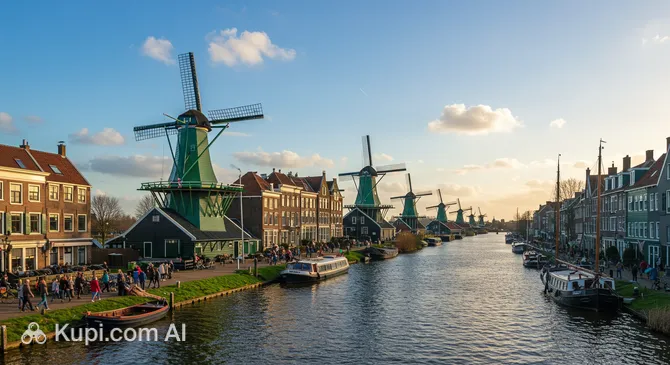
Zaandijk. Illustration.
Source: Kupi.com AI

One of the main reasons to visit this town is its status as the "gateway" to the famous Zaanse Schans open-air museum. It is from the Zaandijk embankment that you get that iconic panoramic view of the majestic windmills standing along the river, a favorite for photographers. Additionally, the air here is often filled with the aroma of fresh pastries from local bakeries, and in craft shops, you can watch artisans at work.

Zaandijk is perfect for leisurely walks or bike rides. It is a place where you can forget the hustle and bustle of big cities, enjoy authentic Dutch culture, and simply soul-search while contemplating the picturesque landscapes.

Weather Overview

The climate in this region can be described as temperate maritime, which makes it quite mild and comfortable for travel at any time of year. Sweltering heat or severe frosts are rare here, but the influence of the North Sea affects humidity. Expect warm summers with occasional rain and cool, damp winters.

The summer season is the most popular time for visits. In July and August, the average temperature is around 18°C, with maximums reaching a comfortable 20–21°C. These are ideal conditions for long walks and cycling, though an umbrella shouldn't be tucked away too far: even in the sunniest months, it can rain for about 12–15 days.

Winters here are mild but overcast. In January and February, the average temperature stays around 5.3°C — 5.7°C, and frosts are infrequent. The rainiest months are usually October and December, when the number of rainy days reaches 18. During this time of year, the town acquires a special, slightly melancholic charm.

Spring, especially May, pleases travelers with a pleasant warming up to 12.8°C, when nature begins to bloom. To pack your suitcase correctly and not make a mistake with your wardrobe, we recommend checking in advance what the weather in Zaandijk is expected to be for your travel dates.

Average monthly temperature

Average monthly precipitation

Interesting Facts

Beyond its famous panoramic views, Zaandijk hides many fascinating secrets and historical details that make it a unique spot on the map.

  • Living History Next Door. The town gained widespread fame due to its immediate proximity to Zaanse Schans — a unique open-air museum. The 18th-century atmosphere is fully recreated here: travelers can not only see old windmills and wooden houses but also personally participate in traditional crafts, such as making wooden clogs, making cheese, or creating chocolate.

  • The Cradle of Industry. In the 17th and 18th centuries, Zaandijk and its surroundings were the center of a true industrial revolution. At that time, hundreds of mills operated here, producing not only flour but also oil, paint, paper, and even mustard. Many of these historical structures have been restored, and today the Netherlands takes pride in them as monuments of engineering.

  • The Tsar's Footsteps and Napoleon's Autograph. One of the oldest wooden houses in the country is located in this area, linked to a legend about Peter the Great staying there during his Grand Embassy. Genuine household items from that era are preserved inside, and according to historians, autographs of many famous figures, including Napoleon himself, can be found on the walls.

  • City of Artisans and Festivals. Locals carefully honor their heritage, regularly hosting colorful festivals and fairs dedicated to crafts, cheese, and the arrival of spring. On such days, the town streets fill with music, and the air is permeated with the aroma of fresh pastries, creating a unique cozy atmosphere.

How to Get There

When planning a trip to this picturesque corner, keep in mind that the town does not have its own airport. However, thanks to the country's developed transport system, getting here is easy. You can find out more details on how to get to Zaandijk by studying various routes and modes of transport.

The main air gateway for tourists heading to Zaandijk is Schiphol (IATA: AMS). It is one of Europe's largest international airports, located in Amsterdam, just 18.4 km from Zaandijk. The journey from there by taxi or bus takes approximately 50 minutes. Thanks to its massive passenger traffic, flights arrive here from almost anywhere in the world.

An alternative could be Rotterdam The Hague Airport (IATA: RTM), located in the city of Rotterdam. It is further away, about 63 km from the destination. A car journey from this aviation hub takes about 2 hours. You might also consider flying into Eindhoven (IATA: EIN), which often hosts budget airline flights, although it is at a significant distance.

For convenience, here is a summary of the main airports suitable for your arrival:

AirportPassenger trafficDistance
Amsterdam Airport Schiphol66.8 mln18 km
Rotterdam The Hague Airport2.1 mln63 km
Eindhoven Airport6.8 mln121 km
Weeze Airport2.0 mln134 km
Eelde Airport112 833140 km

Railway connection is another popular way to reach the region. There are no major long-distance stations in Zaandijk itself, but you can arrive at Amsterdam Centraal in Amsterdam. This is a key transport hub located just 12.5 km from Zaandijk. From there, you can reach your destination by taxi or bus in about 40 minutes, or use local Sprinter trains.

If you are traveling from the south of the country, a convenient transfer point would be Rotterdam Centraal station in Rotterdam. It is located 65.2 km from Zaandijk. This is a major station with high passenger traffic, receiving trains from all over Europe.

Below is information about the nearest major railway stations:

StationPassenger trafficDistance
Amsterdam Centraal Station70.1 mln12 km
Hilversum Railway Station8.5 mln37 km
Rotterdam Centraal Station40.9 mln65 km
Ede-Wageningen Station9.1 mln77 km
Breda Station13.2 mln98 km

Main Attractions

Zaandijk is not just a transit point on the way to the famous windmills, but a treasure trove of Dutch culture in its own right. While many tourists rush to cross to the other side of the river, the town itself offers unique spots that allow for a deeper understanding of the history and lifestyle of a region known as the "pantry" of the country, a place the Netherlands is rightfully proud of.

The Gortershoek Historic District. This is perhaps the most picturesque part of town, officially recognized as a protected view. Walking along Lagedijk street feels like stepping onto a historical film set: wealthy 17th and 18th-century merchant mansions line the road with their characteristic green wooden facades and whimsical gables. It is an ideal spot for a slow stroll to enjoy the silence and admire the unique "Zaan style" architecture without the tourist crowds.

Honig Breethuis Museum. If you are interested in how wealthy merchants and manufacturers lived in the past, be sure to visit this house-museum on Lagedijk. Built around 1710, the building has preserved an authentic 1830s interior. Visitors can see hand-painted wallpaper, antique furniture, and porcelain collections. The museum is notable for its intimate atmosphere: it feels as though the owners have just stepped out for a moment and are about to return for tea with a view of the river.

"De Bleeke Dood" Windmill (The Pale Death). Despite its somber name, this structure is an important historical monument. It is the oldest surviving wooden smock mill in the country, built back in 1656. Originally used to produce flour for bakers, it is easy to find — it towers right in the middle of a residential area, a reminder of times when the horizon was dotted with hundreds of rotating wings. Today, there is a small shop here where you can buy wholemeal flour and baking mixes.

Zaan River Embankment. Although technically the famous open-air museum is on the opposite bank, it is from the Zaandijk side that you get the "postcard" panoramic view of the row of majestic windmills. This is the best spot for photography, especially at sunset or sunrise when the river water becomes mirror-like. Benches are installed here where you can simply sit, watch the boats go by, and enjoy the harmony of industrial heritage and nature.

Local Cuisine

The culinary scene in Zaandijk is a true embodiment of Dutch coziness and loyalty to tradition. Since the Zaan River region was historically an industrial center for the food industry, aromas of cocoa, spices, and fresh pastries still linger in the air. The local cuisine is simple and hearty, yet possesses a unique charm that attracts foodies from all over the world.

The main gastronomic symbol of the town is, undoubtedly, cheese. Here you can taste the world-famous Gouda and Edam varieties, the taste of which is strikingly different from supermarket counterparts. Local farmers and cheesemakers honor old recipes, offering tastings of products with varying degrees of aging — from young and creamy to hard with salt crystals. Cheese is often served with mustard or fig jam, which reveals its flavor in a new way.

For those with a sweet tooth, Zaandijk is a true paradise. Be sure to try stroopwafels — two thin, crispy waffles joined by a layer of gooey hot caramel. They are best eaten warm, bought from a street stall. Another local specialty is the spiced speculoos cookie, traditionally baked with cinnamon, cloves, and cardamom. The region is also famous for its chocolate, as this is where cocoa beans were historically processed.

Street food in Zaandijk is unthinkable without the famous Dutch herring. This is not just a snack, but a real ritual: tender fillets are served with finely chopped onions and pickles. Locals often eat it whole, holding it by the tail, but tourists are usually offered a more convenient option in a soft bun. At markets, you should also look for smoked fish, especially eel, which is considered a delicacy.

Regarding drinks, local craft beer brewed in the region's small breweries pairs perfectly with hearty dishes. If you want to warm up on a cool day, try jenever — a traditional strong juniper spirit that is the ancestor of gin. The dining culture here is democratic: the most delicious discoveries often await tourists not in expensive restaurants, but at farmers' markets and food festivals where food is prepared right before your eyes.

Travel Tips

Preparing for a trip to this cozy corner of North Holland does not require complex preparations, but knowing a few local features will make your holiday much more comfortable. We have compiled a list of practical recommendations to help you feel confident and enjoy the atmosphere of old Zaandijk without extra hassle.

  1. Clothing and Essentials. The weather in the region is changeable and often windy due to the proximity of the river and the sea. Dress in "layers": a t-shirt, a warm sweater, and a windproof jacket with a hood are the best choices in any season. Be sure to bring comfortable flat shoes, as historic streets are often paved with cobblestones. An umbrella might break in the wind here, so a high-quality raincoat will be more practical.

  2. Transport. Zaandijk is a compact town, ideal for walking. Renting a car to move within the town makes no sense: the streets are narrow, and parking can be expensive. For trips to Amsterdam or neighboring cities, it is most convenient to use trains (Zaandijk Zaanse Schans station). For public transport fares, the OVpay system is now universal — you can simply tap your contactless bank card or smartphone at the validator upon entry and exit.

  3. Finances. The official currency is the Euro. In most places (cafes, museums, shops), cards are accepted, but be careful: small shops and Albert Heijn supermarkets sometimes may not accept credit cards (Visa/Mastercard), preferring Maestro debit cards. Always have a little cash with you for small purchases at the market or for tipping. Tipping is not mandatory, but if you liked the service, it is customary to round up the bill or leave 5–10%.

  4. Health and Safety. The Netherlands is a safe country, and Zaandijk is no exception. You can safely walk even in the evening. However, in crowded tourist areas (especially on the way to the windmills), watch your pockets. Tap water is safe to drink — it is of excellent quality. Pharmacies (Apotheek) usually close at 17:30–18:00 and may not work on weekends, so it is better to pack a personal first-aid kit in advance.

  5. Communication. Almost all locals speak English fluently, so you won't experience a language barrier. Nevertheless, politeness is highly valued: learn a couple of words in Dutch, such as "Hallo" (Hello) or "Dank u wel" (Thank you). Free Wi-Fi is available in many cafes and trains, but for a stable connection on the street, it is better to purchase a local SIM card or use roaming.

  6. Local Etiquette. The most important rule of street behavior: never walk on bicycle paths (they are usually marked by red asphalt). Cyclists are the main participants in traffic here; they ride fast and do not expect to see pedestrians in their lane. Also, it is customary to greet the shopkeeper when entering small stores.

  7. What to Avoid. Do not peek into the windows of private houses or photograph interiors through the glass, even if the curtains are wide open. Open windows are an old tradition and a sign of trust in the world, but close tourist attention to private life is considered bad form and can offend the residents.

  8. Extra Tip. If you feel a distinct smell of chocolate or cocoa in the air during your walk, don't be surprised. This is not a local perfume, but a result of major cocoa bean processing factories located in the Zaan region. Consider it free aromatherapy and part of the town's unique character!

We hope these tips help you plan the perfect trip. Zaandijk is an incredibly hospitable place, ready to give you warmth, comfort, and plenty of bright impressions if you show it a little respect and attention!

Entertainment & Nightlife

The nightlife in Zaandijk is significantly different from the noisy parties and endless energy of neighboring Amsterdam. This is a place where the famous Dutch "gezelligheid" reigns — a concept combining coziness, pleasant company, and a soulful atmosphere. Evenings here are designed for slow relaxation after a busy day: tourists and locals alike prefer to spend time in colorful pubs, tasting local drinks, or enjoying dinner with a view of the Zaan River.

There are no large nightclubs or noisy discos operating until morning in the town itself. Main evening activity is concentrated along the primary historic street — Lagedijk. This is where the most atmospheric venues are located to watch the sunset. The dress code is relaxed almost everywhere: casual style is appropriate in any bar or restaurant. The crowd here is calm and friendly, consisting mostly of couples, locals, and tourists seeking peace.

The main point of attraction for evening leisure lovers is the local brewery and restaurant Brouwerij Hoop. This establishment has become the heart of modern life in Zaandijk. They brew their own craft beer, with names often linked to the region's history. The interior is done in an industrial style, and there is a spacious terrace. It is the perfect place to try a tasting flight and hearty snacks. Another noteworthy spot is De Smederij, located in a historic former blacksmith shop, where candles are lit in the evening and refined European cuisine is served.

If you crave dancing, loud music, and bar-hopping, locals would recommend heading to the neighboring city of Zaandam. Just a 6-minute train ride and you are in the center of the action. All the nightlife there hums around Dam Square (not to be confused with Amsterdam's), where dozens of bars, pubs, and cafes with terraces stay open late. It is an excellent compromise: live in quiet Zaandijk and head to the neighbors for entertainment.

In terms of safety, Zaandijk is one of the quietest places in the country. Evening walks pose no threats; the streets are well-lit, especially in the historic center. However, keep in mind that public transport (buses) runs less frequently at night, and trains take a break for a few hours in the middle of the night. If you stay late at a bar, it is most convenient to call a taxi through popular international apps or ask the venue staff to order a car for you.

Speaking of entertainment, the daytime program is no less busy. The town's cultural life is closely linked to its history. Besides visiting the windmills, it is worth exploring local galleries and small museums that tell the story of merchant life. For active travelers, boat rentals are available: seeing the town from the water is a special pleasure. Cycling routes leading through the polders to neighboring picturesque villages are also popular.

Parks & Museums

While many travelers view this town as a starting point for the windmills, Zaandijk possesses its own green charm and cultural depth. Here, away from the capital's hustle, you can find peaceful natural areas and unique intimate museums that carefully preserve the heritage of wealthy merchant families and the creative atmosphere of the region.

Guisveld Nature Reserve. This is a unique natural area located literally behind the Zaandijk railway station. Guisveld represents a classic Dutch polder landscape: marshy meadows cut by narrow canals and overgrown with reeds. The site has protected status (Natura 2000) and is home to many species of waterfowl, including herons and harriers. For tourists, this is a great opportunity to see the "wild" Netherlands without traveling far from the city. Walking trails are laid out here, allowing you to enjoy the silence and fresh air.

Sculpture Garden at "Het Weefhuis" (Beeldentuin Het Weefhuis). A small but very picturesque green oasis located next to the cultural center on Lagedijk. This garden is an ideal place for a short break during a walk through the historic center. Well-kept lawns, old trees, and works of contemporary art are harmoniously combined here. Entry is usually free, and this place is often called the "secret garden" of Zaandijk, hidden behind the facades of ancient buildings.

Honig Breethuis Museum. This museum is the main cultural gem of the town. Unlike large national museums, an intimate, almost domestic atmosphere reigns here. The exhibition is dedicated to the life of a family of white paper manufacturers in the 18th and 19th centuries. Visitors can see a unique collection of porcelain, antique costumes, and original furniture from that era. Not only the collection but the interior itself is of interest: the walls are decorated with rare painted wallpaper, and the windows offer the same view of the Zaan River that the homeowners admired three hundred years ago.

"Het Weefhuis" Cultural Center and Gallery. A building that was once a place for drying paper and a weaving workshop has today transformed into a lively exhibition space. The gallery specializes in temporary exhibitions featuring works by both local artists and masters from all over the country. The themes of the exhibitions constantly change — from painting and photography to ceramics and sculpture. Visiting the gallery allows you to touch the modern cultural life of the city and see how historical architecture adapts to the needs of art.

For those looking for hidden attractions, we suggest paying attention to the so-called "gaps" between the houses on Lagedijk street. These narrow passages to the river are often designed as miniature public spaces or observation platforms. They offer unexpected angles of the water and passing ships, creating a sense of total privacy and union with the river.

Getting Around

The transport system in Zaandijk is integrated into the general regional network, characterized by high reliability and comfort. Since the town is quite compact, the primary mode of public transport for tourists is the railway. The main transport hub here is the Zaandijk Zaanse Schans station (formerly called Koog-Zaandijk). From here, modern "Sprinter" trains depart regularly, reaching the center of Amsterdam or heading toward Alkmaar in 15–20 minutes. This is the fastest and most convenient way to reach or leave the town.

In addition to trains, regional buses operated by Connexxion run through the town. They connect the residential areas of Zaandijk with neighboring Zaandam and other settlements in the region. Buses run strictly according to the schedule, which can be seen on electronic displays at stops. This is a convenient option if you need to reach a specific street far from the railway station, although for most tourist routes, trains and walking are sufficient.

The fare payment system is highly simplified for the convenience of guests. The most modern and easiest way is the OVpay system. You don't need to buy special cards or tickets at a machine: simply tap your contactless bank card (Visa, Mastercard) or smartphone with Apple Pay/Google Pay against the validator. The cost of the trip is automatically deducted based on distance, and it is usually cheaper than buying a one-way paper ticket. If you plan to travel a lot in the region over several days, you can purchase an anonymous OV-chipkaart transport card, but for a short visit, a bank card is perfectly sufficient.

A critical point for all tourists is ticket validation. Regardless of whether you use a bank card, a pass, or a paper ticket, it must be tapped against the reader (validator) twice: at entry (Check-in) and at exit (Check-out). At the railway station, there may be no turnstiles; instead, there are special poles on the platform. If you forget to "check out," the system may charge an extra amount as a fine for an incomplete journey.

As an alternative to public transport, the bicycle is extremely popular. In Zaandijk, as in the entire region, ideal infrastructure has been created: dedicated bike lanes, traffic lights, and parking. You can rent a bike directly at the railway station or at rental points near tourist zones. This is the best way to feel the local pace of life. There is also a ferry service (voetveer) across the river, which operates during the tourist season and allows for a quick crossing to the opposite bank to the windmills.

To plan your routes, we strongly recommend downloading the 9292 app or the official Dutch Railways (NS) app. They show real-time schedules, platform numbers, and exact fares. Taxis are available in town, but it is not customary to "hail" them on the street — it is better to order a car through international apps like Uber or by phone. Keep in mind that a taxi ride will cost significantly more than the train, so this option is usually chosen only for heavy luggage or at night when trains run less frequently.

Accommodation

The choice of accommodation in Zaandijk differs significantly from what large tourist centers offer. Here, you won't find massive skyscraper hotel chains or noisy youth hostels with hundreds of beds. The tourist real estate market is primarily represented by intimate options: cozy Bed & Breakfasts (B&Bs), guesthouses, and boutique hotels located in historic buildings. This allows travelers to do more than just spend the night — they can literally live in the atmosphere of old Holland.

The most prestigious and sought-after residential area is the historic Lagedijk street, which runs along the river. By staying here, you get the unique opportunity to admire the view of the famous Zaanse Schans windmills directly from your room window or from a terrace during breakfast. It is an ideal choice for romantic trips and those seeking inspiration. Another popular option is the area around the railway station. This is a more practical choice for active tourists planning daily trips to Amsterdam or Alkmaar.

Since the number of rooms in the town is limited and the flow of people wishing to visit the region is high, the main booking tip is to plan your trip in advance. During the peak season (April to September), as well as during the tulip blooming period, the best accommodation options are booked several months ahead. If you cannot find suitable housing directly in Zaandijk, it makes sense to consider the neighboring city of Zaandam, where the selection of large hotels is significantly wider.

The price range can be described as medium to above-average. While prices here may be slightly lower than in the capital's center, you will have to pay extra for the authenticity and the river view. Budget travelers should look into renting apartments or rooms from locals via popular online platforms. Direct booking through the websites of small family-run hotels can sometimes yield a better deal or a nice bonus like free bicycle rental.

Nearby Cities

For those who want to explore the surroundings, Zaandijk serves as an excellent starting point for day trips to several interesting nearby locations:

The absolute leader for a short trip is Amsterdam. The capital is so close that you can reach it faster than crossing some large cities. This is a perfect chance to dive into the vibrant life of the metropolis, walk along the famous canal belt, visit the Rijksmuseum or the Anne Frank House, and return in the evening to quiet and cozy Zaandijk.

For lovers of medieval aesthetics, Haarlem is a wonderful choice. This city is often called "Amsterdam in miniature," but without the tourist crowds. Here you can admire the magnificent architecture on Grote Markt square, visit the Frans Hals Museum, or simply wander through the "hofjes" — hidden inner courtyards where time seems to have stopped.

Very close by is Zaandam, famous for its unique modern center. This is where the famous hotel is located, with a facade composed of dozens of traditional green houses, creating a whimsical architectural collage. The city is also known for great shopping and the house of Tsar Peter I, where the Russian ruler lived incognito while studying shipbuilding.

CityPopulationDistance
Koog aan de Zaan11 2251 km
Zaandam78 6824 km
Zaanstad156 9014 km
Krommenie18 9555 km
Oostzaan9 7576 km

These nearby destinations allow you to get a sense of the diverse culture and landscapes of the region, harmoniously complementing the experience of visiting Zaandijk.

Shopping & Souvenirs

General Overview. Shopping in Zaandijk is more of a pleasant addition to the cultural program than an end in itself. The town does not claim to be a fashion capital; you won't find huge malls or high-fashion boutiques here. However, its charm lies elsewhere: in small family shops, craft workshops, and stores with a unique history. It is an ideal place for those who want to bring home something authentic, made with soul, and reflecting the traditions of the Zaan region.

Main Shopping Streets. The main artery where the trade life of the historic part of the town is concentrated is Lagedijk. A walk along it provides aesthetic pleasure: shops here are located in old buildings with green wooden facades. You can find cozy bakeries, antique shops, home decor stores, and small clothing boutiques. For more practical purchases and supermarket visits, head to the railway station area, where the daily life of locals is centered.

Shopping Centers. There are no large shopping complexes in Zaandijk itself, which helps preserve the town's quiet atmosphere. If you need large-scale shopping with visits to world-renowned brands, it is best to go to neighboring Zaandam. The train ride takes no more than 10 minutes, and right by the station, you will find a bustling commercial district with passages and department stores.

Markets and Craft Shops. There are few classic street markets in the town, but tourists will find a real discovery in the workshop-shops located near the tourist paths to the windmills. These are places where trade turns into a show: you can not only buy a product but also see the process of its creation. Fresh pastries, farm products, and handmade items are sold here in an atmosphere reminiscent of an open-air museum.

Souvenirs. From a trip to the Netherlands and specifically Zaandijk, it is worth bringing back local gastronomic specialties. Be sure to buy Zaanse mustard (Zaanse mosterd) — piquant and grainy, made here according to old recipes. The region is also famous for cocoa processing, so local chocolate will make an excellent gift. Don't forget the cheese (especially smoked varieties) and, of course, traditional wooden clogs (klompen), which can be found in both souvenir and wearable versions.

Opening Hours and Payment. Most shops are open from 09:00 or 10:00 to 17:30–18:00. An important detail: on Mondays, many small shops open only after lunch, around 13:00. Supermarkets usually stay open longer, until 20:00 or 21:00. Regarding payment, cashless transactions are preferred. Be prepared that small shops may only accept debit cards (Maestro, V-Pay), and credit cards (Visa, Mastercard) might not work. Having a small amount of cash is always welcome.

Tax Free. Tourists residing permanently outside the EU are entitled to a VAT refund on purchases over 50 euros on a single receipt. This option is available in large souvenir shops and workshops oriented toward travelers (look for the "Global Blue" or "Tax Free" logo at the entrance). Don't forget to ask for the special form at the checkout and present your passport when making the purchase.
Reached the end of the page?

That means the route is fully explored