Support

San Blas

About

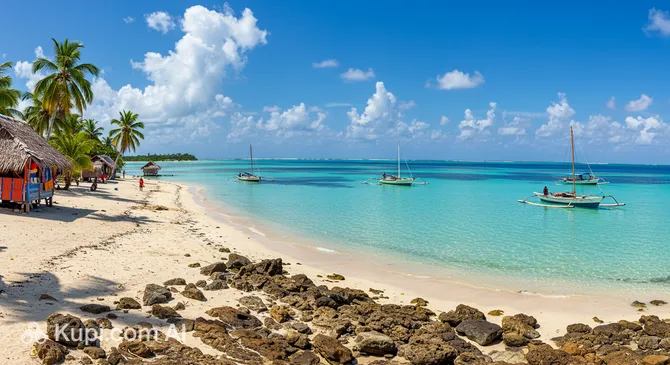
San Blas is more than just a point on the map; it is a true tropical paradise consisting of an archipelago of 365 islands — one for every day of the year. Located along the northeastern coast of Panama, this region is washed by the turquoise waters of the Caribbean Sea and bordered by the dense jungles of the mainland. Here, time seems to stand still, giving way to the sound of the surf and the rustle of palm leaves.

San Blas. Illustration.
Source: Kupi.com AI

Officially, this autonomous region is known as Guna Yala, named after the indigenous Guna people who inhabit these lands. The unique history of San Blas and the carefully preserved traditions of the local residents give the archipelago an inimitable character. You won't find the usual attributes of modern civilization here: no cars, no noisy airports, and no high-rise hotels. Life on the islands flows in harmony with nature, and guests often stay in authentic bamboo huts right by the water.

Travelers are drawn here by the opportunity to escape the hustle and bustle of major metropolises. Among the hundreds of islands, only a small portion is inhabited, with places like El Porvenir, Cartí Sugtupu, and Chichime serving as popular hubs for exploring the archipelago. Snow-white beaches, crystal-clear water, and a rich underwater world make San Blas an ideal destination for snorkeling and peaceful relaxation. If you dream of seclusion and "Bounty-style" landscapes, this archipelago will be your greatest discovery.

Weather Overview

The archipelago is located in a humid tropical climate zone, so it is warm here all year round. The temperature regime is surprisingly stable and comfortable for a beach holiday: average figures stay around 26°C, with nightly minimums around 24°C and daytime maximums rarely exceeding 29°C. To better prepare for your trip, we recommend checking the detailed weather in San Blas by month.

Precipitation in this region is a frequent and regular occurrence. Statistics show a high number of "wet" days per year: from 21 days in February to 30 days in May and the summer months. However, don't be alarmed by the numbers: these are often short-lived tropical downpours that pass quickly and refresh the air. Expect consistently warm weather throughout the year with a high probability of periodic rain, so a light raincoat in your luggage won't go amiss.

Average monthly temperature

Average monthly precipitation

Interesting Facts

In addition to impressive landscapes, San Blas holds many fascinating secrets and traditions that reveal themselves only to the most curious travelers. Here are some facts to help you better understand this amazing world:

  • An island for every day. Symbolically, the archipelago consists of exactly 365 islands — one for each day of the year. However, only a small portion is permanently inhabited, while the rest remains a realm of untouched nature and seclusion.

  • The special status of coconuts. For local residents, the coconut is not just food but an important element of the economy and trade. There is a legend and a rule that every nut, even those fallen on the ground, has an owner, so picking them without permission is not accepted here.

  • Autonomy and independence. The region is governed by the indigenous Guna people and lives by its own laws, which differ from those established by Panama. Local traditions prevail here over state norms, and the airports on the islands look more like exotic tropical strips than standard terminals.

  • The art of Mola. San Blas is famous for its distinctive culture, which is carefully protected from outside influence. Women here wear unique "mola" outfits with complex multi-layered embroidery, and men still go out to sea in traditional wooden canoes.

How to Get There

Traveling to this unique region is an adventure in itself. Since the archipelago is located far from major highways, most tourists' routes go through the country's capital. You can find out more about how to get to San Blas by exploring all available options, but the primary method remains flying to the nearest major cities followed by a transfer.

The main gateway for travelers is Tocumen International Airport (IATA: PTY). It should be noted that there is no large international airport in San Blas itself, so you will arrive in Panama City, which is approximately 129 km from the region's border. The journey from there by car or specialized transfer (4x4 jeep) takes roughly 3 hours and 30 minutes.

Another important role is played by Marcos A. Gelabert International Airport (IATA: PAC), located in the Albrook area of Panama City. This is a hub for domestic airlines, from which small planes often depart directly for the islands. If you choose the overland route from this airport, the distance to San Blas is about 149 km, and the travel time by taxi or bus is approximately 4 hours.

For convenience, here is a summary of the main airports through which you can reach the region:

AirportPassenger trafficDistance
Tocumen International Airport19.3 mln129 km
Marcos A. Gelabert International Airport350 000149 km
Panama Pacifico Airport394 422155 km
Apartado Airport186 174229 km
Rio Hato (Scarlett Martinez International)62 159230 km

There is no rail service to the Guna Yala region. The primary way to reach the islands after arriving in Panama is a combination of a 4x4 off-road trip through the jungle to the port of Cartí, followed by a transfer to a water taxi (lancha) that will take you to your chosen island.

Main Attractions

In San Blas, you won't find the typical architectural monuments, cathedrals, or museums. The main treasures of this region were created by nature itself: a scattering of coral atolls, underwater reefs, and the distinctive culture of the Guna people. A trip here is a constant journey between islands, each of which, despite outward similarities, possesses its own unique character and atmosphere.

One of the most recognizable and visited locations in the archipelago is Isla Perro (Dog Island). This spot attracts snorkeling enthusiasts from all over the world thanks to a shipwreck lying in shallow water just a few meters from the shore. The ship's hull, covered in marine vegetation, has become a home for many colorful fish and corals, creating incredible conditions for snorkeling even for beginners. The combination of history and natural beauty makes this island the region's "signature" attraction.

If you are looking for maximum privacy and pristine purity, it's worth heading to Cayos Holandeses (Dutch Cays). This group of islands is located furthest from the mainland, which protects it from the large influx of day-trippers. Here, the water has the most intense turquoise hue, and the coral reefs are considered some of the most vibrant and colorful in all of Panama. This is the perfect place for those who want to feel like they are at the edge of the world, surrounded by wild nature and silence.

Another gem of the archipelago is the tiny Isla Pelícano (Pelican Island). It gained worldwide fame after the release of the popular series "Money Heist" (La Casa de Papel), where characters hid here from pursuit. The island is very compact and can be walked around in just a few minutes, but it is precisely this intimacy and the classic "postcard" paradise look, with hammocks strung between palms, that makes it a must-see for many travelers and photography enthusiasts.

Local Cuisine

The gastronomy of San Blas is a true symphony of freshness and simplicity, where the lead roles are played by the bounty of the Caribbean Sea and exotic tropical fruits. It is not customary to overcomplicate recipes here: the secret of the flavor lies in the fact that the fish or seafood reaches the table just a few hours after being caught. The menu is based on lobsters, crabs, mollusks, and a variety of fish, most often grilled or stewed in fragrant coconut sauces.

Among the main dishes that are definitely worth a try are pargo (red snapper) and fried plantains — patacones, which serve as a universal side dish. A true point of pride for the local cuisine is a hearty seafood soup with coconut milk, aromatic herbs, and local vegetables. This dish has a rich flavor and is great for restoring strength after a day spent in the water.

Mornings on the islands often begin with traditional cassava or corn tortillas. As for street food, on the beaches and in the Guna villages, you can find simple but delicious snacks: fried fish, crispy banana chips, and homemade coconut sweets. Sometimes local residents set up small markets selling fresh fruit and homemade treats, creating an atmosphere of a feast of flavors.

When it comes to drinks, San Blas offers a refreshing variety. Tourists can enjoy natural juices made from pineapple, mango, and guava, which are squeezed right in front of you. For those who prefer something stronger, local rum is the perfect accompaniment to dinner by the sound of the surf. The dining culture here is devoid of the pretension of expensive restaurants: food is usually served in authentic huts on the seashore, where the simple surroundings only highlight the magnificent taste of fresh products.

Travel Tips

Traveling to San Blas is an immersion into a unique world with its own laws and customs, different from the rest of Panama. To ensure your holiday on these wild and beautiful islands is perfect, we have prepared a list of important recommendations to help you avoid surprises and enjoy nature.

  1. Clothing and Essentials. The climate here is hot and humid, so pack light clothing made of natural fabrics and several swimsuits. Be sure to bring special water shoes (coral shoes), as the seabed can be sharp. A dry bag for documents and electronics is also essential — splashes go everywhere during boat trips.

  2. Transport. Forget about typical city transport. The only way to reach the islands is an organized 4x4 jeep transfer from Panama City to the port, followed by a transfer to a water taxi (lancha). There are no roads on the islands themselves; you can only get around on foot or by boat between atolls. Car rental here is unnecessary and useless.

  3. Finances. This is a critical point: there are no ATMs or payment terminals on the islands. Bring enough cash in US dollars (in small bills: $1, $5, $20). You will need money to pay the mandatory entrance tax for the Guna Yala reservation, port fees, excursions, and souvenirs. Credit cards here are just pieces of plastic.

  4. Health and Safety. There are no pharmacies or hospitals on the islands, so bring a full first-aid kit, including remedies for motion sickness and stomach upsets. Pay special attention to sun and insect protection: sand flies (chitras) can appear in the evening, so a powerful repellent is mandatory. The area is safe, but don't leave belongings unattended at the port.

  5. Communication and Connection. The main languages of communication are Spanish and the local Guna dialect; not all boatmen know English. Download an offline translator in advance. Mobile service and internet are spotty (the Tigo operator works best), and Wi-Fi in huts is very rare. Prepare for a digital detox.

  6. Local Etiquette. The Guna people are very proud of their culture but do not like being photographed without permission. Always ask for permission before filming or photographing locals, especially women in traditional "mola" outfits. It is often customary to give a small coin ($1) as a thank-you for a photo.

  7. What to Avoid. Under no circumstances touch the coconuts, even if they are lying on the ground. In Guna culture, every coconut is someone's private property and currency. Taking a coconut without permission is considered theft. Also, avoid "five-star" expectations: living conditions here are ascetic, often without fresh water in the showers.

  8. Electricity. On most islands, electricity is provided by generators and only during certain hours (usually in the evening). Outlets may not be available in every hut. Be sure to bring a powerful Power Bank to charge your phones and cameras, otherwise you risk running out of battery for photos by the second day.

By following these simple tips, you can focus on the main thing — the incredible beauty of the Caribbean Sea and the hospitality of the Guna people. Leave your worries on the mainland and let yourself dissolve in the serene atmosphere of the tropical archipelago!

Entertainment & Nightlife

Entertainment and nightlife in San Blas have their own unique, one-of-a-kind format. You won't find neon signs, multi-story discos, or noisy bar districts common in major resorts. "Nightlife" on the archipelago consists of complete union with nature, silence, and the magic of the starry sky. The evening program here is built around conversation, the sound of the waves, and cozy gatherings on the ocean shore.

Social activity centers around the common areas on inhabited islands, which serve as dining halls during the day and transform into improvised bars in the evening. The liveliest atmosphere usually prevails on popular tourist islands such as Isla Perro Chico (Little Dog Island) and Isla Diablo. Groups of travelers from all over the world often gather here to discuss the day's impressions, drink local beer or rum, and listen to music played by the guests themselves or the island hosts.

The atmosphere in such places is as relaxed and informal as possible. There is no dress code at all: shorts, T-shirts, and flip-flops (or bare feet) are the standard attire. The venues, if they can be called that, are open-air huts with wooden tables and sand for floors. Operating hours depend on the availability of electricity (generators are usually turned off around 10:00 PM – 11:00 PM) and the mood of the guests. If you are looking for a place with a "sailor" vibe, pay attention to the anchorages near Chichime Island, where yacht crews often gather, hosting parties right on the decks or on the beach by a bonfire.

Here are some practical tips for those planning their evening leisure in Panama on the Guna Yala islands:

  • Alcohol: The selection of drinks on the islands is limited (usually only beer and soda), and prices are marked up ($2–$3 per can). It is highly recommended to bring rum, wine, or other beverages with you from the mainland. This not only saves money but also guarantees you'll have your favorite drink.
  • Light: Be sure to bring a powerful headlamp. After the generators are turned off, the islands are plunged into absolute darkness, and getting back to your hut without light will be difficult.
  • Transport: There is no nighttime water transport between the islands. Lanchas (boats) stop running at sunset (around 6:00 PM) for safety reasons. Therefore, you will have to spend the evening on the island where you are staying for the night.

In terms of security, night walks on the islands do not pose a criminal threat — everyone here knows each other, and there are no strangers. The main danger is natural: in the dark, it's easy to trip over palm roots or fall by stepping on a coconut. If you decide to walk along the shore under the moonlight, watch your step carefully.

Daytime entertainment in San Blas is also far from urban standards: there are no cinemas or amusement parks. Cultural leisure is replaced by visits to traditional Guna communities, which can be considered living open-air museums. There, you can see the daily life of local residents, buy the famous "mola" textiles, and learn about centuries-old traditions. The rest of the time is dedicated to snorkeling, beach volleyball, and kayaking between the atolls.

Parks & Museums

San Blas is not a typical tourist center with manicured city squares and classical exhibition halls. The entire Guna Yala region can be boldly described as a vast natural reserve and a living open-air ethnographic museum. Here, culture is not hidden behind glass displays, and nature is not restricted by fences, offering travelers direct contact with history and the ecosystem.

Nusagandi Natural Area

While most tourists head straight for the islands, the mainland part of the region deserves special attention. Nusagandi is a large protected natural area located along the road leading to the ports. This is a realm of dense tropical jungle where you can hike along forest trails. The location is perfect for ecotourism and birdwatching: it is home to many rare bird species, as well as monkeys and reptiles. Nusagandi allows you to see the "green heart" of the region before you dive into the blue of the Caribbean Sea.

Cayos Limones Marine Park

Instead of traditional urban parks, San Blas has natural marine zones. The Cayos Limones island group is one of the most picturesque. This place can be considered a natural aquarium: the shallows here abound with coral gardens where rays and starfish swim. The absence of strong currents makes this area a safe and relaxing alternative to walking through a botanical garden, only with colorful corals instead of flowers.

Museum of the Guna Nation (Museo de la Nación Guna)

On the island of El Porvenir (Gaigirgordub), which is considered the administrative capital of the region, there is a small but significant museum. The exhibition is modest, but it provides important insight into the history of the Guna people's struggle for their independence and autonomy, especially the Revolution of 1925. Here you can see historical documents, photographs, and household items that help explain why this region of Panama is so different from the rest of the country.

Community Museums (Cartí Sugtupu and others)

In Guna culture, there is no clear separation between life and art, so the densely populated island communities themselves serve as living galleries. Visiting a settlement like Cartí Sugtupu allows you to see traditional architecture and visit the Congress House (Onmaked Nega) — a massive structure made of bamboo and palm leaves. This is the center of social and spiritual life, where elders, lying in hammocks, discuss important issues and pass on oral traditions. This is a unique opportunity to touch an intangible heritage that cannot be placed in a museum showcase.

Insider Tip: If you are interested in culture, don't just look at finished "mola" products (the famous textiles), but ask local artisans to show you the process of creating them. Watching a woman sew layers of fabric together to create complex geometric patterns is the best "masterclass" you can find on the archipelago. It is also worth visiting the Guna cemeteries on the mainland (usually located on hills) — these are sacred places with a special atmosphere, but they should only be visited accompanied by a local guide.

Getting Around

The public transport system in San Blas is radically different from a typical city scheme. Since it is an archipelago, you won't find subways, trams, trolleybuses, or route buses here. Paved roads are absent on the islands themselves, so there is no car traffic within the settlements. All transport logistics are built on two key elements: 4x4 off-road vehicles for accessing ports and motorboats for moving between islands.

The primary and practically only type of "public transport" on the water is the lancha — small fiberglass boats with outboard motors that accommodate 10 to 20 people. They function as water taxis and shuttle boats. Lanchas run between the main port terminal in Cartí and various islands. They don't have route numbers, but captains always know where to take a tourist if you provide the name of the island or hotel.

The payment system here is as conservative as possible: cash only (US dollars). No transport cards, contactless phone payments, or mobile apps like Uber work in the region. There are no tickets as such — you pay the boat captain or the coordinator at the pier personally before boarding. Fares are fixed for popular destinations but can vary depending on the distance (usually from $10 to $20 for a trip between remote islands). Always have small bills ($1, $5, $10) with you, as boatmen often don't have change.

The water transport schedule is strictly tied to daylight hours and weather conditions. Boats start running at dawn (around 6:00 AM – 7:00 AM) and stop moving around 4:00 PM – 5:00 PM. Night navigation is prohibited by the laws of the Guna Yala autonomy for safety reasons. This is critical to consider when planning: if you don't catch a boat before sunset, you will have to stay overnight where you are.

Alternative ways to get around, such as car sharing, bike rentals, or scooter rentals, do not exist on the islands due to the sandy terrain and small size of the land. The only way to move around an island itself is on foot. Most inhabited atolls are so compact that you can walk around their entire perimeter in 5–10 minutes. To access the region from the mainland, only organized 4x4 jeep transfers are used, which effectively replace intercity buses, picking up tourists from hotels in Panama City early in the morning.

It's important for tourists to remember the specifics of boarding and disembarking: piers are not everywhere, and often the boat approaches right to the shore, requiring you to step into knee-deep or waist-deep water. Dress accordingly and always pack valuables in waterproof dry bags before boarding a "water shuttle," as splashes are an inevitable part of the journey.

Accommodation

Accommodation in San Blas is fundamentally different from typical resort stays. You won't find multi-story hotel complexes with elevators, chain hotels, or luxury spa centers with swimming pools here. The entire housing stock of the archipelago consists of authentic eco-huts (cabañas) built by local Guna communities from natural materials. The main choice for a tourist is between staying on one of the islands in a hut or renting a cabin on a sailing yacht (catamaran) cruising between the atolls.

Most land-based housing options can be divided into a few general comfort categories, though the concept of "star ratings" does not apply here. The budget sector is represented by simple huts with sand floors, reed walls, and shared facilities outdoors. The mid-range level offers huts with wooden flooring, electricity (usually from solar panels or a generator for specific hours), and private bathrooms. The most prestigious option, which could be called "local luxury," consists of spacious bungalows standing on stilts directly over the water, where you can fall asleep to the sound of waves right beneath the floor.

When choosing a location, consider the geography of the archipelago. The islands of the Cayos Limones group are located closer to the port of Cartí and the mainland, so they are more popular, livelier, and faster to reach. If you are looking for absolute silence, seclusion, and "postcard" views without crowds, it's worth looking at more remote island groups like Cayos Holandeses. However, remember that the further the island, the more expensive and longer the boat transfer will be.

Booking tip: It is highly recommended to book accommodation in advance, especially if you plan to visit during the dry season (December to April) or want to snag one of the scarce overwater bungalows. A key feature of San Blas is its specific "all-inclusive" system. Since there are no supermarkets or restaurants on the islands, the cost of stay almost always includes three meals a day (usually the fresh catch of the day, rice, and plantains). Do not expect a buffet; the menu here is fixed and depends on the fishermen's luck.

The price range varies from moderate to high, but it's important to understand that you are not paying for five-star service, but for the exclusivity of the location and the logistics. Booking most often happens through travel agencies in Panama or via messaging apps directly with the Guna families who own the islands. Only a small percentage of available options are listed on major international booking platforms, and many yacht captains and hut owners prefer to work through recommendations or social media.

Nearby Cities

For those who want to explore the surrounding area, San Blas serves as an excellent starting point for day trips to several interesting nearby locations:

Panama City is the dynamic capital located a few hours' drive from the Guna Yala coast. The city presents a striking contrast to the quiet life on the islands: here, skyscrapers stand alongside the colonial architecture of the Casco Viejo district. It's an ideal place for those who want to see the famous Panama Canal, visit biodiversity museums, or enjoy the culinary diversity of world-class restaurants.

Tocumen and Pacora are the settlements closest to the road leading to the San Blas region. Pacora, being one of the oldest settlements in the area, retains the atmosphere of provincial Panama and is surrounded by picturesque hills. Tocumen is primarily known as a transport hub but also offers travelers the chance to experience the daily life of local residents and local markets before returning to the capital.

CityPopulationDistance
Playon Chico7 km
Ailigandi1 20023 km
Achutupo26 km
Mamitupo50027 km
Ustupo1 80035 km

These nearby destinations provide an insight into the diverse culture and landscapes of the region, creating an interesting contrast to the secluded beach holiday on the archipelago.

Shopping & Souvenirs

Shopping in San Blas is fundamentally different from a typical shopping trip in major tourist centers. You won't find brand-name boutiques, outlets, or shopping districts here. The entire shopping process is an immersion into the ethnic culture of the Guna people. Trade here is spontaneous and very personal: often goods are sold by the artisans themselves right at the doorsteps of their huts or by coming on boats to the beaches where tourists relax. This is a unique opportunity to purchase authentic handmade products without intermediaries.

There are no typical shopping streets in the Guna Yala region, as there are no car roads on the islands. The role of shopping centers is played by the densely populated island communities such as Cartí Sugtupu, Río Sidra, or Playón Chico. Walking along the narrow sandy paths between the huts in these settlements, you will see items displayed for sale. Often, the "showcase" is just a stretched rope with fabrics or a small table at the entrance to a house. This is where the concentration of local craftsmen is highest.

There are no large shopping centers, malls, or supermarkets in the archipelago. Infrastructure is limited to tiny shops (tiendas) selling basic necessities: water, snacks, rice, canned goods, and simple household items. If you need specialized goods, electronics, or beachwear, they should be purchased in advance in Panama City before leaving for the islands.

Markets in San Blas are not organized pavilions but rather gathering places for local residents. On the larger islands, you can find small food markets selling fresh catch, coconuts, bananas, and seasonal fruits. However, the most interesting phenomenon for a tourist is the improvised souvenir markets that Guna women set up right on popular beaches like Isla Perro or Isla Pelícano, spreading their bright fabrics on the sand or special stands.

The main souvenir worth opening your wallet for is the famous mola. This is a traditional part of Guna women's clothing, featuring a complex multi-layered fabric applique with geometric or natural patterns. Each mola is unique and can take months to create. Also popular are winis — bright beaded bracelets that local women wear on their arms and legs to create geometric patterns. Additionally, you can buy simple shell jewelry and wooden crafts.

In terms of payment, conservatism prevails. Bank cards, Apple Pay, or other digital payment methods are not accepted anywhere here. The only means of payment is cash in US dollars. It is highly advisable to have small bills ($1, $5, $10, $20) with you, as finding change for a $50 or $100 bill from a seller on an island will be nearly impossible. Bargaining is appropriate but should be polite and respectful, as for local residents, selling handicrafts is often their only source of income.

The Tax-Free system (VAT refund) does not operate in the autonomous region of Guna Yala. The zone is a special territory with its own economic structure, and receipts required for processing a VAT refund are simply not issued here. All purchases are made on a "cash-and-carry" basis without formal accounting.
Reached the end of the page?

That means the route is fully explored