Support

Buka

About

Buka is the bustling administrative capital and the primary gateway to the Autonomous Region of Bougainville. Located in the eastern reaches of Papua New Guinea (Niugini), this vibrant town serves as a crucial hub for commerce and travel in the archipelago. With a population of approximately 11,000 residents, Buka offers a lively yet laid-back atmosphere, characterizing the unique island lifestyle of the region.

Buka. Source: Kupi.Binoculars

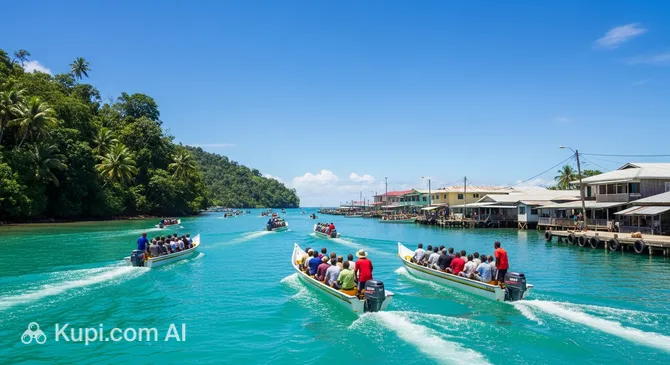
Geographically, the town sits on the southern tip of Buka Island, separated from the larger Bougainville Island by the narrow and swiftly flowing Buka Passage. This strategic location defines much of the town's character and daily life, with small boats constantly ferrying people and goods across the water. The climate is distinctly tropical, providing warm weather year-round that complements the lush green surroundings.

For those interested in the local heritage, exploring the history of Buka reveals its evolution from a quiet island settlement into a key administrative center. A short boat ride away lies Sohano Island, a former colonial headquarters that now offers peaceful walking paths, beautiful gardens, and panoramic views of the passage and the surrounding islands.

Visitors are also drawn to the colorful Buka Market, where fresh tropical fruits, vegetables, and local crafts are displayed, offering a genuine taste of local culture. Whether you are stopping over on your way to further adventures in Bougainville or taking time to explore the immediate area, Buka extends a warm and friendly welcome to all travelers.

Weather Overview

Buka features a warm and humid tropical climate characterized by remarkably stable temperatures year-round. Daily averages consistently stay around 27°C, with daytime highs reaching approximately 28°C and nighttime lows settling near 26°C, making for a predictable thermal environment.

Rainfall is a constant companion in this region, contributing to the island's lush vegetation. Visitors should expect precipitation on most days, as the area typically records between 24 and 28 wet days each month. To plan your trip effectively, it is helpful to review the current weather in Buka before departure.

Interesting Facts

Beyond the main attractions, Buka holds many fascinating secrets that reveal the depth of its culture and natural wonders. Travelers willing to look closer will discover unique traditions and geographical quirks that define this island community.
  • The "River" in the Sea: The Buka Passage is famous for its exceptionally strong tidal currents, which can reach speeds of up to six knots. Locals often describe the channel as a "river in the sea," and the rushing water is so powerful that it creates a visual illusion of stationary scenery moving rapidly past the observer.

  • The Sacred Upe: The northern part of the region is the traditional home of the Upe, a tall, cylindrical woven headdress worn by young men during secretive initiation rites. This symbol is so culturally significant that it is prominently featured on the flag of the Autonomous Region of Bougainville.

  • Percussion with Footwear: The local music scene is renowned for the "Bamboo Band," a distinct genre where musicians strike varying lengths of large bamboo pipes using rubber flip-flops. This creative technique produces a vibrant, resonant sound that is iconic to this specific part of Papua New Guinea (Niugini).

How to Get There

Reaching this island destination is an exciting part of the journey, with air travel being the primary method for most visitors. Since the region is separated from the main landmasses by the ocean, flying is the most practical option. For those planning a trip, you can find more about how to get to Buka and the available transport connections online.

The most convenient entry point is the local Buka Airport (BUA), which is situated directly in the town, just 0.9 km from the center. Because of its immediate proximity, the transfer to your accommodation is incredibly quick; a taxi or shuttle ride typically takes just a few minutes. It handles a significant portion of the region's domestic traffic.

Travelers may also transit through Tokua Airport (RAB), located in the city of Rabaul, approximately 281 km away from Buka. As a larger regional hub, it connects various parts of the archipelago, though you will need a connecting flight to reach Buka from there. Another alternative on the main island of Bougainville is Aropa Airport (KIE) in the city of Kieta. It is located about 151.5 km from Buka. If you choose to land here, be prepared for a longer overland journey involving a road trip and a short boat crossing; the travel time by taxi or bus is approximately 4 hours.

For clarity, here is a summary of the main airports:

Airport Name City Passenger Traffic Km from City
Tokua Airport Rabaul Medium 281.4
Buka Buka Small 0.9
Aropa Kieta Small 151.5
Choiseul Bay Airport Choiseul Bay Small 237.6

Main Attractions

While Buka is often seen as a transit point, it possesses a unique charm and several sites that offer a glimpse into the region's history and natural beauty. Visitors who take the time to explore the immediate surroundings will find peaceful islands, historical remnants, and vibrant local life.

One of the most accessible and historically significant spots is Sohano Island. Located just a few minutes by boat across the passage, this small island served as the administrative headquarters for the district before World War II. Today, it is a serene escape featuring manicured gardens, rain trees, and walking paths that offer spectacular views of the Buka Passage. Tourists can explore the remnants of colonial buildings and Japanese bunkers, making it a perfect spot for a history-focused walking tour and a relaxing picnic.

For a day of relaxation and water activities, Madehas Island is a favorite local getaway situated near the northern entrance of the passage. It is renowned for its crystal-clear waters and white sandy beaches, which contrast beautifully with the deep blues of the surrounding ocean. It is an excellent location for swimming, snorkeling, and enjoying a beachside barbecue, offering a quintessential tropical island experience just a short boat ride from the main town.

The Buka Passage Waterfront itself is an attraction that defines the pulse of the town. Watching the "banana boats" skillfully navigate the swift currents—which flow so fast they resemble a rushing river—is a mesmerizing sight. A stroll along the waterfront provides opportunities to interact with friendly locals, observe the daily commerce of the region, and witness the stunning sunsets that paint the strait in vivid colors.

Local Cuisine

The culinary scene in Buka is deeply rooted in its island environment, relying heavily on fresh, locally sourced ingredients rather than imported goods. The daily diet is centered around staple root vegetables such as taro, yams, cassava, and sweet potato, known locally as kaukau. These are typically boiled or roasted and served alongside the catch of the day, as the surrounding ocean provides an abundant supply of fresh fish, crabs, and crayfish.

Coconut plays a vital role in the preparation of many dishes in this part of Papua New Guinea (Niugini). Coconut cream is frequently used to simmer greens, fish, and vegetables, creating rich and savory stews that are full of flavor. It is not uncommon to find dishes where ingredients are cooked in their own juices mixed with this creamy extract, offering a distinct tropical taste.

For special occasions and community gatherings, the traditional cooking method known as mumu is employed. This involves creating an earth oven where food—often pork, chicken, fish, and vegetables—is wrapped in banana leaves and slow-cooked over hot stones buried in the ground. The result is tender, smoky, and flavorful meat that falls off the bone, making a mumu feast a cultural experience that visitors should try if given the opportunity.

Travelers can also indulge in a variety of sweet tropical fruits that thrive in the region's warm climate. The local markets are filled with ripe papayas, pineapples, mangoes, and bananas, which are consumed as snacks or desserts. The simplicity of the food in Buka allows the natural freshness of the produce to shine, providing a wholesome and satisfying dining experience.

Travel Tips

Visiting Buka offers a unique opportunity to experience the laid-back island lifestyle of the Autonomous Region of Bougainville, but a trip to this remote destination requires some thoughtful preparation. To ensure your journey is as smooth and enjoyable as possible, here are some practical tips to help you navigate local customs and logistics.

  1. Clothing and Gear: Given the tropical heat and high humidity, pack lightweight, breathable fabrics like cotton or linen. Since rain is frequent, a durable umbrella or a light rain poncho is essential. While beachwear is fine for swimming at secluded spots, Buka is socially conservative; always dress modestly in town and villages. Men should wear knee-length shorts or trousers, and women should opt for skirts or dresses that cover the knees and shoulders. Comfortable, sturdy sandals are best for walking.

  2. Transportation: The most iconic mode of transport here is the "banana boat" (water taxi) used to cross the Buka Passage; these are fast, frequent, and affordable. On land, Public Motor Vehicles (PMVs)—usually minibuses or open-back trucks—are the primary way to get around the island. They don't have fixed schedules and leave when full. Taxis are available in the main town area, but it is advisable to negotiate the fare before getting in, as meters are rarely used.

  3. Finances: The official currency is the Papua New Guinea Kina (PGK). Cash is absolute king in Buka, especially for markets, PMVs, and small shops. While there are ATMs in town (typically BSP or Kina Bank), they can occasionally be out of service or out of cash, so carrying a sufficient reserve of cash is wise. International credit cards are accepted at a few major hotels and larger stores, but do not rely on them for daily expenses.

  4. Health and Safety: Malaria is present in the region, so carrying strong insect repellent and consulting your doctor about prophylaxis before the trip is highly recommended. Drink only bottled or boiled water to avoid stomach issues. In terms of safety, Buka is generally more relaxed than the mainland capital, but you should still exercise common sense: avoid walking alone at night in unlit areas and keep your valuables secure.

  5. Communication: English is an official language and is widely understood in government and business circles. However, the lingua franca is Tok Pisin (Pidgin). Learning a few phrases like "Gude" (Hello) or "Tenkyu" (Thank you) will go a long way in building rapport with locals. Mobile coverage is decent in town; you can easily purchase a local SIM card (Digicel is a common provider) at the airport or local shops for data and calls.

  6. Local Etiquette: The culture in Buka is warm and communal. It is polite to greet people you pass on the street with a smile or a nod. Always ask for permission before taking photographs of people or their property. If you visit a village, it is customary to be introduced to the chief or community leader first. Sunday is strictly observed as a day of rest and worship by many, so expect a quieter atmosphere and fewer services.

  7. What to Avoid: Do not wear revealing clothing such as bikinis or shirtless attire in public markets or town centers, as this is considered disrespectful. Also, avoid public displays of anger or frustration; patience is a virtue here, and a calm demeanor will resolve issues much faster than a raised voice.

  8. Power and Plugs: Be prepared with the right adapter if you are bringing electronics. Papua New Guinea (Niugini) uses the Type I plug (the same as Australia and New Zealand) with a standard voltage of 240V. Power outages can occur, so packing a portable power bank for your phone and a small flashlight is a smart "life hack" for travelers.

By keeping these practicalities in mind, you will be well-equipped to embrace the slow pace and genuine hospitality that define this beautiful part of the world. Buka is a place where rushing is unnecessary, so relax, respect the local ways, and enjoy the stunning natural beauty around you.

Entertainment & Nightlife

Nightlife in Buka reflects the town's laid-back island character rather than the high-energy club scenes found in major global cities. The evening entertainment here is centered primarily around socializing at hotel bars, guest houses, and a few local taverns. The atmosphere is generally casual and friendly, with locals and visitors gathering to enjoy cold beverages, share stories, and listen to island music. The main hub of activity is often found along the waterfront facing the Buka Passage, where the breeze cools the tropical evening air.

For those looking to enjoy a drink with a view, Kuri Village Resort is one of the most well-known establishments in town. Its open-air deck overlooks the swift waters of the passage, making it a prime location for sunset drinks and evening meals. It often hosts a mix of expatriates, business travelers, and locals, offering a safe and relaxed environment. Another notable venue is Reasons Bar & Grill, which is popular for its hearty food and lively atmosphere on weekends. It serves as a good spot to experience the local social scene without being too rowdy.

The vibe in Buka’s nightlife venues is distinctly "island style." The dress code is informal, with shorts and shirts being the standard attire, though flip-flops are acceptable almost everywhere. Music is a staple of the evening, ranging from recorded international hits to local string bands and the rhythmic beats of Bougainvillean pop. Venues typically close relatively early compared to Western standards, often winding down around midnight, especially on weekdays.

Practical planning is essential for a night out in Buka. Prices for beer and spirits are reasonable, but it is important to carry enough cash (Kina), as card machines can be unreliable or unavailable in smaller bars. Transport at night requires caution; public motor vehicles (PMVs) stop running in the evening, and taxis can be scarce. It is highly recommended to arrange a private transfer or a reliable taxi through your hotel or the venue before you head out.

Safety should be your top priority when enjoying the evening. Buka is generally safer than some mainland cities, but walking alone at night is strongly discouraged, even for short distances. Stick to well-lit areas and established venues, and avoid venturing into residential settlements or unlit streets after dark. Always travel in groups if possible, and keep a low profile to ensure a hassle-free experience.

Regarding daytime entertainment, Buka does not feature conventional amusement parks, large theaters, or national museums. Instead, entertainment is woven into the cultural fabric of daily life. Visitors can find enjoyment in exploring the bustling markets, watching local sports matches at the town oval, or attending cultural festivals if their visit coincides with local celebrations. The "entertainment" here is about connecting with the community and experiencing the authentic lifestyle of the Autonomous Region of Bougainville.

Parks & Museums

Buka is a destination where nature and history blend seamlessly, offering visitors a chance to explore green spaces that are quite different from the manicured city parks found elsewhere. Instead of formal botanical gardens or large national museums, the town and its surroundings function as an open-air gallery of war history, colonial heritage, and vibrant living culture.

Sohano Island serves as the area's premier green space and historical reserve. Located just a short boat ride across the passage, this former administrative center is covered in lush vegetation and shaded by massive, ancient rain trees that provide a cool respite from the tropical sun. The island is crisscrossed with walking paths that lead past remnants of colonial architecture and World War II history, effectively making the entire island a park. It is a favorite spot for locals and visitors alike to enjoy a peaceful picnic while taking in panoramic views of the Buka Passage and the distant mountain ranges.

For a more coastal experience, the Buka Waterfront acts as the town's linear park. This stretch along the water is the heart of daily activity, where one can stroll and watch the dynamic flow of the passage. While not a park in the traditional sense, it offers a breezy, open-air environment perfect for observing the "river in the sea." The natural beauty here is raw and unpolished, with the changing tides and boat traffic providing a constant, engaging backdrop for a relaxing afternoon walk.

In terms of museums, Buka does not currently host a dedicated building for artifacts; rather, the history is embedded in the landscape. The Japanese Bunkers found on Sohano Island and scattered along the coast act as informal historical sites. These concrete structures from the Second World War are accessible to the public and offer a tangible connection to the region's turbulent past. Exploring these sites allows tourists to piece together the wartime narrative of the Pacific theater without the need for glass display cases.

The culture of the region is best experienced at the Buka Market, which functions as a living museum of Bougainvillean life. Here, the display isn't of ancient relics, but of current traditions, crafts, and sustenance. Visitors can see traditional woven baskets (often used to carry produce), sample local foods, and observe the social interactions that have defined island life for generations. It is the most authentic place to witness the local customs and the vibrant spirit of the community in real-time.

For a truly unique cultural insight, keep an eye out for the Upe, a traditional headdress worn by young men from the Wakunai and Terra areas during initiation. While you won't find them in a museum, seeing an Upe in person during a cultural festival or ceremony is a rare privilege. These towering woven hats are a powerful symbol of the region's identity, representing a custom that is still practiced and revered today.

Getting Around

The public transport system in Buka is informal, practical, and deeply integrated with the island's geography. Unlike large metropolitan areas, there are no subways, trams, or scheduled municipal bus networks here. Instead, the local transit system relies on a combination of road-based Public Motor Vehicles (PMVs) and water-based taxis, which are essential for navigating the town and crossing the narrow strait that separates Buka Island from the larger Bougainville Island.

On land, the primary mode of transport is the PMV. These are typically 15-seater minibuses or open-back utility trucks fitted with bench seating. They do not operate on a strict timetable; instead, they depart from designated stops—usually near the main market or the waterfront—once they are full. PMVs are the most affordable way to travel to villages along the east coast or towards the northern tip of the island. While they are reliable during the day, patience is required as you wait for the vehicle to reach capacity before the journey begins.

The most distinctive feature of the local transport network is the fleet of "banana boats." These open fibreglass dinghies function as water taxis, shuttling passengers constantly across the Buka Passage. Because the town is situated right on the water's edge, these boats are as vital here as a metro system might be elsewhere. They are fast, frequent, and offer a thrilling ride across the swiftly flowing currents. They operate from the main waterfront ramp, and you simply hop into the next available boat that is loading passengers.

For those seeking a more private or direct option, taxis are available within the town limits. These are standard sedans that can be hailed on the street or found waiting at the airport and major hotels. It is important to note that taxis in Buka do not use meters. You must negotiate and agree upon the fare with the driver before getting into the car to avoid any misunderstandings later. Car rentals are generally limited and often come with a hired driver, which can be a good alternative for travelers unfamiliar with the local road conditions.

Payment for all forms of public transport is strictly cash-based. There are no travel cards, mobile apps, or electronic ticketing systems. Passengers pay the driver or the "crew" (the conductor who assists the driver) directly. For PMVs and banana boats, the fares are fixed and generally quite low, usually just a few Kina for short trips. It is highly recommended to carry small denominations of the local currency, as drivers often struggle to make change for large banknotes.

Tourists should be aware that the transport system operates primarily during daylight hours. PMVs and banana boats begin running shortly after sunrise and start to wind down as the sun sets, typically around 6:00 PM. Nighttime transport is very scarce, so if you plan to be out late, you should pre-arrange a private transfer with a taxi driver or your accommodation. Additionally, services are significantly reduced on Sundays, as it is a day of rest and worship for the local community.

When using the banana boats, safety is a consideration. While the skippers are highly skilled at navigating the strong currents, the ride can be wet and bumpy. It is advisable to protect your luggage with plastic bags and, if the water looks particularly rough, ensure there is a life jacket available. Navigating the transport in Buka is an adventure in itself, offering a chance to interact with friendly locals and experience the authentic rhythm of island life.

Accommodation

Accommodation in Buka is generally modest, functional, and centered around the practical needs of business travelers and adventurous tourists. You will not find sprawling international luxury chains or five-star mega-resorts here. Instead, the town offers a selection of reliable mid-range hotels, guest houses, and lodges that provide comfortable amenities and a friendly, local atmosphere. Most establishments are family-run or locally owned, ensuring a warm welcome and personalized service.

The most convenient and popular area to stay is along the Buka Passage waterfront. Hotels situated here offer the dual benefit of cooling sea breezes and spectacular views of the swift currents and boat traffic. Staying in this area also places you within walking distance of the main market, the airport, and the town's administrative centers. Alternatively, there are quieter guest houses located slightly inland or on the nearby Sohano Island, offering a more secluded and peaceful environment surrounded by gardens.

For those seeking the most established facilities, Kuri Village Resort is a well-known name in town. Located directly on the water's edge, it is a hub for social activity and offers a range of rooms from standard to more spacious suites. It is a frequent choice for expatriates and government officials, making it a reliable option for amenities like air conditioning and an on-site restaurant. Other options in town often include smaller lodges that provide basic but clean rooms with ensuite bathrooms, catering to travelers who plan to spend most of their day exploring.

Booking Tip: Online booking platforms are not widely used by many smaller establishments in Buka. While some larger hotels may have a web presence, it is often more effective to book directly by phone or email. Because the number of rooms in town is limited, accommodation can fill up quickly during government conferences or local festivals, so securing your reservation several weeks in advance is highly recommended.

In terms of pricing, accommodation generally falls into the mid-range category. Budget backpacker hostels are rare, and prices can be somewhat higher than expected for the level of luxury provided, due to the high cost of operating in a remote island location. Payment is often expected in cash (Papua New Guinea Kina) upon arrival, although the major hotels usually accept credit cards. Always confirm the payment method when you make your booking to avoid any inconvenience.

Nearby Cities

For those looking to explore the wider region, Buka serves as a starting point for reaching several interesting nearby destinations and regional connections:

Arawa is the most accessible major destination for travelers wishing to see more of the Autonomous Region of Bougainville. Located on the main island, it can be reached via a scenic drive south after crossing the passage. Once the administrative capital, Arawa provides a fascinating insight into the region's recovery and resilience, offering access to historical sites and the lush central mountains.

Kokopo, situated across the water on the island of New Britain, serves as a vibrant regional hub. While it typically requires a short flight or a longer sea journey, it is a popular stop for those exploring the wider archipelago. The town is famous for its dramatic backdrop of active volcanoes and its extensive World War II history, making it a compelling contrast to the quiet charm of Buka.

City Population Distance (km)
Popondetta 65000 801
Arawa 40266 132
Kimbe 27191 503
Kokopo 20262 292
Lihir 20000 349

These nearby destinations offer a glimpse into the diverse culture and landscapes of the region.

Shopping & Souvenirs

Shopping in Buka offers a distinctively local experience that contrasts sharply with the polished retail environments of major global cities. Rather than sprawling shopping malls or high-end luxury boutiques, visitors will encounter a functional and vibrant commercial scene driven by small trade stores, general merchants, and bustling open-air markets. The retail atmosphere here is authentic and unpretentious, catering primarily to the daily needs of the island's residents while offering unique cultural treasures for travelers.

The town's commercial activity is concentrated along the waterfront area and the main road running parallel to the Buka Passage. This strip serves as the economic heartbeat of the island, lined with various general stores, hardware suppliers, and supermarkets. Here, tourists can find essential supplies, groceries, clothing, and basic travel gear. It is a compact area that can easily be explored on foot, allowing visitors to soak in the lively atmosphere of the town center.

While Buka does not feature modern shopping malls in the western sense, it is home to several large department stores and supermarkets that serve as one-stop shops for the community. These establishments typically stock a wide range of imported goods, from canned foods and electronics to homewares and fabrics. They provide a cool, air-conditioned respite from the tropical heat and are the best places to restock on toiletries or snacks during your stay.

The undisputed highlight of the local shopping scene is the main Buka Market. Located right near the boat stop, this market is a colorful explosion of sights and smells. While it is the primary source of fresh fruit, vegetables, and fish for locals, it is also the best place to find authentic handicrafts. The market is a social hub where the community gathers, offering a genuine insight into the daily life of the Autonomous Region of Bougainville.

For souvenir hunters, the region is famous for its exceptional craftsmanship, particularly the renowned "Buka Basket". These baskets are woven from vine and are celebrated for their incredible durability and intricate, tight weave. They are considered some of the finest in the Pacific and make for a practical and beautiful memento. Other popular items include bilums (traditional string bags), wood carvings, and jewelry made from local shells, all of which support local artisans directly.

Opening hours in Buka generally follow a standard business schedule, with most shops opening around 8:00 AM and closing by 5:00 PM on weekdays. On Saturdays, trading hours are often reduced, typically ending by 1:00 PM, and nearly all businesses, including the main market, remain closed on Sundays. Visitors should plan their shopping trips accordingly to avoid disappointment.

Cash is king throughout the town. While a few major hotels and larger supermarkets may accept credit cards, the vast majority of shops, and certainly all market vendors, operate strictly with the Papua New Guinea Kina. It is essential to carry sufficient small change, as breaking large notes can sometimes be difficult for smaller vendors. Bargaining is not a common practice in stores, but polite negotiation might be acceptable when purchasing multiple handicraft items at the market.
Reached the end of the page?

That means the route is fully explored