Support

Machu Picchu

About

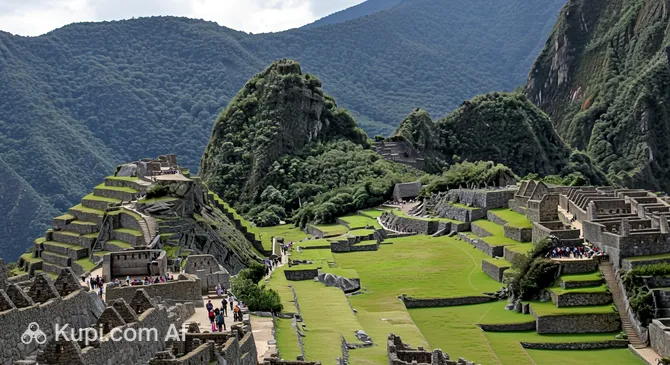
Machu Picchu is not just an ancient city, but a true legend, shrouded in mists and mysteries, lost high in the Peruvian Andes. This amazing archaeological complex, located at an altitude of about 2,430 meters above sea level, is considered one of the main cultural and historical symbols not only of the country but of all South America. It captures the imagination with its inaccessibility and harmony with the surrounding nature — dense tropical forests and sheer cliffs.
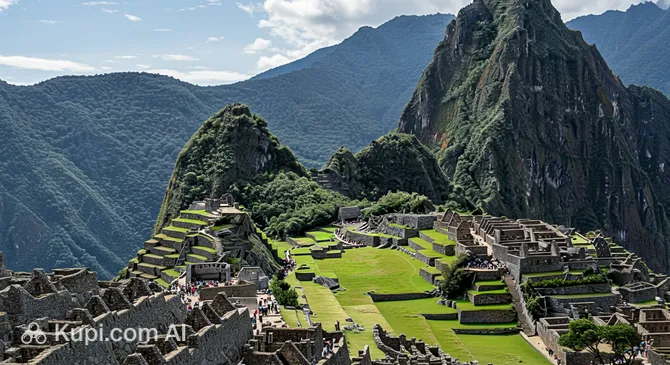
Machu Picchu. Illustration.
Source: Kupi.com AI

Machu Picchu itself is not a residential city in the usual sense; the permanent population here is minimal, as it is primarily a majestic monument of the Inca civilization. Most travelers stay in the nearby town of Aguas Calientes, which serves as the gateway to the ancient citadel and offers tourists hotels, restaurants, and famous hot springs. You can reach Machu Picchu from Cusco, and the journey itself, whether by train or on foot along the legendary Inca Trail, becomes an unforgettable adventure.

Among the key features of this site is the unique Inca architecture, perfectly integrated into the mountain landscape. You can explore the ancient terraces climbing up the slopes, the mysterious Intihuatana stone that served astronomical purposes, and the ruins of temples such as the Temple of the Sun. The atmosphere here is truly magical, especially when the morning mist drifts over the ancient stones and sunbeams break through the clouds, making you feel as if you have entered another world.

Visiting Machu Picchu is a must-do for any traveler dreaming of touching the secrets of a vanished civilization and feeling at one with majestic nature. It is a journey that leaves a deep mark on the soul and provides memories for a lifetime.

You can find more interesting facts on the history of Machu Picchu page.
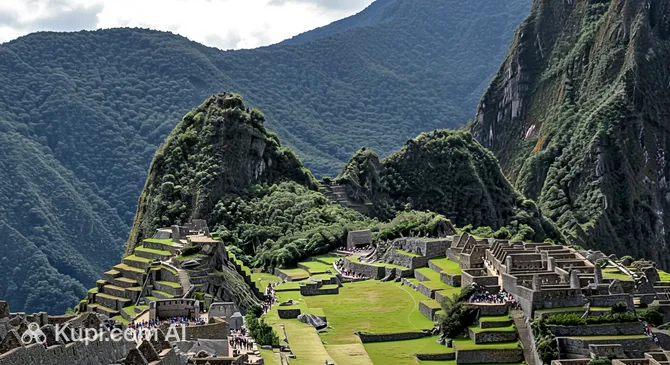
Weather Overview

The weather in Machu Picchu is characterized by relatively stable, cool temperatures throughout the year. The average annual temperature hovers around 9-12°C, while maximum daytime temperatures usually reach 14-15°C, and minimum nighttime temperatures can drop to 5-8°C, especially during the dry season.

There are two distinct seasons: the rainy season, which lasts roughly from November to April, and the dry season, from May to October. The highest amount of precipitation and cloudy days occurs in January, February, and March, while June and July are the driest months with the least precipitation. Regardless of the season, be prepared for changeable weather and possible rain. You can learn more about the climate of Machu Picchu on the special page.

Average monthly temperature

Average monthly precipitation

Interesting Facts

In addition to its status as one of the New Seven Wonders of the World and a UNESCO World Heritage site, the ancient city of Machu Picchu holds many fascinating secrets and surprising details that not everyone knows. Here are just a few of them:

Machu Picchu. Illustration.
Source: Kupi.com AI

Traveler photos:

  • Although American explorer Hiram Bingham is credited with "discovering" Machu Picchu for the Western world in 1911, local residents had known about the city's existence for centuries. There is even evidence that other foreigners may have visited the ruins before Bingham, and Bingham himself learned about them from local farmers.

  • The Inca stonework in Machu Picchu is so skillful that massive stones are perfectly fitted together without the use of any mortar. This technique, known as "ashlar," not only demonstrates incredible craftsmanship but also gives the buildings seismic resistance, allowing them to withstand numerous earthquakes over the centuries.

  • Despite numerous studies, the exact purpose of Machu Picchu remains a subject of debate. It is suggested that it could have been a sacred residence for Emperor Pachacutec, an important administrative and agricultural center, an astronomical observatory, or even a secret refuge for the Inca nobility.

  • Many visitors and researchers note the special energy of Machu Picchu. Legends speak of hidden Inca treasures and mystical forces emanating from the sacred stones and mountains surrounding the citadel. One such iconic spot is the Sun Gate (Intipunku), through which the first rays illuminate the city on the day of the winter solstice, highlighting the Incas' deep astronomical knowledge.

How to Get There

The journey to the legendary Inca city is an exciting adventure that requires prior planning, as there are no direct roads to the ruins themselves. Logistics typically involve a flight to the nearest major city, a train or bus transfer, and a final ascent. You can find out more about how to get to Machu Picchu by studying all available routes and transport combinations.

Since there is no airport in Machu Picchu itself, travelers usually fly into the city of Cusco. The main air gateway to the region is Alejandro Velasco Astete International Airport (CUZ). It is located in Cusco, approximately 77.6 km from Machu Picchu. This is a major transport hub receiving many flights. The journey from the airport to the transfer stations by taxi or bus takes about 2 hours and 20 minutes. Detailed information about this hub can be found on the Alejandro Velasco Astete page.

An alternative option, though located much further away, is Yanamilla Airport (AYP). It is located in the city of Ayacucho, about 179.9 km from Machu Picchu. This is a regional airport with lower passenger traffic. The road from here will take much longer — about 5 hours by car to the nearest transport interchanges. More data is available at the link Yanamilla Airport.

For convenience, here is summary information on the main airports:

AirportPassenger trafficDistance
Alejandro Velasco Astete3.0 mln78 km
Andahuaylas30 000106 km
Yanamilla Airport356 987180 km
Mazamari (Manuel Prado)297 km

The railway is the most popular and scenic way to reach the foot of the mountain. Trains depart from stations in Cusco (Poroy) or Ollantaytambo and arrive at the station in the town of Aguas Calientes (Machu Picchu Pueblo). There is no railway station in Machu Picchu itself; the final stop is in the village at the base, from where special buses run to the entrance of the archaeological complex. The train ride allows you to enjoy views of the Sacred Valley and takes from 1.5 to 4 hours depending on the departure point.

Main Attractions

Machu Picchu, the lost city of the Incas, is a major attraction in its own right, but there are several key sites within its grounds and the immediate vicinity that deserve special attention from every traveler. These sites will help you gain a deeper understanding of the history and culture of this amazing place.

Machu Picchu. Illustration.
Source: Kupi.com AI

Traveler photos:

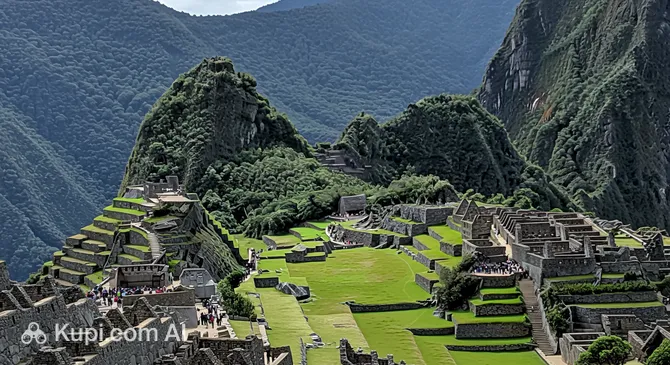
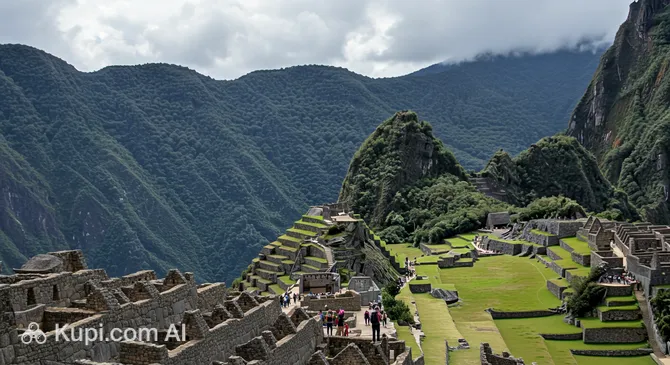
The heart of this ancient wonder is, of course, the Machu Picchu archaeological complex itself. This magnificently preserved Inca city, located high in the Andes, impresses with its complex architecture, mystical atmosphere, and breathtaking views. By exploring its temples, palaces, residential quarters, and agricultural terraces, you will touch the mysteries of a civilization that disappeared centuries ago. This site is a must-visit for anyone interested in history and ancient cultures.

Sun Gate. Illustration.
Source: Kupi.com AI

Traveler photos:

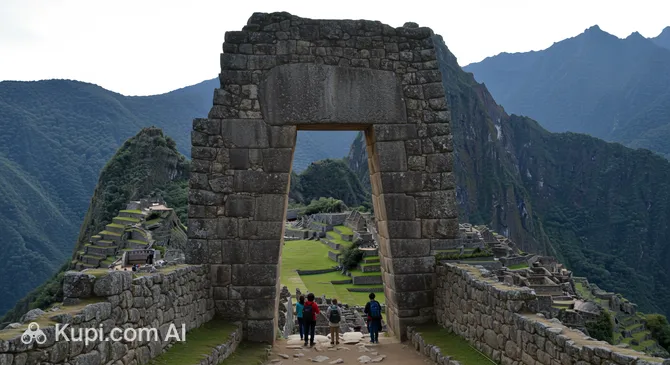
One of the most famous points within the complex is the Sun Gate (Intipunku). Historically, it served as the main entrance to Machu Picchu for those arriving via the Inca Trail. Today, it is a popular spot to watch the sunrise, offering a classic panoramic view of the entire city. The climb to the Sun Gate requires some effort, but the reward of an unforgettable sight is well worth it.

Machu Picchu Main Square. Illustration.
Source: Kupi.com AI

Traveler photos:

Inside the citadel, the Main Square of Machu Picchu is of particular importance. This vast open space, surrounded by the most important buildings, likely served as the center of the city's social and religious life. Standing here, it is easy to imagine life bustling during the time of the Incas. The square is an excellent starting point for exploring the various sectors of the ancient city.

Manuel Chávez Ballón Site Museum. Illustration.
Source: Kupi.com AI

Traveler photos:

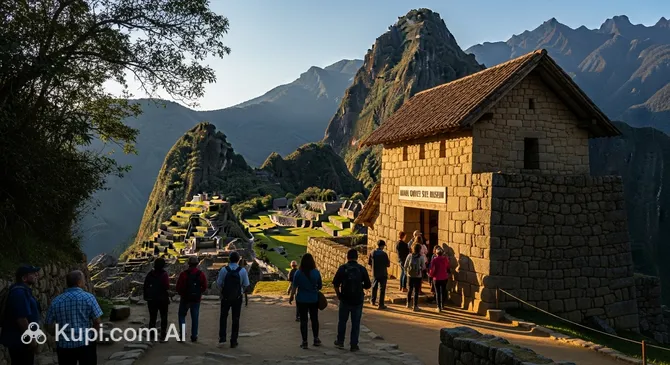
For those who want to dive deeper into the history of the discovery and study of Machu Picchu, a visit to the Manuel Chávez Ballón Museum is recommended. Located at the foot of the mountain near the Ruinas Bridge, this museum offers interesting exhibits dedicated to artifacts found at Machu Picchu, as well as the history of its exploration. It is an excellent addition to a visit to the archaeological site itself, allowing for a better understanding of its significance.

Local Cuisine

Gastronomic discoveries in the vicinity of Machu Picchu are an integral part of the journey, allowing for a deeper acquaintance with the culture of Peru. Most restaurants and cafes are concentrated in the town of Aguas Calientes at the foot of the famous citadel. Here, authentic Andean cuisine awaits you, combining ancient traditions and fresh local products.

Be sure to try the grilled alpaca — tender and lean meat prepared according to local recipes. For more adventurous foodies, cuy (roasted guinea pig) is offered, considered a delicacy in the Andes. It is also worth paying attention to quinoa dishes, such as hearty soups or stews, and, of course, potatoes. Peru has a vast number of potato varieties, and one of the popular dishes is papa a la huancaína — potatoes under a spicy cheese sauce. No less interesting will be ceviche made from fresh river trout.

Among the drinks, chicha morada stands out — a refreshing non-alcoholic drink made from purple corn, which has a pleasant sweetish taste. Among alcoholic beverages, the king is the Pisco Sour — the famous Peruvian cocktail based on Pisco grape brandy, with the addition of lime juice, egg white, and sugar syrup. Also, in many establishments, you can find local beer, including craft varieties.

Chullos Restaurant & Craft Beer. Illustration.
Source: Kupi.com AI

Traveler photos:

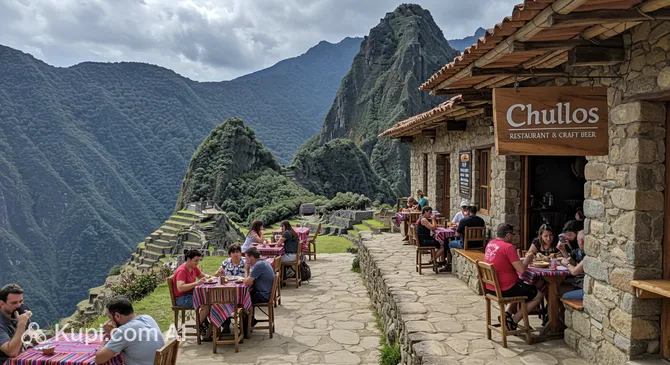
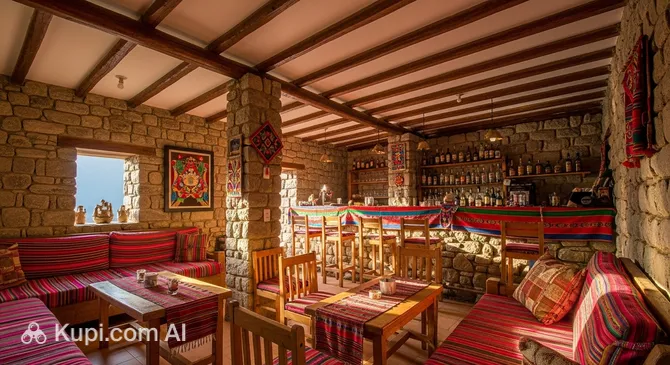
You can eat in cozy restaurants or taste street food at small markets or from vendors in Aguas Calientes. They often offer fried corn cakes, empanadas (stuffed pastries), and fresh fruit. For a more substantial dinner, you can stop by, for example, Chullos Restaurant & Craft Beer, where you can enjoy local specialties and craft beer. Another popular option is Chef House Restaurant, offering Peruvian and international cuisine.

The gastronomic scene of Machu Picchu and Aguas Calientes attracts tourists with its authenticity, use of the freshest local ingredients, and the opportunity to try unique dishes that are part of the rich cultural heritage of the Andes. This is a wonderful way to complement the experience of visiting the ancient Inca city.

Travel Tips

Welcome to Machu Picchu, the lost city of the Incas! To make your trip to this wonder of the world in Peru as comfortable and memorable as possible, we have prepared some practical tips.

  1. Clothing and Essentials

    The climate in the Machu Picchu area is mountainous and very changeable. Even in the dry season (May-October), the weather can change quickly. The key principle is layering. Bring along: light breathable t-shirts, a fleece jacket or sweater, a windproof and waterproof jacket. Comfortable trekking trousers (perhaps convertibles) will be very handy. Comfortable, broken-in trekking shoes with a non-slip sole are mandatory — you will be walking a lot on stone steps and uneven trails. Don't forget a hat, sunglasses, and high-SPF sunscreen (the sun is very active at high altitudes), as well as insect repellent. A Type A and C power adapter may also be useful.

  2. Transport: Getting There and Around

    The journey to Machu Picchu is an adventure in itself. The village closest to the ruins, Aguas Calientes (also known as Machu Picchu Pueblo), can be reached by train (PeruRail or Inca Rail companies) from Cusco or, more commonly, from Ollantaytambo. It is highly recommended to buy train tickets in advance online, especially during high season. For hiking enthusiasts, there is the legendary Inca Trail, but it must be booked many months in advance. Special buses run from Aguas Calientes to the Machu Picchu archaeological complex itself. Tickets for these can be bought at the ticket office in Aguas Calientes (be prepared for queues) or sometimes in advance online. An alternative is a walk up (about 1.5-2 hours, quite steep). In Aguas Calientes itself, everything is within walking distance.

  3. Finances: Currency, Payment, and Tipping

    The local currency is the Peruvian Nuevo Sol (PEN). It is recommended to have enough cash Soles with you, especially for small purchases, paying for the bus to the ruins, souvenirs, and food in small cafes. US dollars may be accepted in some tourist spots in Aguas Calientes, but the exchange rate will be less favorable. It is better to exchange currency in Cusco or Ollantaytambo before the trip to Aguas Calientes, where the rate is usually worse and the choice of exchange offices is limited. There are ATMs in Aguas Calientes, but they may charge high fees or be temporarily out of service. Credit cards are accepted mainly in hotels and some restaurants, but do not rely on them completely.

    When planning a daily budget in the Machu Picchu area (Aguas Calientes), consider several main expense items: meals (from $15-20 USD for lunch in an inexpensive cafe to $50+ USD in a restaurant), the bus to the ruins and back (about $24 USD), small souvenirs, and water. If you haven't purchased entry tickets in advance, that will be the most significant expense. On average, excluding the cost of entry tickets to the citadel and the train, you might spend from $50 to $100 per person per day on food, local transport, and small purchases, depending on your preferences. Budget travelers can get by on less by choosing simpler establishments and limiting purchases.

    Tipping is welcomed in Peru: about 10% in restaurants, and it is also customary to thank guides and porters (if you are on a trek).

  4. Health and Safety

    Machu Picchu is located at an altitude of about 2,430 meters above sea level. However, many tourists arrive from Cusco, which is located even higher (about 3,400 m). Be sure to take time to acclimate (2-3 days in Cusco or the Sacred Valley) before visiting the citadel. Drink more water, avoid alcohol and heavy food in the first few days. Locals often use coca leaves (tea or chewing) to alleviate symptoms of altitude sickness (soroche). In Aguas Calientes, there are small pharmacies (farmacias) with a basic set of medicines, but if you need specific drugs, it's better to bring them with you. There is a small medical post. For serious cases, transportation to Cusco will be required, so having good travel insurance is critical. The Machu Picchu complex itself is very safe. Be mindful of your belongings in crowded places (stations, markets, buses) in Aguas Calientes and along the way.

  5. Communication: Language and Internet

    The official language in Peru is Spanish. In tourist areas, including Machu Picchu and Aguas Calientes, many hotel and restaurant staff and guides speak English. However, knowing a few basic phrases in Spanish will be very useful and appreciated by the locals: "Hola" (Hello), "Gracias" (Thank you), "Por favor" (Please), "¿Cuánto cuesta?" (How much does it cost?), "Baño" (Bathroom). It is best to purchase a SIM card with mobile internet in Cusco (operators Claro or Movistar). Wi-Fi is available in most hotels and cafes in Aguas Calientes, but the speed may be low. Within the Machu Picchu archaeological complex itself, internet access is limited or unavailable — be prepared to enjoy the views without distractions.

    As for mobile applications, there are no specific local apps required for visiting Machu Picchu. The main needs of a traveler are fully covered by standard international services: offline maps (e.g., Google Maps, Maps.me) for navigation in Aguas Calientes and the surroundings, translator apps, and, of course, the official websites of the Peruvian Ministry of Culture, PeruRail, and Inca Rail for booking tickets and getting up-to-date information.

  6. Local Etiquette and Rules of Conduct in Machu Picchu

    Machu Picchu is not just ancient ruins, but a sacred place and a UNESCO World Heritage site. Treat it with maximum respect. Strictly observe the park rules: do not climb on walls and stones, do not take anything from the territory, do not smoke, do not eat within the ruins (drinking water is allowed). The use of drones, bringing in large backpacks (they must be left in the storage room at the entrance), and trekking poles without rubber tips is prohibited. Move only along the established routes and follow the instructions of the rangers. Do not make noise or disturb other visitors enjoying the atmosphere of this unique place.

  7. What to Avoid

    To ensure your visit to Machu Picchu goes smoothly, avoid the following: First, do not ignore park rules and staff instructions. This can lead to trouble, up to expulsion from the territory. Second, do not buy entrance or train tickets from unofficial sellers or third parties. Use only official sites (the Peruvian Ministry of Culture site for Machu Picchu tickets, PeruRail/Inca Rail sites for trains) or authorized agencies. Third, do not leave trash behind. Take all your waste with you to keep this amazing place clean for future generations.

  8. Additional Tip: Book Everything in Advance!

    This is perhaps one of the most important tips. The number of entrance tickets to Machu Picchu is strictly limited, and they sell out very quickly, especially during high season (May to September). It is highly recommended to buy tickets online several months before the intended date of visit. This also applies to tickets for additional treks within the complex, such as the climb to Huayna Picchu or Machu Picchu Mountain — tickets for these are even more scarce. Train tickets to Aguas Calientes are also best booked well in advance. Planning ahead is the key to a successful and peaceful trip to Machu Picchu.

We hope these tips help you better prepare for your meeting with Machu Picchu and enjoy every moment in this amazing and mystical place. Have an unforgettable trip!

Entertainment & Nightlife

Machu Picchu, being primarily a world-famous archaeological complex, also offers its visitors opportunities for relaxation and entertainment. These activities are mainly concentrated in the town of Aguas Calientes (also known as Machu Picchu Pueblo), which serves as the gateway to the ancient citadel. Although this place is not famous for boisterous nightclubs like major metropolises, there is definitely somewhere to spend a pleasant evening and relax after an eventful day.

Nightlife in Aguas Calientes has its own special, cozy atmosphere. Most establishments are geared towards tourists looking to unwind and share their impressions of what they have seen. The main evening activity is concentrated along the main street, Avenida Pachacutec, and around Manco Cápac Square. Here you will find many restaurants, bars, and cafes offering both local Peruvian cuisine and international dishes. The atmosphere in these venues is usually relaxed and friendly, and the dress code is casual and comfortable, suitable for travelers.

Among the places where you can spend an evening, notable establishments include Café Ollantay, where you can enjoy drinks in a quiet setting. If you are a fan of craft beer and delicious food, stop by Chullos Restaurant & Craft Beer. Another option for dinner is Chef House Restaurant. Many restaurants also offer "happy hours" on drinks, which can be a nice bonus. Some bars may offer live music, often with Andean motifs, adding local flavor to the evening.

Ollantay Café. Illustration.
Source: Kupi.com AI

Traveler photos:

Most bars and restaurants in Aguas Calientes stay open until late evening, but keep in mind that many tourists get up very early to visit the ruins of Machu Picchu, so the town quiets down earlier than larger tourist centers. The optimal time for evening gatherings is from early evening until 22:00-23:00. Prices in Aguas Calientes establishments can be slightly higher than the average in Peru, due to its remote location and tourist popularity.

In terms of safety, Aguas Calientes is considered a fairly quiet town, especially its central part where hotels and restaurants are concentrated. Moving around the town is easy on foot, as it is compact. Special night public transport or an abundance of taxis for moving within the town itself is usually not required — all major points of attraction are within walking distance.

As for daytime entertainment, besides the main gem — the ancient city of Machu Picchu itself — you can visit the local Manuel Chávez Ballón Museum to learn more about its history and archaeological finds. For nature lovers, a walk to the Mandor Gardens or a visit to the Machu Picchu Butterfly House, where you can see a variety of local species, would be interesting.

Parks & Museums

Machu Picchu, the legendary lost city of the Incas, offers not only breathtaking ruins but also unique opportunities to experience the natural splendor of the Andes and the region's cultural heritage. While the archaeological complex itself is the main treasure, one can find charming green corners and important museum exhibits in its surroundings that will help deepen the understanding of this amazing place.

Among the green areas available to visitors, the Mandor Gardens particularly stand out. This is not just a park, but a true natural oasis located in the Urubamba River valley, about an hour's walk from Aguas Calientes (Machu Picchu Pueblo). Tourists are attracted by picturesque trails leading through lush subtropical vegetation to a beautiful waterfall. Here you can see various species of orchids, bromeliads, ferns, and, if you're lucky, encounter hummingbirds and other exotic birds. It is a wonderful place for a quiet walk and communion with nature away from the main tourist routes.

Mandor Gardens. Illustration.
Source: Kupi.com AI

Traveler photos:

The historical and archaeological sanctuary of Machu Picchu itself is a grandiose example of the harmony between nature and human genius. Its famous agricultural terraces, carved into the mountainsides, and the surrounding cloud forests create a unique landscape. A walk through the ancient citadel is not only an immersion into history but also an enjoyment of the unique ecosystems of the high Andes.

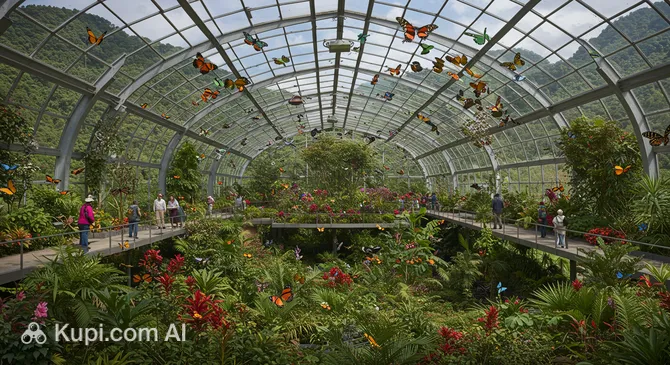
Another interesting place for nature lovers, especially for families with children, is the Machu Picchu Butterfly House (Mariposario de Machupicchu). Located on the road to the ruins, this small research center and nursery allows you to see hundreds of species of local butterflies in their natural habitat and learn a lot about their life cycle and role in the ecosystem.

Machu Picchu Butterfly House. Illustration.
Source: Kupi.com AI

Traveler photos:

For a deep understanding of the history and significance of the "lost city of the Incas," a visit to the Manuel Chávez Ballón Museum (Museo de Sitio Manuel Chávez Ballón) is highly recommended. It is located at the foot of Machu Picchu Mountain, next to the Ruinas Bridge, where buses transport tourists to the citadel entrance. The museum's exhibition includes archaeological finds made on the territory of Machu Picchu — ceramics, tools, textiles, as well as information stands, maps, and photographs telling about the history of discovery, research, and Inca culture. Visiting the museum before exploring the ruins will help better conceptualize what you see.

The entire Machu Picchu complex is an outstanding historical and architectural site. Key points of attraction inside the citadel are the Sun Gate (Intipunku), from where a canonical view of the city at dawn opens, and the Main Square of Machu Picchu, which served as the center of social and ceremonial life. In the town of Aguas Calientes, which is the starting point for most tourists, the central location is Manco Cápac Square, decorated with a statue of the legendary founder of the Inca Empire.

Manco Cápac Square. Illustration.
Source: Kupi.com AI

Traveler photos:

Insider tip: to get a more complete and authentic experience, consider visiting the Manuel Chávez Ballón Museum a day before or immediately after visiting the mountain itself — this will allow for a deeper immersion into the context. And a walk to the Mandor Gardens will be a great way to take a break from the crowds and enjoy the silence and beauty of the local nature.

Getting Around

When planning a visit to Machu Picchu, it is important to understand the features of local transport, which differ significantly from familiar urban systems. The main transport hub for access to the famous citadel is the small town of Aguas Calientes (also known as Machu Picchu Pueblo), where most travelers arrive by train. It is from here that the path to the archaeological complex itself begins.

The town of Aguas Calientes itself is so compact that the main way to get around it is walking. There is no extensive public transport network as in large cities, because all the main points — hotels, restaurants, the market, and the bus departure station for the citadel — are within walking distance. This makes navigating the town simple and pleasant.

A key element of the public transport system for tourists is the bus service between Aguas Calientes and the entrance to the Machu Picchu archaeological complex. These buses are the only motorized way to ascend to the citadel for most visitors. The ride takes place along a scenic but very winding mountain road, offering spectacular views. It is recommended to purchase bus tickets in advance, especially during high season. They can be bought at a special ticket office in Aguas Calientes or, in some cases, online through official operators. The ticket price is fixed. Buses start running very early in the morning, even before dawn, to deliver the first visitors for the site opening, and continue running until it closes. The departure interval is usually about 10-15 minutes but can vary depending on the flow of tourists.

The payment system is simple: you buy a ticket for a specific direction (up, down, or round trip). Special travel cards or mobile apps for these buses are generally not provided. Ticket validation occurs when boarding the bus, where it is checked by an employee.

An alternative to the bus for ascending to Machu Picchu is the walking route. This is a fairly difficult climb along an ancient path with steps, taking from 1 to 1.5 hours. This option is chosen by physically fit tourists looking for an extra experience and to enjoy nature. There are no other common alternatives, such as taxis directly to the entrance of the citadel, car sharing, or developed bike rentals for this specific route, due to the terrain features and strict regulations for access to the World Heritage site.

Thus, transport logistics in the Machu Picchu area boils down to arriving in Aguas Calientes (mainly by train) and the subsequent ascent to the citadel by special bus or on foot. It is highly recommended to plan these aspects of your trip in advance, especially purchasing train and bus tickets, to ensure a comfortable and timely visit to this amazing place.

Accommodation

When planning a trip to the famous Inca citadel, it is important to take care of a place to stay in advance. Accommodation options in the Machu Picchu area are mainly concentrated in the nearby town of Aguas Calientes (also known as Machu Picchu Pueblo), which serves as the starting point for visiting the ancient city. Here you will find accommodation for every taste and budget: from inexpensive hostels and guesthouses, ideal for backpackers, to mid-range hotels and more comfortable options offering cozy rooms and good service. There are no luxury resorts directly at the ruins, but there are several high-level hotels in Aguas Calientes with beautiful views and additional services.

Machu Picchu. Illustration.
Source: Kupi.com AI

Traveler photos:

Since Machu Picchu is one of the most popular tourist destinations in the world, it is highly recommended to book accommodation in advance, especially if your trip falls during the peak season (usually from May to September). This will help you not only guarantee availability but also get better prices. The price range varies from budget options to more expensive offers. Most hotels and hostels can be booked through popular online platforms, as well as directly through their websites or by phone.

When choosing a place to stay in Aguas Calientes, pay attention to its location relative to the bus stop, where buses depart for the entrance to Machu Picchu, and the railway station. Some hotels offer transfers or assistance with organizing excursions. The town also has many restaurants, cafes, and shops where you can buy everything you need. For example, you can visit Chullos Restaurant & Craft Beer or Chef House Restaurant to experience local cuisine.

Nearby Cities

For those who want to explore the surroundings, Machu Picchu serves as an excellent starting point for day trips to several interesting nearby locations:

CityPopulationDistance
Quillabamba30 42236 km
Urubamba2 70049 km
Anta20 00055 km
Abancay72 27765 km
Calca9 73266 km

Abancay, located just 65 km away, is an important commercial center for the region and can offer a glimpse into the modern life of the Peruvian Andes. It also serves as a starting point for exploring nearby natural beauties, such as the impressive Apurimac Canyon.

Cusco, the ancient capital of the Inca Empire, is about 75 km away and is a must-visit. The city impresses with its magnificent colonial architecture overlaid on Inca foundations, the majestic ruins of Sacsayhuaman and the Coricancha temple, as well as the lively atmosphere of the Plaza de Armas. It is the perfect place for a deep immersion into the rich history and culture of Peru.

A trip to Andahuaylas (106 km) will reveal picturesque Andean landscapes and allow you to get acquainted with less touristy aspects of Peruvian life. The city and its surroundings are known for their traditional festivals and proximity to interesting archaeological sites, such as the Sondor complex.

These nearby destinations provide a more complete picture of the diverse culture, history, and landscapes of the Peruvian region, complementing the experience of visiting Machu Picchu itself.

Shopping & Souvenirs

Although the ancient city of Machu Picchu itself is an archaeological sanctuary, the town of Aguas Calientes (also known as Machu Picchu Pueblo), which serves as the gateway to the famous ruins, offers tourists various opportunities to buy souvenirs and local products. Shopping here is mainly focused on goods reflecting the culture and crafts of Peru, especially the Andean region.

Main trade activity in Aguas Calientes is concentrated along the main street, Avenida Pachacutec, which leads from the railway station to the bus stops for Machu Picchu, as well as on the adjacent streets and around Manco Cápac Square. Here you will find many small shops, stalls, and street vendors.

Manco Cápac Square. Illustration.
Source: Kupi.com AI

Traveler photos:

There are no large shopping centers in the European sense in Aguas Calientes. The town retains the atmosphere of a small mountain village, and shopping here is more authentic and intimate.

The main place for purchasing souvenirs and handicrafts is the Mercado Artesanal (Artisan Market), located near the railway station. It is a lively market where you can find a wide range of textiles, ceramics, jewelry, paintings, and other traditional Peruvian goods. It is customary to haggle here, so don't hesitate to discuss the price.

Among the popular souvenirs from Machu Picchu and Aguas Calientes are alpaca wool products (sweaters, hats, scarves, ponchos), colorful textile items with traditional patterns, Inca-style ceramics, silver jewelry with Andean symbols, and various small souvenirs like magnets, keychains, and postcards with views of Machu Picchu. Leather and wood products are also popular. Some tourists bring back products made from coca leaves (such as candy or tea), but it is worth remembering your country's laws regarding the import of such products.

Shops and markets in Aguas Calientes are usually open from morning until late evening, catering to the flow of tourists. Most of them work daily. Peruvian Soles (PEN) are accepted for payment. In some larger shops and hotels, US dollars and credit cards may be accepted, but in markets and small stalls, it is preferable to have cash. There are ATMs in the city, but it is better to stock up on cash in advance, for example, in Cusco.

In Peru, there is a tax refund system (IGV, similar to VAT) for tourists on certain goods purchased in authorized stores. However, in Aguas Calientes, this system may be less common or more difficult to process for small purchases compared to large cities like Lima or Cusco. If you plan major purchases, check the possibility of obtaining Tax Free directly with the seller.

Reached the end of the page?

That means the route is fully explored