Support

Moyobamba

About

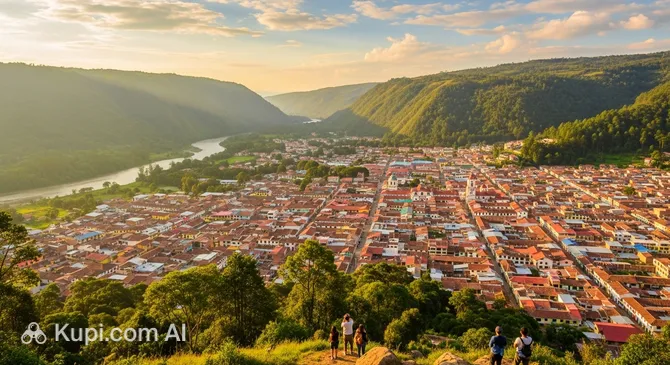
Moyobamba. Illustration.
Source: Kupi.com AI

Moyobamba, often called the "City of Orchids," is the picturesque capital of the San Martín region, located in the Mayo River valley. This city serves as a gateway to the jungle for travelers exploring the northern part of Peru. Here, the comfortable climate of the high jungle, the riot of tropical nature, and the relaxed atmosphere of provincial life blend in a unique way.

This place holds a special status: founded in 1540, it is considered the oldest Spanish settlement in the Peruvian Amazon. The long and rich history of Moyobamba has shaped the city's unique cultural identity, where colonial heritage intertwines with indigenous traditions. Today, more than 56,000 people live here, allowing it to maintain a cozy and peaceful feel despite its status as an administrative center.

The main pride of the region is its incredible variety of flora. Several thousand species of orchids grow in the city's surroundings, and colorful festivals dedicated to these exquisite flowers are held here annually. In addition to botanical gardens, tourists are drawn to the famous San Mateo Thermal Springs, where they can relax in healing waters, and numerous observation decks with breathtaking views of the green hills.

A trip to Moyobamba is an ideal choice for ecotourism enthusiasts and those seeking harmony with nature. It is a wonderful destination to take a break from the city bustle, enjoy the fresh air, and begin an acquaintance with the amazing world of the Amazon.

Weather Overview

The climate of Moyobamba is characterized by enviable stability and comfortable temperatures typical of the high jungle zone. There is practically eternal summer here: the average daytime temperature stays in the range of +25°C...+27°C, and nights bring a pleasant coolness when the thermometer drops to +15°C...+17°C. Such mild conditions are ideal for the lush growth of tropical vegetation for which the region is famous.

When planning a trip, it is important to consider the high humidity. Precipitation here is a frequent phenomenon: it rains for most of the year. Even in the conditionally "dry" season, which lasts from June to August, the number of rainy days is from 19 to 22 per month. In March and January, this figure can reach 28–30 days. Expect warm weather with periodic downpours and short-term clearings in any season.

To properly plan your wardrobe and excursions to natural attractions, we recommend checking the detailed weather in Moyobamba before your trip. Despite the frequent precipitation, it is thanks to it that the city is buried in bright greenery and flowers all year round.

Average monthly temperature

Average monthly precipitation

Interesting Facts

In addition to its natural beauty, Moyobamba holds unique historical features and cultural traditions that often remain unknown to most tourists. This city is not just an administrative center, but a true treasure trove of Amazonian secrets.

  • "Mother" of Amazonian Cities: Moyobamba is considered the oldest city founded by the Spanish in the Peruvian jungle (in 1540). Interestingly, it served as the main headquarters and starting point for expeditions that subsequently founded large regional centers such as Iquitos and Tarapoto.

  • Record Orchid Diversity: The title of "City of Orchids" is taken literally and with scientific precision here. About 3,500 varieties of these flowers grow in the surrounding area, which, according to botanists, accounts for approximately 10% of all known orchid species on the planet.

  • The "Blessed Bath" Ritual: During the Amazon's main holiday—the San Juan Festival—thousands of locals observe the ancient tradition of "Baño Bendito." Early on the morning of June 24, they head to rivers and springs, believing that on this day the water has a special purifying power that grants health and happiness for the whole year.

  • A Wandering City: In colonial times, the settlement changed its location several times due to soil erosion and earthquakes before finally settling on its current plateau. This is why, despite its considerable age, it is difficult to find buildings in Moyobamba preserved from the 16th or 17th centuries.

How to Get There

A journey to the "City of Orchids" is an immersion into the very heart of Peruvian nature. Since Moyobamba itself does not have its own airport that accepts regular commercial flights, the route for most tourists goes through neighboring large cities. You can find all the logistics details and choose the optimal path by following the link: more about how to get to Moyobamba.

The most popular and convenient option is to fly to Cadete FAP Guillermo del Castillo Paredes Airport (IATA: TPP). Please note: this airport is not in Moyobamba, but in the city of Tarapoto, about 84 km away. It is a key transport hub for the region with high passenger traffic, receiving many flights from Lima. The journey from there to the final destination by taxi or collective bus will take about 2.5 hours, passing through the picturesque landscapes of the high jungle.

Another possible option is to use the Cajamarca Airport (IATA: CJA). It is located in the city of Cajamarca and is a major regional hub. However, one should consider the significant distance: the airport is more than 200 km from Moyobamba. The trip along difficult mountain roads will take a lot of time, so this route is more often chosen by those planning an extensive trip through northern Peru with visits to several cities, rather than a direct transfer.

For clarity, here is summary information on the main airports:

AirportPassenger trafficDistance
Cad. FAP Guillermo del Castillo Paredes Airport1.1 mln84 km
Chachapoyas12 000100 km
Shumba Airport80 000206 km
Cajamarca Airport632 000207 km

Rail connections are not developed in this region of Peru, and there are no active passenger stations near Moyobamba. The main way to travel between cities remains by road. Travelers usually use comfortable intercity buses or faster collective taxis (colectivos) to reach the city from airports or other tourist centers.

Main Attractions

Moyobamba offers travelers a unique combination of relaxing rest and active immersion in the nature of the Amazon. The attractions here are closely linked to the surrounding landscape, allowing tourists to enjoy the beauty of the jungle without traveling far from civilization. Here are several key places that are definitely worth including in your itinerary.

One of the most popular locations is the San Mateo Thermal Springs (Baños Termales de San Mateo). Located just 5 km from the city center, these natural hot springs are known for their healing properties. The complex is situated at the foot of San Mateo Mountain and is surrounded by dense tropical greenery. Pools with different water temperatures (from warm to hot) are available, allowing everyone to find a comfortable setting. It is an ideal place to relax after a long journey or hiking.

Since Moyobamba bears the title of the "City of Orchids," a visit to the Waqanki Hummingbird and Orchid Refuge (Refugio de Colibríes y Orquídeas Waqanki) will be a true discovery. This private ecological reserve is located in the foothills and is famous not only for its rich collection of orchids growing in their natural environment but also for the opportunity to observe hummingbirds. Many feeders are set up here, attracting dozens of species of these tiny birds. Tourists can see them at arm's length, which guarantees amazing photos and vivid emotions.

To enjoy a panorama of the city and the Mayo River valley, it is worth visiting the Punta de Tahuishco Observation Deck (Mirador Punta de Tahuishco). This is a well-maintained promenade on a high bank that has become a favorite walking spot for both locals and visitors. The deck offers a magnificent view, especially at sunset. Nearby are cafes where you can try local cuisine and a descent to the port of Tahuishco, from where boat excursions depart.

Nature lovers are recommended to head to the Tingana Ecological Reserve (Reserva Ecológica Tingana). This is a unique ecosystem of flooded high-altitude forest, which is explored exclusively by canoe. During a quiet water trip among giant trees, you can see monkeys, sloths, and many exotic birds in their natural habitat. An excursion here gives a sense of complete union with nature and peace.

Local Cuisine

The gastronomy of Moyobamba is a bright and original journey into the world of flavors of the Amazonian jungle. The cuisine here is based on fresh local ingredients: river fish, bananas, yucca (cassava), and a huge variety of exotic fruits. Food in this region of Peru is characterized by its heartiness and rich aromas that cannot be confused with anything else.

The main culinary symbol of the city is Avispa Juane (Avispa Juane). Unlike the traditional Peruvian juane, this version is prepared with ground meat added to the rice and chicken, which gives the dish a special juiciness. The mixture is wrapped in bijao leaves, which infuse the food with a subtle herbal aroma during boiling. This dish is so important to the local culture that it is a mandatory attribute of the annual San Juan festival.

Another iconic dish worth trying is Tacacho with Cecina (Tacacho con cecina). This is a hearty combination of balls made from mashed green bananas (tacacho) mixed with pieces of pork fat, and dried smoked meat (cecina). For lovers of first courses, Inchicapi (Inchicapi) will be a real discovery—a thick soup based on peanuts, corn, and chicken, seasoned with cilantro and local spices.

The world of drinks in Moyobamba is no less diverse. To freshen up in the heat, locals drink aguajina—a drink made from the fruit of the aguaje palm, which has a pleasant sweet and sour taste, or cocona juice. You should definitely try the local coffee: the San Martín region is famous for its coffee plantations, and a cup of aromatic drink here is considered one of the best in the country. Among alcoholic drinks, various tinctures on roots and tree bark (chuchuhuasi, 7 raíces) are popular, which are credited with healing and tonic properties, as well as traditional masato based on fermented yucca.

The dining culture in Moyobamba is very democratic. To feel the real rhythm of the city, head to the local markets (mercados). It is here, among the noisy rows, that you can find the most authentic and inexpensive dishes prepared right in front of you. In the mornings and evenings, vendors with carts appear on the streets offering fresh juanes, fried bananas, and anticuchos (skewers). For a quieter dinner, open-air recreo restaurants are suitable, where you can enjoy dinner in the fresh air to the sounds of the jungle.

Travel Tips

Welcome to the "City of Orchids"! To ensure that your journey to the heart of the Peruvian jungle is as comfortable and safe as possible and leaves only bright impressions, we have prepared a list of important practical recommendations based on the characteristics of this amazing region.

  1. Clothing and equipment. The climate in Moyobamba is warm and humid, so give preference to light, "breathable" clothing made of natural fabrics or modern synthetics. Since rain is a frequent and sudden phenomenon here, be sure to bring a high-quality raincoat or poncho. For jungle excursions (for example, to the Waqanki Reserve), comfortable closed shoes with non-slip soles and long pants are necessary to protect against insects.
  2. Transport. The most popular and affordable way to get around the city is the motokar (motokar) (motorized rickshaw). It is a kind of symbol of the local province. Important: always agree on the cost of the trip with the driver before boarding, as there are no meters in them. Taxi apps practically do not work here, so it is more reliable to ask hotel staff to call you a car or to catch official transport on the street.
  3. Finances. The official currency is the New Sol (PEN). Large hotels and some restaurants accept cards, but in small cafes, souvenir shops, and at markets, only cash is used. ATMs are located near the main square (Plaza de Armas). Try to always have small bills and coins with you, as sellers often do not have change for large banknotes.
  4. Health and hygiene. The main rule is never drink tap water; use only bottled water even for brushing your teeth. Pharmacies are widespread in the city center, and basic medicines are easy to buy, but it is better to bring specific medications with you. Do not forget about repellents: mosquitoes in the jungle are active around the clock.
  5. Communication. Not many people in Moyobamba know English, mainly only guides and staff of expensive hotels. Locals speak Spanish. We recommend learning a few basic phrases or installing an offline translator on your phone. For communication, it is better to buy a local SIM card (operators Claro, Movistar, or Bitel)—this can be done in official salons with a passport.
  6. Local etiquette. Residents of the San Martín region, often called "charapas," are known for their openness and friendliness. It is customary to say hello when entering a shop or getting into a taxi ("Buenos días" or "Buenas tardes"). The rhythm of life in the city is leisurely, so do not rush the service staff—show patience and a smile; it is the best way to establish contact.
  7. What to avoid. It is categorically not recommended to buy wild animals, birds, or rare species of orchids from street vendors. This is not only illegal but also causes irreparable damage to the unique ecosystem of the Amazon. Also, refrain from independent hikes into the dense jungle without an experienced guide—the tropical forest can be unpredictable.
  8. Local tip. Get up early! Life in Moyobamba begins with the sunrise. Visit the central market before 8 am: that is when you will find the largest selection of exotic fruits, fresh juices, and traditional breakfasts such as "tacacho" or "tamales."

Moyobamba enchants with its simplicity and proximity to nature. By following these simple tips, you will be able to avoid minor everyday troubles and fully immerse yourself in the relaxed atmosphere of the Amazon.

Entertainment & Nightlife

Nightlife in Moyobamba is not about noisy metropolitan raves, but a colorful immersion into the relaxed atmosphere of the tropics, where music mixes with the sounds of the jungle. The evenings here are warm, and as the sun sets, the city comes alive: locals go for walks, and rhythms of cumbia, salsa, and reggaeton drift from the open doors of establishments. The main fun is not concentrated in one block but is distributed between the central square and the main observation deck.

The undisputed center of attraction in the evening is the Punta de Tahuishco Boulevard (Boulevard Punta de Tahuishco). During the day, it is a place for contemplating panoramas, and at night it turns into the city's liveliest street. A whole string of bars, cafes, and discos—either open-air or with large terraces—is located here. Tourists and local youth come here to drink exotic cocktails based on local fruits, enjoy the cool breeze from the Mayo River, and dance.

If you are looking for specific places to feel the local vibe, pay attention to the establishments in the boulevard area. Boulevard 110 is popular—it's a video pub and disco where a fun crowd often gathers to dance and watch music videos on large screens. Karaoke is also very popular in the city: small bars where you can sing your favorite songs are scattered throughout the center, especially in the blocks adjacent to the Plaza de Armas.

The atmosphere in Moyobamba's venues is very democratic. There is no strict dress code: light summer clothes, jeans, or shorts are quite appropriate even in nightclubs. The crowd is friendly, and conflicts are rare. The average check in bars will pleasantly surprise travelers—prices here are significantly lower than in Lima or Cusco. Cocktails and beer are inexpensive, and entry to many establishments is free or for a nominal fee.

Regarding safety and transport, the city center and the Tahuishco area are considered safe for evening walks. However, after midnight when the streets empty, it is better not to walk long distances. Use motokars (motorized rickshaws) to get around—this is the main and most convenient type of night transport. They are easy to catch on the street, but you should agree on the price in advance (usually a night trip around the city costs 3–5 soles).

While Moyobamba is famous for its nature, there is also cultural entertainment during the day. History buffs should stop by the San Martín Departmental Museum (Museo Departamental San Martín), which houses archaeological finds and ethnographic exhibits telling the story of the indigenous peoples of the Amazon. There is also a Cinerama Plaza cinema in the city, where you can wait out the midday heat while watching the latest movie releases.

Parks & Museums

Moyobamba is a city where the boundary between urbanism and wild nature is practically erased. Green zones here do not just decorate the streets, but are a natural extension of the surrounding jungle, while cultural venues carefully preserve the heritage of the peoples who inhabited these lands long before the arrival of the Spanish.

San Francisco Botanical Garden (Jardín Botánico San Francisco) is one of the city's main green gems. It is not just a park for walking, but an important center for the study and conservation of Amazonian flora. Here, just a few minutes from the center, you can see hundreds of species of exotic plants, including medicinal herbs and giant trees. The garden serves as a home to many birds and butterflies, creating an atmosphere of complete immersion in the forest while being within city limits. It is a great place for peaceful relaxation and learning about the region's biodiversity without having to travel far into the wilderness.

The heart of social life is the Plaza de Armas. As in many Peruvian cities, the main square here is a true oasis. It is buried in the greenery of tall palms and flowering shrubs, providing saving shade on hot days. This is the perfect location to feel the rhythm of local life: families walk here, children play, and small concerts or public meetings take place in the evenings. The architectural ensemble of the square is complemented by the city's main cathedral, creating a classic colonial landscape.

Among cultural institutions, the San Martín Departmental Museum (Museo Departamental San Martín) plays a key role. The museum's exhibition covers a huge span of time—from prehistoric times to the republican period. Of particular interest are the archaeological finds of the Chachapoyas culture, including ceramics, textiles, and mummies found in the region. You can also see fossils here and learn more about the mythology of Amazonian tribes. The museum is small but very informative and allows for a better understanding of the context in which this region developed.

Modern cultural life in the city is personified by the Moyobamba Cultural Center (Centro Cultural Moyobamba - CUMO). This modern architectural space has become a venue for theatrical productions, art exhibitions, concerts, and dance performances. The building itself is a landmark, combining modern forms with elements inspired by the nature of the jungle. If you are interested in the contemporary art of Peru or want to attend a quality event, be sure to check the center's schedule.

From an architectural point of view, the city is interesting for its resilience. Despite devastating earthquakes in the past, Moyobamba has preserved the spirit of antiquity. It is worth paying attention to the Santiago Apostol Cathedral on the main square. Although it is a relatively new building, constructed on the site of destroyed predecessors, it is the spiritual center of the city and an example of the religious architecture of the region.

Insider Tip: If you want to see orchids but don't have time for a trip to the reserves, visit one of the many private nurseries ("viveros") scattered around the city, for example, Vivero Agro Oriente. Entry there often costs very little or is even free, and the flower collection can rival large botanical gardens. The owners of such places are true enthusiasts who will be happy to tell you everything about the "queens of flowers."

Getting Around

The public transport system in Moyobamba is fundamentally different from the usual schemes of large metropolises. Here you will not find subways, trams, trolleybuses, or even classic large buses with a fixed schedule. The main and undisputed "king of the roads" is the motokar (motokar)—a local variety of motorized rickshaw. This is a motorcycle with a covered carriage-sofa attached to the back, designed for 2–3 passengers. It is this maneuverable and noisy transport that provides 90% of all city travel.

For trips outside the city, for example, to neighboring settlements or to remote attractions, colectivos (colectivo) are used. These are passenger cars or minivans that serve as shared taxis. They do not have route numbers in the usual sense: cars depart from special stands (paraderos) as the cabin fills with passengers. This is a fast and economical way to move between cities in the region.

Payment for travel in Moyobamba is made exclusively in cash. There are no validators, turnstiles, or the ability to pay for travel with a bank card or smartphone in public transport. Global mobile apps for calling a taxi practically do not work here or have very few cars. Money is handed directly to the driver at the end of the trip. It is highly recommended to always have small coins and bills of small denomination with you, as drivers rarely have change from large banknotes.

An important practical tip for a tourist: there are no meters in motokars. The fare is fixed but unspoken, so the price must be agreed upon before boarding. Simply tell the driver your destination and ask: "¿Cuánto?". A trip within the central part of the city usually costs very little (2–4 soles), but at night, on holidays, or in heavy rain, the fare may increase slightly. Bargaining is appropriate, but usually prices are standard for everyone.

As an alternative to noisy motokars, you can use a classic car taxi, although there are significantly fewer of them on the streets. It is better to order a car ("auto") through the hotel reception or take one at official stands. This is a more comfortable and safer option for evening trips or transfers with luggage. Also, given the compactness of the historical center, many distances are easily covered on foot, which allows for a better look at the architecture and to enjoy the atmosphere of the city.

Accommodation

Accommodation in Moyobamba is, above all, about comfort and proximity to nature, rather than the prestige of international chains. The hotel infrastructure here is geared toward travelers looking for authenticity. Tourists have access to a wide choice of options: from budget hostels for backpackers and simple city hotels ("hospedajes") to comfortable mid-range resorts and atmospheric eco-lodges surrounded by greenery.

When choosing a place to stay, consider the purpose of your visit. The city center (Plaza de Armas area) is ideal for those who want to be within walking distance of restaurants, markets, and transport hubs. This is convenient for planning excursions and evening walks. If you are looking for peace and beautiful landscapes, look at the Tahuishco area or the outskirts of the city towards the thermal springs. Here you will find the best eco-hotels and bungalows where you can wake up to the sound of birds with a view of the Mayo River valley.

Price Range and Booking: Moyobamba remains a very affordable destination. Housing prices here are significantly lower than in Lima or Cusco, ranging from budget to mid-level.

  • You can book accommodation through popular international online platforms, but many small family guesthouses and lodges respond more actively on social networks or messengers.
  • Most mid-range hotels accept cards, but budget places often require cash payment.

Important Tip: During normal times of the year, you can find a free room even on the day of arrival. However, the situation changes drastically during the Amazon's main holiday—the San Juan Festival (late June) and during the Orchid Festival (usually in the fall). During these periods, the city is overcrowded with tourists from all over the world, and prices soar. If you plan a trip for these dates, it is highly recommended to book accommodation 2–3 months before your visit.

Nearby Cities

For those who want to explore the surroundings, Moyobamba serves as an excellent starting point for trips to several interesting nearby places. Although some cities require a full move due to the nature of the mountain roads, the nearest neighbors are quite accessible for a short visit.

The most popular destination is Tarapoto, located about two hours away. It is often called the "City of Palms." It is a noisy and hot commercial center of the region, which is strikingly different from the calm Moyobamba. It's worth coming here to see the impressive Ahuashiyacu Waterfall, visit the famous Laguna Azul, or simply dive into a more active nightlife and gastronomy.

Another interesting option is Yurimaguas, known as the "Pearl of the Huallaga." It is an important river port connecting the high jungle with the lowland Amazon. The city attracts travelers with its colorful market and beautiful cathedral. A trip here allows you to see how the landscape changes from green hills to wide river expanses and feel the atmosphere of a real jungle port city.

CityPopulationDistance
Rioja22 19722 km
Rodriguez De Mendoza21 00063 km
Lamas16 87166 km
Tarapoto240 45382 km
Yurimaguas62 90397 km

These nearby destinations provide an insight into the region's diverse culture and landscapes, from high-altitude forests to the full-flowing rivers of the Amazon basin.

Shopping & Souvenirs

Shopping in Moyobamba is not a pursuit of global brands or walks through giant shopping centers, but a fascinating immersion into the authentic culture of the Amazonian province. Trade here has a distinctly local character: instead of boutiques, small family shops await you, and instead of food courts, there are colorful market rows. It is an ideal place to purchase unique gastronomic souvenirs and handmade items that cannot be found in other parts of Peru.

The city's main commercial life is concentrated in the historical center, in the blocks adjacent to the main square (Plaza de Armas). The main commercial artery is considered Alonso de Alvarado Street (Jirón Alonso de Alvarado) and its neighboring alleys. Here you will find many shops for clothing, shoes, pharmacies, as well as shops with household goods and electronics. A walk through this area allows you not only to make purchases but also to observe the everyday hustle and bustle of the local residents.

There are no giant malls familiar to European tourists in Moyobamba. Trade is conducted mainly in the format of street retail or small shopping galleries. The only place remotely resembling a shopping center is the Cinerama Plaza complex. Although it is primarily an entertainment center with a cinema, there is a small area with cafes and shops where you can buy sweets or accessories in a more modern setting.

The true heart of local trade is the Central Market (Mercado Central or Mercado de Abastos). It's worth coming here not only for shopping but also for the experience. The stalls are bursting with exotic fruits: here you can buy fresh aguaje, cocona, camu camu, and many types of bananas. The market also sells spices, local medicinal herbs, and, of course, the freshest fish from the Amazon rivers. This is the best place to experience the tastes and smells of the region.

As souvenirs from Moyobamba, tourists most often bring back gastronomic treasures. The San Martín region is famous for its coffee and cocoa, which are considered some of the best in the world. Look for products from local cooperatives (for example, the Alto Mayo brand)—this is an excellent and useful gift. Wild bee honey and traditional indigenous pottery are also popular. Although the city is called the "orchid capital," taking live flowers out is difficult due to customs regulations, so it is better to purchase textiles or jewelry depicting this flower.

Most shops in the city are open from 9:00 to 20:00 or 21:00. Markets open much earlier—life there is already in full swing by 6 am, and activity decreases after lunch. As for payment, cash is king in Moyobamba. Bank cards are accepted only in large supermarkets, some hotels, and pharmacy chains. In souvenir shops, at the market, and in small shops, you can only pay in Peruvian soles, so always have small bills with you.

The Tax Free refund system is practically non-applicable in Moyobamba. There are no shops in the city authorized to issue the corresponding receipts. This service is available mainly in large shopping centers in Lima or Cusco, so you should not count on a VAT refund for purchases made in this region.
Reached the end of the page?

That means the route is fully explored