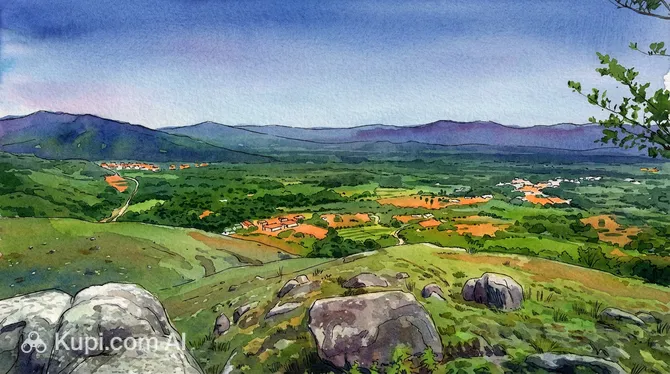
Located in the southeastern part of the Amazonas region in Peru, the city of Rodriguez de Mendoza is a cozy administrative center nestled among the majestic Andes. Situated at an altitude of 1,616 meters above sea level, it serves as an ideal starting point for travelers eager to explore the region's unique natural wonders, from deep caves to high-altitude lakes. Home to about 21,000 people, the atmosphere is steeped in the tranquility of rural life and genuine hospitality.
Rodriguez De Mendoza. Illustration.
Source: Kupi.com AI
The city's rich historical heritage is inextricably linked with the name of Toribio Rodriguez de Mendoza — an outstanding priest and educator considered one of the ideologues of the country's independence. The province was officially founded in 1932, preserving the spirit of authentic Peru, unspoiled by mass tourism. Walking through its streets, you will feel the harmony between man and nature, which seems particularly fragile and beautiful here.
The main draw for tourists in Rodriguez de Mendoza is ecotourism. The city is surrounded by dense forests and cloud jungles ("ceja de selva"), where thermal springs and ancient ruins are hidden. Visiting this region is an invitation to a real adventure, where every route promises an encounter with endemic flora and fauna, and the silence is broken only by the singing of exotic birds.
Weather Overview
The climate in Rodriguez de Mendoza is a subtropical highland type, making it moderately warm but quite humid. The city's location on the edge of the "cloud forest" results in frequent morning fog and high air humidity. Temperatures are fairly stable: during the day, the air usually warms up to +19°C...+25°C, while at night it can drop to +10°C...+13°C, necessitating warm clothing for evening walks.
The year is clearly divided into two seasons. The period from November to March is characterized by intense tropical downpours, which can make mountain trails difficult to pass. The most favorable time to visit is from May to November. During these months, rainfall is minimal, and the weather is conducive to long hiking trips. To better plan your wardrobe, check out detailed information about the city's climate before your trip.
It is important to remember that even in the dry season, mountain weather can change quickly. Sunny periods often give way to brief showers, which helps maintain the region's lush greenery. The dense vegetation and unique microclimate make Rodriguez de Mendoza a paradise for wildlife lovers, but they require tourists to be prepared for damp conditions.
Average monthly temperature
Average monthly precipitation
Interesting Facts
The province was named after Toribio Rodriguez de Mendoza, a prominent scholar from Chachapoyas whose ideas laid the foundation for Peru's struggle for independence.
Administratively, the region is divided into 12 districts, each with its own unique natural character, from misty forests to high-altitude plateaus.
The city is located at an altitude of 1,616 meters, creating a special microclimate that transitions between the high Andes and the humid Amazonian jungle.
The province's territory is an important part of the Amazonas biodiversity corridor, serving as a home to many rare plant and animal species.
Mendoza has close historical ties to the Diocese of Chachapoyas, which is reflected in the local architecture and the region's religious traditions.
How to Get There
Traveling to Rodriguez de Mendoza is an adventure in itself that requires prior planning. There are no direct international flights to the province, so the most convenient route is through the country's major transport hubs. You can use LATAM or Star Perú airlines to fly from Lima to the cities of Tarapoto or Jaen. The flight usually takes just over an hour, after which the land portion of the journey begins.
From Tarapoto or Jaen, you need to reach the city of Chachapoyas, which is the main transit point in the region. Buses to Rodriguez de Mendoza depart regularly from the Chachapoyas bus station. The journey takes about 3.5 hours and passes through scenic mountain passes. It's worth remembering that during the rainy season (from November to March), travel time may increase due to the condition of the mountain roads.
Upon arrival in the city, the main way to get around is by local taxis or on foot, as Mendoza is a compact town. To visit remote natural attractions, it is often necessary to rent SUVs or even use the services of muleteers on difficult stretches. For a smooth trip, it is recommended to read the section on how to get to the city, taking into account current weather conditions.
Main Attractions
Rodriguez de Mendoza is a place where the main attractions were created by nature itself. One of the most impressive locations is the private protected area ACP Cavernas de Leo. In these caves, located on the way to the city, travelers can see bizarre formations of stalactites and stalagmites. To visit this site, it is worth making arrangements with local caretakers in advance to ensure the trip is safe and informative.
Fans of long walks and wildlife should head to the high-altitude lake Huamanpata. This is a seasonal body of water, and the trek to reach it takes about 4 hours from the city center. The lake is known for its crystal-clear water and the opportunity to see rare bird species in their natural habitat. The silence and solitude of this place make it ideal for meditation and a break from civilization.
For those interested in history and wellness, the region offers visits to the Tocuya thermal springs and an exploration of the ancient fortress of La Winda. Although the province is not filled with classic museums, its landscapes are an open-air museum in themselves. Rodriguez de Mendoza serves as an excellent base for organizing expeditions to these hidden treasures of the Amazonas.
Local Cuisine
Gastronomy in Rodriguez de Mendoza is an amazing fusion of Andean traditions and the bounty of the Amazonian land. The basis of local cuisine is fresh products grown on fertile mountain slopes: potatoes, corn, legumes, and juicy vegetables. The dishes here are simple, hearty, and home-cooked, which is perfect for recovering after long walks in the mountains.
You should definitely try traditional Peruvian soups and main courses made from local meat. Thanks to the humid climate and abundance of forests, the region is famous for its unique ingredients that are rarely found in coastal areas. The food culture here is centered in small family restaurants and city markets, where you can taste authentic street food and learn about the culinary habits of the townspeople.
As for drinks, infusions of local herbs and freshly squeezed juices from exotic fruits are popular in Rodriguez de Mendoza. Although the choice of fine dining establishments here is limited, every café tries to offer guests the best of what local nature provides. This is honest and simple cuisine that allows you to experience the real taste of the Peruvian province.
Travel Tips
A trip to Rodriguez de Mendoza will give you an unforgettable experience if you prepare in advance for the specifics of this remote region. These tips will help make your journey comfortable and safe.
Clothing and gear: The weather here is changeable, so be sure to bring a waterproof jacket and comfortable shoes with good grip for trekking. Nights can be chilly, so a light layer of insulation will be useful.
Transport: The best way to reach remote attractions is to hire a local guide with an SUV. Within the city, it's easiest to get around on foot.
Finances: Be sure to carry cash in local currency (Soles). ATMs in the city are rare, and in the surrounding villages, there are none at all. Cards are accepted very reluctantly.
Health: At an altitude of 1,616 meters, altitude sickness is rare, but acclimatization is still important. Drink plenty of water and bring a basic first-aid kit, as medical points are limited.
Communication: The main language is Spanish. English is not widely spoken here, so learn a few basic phrases or download an offline translator.
Local Etiquette: Residents of Mendoza are very friendly. Always say hello when entering a café or shop — a simple "¡Buenos días!" will open many doors.
What to avoid: Do not go on mountain hikes alone without a guide, especially during the rainy season. The weather and trails can be unpredictable.
Connectivity: Buy a SIM card from a major operator (such as Movistar or Claro) in Lima or Chachapoyas — signal can be unstable in the mountains, but Wi-Fi is available in most hotels within the city itself.
May your acquaintance with this amazing corner of Peru be a bright and peaceful adventure. Safe travels!
Entertainment & Nightlife
Entertainment in Rodriguez de Mendoza is closely linked to the surrounding natural landscape and ecotourism. You won't find noisy nightclubs or huge entertainment centers here — city life follows the rhythms of nature. During the day, tourists usually set off on hiking trails, engage in birdwatching, or explore mysterious caves, immersing themselves in the world of Andean adventure.
The evening program in the city is characterized by tranquility and coziness. Locals and travelers gather in small cafes and restaurants in the center to exchange impressions of the day. In some remote lodges and shelters (refugios), the absence of city lights creates ideal conditions for astrotourism — observing the incredibly bright starry sky of the Southern Hemisphere.
If you miss a more active city life, you can visit cultural events in neighboring, larger centers. However, most guests choose Rodriguez de Mendoza precisely to take a break from the hustle and bustle and enjoy the silence. The city offers a rare opportunity to feel like a pioneer in one of the most ecologically clean corners of the region.
Parks & Museums
In Rodriguez de Mendoza, nature itself, surrounding the city, plays the role of museums and parks. Instead of traditional exhibition halls, travelers will find protected natural areas such as ACP Cavernas de Leo. This geological wonder allows you to see the history of the region's formation, captured in stone thousands of years ago. To visit such places, it is recommended to hire local guides who will share knowledge about local ecology.
Although there are few museums in the classical sense, history buffs can head to the La Winda fortress. This site holds traces of pre-Columbian cultures and offers tourists a chance to touch ancient heritage without museum displays or queues. Such historical sites are integrated into the natural landscape, creating a sense of total immersion in the past.
Urban greenery in Mendoza is represented by modest but well-maintained public spaces. However, the surrounding forests and the shores of seasonal lakes become the real "parks" for guests of the city. Nature conservation programs run by local communities turn the entire region into a living educational center, where every route becomes a lesson in biology and ecology.
Getting Around
The transport system of Rodriguez de Mendoza reflects its status as a small provincial center. Getting around within the city is easy — most key places are within walking distance. For faster trips around the city or its outskirts, you can use local taxis, which are affordable and whose drivers are usually happy to provide directions.
Connections with other parts of the province and neighboring towns are provided by buses and minibuses known as combis. This is the main mode of transport for locals, running on a schedule (which, however, may depend on how quickly the vehicle fills up). The main transport hub is located in the center of Mendoza, from where trips to Chachapoyas and other settlements in the region depart.
A unique feature of travel in this area is the use of animals — mules (acémilas) — to access difficult natural sites and transport cargo in the mountains. Roads in the province are predominantly mountainous and can be difficult to navigate during periods of heavy rainfall. Tourists are advised to plan their trips for the first half of the day and always check the current road conditions with hotel staff.
Accommodation
The accommodation infrastructure in Rodriguez de Mendoza is primarily geared towards fans of ecotourism and active recreation. In the city itself, you can find cozy guesthouses (hospedajes) and small mid-range hotels that offer basic comfort and a homey atmosphere. Staying in the center of Mendoza is convenient because the majority of shops and cafes are concentrated there.
For those planning multi-day hikes to natural attractions, there are special mountain shelters called refugios. For example, Roberto Cabrera's shelter operates near Lake Huamanpata, where you can stay overnight surrounded by pristine nature. Keep in mind that in such places, living conditions are spartan, and issues of food and luggage transportation on mules must be discussed with the owners in advance.
During the peak tourist season, which lasts from May to November, space in popular guesthouses can be limited. Therefore, experienced travelers are recommended to book accommodation in advance. Rodriguez de Mendoza is a region where authenticity is valued, so instead of luxury chain hotels, you will encounter the sincere hospitality of local residents and the opportunity to live in harmony with the nature of the Andes.
Nearby Cities
Rodriguez de Mendoza serves as an excellent starting point for those who want to explore the northern part of Peru more deeply. The most significant destination for a trip is Chachapoyas, located just a few hours away. This city is considered the gateway to the world of the ancient Chachapoya civilization and offers a well-developed tourist infrastructure with museums and cozy squares.
If you decide to continue north and east, it's worth checking out cities like Rioja and Moyobamba. These destinations are known for their orchids, thermal springs, and proximity to the Amazon jungle. A trip to these areas will allow you to see how the rugged Andes gradually give way to the lush tropical greenery of the Amazon basin.
Exploring the surroundings of Rodriguez de Mendoza is an opportunity to see different faces of the country: from high-altitude fortresses to misty forests. Each of these directions is easily accessible by regular buses or shared taxis, making one- or two-day excursions from the city convenient and full of experiences.
Shopping & Souvenirs
Shopping in Rodriguez de Mendoza is primarily an introduction to local crafts and natural products. You won't find large shopping centers with global brands here, but you can visit colorful markets where residents of the surrounding villages trade. This is the best place to buy fresh fruit, local coffee, or traditional Peruvian delicacies.
As souvenirs from this region, it is worth bringing back handmade items: alpaca wool textiles, carpets with traditional patterns, and ceramics. The province's craftsmen carefully preserve ancient weaving and pottery techniques, so every item has its own unique story. It is also worth paying attention to local medicinal herbs and honey, for which this ecologically clean area is famous.
Shops in the city usually operate on a standard schedule with a lunch break, and payment is most often made in cash in the local currency. In remote areas and markets, bank cards are not accepted, so it is always useful to have a supply of Soles. For larger-scale purchases and modern goods, tourists usually have to go to Chachapoyas, but for authenticity and the warmth of craftsmen's hands, you should come here.