Support

Casa Museo Gran Almirante Grau

About

Want to discover where the story of the country’s most revered naval hero began? Piura invites you to the Admiral Grau House-Museum — a unique historical monument that preserves the spirit of the 19th century. It was here, in 1834, that the great Miguel Grau Seminario was born.
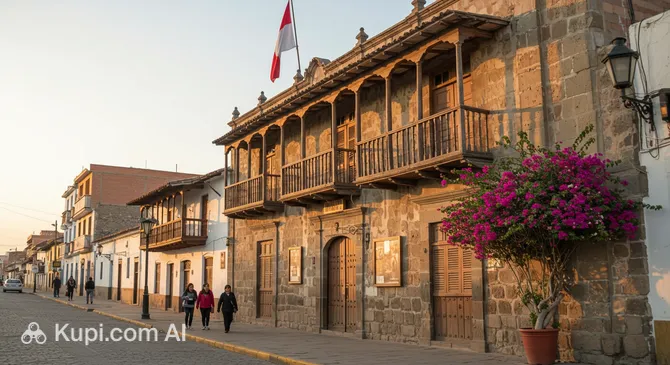
Admiral Grau House Museum
Admiral Grau House Museum. Иллюстрация. Источник: Kupi.com AI

This museum in Peru is recognized as a national treasure and serves as a magnificent example of colonial architecture. Walking through its seven halls and two cozy inner courtyards, you will see authentic furniture, crystal chandeliers, and precious porcelain that surrounded the admiral's family for decades.

The main highlight of the collection includes the hero's personal belongings and a model of the legendary monitor "Huáscar." The house-museum offers a rare opportunity to witness the life of the upper class of that era and explore documents that shaped the region's modern maritime tradition.

Contacts

To verify current information before your visit, we recommend visiting the museum's official online resources. It is also useful to keep in mind that some details may change depending on public holidays.

How to contactContact
AddressCa. Tacna 662, Piura 20001, Перу
Websitemuseosnavales.mil.pe

What to Do

In the museum's halls, you can examine unique artifacts: from ceremonial uniforms and medals to handwritten letters by Admiral Grau. Special attention should be paid to the model of the ship Huáscar, which clearly demonstrates the naval power of that time, as well as a replica of the legislative chair Grau sat in during his political career.

Lovers of vintage aesthetics will enjoy the halls featuring French porcelain and 19th-century portraits of the Seminario family. Be sure to stop by the inner courtyards, where you can enjoy the silence and take atmospheric photos. Photography without flash is permitted in the museum, allowing you to capture the exquisite details of the antique interior.

For the most immersive historical experience, we recommend joining a free guided tour. Experienced guides tell captivating stories about the admiral's deeds and how the city's independence was forged within these walls, turning a simple viewing of exhibits into a vivid historical adventure.

Getting There

The museum is located in the heart of the historical city center, just half a block from the main square, Plaza de Armas. This central location makes it highly accessible for tourists who prefer walking through the ancient streets.

If you are coming from Piura Airport (PIU) or remote bus terminals, it is most convenient to take a taxi or a local mototaxi (vibrant three-wheeled rickshaws). A taxi ride takes about 10–20 minutes, and the fare from the center usually ranges from 5 to 10 soles.

For those using a navigator, the coordinates are POINT(-80.6273009 -5.1979005). Due to its proximity to the administrative center, public transport passing through the city's main thoroughfares also stops near the museum.

Ближайший город: Piura

History & Facts

The building originally belonged to Fernando Torcuato Seminario y Jaime, Miguel Grau's maternal grandfather. It was within these walls on July 27, 1834, that the future admiral was born, eventually becoming a national symbol of honor and valor. After the owner's death in 1821, the house was inherited by the daughters of the Seminario family, preserving the atmosphere of a noble Peruvian lineage.

In 1912, a powerful earthquake struck the city, severely damaging the structure and almost completely destroying the second floor. Nevertheless, the historical significance of the site was recognized at the state level, and in 1944, the building was granted the status of a National Historical Monument.

A large-scale restoration was initiated by the Peruvian Navy. The work restored the house to its colonial grandeur, and on July 27, 1964, the 130th anniversary of the admiral's birth, the museum officially opened its doors to the public. Today, it houses not only the memory of the hero but also the unique saber used to proclaim Piura's independence in 1821.

Time Needed

To leisurely explore all seven exhibition halls and the courtyards, most travelers need about 1–1.5 hours. This is quite enough time to view the admiral's personal belongings and soak in the spirit of the era.

The museum features a compact and calm environment, allowing you to study the exhibits without the rush. If you decide to use a guide's services, the visit may take an additional 20–30 minutes due to detailed stories about naval history and the Grau family secrets.

Working Hours

The museum welcomes guests according to the following schedule: Monday to Friday, the doors are open from 09:00 to 13:00 and after a break from 15:00 to 17:00. On weekends (Saturday and Sunday), visits are only possible during the morning hours — from 09:00 to 13:00.

An interesting feature is that entry to the museum is based on a voluntary donation. This makes visiting the cultural center accessible to every tourist wishing to touch the history of the Peruvian navy.

DayWorking hours
понедельник09:00–13:00, 15:00–17:00
вторник09:00–13:00, 15:00–17:00
среда09:00–13:00, 15:00–17:00
четверг09:00–13:00, 15:00–17:00
пятница09:00–13:00, 15:00–17:00
суббота09:00–13:00
воскресенье09:00–13:00

Nearby

A stroll around the house-museum area allows you to deeply feel the city's colonial spirit and get acquainted with its modern life. Its location in the historical center makes the museum an excellent starting point for a complete itinerary of city attractions.

Below are interesting sites and parks located within walking distance or a few minutes' taxi ride away:

NameDistance
Plaza Mayor of Piura0.1 km
St. Michael the Archangel Cathedral0.2 km
San Sebastian Church0.2 km
Grau Oval0.4 km
Vicús Municipal Museum0.7 km
Club Grau0.7 km
Festa Restobar1.6 km

Reached the end of the page?

That means the route is fully explored