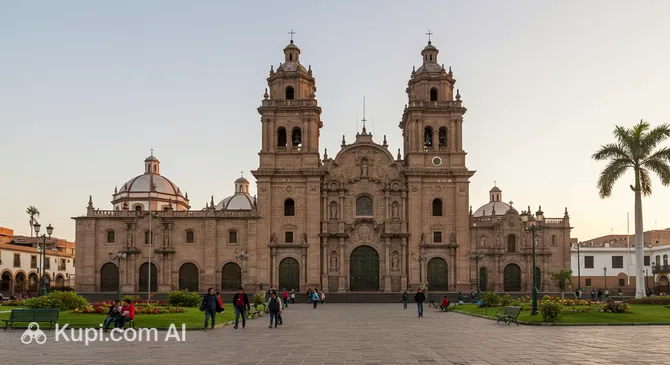
Chiclayo Cathedral (Catedral de Chiclayo) is a majestic architectural symbol rising above the main square of Chiclayo in northern Peru. This Catholic church, built in the 19th century, is rightfully considered one of the most beautiful structures in the region. Its uniqueness lies in the unusual design developed by the famous Gustave Eiffel, which brings a refined European style to this South American city.
Chiclayo Cathedral. Illustration.
Source: Kupi.com AI
Traveler photos:
The cathedral stands out with its unconventional two-story facade, decorated with snow-white neoclassical columns and symmetrical bell towers. The building is recognized as a national historical heritage site, serving not only as an important religious center but also as a true architectural masterpiece that combines Neo-Gothic elements with the rigor of classical lines.
Inside the temple, an atmosphere of solemn tranquility prevails. The interiors are striking in their rich decoration: here you can see gilded altars, intricate stained-glass windows, and religious paintings typical of Peruvian church culture from the Republican era. The cathedral's high rating among travelers confirms that this is a must-visit place for everyone who appreciates history and aesthetics.
Contacts
To contact the cathedral administration or check mass times, you can use the provided phone number. The cathedral is located directly in the city's historic center, making it very easy for any tourist to find.
Visiting the cathedral in Chiclayo is primarily an opportunity to connect with the city's historical heritage. Start your tour with the exterior facade: its two-story structure with elegant columns is a perfect backdrop for architectural photography. The cathedral's towers look especially impressive in the rays of the setting sun when the evening illumination turns on.
Once inside, take note of the silence and coolness, which contrast with the lively atmosphere of the square. Explore the rich interiors, including the masterfully crafted stained-glass windows and ornately decorated altars. This is a great place for quiet reflection and for getting to know 19th-century Peruvian religious art. You can often catch church services here, which allow you to witness the living traditions of the locals.
After visiting the cathedral itself, a stroll through the Plaza de Armas is highly recommended. Here you can watch the unhurried life of the locals, relax on a bench in the shade of the trees, or stop by nearby cafes to try traditional Peruvian sweets. The cathedral is located in the city's commercial hub, so a visit can easily be combined with shopping for local souvenirs or handicrafts.
Getting There
The Cathedral is located in the heart of Chiclayo on the main square, Plaza de Armas, so most tourists arrive here on foot. If your hotel is in the central area, a walk to the cathedral will be a pleasant addition to exploring the city's architecture.
For those arriving from Chiclayo Airport (Aeropuerto Internacional José Quiñones Gonzales), which is only 1.5 km away, a taxi is the best option. The ride takes about 10–15 minutes and costs approximately 10–20 Peruvian Soles. You can also use the local minibuses called "combis", which should be marked with "Centro" or "Plaza".
If you are traveling between cities and arrive at the bus terminal from Lima or Trujillo, a taxi will take you to the cathedral doors in about 10 minutes. For precise navigation, you can use the address code 65H6+8RF in navigation apps. A walk from popular spots like Mercado Modelo takes no more than 15–20 minutes.
Nearest city: Chiclayo
History & Facts
Construction of the Chiclayo Cathedral began in 1928, when the first stone of the city's future spiritual center was laid. The church was designed as a harmonious blend of neoclassical style and Neo-Gothic elements. Notably, the cathedral's design is attributed to the famous French engineer Gustave Eiffel, whose influence is clearly visible in the building's elegance and structural clarity.
The history of this site is inextricably linked to the development of the region itself. Chiclayo grew from a small community founded by Franciscan missionaries in the 16th century. The cathedral became a symbol of the city's economic prosperity in the 19th and 20th centuries, when the region turned into a vital trade hub of northern Peru thanks to the sugar industry and agriculture.
Interestingly, the cathedral stands on land that was once the cradle of the ancient Moche and Sicán civilizations. Today, the majestic temple building serves as a reminder of the "Heroic City" status that Chiclayo received in 1835 for its contribution to the country's struggle for independence. The architectural appearance of the cathedral is a synthesis of colonial traditions and the ambitions of the young republic.
Time Needed
A standard tour of the Cathedral and a walk around the adjacent Plaza de Armas usually takes from 1 to 2 hours. This is enough time to carefully examine the details of the two-story facade, go inside to see the interiors, and take some memorable photos.
If you plan to take a guided tour, attend a mass, or wait for the evening lighting that transforms the building's appearance, you should set aside about 3 hours in your schedule. The cathedral is often visited in conjunction with the nearby shopping streets, so a visit to this part of the city might last longer.
Working Hours
The uniqueness of visiting Chiclayo Cathedral in Chiclayo lies in its accessibility. According to official information, the cathedral doors are open to visitors 24/7 (around the clock) every day of the week — from Monday to Sunday.
This schedule allows guests of the city to plan their visit at any time: from early morning, when the church is filled with soft light, to late evening, when you can enjoy the artistic lighting of its facade without the daytime bustle.
Open 24 hours
Nearby
Exploring the surroundings of the main square allows you to dive deeper into the atmosphere of northern Peru and get acquainted with the local lifestyle. Near the cathedral, you'll find cultural sites as well as places for family recreation.