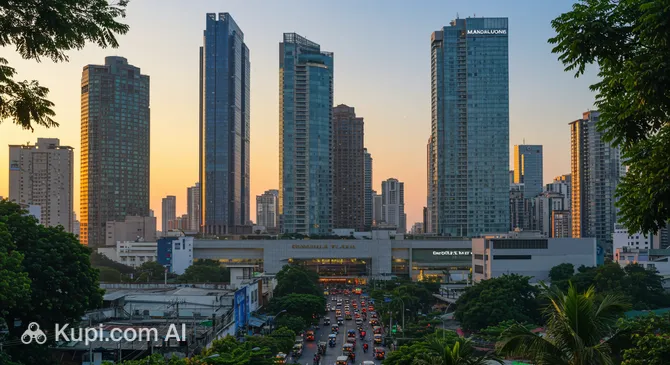
Located in the heart of the Metro Manila region, Mandaluyong is often called the "Tiger City of the Philippines" due to its rapid economic growth. Despite its small size, this dynamic metropolis is one of the country's most important commercial and business hubs. The city's atmosphere is charged with business energy and the rhythm of modern urban life, where glass skyscrapers stand alongside bustling residential neighborhoods.
Mandaluyong. Illustration.
Source: Kupi.com AI
Geographically, Mandaluyong lies directly east of Manila. It is one of the most densely populated cities in the archipelago, with over 425,000 people living in an area of just about 11 square kilometers. The urban landscape has been shaped over decades, transforming from a modest settlement into a modern hub. If you are interested in the city's history, it is worth remembering that it was once part of the ancient Kingdom of Namayan and played an important role in the revolutionary events of the late 19th century.
Today, travelers are primarily drawn here by its status as the "shopping capital." Mandaluyong is home to some of the largest shopping malls in the world, such as SM Megamall. Beyond endless shopping opportunities, the city is interesting for its historical monuments, most notably the old San Felipe Neri Church, which preserves the spirit of the colonial era. Visiting this city is an excellent opportunity to see the modern face of the Philippines, where tradition intertwines with high technology and business activity.
Weather Overview
The climate in Mandaluyong is typically tropical, meaning warm and humid weather throughout the year. The average air temperature usually fluctuates between 27–32°C. There are two distinct seasons: the dry season, lasting from December to May, and the rainy season, which brings heavy monsoon rains from June to November. The hottest days occur in April and May, when the thermometer can rise to 34°C and above.
If you are planning a trip, keep in mind that rainfall can be very intense during the rainy season, which sometimes leads to localized flooding on the roads and increased traffic jams. The most comfortable time to visit is considered to be the period from January to March, when the weather is sunny with moderate humidity. Detailed weather in Mandaluyong is available in our special section, where you can view the forecast by month.
It is important to remember the "urban heat island effect": due to dense construction and the lack of large parks, the temperature in the city center can feel higher than in the suburbs. Humidity reaches high levels during the summer months, so tourists are advised to always carry a supply of water and plan visits to outdoor attractions for the morning hours, spending the hot afternoons in the air-conditioned spaces of shopping malls.
Average monthly temperature
Average monthly precipitation
Interesting Facts
Ancient Roots: The territory of modern Mandaluyong was the center of the ancient Kingdom of Namayan, which existed as early as the 15th century and controlled a significant portion of what is now Manila.
Cradle of Revolution: In 1896, revolutionary leader Andres Bonifacio gathered over a thousand supporters here to declare the start of the uprising against Spanish colonial rule.
Tiger Status: In 2002, Mandaluyong officially earned the nickname "Tiger City of the Philippines" in recognition of its incredibly rapid economic development and financial stability.
Population Density: This is one of the "tightest" cities in the world—the population density here exceeds 45,000 people per square kilometer, creating a unique urban dynamic.
First of Its Kind: Mandaluyong was the first municipality in Metro Manila to be granted official city status after the reorganization of the capital region in 1975.
How to Get There
Mandaluyong occupies a strategically advantageous position in the center of Metro Manila, making it easily accessible for travelers. The city is a major transportation hub through which main highways and public transport lines pass, connecting the north and south of the capital. You can learn more about transportation logistics on the how to get to the city page.
The region's main air gateway is Ninoy Aquino International Airport (MNL), located in the neighboring city of Pasay. The trip from the airport terminals to the center of Mandaluyong by taxi or via the Grab app usually takes 30 to 60 minutes, though travel time can increase significantly during peak hours due to heavy traffic. For those wanting to save time, it is recommended to use the paid elevated highways (Skyway).
Rail service is provided by the MRT-3 line, which runs along the main EDSA highway. The Shaw Boulevard and Boni Avenue stations provide quick access to the city's business and shopping districts. MRT trains are the fastest way to get here from Quezon City or Makati, bypassing traffic jams, although the cars can be very crowded during morning and evening rush hours.
Station
Passenger traffic
Distance
Boni Station
6
1 km
Shaw Boulevard MRT Station
6
2 km
Ortigas station
6
2 km
Buendia station
6
3 km
V. Mapa Station
6
3 km
Main Attractions
Mandaluyong is primarily a city of business and shopping, so there are few classic tourist sites, but those that exist are worth your attention. One of the main historical attractions is the San Felipe Neri Church. Built in 1863, it is not only the city's spiritual center but also a reminder of its heroic past: during the Philippine Revolution of 1896, the building served as an important base for the revolutionaries.
For those seeking tranquility amidst the concrete jungle, Amado T. Reyes Park is open to the public. This is a small but cozy green oasis featuring monuments to national hero Jose Rizal and participants of the liberation movement. The park is a popular spot for locals to relax and for city events, providing a temporary escape from the bustle of metropolitan traffic.
The modern image of the city is impossible to imagine without its giant shopping complexes. SM Megamall and The Podium are more than just places to shop; they are full-fledged leisure centers with cinemas, ice rinks, and art galleries. Although Mandaluyong is often perceived as a transit point, its combination of colonial heritage and futuristic mall architecture creates the unique character of a typical Asian megacity.
Local Cuisine
The gastronomic scene in Mandaluyong is a vibrant kaleidoscope of flavors typical of the Philippine capital. You should definitely try local classics here: adobo (meat braised in soy sauce and vinegar), crispy lumpia rolls, and soft siopao steamed buns. Lovers of richer flavors will enjoy sisig—fried parts of a pig's head with onions and chili, usually served on a sizzling plate—as well as the famous lechon (roasted suckling pig).
As for drinks, on a hot day, there is nothing better than fresh coconut milk (buko) straight from the nut or the famous Philippine San Miguel beer. For dessert, be sure to order halo-halo—a whimsical mixture of crushed ice, condensed milk, sweet beans, fruit, and jelly, topped with a scoop of purple yam (ube) ice cream.
The dining culture in the city is diverse: locals often eat at small street cafes called carinderias, where the food is simple and very cheap. Tourists, however, more often choose food courts and restaurants in large shopping malls like SM Megamall. There, you can find everything from international fast food to exquisite Japanese, Korean, and Chinese cuisine. To find an authentic atmosphere, you can head to the markets in the Barangay Plainview area, where fresh produce is sold and traditional snacks are prepared.
Travel Tips
Mandaluyong is a bustling metropolis, and a little preparation will help make your stay as comfortable and safe as possible.
Clothing and Essentials: Choose lightweight clothing made from natural fabrics, as it is always hot and humid in the city. Be sure to bring an umbrella or raincoat, especially if your trip coincides with the monsoon season (June–November). For visiting churches like San Felipe Neri, you should have clothing that covers your shoulders and knees.
Transportation: The best way to avoid stress is to use the Grab app. If you decide to ride the MRT, try to avoid rush hours, otherwise you risk spending the trip in very cramped conditions.
Finances: The official currency is the Philippine Peso (PHP). Credit cards are accepted almost everywhere in malls, but always carry small change in cash for paying for jeepneys, markets, and small purchases. ATMs are found at every turn in the malls.
Health and Safety: Drink only bottled water and avoid ice in street drinks. Mandaluyong is generally safe, but in crowded places (especially in transport queues and malls), keep a close eye on your bags and phones.
Communication: Almost all residents speak or at least understand English very well. You can buy a local SIM card (Globe or Smart) right at the airport or in any shopping mall for constant internet access.
Local Etiquette: Filipinos are very polite and smiling people. When communicating with elders, it is customary to show respect. Be patient in queues and with transport delays—it's part of daily life here.
What to Avoid: You should not walk alone in poorly lit outlying barangays at night. Also, try not to criticize local traditions or religion in public conversations.
Extra Tip: If you plan on a major shopping spree, set aside a whole day for SM Megamall—its size is truly impressive, and information boards will help you navigate inside.
May your introduction to Mandaluyong be filled only with pleasant impressions and successful purchases!
Entertainment & Nightlife
Entertainment in Mandaluyong is closely tied to its massive shopping complexes, which become magnets for young people and tourists after sunset. Most activity is concentrated in SM Megamall and The Podium, where you can find modern cinemas, bowling centers, and even an ice rink. For those who prefer a more relaxed experience, there are numerous premium spas offering traditional Philippine massage.
The city's nightlife is somewhat moderate compared to neighboring Makati. In the evening, the pubs and restaurants around Shaw Boulevard are popular, often featuring local live bands performing Philippine pop hits. Karaoke culture is also very prominent in Mandaluyong—small, cozy venues can be found in almost every barangay, providing a great way to meet locals in an informal setting.
If you are looking for loud nightclubs and dancing until dawn, keep in mind that locals usually head to neighboring areas of Metro Manila for such entertainment, which is about a 15–30 minute taxi ride away. Nevertheless, Mandaluyong is perfect for a pleasant dinner at a restaurant overlooking the city lights or an evening shopping spree, as malls here stay open until late evening.
Parks & Museums
Mandaluyong is one of the most developed cities in the region, so there are few classic parks here. The main place for outdoor recreation is Amado T. Reyes Park. This is a small green space in front of the City Hall where residents walk, exercise, and take a break from the noise of cars. The park is decorated with statues of national heroes, giving it a solemn yet peaceful appearance.
Museum activity in the city is mainly represented by private galleries and exhibition spaces inside large shopping malls. For example, The Podium and SM Megamall regularly host exhibitions of contemporary Philippine art. If you are interested in history, the San Felipe Neri Church acts as the main "living museum," where elements of 19th-century architecture and commemorative plaques telling stories of the revolutionary times are preserved.
For those seeking larger park areas or specialized museums, Mandaluyong serves as a convenient base. In just 20–30 minutes, you can reach Quezon Memorial Circle in Quezon City or the museums in the Intramuros district. Within the city itself, residents compensate for the lack of greenery by visiting indoor gardens and lounge areas in modern malls, which are designed to create a sense of open space.
Getting Around
The public transportation system in Mandaluyong is typical for Metro Manila and offers travelers several ways to get around. The main artery of the city is the MRT-3 metro line. The Boni and Shaw Boulevard stations connect the city with other key districts of the capital. This is the fastest transport, although you should be prepared for queues and crowded cars during peak hours (7 to 9 AM and 5 to 8 PM).
Ground transport is represented by the legendary Philippine jeepneys, buses, and tricycles. Jeepneys run on fixed routes and are very cheap (from 12-15 pesos), but riding in them requires getting used to the heat and tight space. Tricycles (motorcycles with sidecars) are convenient for short trips within residential blocks where large buses do not pass. To pay for the metro and some buses, it is convenient to use a Beep card, which can be purchased and topped up at any station.
For more comfortable travel, tourists are strongly recommended to use the Grab mobile app (the local equivalent of Uber). This will save you from having to negotiate prices with street taxi drivers and guarantees safety. Walking in Mandaluyong is possible around large shopping malls and business districts where there are sidewalks and overpasses; however, in other parts of the city, traffic is very chaotic, and sidewalks may be narrow or occupied by vendors.
Accommodation
The choice of accommodation in Mandaluyong reflects its status as a business and commercial center. There are almost no classic resort hotels here, but high-end serviced apartments and business hotels are widely available. The main concentration of quality accommodation can be found in the Shaw Boulevard area and near The Podium shopping complex. Complexes like Discovery Suites and Ascott are popular choices, catering to expats and business travelers.
For budget travelers and those planning to stay in the city longer, renting condominiums through popular booking services is an excellent option. Many modern high-rise residential buildings are integrated directly into shopping centers (such as SM Light Mall), which is very convenient: you can literally take the elevator down to the supermarket or cinema. Accommodation prices here are quite affordable by Manila standards, starting on average from 2,000 Philippine pesos per night.
When planning your trip, keep in mind that hotels in the central districts fill up quickly due to constant business events and conferences, so it is better to book in advance. If you are looking for quieter areas, look for apartments deeper within the barangays, but remember that it may be harder to reach main transport arteries from there during peak hours.
Nearby Cities
Thanks to its central location in the Metro Manila area, Mandaluyong serves as an ideal starting point for exploring neighboring cities and districts. In just a few minutes, you can find yourself in a completely different atmosphere—from historical quarters to ultra-modern business centers.
To experience the cultural heritage, head to the city of Manila to the west. There you will find the old Intramuros district and the famous Rizal Park. Foodies and nightlife enthusiasts will enjoy neighboring Poblacion in Makati, known for its cozy bars and restaurants. If you want to browse markets or visit shopping areas, check out San Juan, which is literally just a couple of kilometers away.
City
Population
Distance
Bel-Air
36 007
2 km
Poblacion
153 197
2 km
San Juan
126 347
2 km
Guadalupe Nuevo
18 341
2 km
Pinagkaisahan
57 343
2 km
Don't miss the chance to explore the surroundings: the proximity of the MRT-3 line allows you to quickly reach Quezon City in the north or the Bel-Air business district. Each of these destinations offers its own unique attractions, turning an ordinary walk into an exciting journey through the Philippine metropolis.
Shopping & Souvenirs
Shopping in Mandaluyong is not just an errand, but a national sport and the main reason guests come here from other parts of the country and abroad. The city deservedly holds the title of shopping capital, as it is home to the famous SM Megamall. This giant complex is among the largest in the world and offers over a thousand shops, ranging from budget local brands to well-known international names like H&M and Uniqlo.
If you prefer premium brands and a more intimate atmosphere, head to The Podium shopping mall. It is famous for its exquisite boutiques, jewelry stores, and high-end restaurants. For those looking for something more affordable and everyday, SM Light Mall or the shops along Shaw Boulevard are perfect, where you can always find clothing, electronics, and accessories at great prices.
For authentic goods and fresh produce, it is better to go to local markets, such as the market in Barangay Plainview. Here you can buy traditional Philippine sweets, souvenirs made of pearls or wood, and handicrafts. Shops in the malls usually operate from 10:00 to 21:00 or 22:00; card payments are accepted almost everywhere, but in markets and small shops, you will definitely need Philippine pesos in cash.