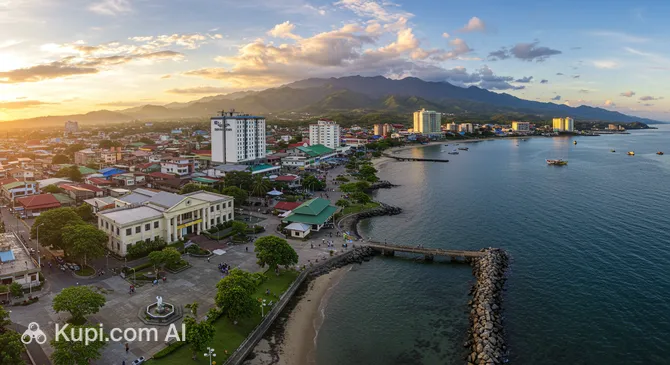
Panabo is a dynamic agro-industrial center located on the sunny island of Mindanao in the Philippines. The city has rightfully earned its status as the country's "Banana Capital," as nearly 40% of its territory is covered by endless plantations of the export-grade Cavendish variety. With a population of over 200,000, Panabo is a vital part of Metropolitan Davao, offering visitors a unique glimpse into the region's economic life.
Panabo. Illustration.
Source: Kupi.com AI
Located in the province of Davao del Norte, the city borders the picturesque Davao Gulf. Its development history is closely linked to the expansion of agricultural lands, which transformed a small settlement of the indigenous Aeta people into a thriving modern city. Panabo attracts those who want to see the real Philippines, away from the glossy facades of typical tourist resorts.
The city's main feature is the world's largest banana plantation, TADECO, spanning thousands of hectares. Visiting Panabo is an excellent opportunity to appreciate the scale of tropical farming, enjoy the freshest fruit, and feel the rhythm of life in the hardworking Filipino South.
Weather Overview
The climate in Panabo is typical of the tropical coastal zones of Mindanao. Warm and humid weather prevails year-round, with daytime temperatures ranging from 28°C to 32°C. Considering the weather in Panabo, travelers should be prepared for high humidity, which is particularly noticeable due to its proximity to Davao Gulf.
There is no distinct cold season in the region, though there are periods of varying rainfall intensity. Traditionally, the drier months last from December to May, while the main rainy season falls between June and November. Nevertheless, tropical downpours can occur at any time, bringing a welcome coolness after a hot day.
Average monthly temperature
Average monthly precipitation
Interesting Facts
Panabo is home to the 6,900-hectare TADECO plantation, officially recognized as one of the largest banana plantations in the world.
Bananas occupy nearly 40% of the city's total area, making the agricultural sector the absolute foundation of the local economy.
Over the past six decades, the city's population has grown nearly fivefold: from 42,000 in 1960 to over 209,000 today.
Before transforming into a major agro-center, these lands were inhabited by the indigenous Aeta people, who led a hunter-gatherer lifestyle.
According to one legend, the city's modern name comes from a local word for a hunting tool, reflecting its ancient roots.
How to Get There
Panabo is conveniently located within Metropolitan Davao, providing good transport connectivity with other regions of Mindanao. Essential information on how to get there usually involves transit through neighboring major aviation and maritime hubs.
The closest and most convenient air hub is Francisco Bangoy International Airport (DVO) in Davao, located approximately 30–40 kilometers away. From the airport, you can reach Panabo's center by taxi, bus, or jeepney. A trip along the Pan-Philippine Highway (Maharlika Highway) usually takes between 60 to 90 minutes, depending on traffic.
The city does not have its own railway station, as this mode of transport is not developed on the island. All passenger traffic is served by bus routes and private vehicles. From the neighboring city of Tagum to the north, Panabo can be reached in 20–40 minutes by regular bus or minivan.
Main Attractions
Panabo is primarily an industrial and agricultural hub, so you won't find classic architectural monuments here. The main draw for travelers is the unique industrial landscape and the life of the massive farms that define the region's character.
TADECO Banana Plantations are the city's primary "calling card." Agritours can be organized here by prior request to see the entire production cycle: from growing seedlings to packing fruit for export. The vast green fields stretching to the horizon create an impressive sight rarely found in other parts of the country.
The city's central markets offer a full immersion into local life. They are always bustling and colorful, with stalls offering exotic tropical fruits at prices that will pleasantly surprise any tourist. This is the best place to experience the authentic atmosphere of the "Banana Capital."
The coastal areas of Davao Gulf are perfect for relaxing and watching the sunset. While the city itself lacks developed beaches, the coastline offers beautiful sea views and the chance to see the local port in action. For many tourists, Panabo serves as a quiet haven before heading to the busier Davao City.
Local Cuisine
The gastronomic scene in Panabo is closely intertwined with its status as the "Banana Capital." Here, you will find an incredible variety of dishes made from this fruit: from the popular street snack banana cue (deep-fried caramelized bananas on a stick) to sweet turon rolls. This is the true culinary soul of the city, which every guest should experience.
Local eateries, known as karinderias, serve classic Filipino hits. Be sure to try kinilaw—fresh fish marinated in vinegar with ginger and chili—as well as the famous lechon (roast pig), prepared here with crispy skin and tender meat. Proximity to Davao Gulf ensures an abundance of seafood in local restaurants.
To quench your thirst, fresh coconut water (buko) or banana smoothies are perfect. In the evening, it's pleasant to spend time at a venue overlooking the gulf, ordering a cold bottle of San Miguel beer accompanied by local snacks. The food culture here is simple and heartfelt, focusing on fresh ingredients and traditional recipes.
Travel Tips
Visiting Panabo allows you to see the authentic life of the Philippines, and these practical tips will help make your trip as comfortable and safe as possible.
**Clothing and essentials:** Choose light clothing made of cotton or linen, as the region experiences high humidity. Be sure to bring comfortable shoes, sunglasses, and a hat for walks through the open plantations.
**Transportation:** Use tricycles for moving around the city, and buses or taxis for trips to Davao. During peak hours, the Maharlika Highway can experience long traffic jams, so plan your time with a buffer.
**Finances:** The primary currency is the Philippine Peso. ATMs are available in the center, but cards are not accepted everywhere. Always carry cash for fares and market purchases.
**Health and safety:** Drink only bottled water. Given the tropical climate, use mosquito repellent regularly to protect against local infections.
**Communication:** Most residents understand English, but knowing a few phrases in Cebuano (such as a greeting) will earn you the favor of the locals. It is best to buy a SIM card immediately upon arrival at the airport.
**Local etiquette:** Filipinos are very friendly and value politeness. When entering a private home or a small shop, it is sometimes customary to remove your shoes if you see the owners doing so.
**What to avoid:** It is not recommended to walk alone in remote areas or on the outskirts of plantations after dark. Also, avoid discussing political topics with strangers.
**Additional tip:** If you plan to visit the TADECO banana plantations, try to arrange a tour in advance, as it is a restricted facility with limited access.
May your introduction to the "Banana Capital" be smooth and bring only pleasant impressions!
Entertainment & Nightlife
Nightlife in Panabo is quiet and provincial, as the city follows the rhythm of an agro-industrial center where plantation work often begins at dawn. The main entertainment for locals remains KTV bars (karaoke), which can be found in almost every neighborhood—Filipinos are famous for their love of singing.
For more active recreation, nightclubs, and large entertainment centers, travelers usually head to neighboring Davao City, which is about a 30-minute drive away. In Panabo itself, the evening social life centers around cozy bars along the national highway, where you can enjoy a cold beer and discuss the latest news to the sound of popular music.
Daytime entertainment focuses on city squares and sports centers. If you're lucky enough to be here during local holidays, such as harvest festivals, you can see colorful street dances and fairs. For family outings, residents often choose outdoor picnics or trips to private farms that offer tastings of local produce.
Parks & Museums
Panabo does not have classic art galleries, as its cultural life is centered around daily labor and agricultural traditions. The vast banana fields serve as unique "open-air museums," defining the landscape and lifestyle of this part of the island.
There are few public parks in the city itself—mostly cozy green squares near government buildings and the central city plaza, where locals gather to relax and socialize. Greenery here is maintained naturally through agriculture, creating a pleasant atmosphere in residential zones.
For nature walks, residents and visitors often choose the coastal stretches of Davao Gulf. Those looking for large-scale park complexes with rides and fountains are recommended to take a short trip to neighboring Davao City. However, Panabo has its own special charm—the quiet, unhurried greenery of the Filipino province.
Getting Around
The public transport system in Panabo is typical of Filipino cities and is geared towards connecting with other hubs in Metropolitan Davao. The main way to get around within the city and between barangays is by jeepney—colorful mini-buses—as well as nimble tricycles that can take you almost anywhere.
The Maharlika Highway, a vital transport artery for the region, passes through Panabo. Intercity buses regularly ply this route, connecting the city with Davao and Tagum. Fares are usually paid in cash to the driver or conductor and remain very affordable for any budget.
Travelers should keep in mind that traffic jams often occur on main roads during morning (7:00 to 9:00 AM) and evening (5:00 to 7:00 PM) rush hours. For more comfortable travel or trips to the airport, it is better to use taxis or ride-hailing apps like Grab or InDrive, which allow you to book a car with a fixed fare.
Accommodation
Since Panabo is mostly visited for business or agritours, the city's hotel stock consists mainly of budget hotels, guesthouses, and pensions. While it is difficult to find luxury five-star resorts here, it is quite possible to find comfortable accommodation at an affordable price.
In the city center, near major transport hubs, there are small hotels such as the Panabo Grand Hotel, which cater to business travelers and transit tourists. For those planning a longer stay in the region, apartments and private rooms are available through popular booking services.
If you are looking for a high level of service and extensive infrastructure with pools and restaurants, it is recommended to consider accommodation options in neighboring Davao City. However, staying in Panabo itself allows you to better experience the atmosphere of provincial Philippines while saving on your travel budget.
Nearby Cities
Panabo is geographically well-positioned, serving as an excellent link between the key cities of the Davao region. The city's surroundings offer many interesting destinations perfect for day trips and discovering the culture of Mindanao.
Just 27 kilometers southwest is Davao City—the largest metropolis in the southern Philippines. Here, tourists can find modern shopping malls, the famous Crocodile Park, and numerous museums. It can be reached by bus or taxi in less than an hour, provided there is no heavy traffic.
North of Panabo lies Tagum, known as the "City of Palms." It is famous for its wide avenues and monumental government architecture. The journey takes about 20–30 minutes, making it the most accessible destination for a quick excursion.
For fans of white sandy beaches and boat trips, a visit to Island Garden City of Samal is a must. This resort island offers crystal-clear waters and waterfalls, accessible via ferry crossings located within Metropolitan Davao.
Exploring the areas around Panabo allows you to see the wonderful contrast between the industrial life of an agricultural center and the tropical beauty of the Filipino coast.
Shopping & Souvenirs
Shopping in Panabo is primarily about exploring the vibrant local markets. The city isn't known for huge malls, but its central markets (public markets) are always full of fresh produce. Here you can buy not only the famous bananas in dozens of varieties but also other exotic fruits like pomelo and durian at very attractive prices.
As souvenirs from the "Banana Capital," it's worth bringing home high-quality dried fruits, banana chips, or items made by local artisans, who sometimes display their work at city fairs. For more serious shopping, brand-name clothing, or electronics, residents usually head to the shopping centers in Davao, which are just a short trip away.
Shops in the city center and small supermarkets typically operate from early morning until 7 or 8 PM. It is important to remember that markets and small shops only accept Philippine Pesos in cash, so tourists should make sure to carry smaller denominations.