Support

Vila Nova de Gaia

About

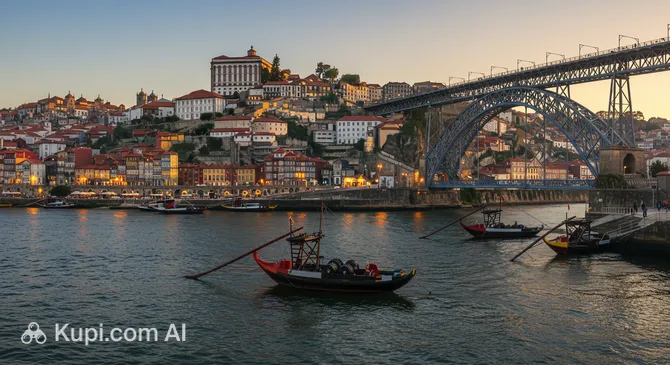
Vila Nova de Gaia is a city where the very atmosphere seems permeated with the intoxicating aroma of port wine and the fresh breeze of the Atlantic Ocean. It stretches cozily along the southern bank of the majestic Douro River, directly opposite the ancient city of Porto. These two cities are connected by several picturesque bridges, most notably the famous Luís I Bridge — a creation of Gustave Eiffel's disciple, which has become one of the region's symbols.

Vila Nova de Gaia is the third most populous municipality in Portugal, with more than 300,000 residents. It is not merely a suburb or a satellite of Porto, but a completely independent city with a rich history, unique culture, and its own distinct character. Its embankments, dotted with historic wine cellars featuring characteristic tiled roofs, beckon both tourists and locals for leisurely strolls and relaxation in cozy restaurants with breathtaking views of the river and Porto's historic center.

Vila Nova de Gaia. Illustration.
Source: Kupi.com AI

The main pride and magnet for visitors to Vila Nova de Gaia is, without a doubt, its legendary port wine cellars. It is here, in the cool cellars, that the famous fortified wine matures and acquires its unique flavor, becoming the hallmark of the entire country. Port wine tastings and winery tours are a must for every guest. However, Gaia is attractive for more than just wine: it boasts magnificent wide sandy beaches washed by the Atlantic, modern hotels, ancient churches, and even a university, which gives the city a youthful and dynamic atmosphere.

Vila Nova de Gaia is the ideal destination for those who want to deeply feel the soul of Northern Portugal, enjoy exquisite local cuisine, immerse themselves in history, and experience the slow, peaceful rhythm of life on the banks of the great river. Come and discover this amazing city!

You can find more interesting facts on the history of Vila Nova de Gaia page.

Weather Overview

The weather in Vila Nova de Gaia is characterized by a mild climate with distinct seasons. Summer, especially in July and August, is warm and dry here, with average temperatures around 21°C and minimal precipitation. Winters, on the other hand, are cooler and wetter: the average temperature in January is about 10°C, and the number of rainy days increases significantly. Expect warm, mostly dry summers and mild, wet winters. Spring and autumn are transitional seasons with moderate temperatures and changeable weather.

For more detailed information on the weather by month, you can check the Vila Nova de Gaia Climate page.

Average monthly temperature

Average monthly precipitation

Interesting Facts

Vila Nova de Gaia is not just about picturesque embankments and famous wine cellars. This city on the banks of the Douro hides many fascinating stories and little-known details that make it even more alluring for curious travelers.

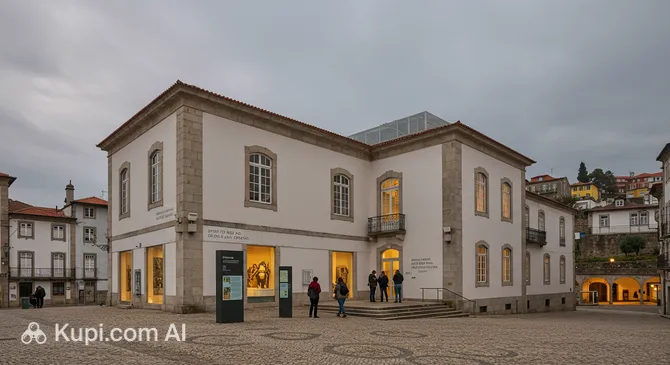
Ramos Pinto Museum. Illustration.
Source: Kupi.com AI

Traveler photos:

  • World Capital of Port Wine: Founded in 1255, Vila Nova de Gaia is rightfully considered the birthplace of the world's best port wine. Only wine produced in the Douro Valley and aged in the numerous cellars of this specific city can officially bear the proud name "Port" — this is strictly regulated by European law.

  • Cradle of the Country's Name: There is a fascinating legend that the ancient Roman port of Portus Cale was located on the site where Vila Nova de Gaia stands today. It is believed that the name of the entire country — Portugal — originated from the merging of these two words. Although historians still debate this, the residents of Gaia proudly share this version with visitors.

  • A Bridge with Eiffel Heritage: The majestic metal Luís I Bridge, connecting Vila Nova de Gaia with neighboring Porto, is not just an important transport artery but also a true work of engineering art. It was designed by Théophile Seyrig — a talented disciple of the famous Gustave Eiffel, the creator of the Eiffel Tower.

  • More Than Just Wine: While Gaia is inextricably linked with port wine, the city offers other interesting discoveries. Here you can find museums dedicated to unexpected topics such as chocolate and cork — another traditional product of the region. Additionally, history buffs will appreciate the well-preserved medieval cathedrals and ancient chapels scattered throughout different parts of the city.

How to Get There

Vila Nova de Gaia, located on the left bank of the Douro River, boasts excellent transport accessibility. Thanks to its proximity to major transportation hubs, you can get here quickly and comfortably from almost anywhere in the world. You can find out more about how to get to Vila Nova de Gaia on a dedicated page; below we will cover the main air and rail routes.

The most convenient way to reach the city is by air. The nearest and most significant hub is Porto Airport (OPO), also known as Francisco Sá Carneiro Airport. It is located not in Vila Nova de Gaia itself, but in the neighboring city of Porto, approximately 15 km from your destination's center. This is a modern international airport with high passenger traffic. A taxi or car ride from there will take about 20–30 minutes, and convenient metro connections are also available (Line E with a transfer to Line D).

If you are planning an extensive trip across the country, you can fly into the capital. Lisbon Portela Airport (LIS) is located in Lisbon, about 264 km from Vila Nova de Gaia. It is the country's largest hub, receiving flights from all over the world. From there, Vila Nova de Gaia can be reached by high-speed train or intercity bus in approximately 3–3.5 hours.

It is also worth mentioning Vigo Airport (VGO), located in the Spanish city of Vigo, 123 km from Vila Nova de Gaia. This could be a convenient option if you are combining a trip to Portugal with Spanish Galicia.

For your convenience, here is a summary of the main airports:

AirportPassenger trafficDistance
Porto Airport15.9 mln15 km
Vigo Airport1.1 mln123 km
Santiago de Compostela Airport3.6 mln198 km
A Coruna Airport1.3 mln243 km
Matacan Airport21 100262 km

Travelers who prefer rail, especially when coming from neighboring Spain, should take note of the nearest major stations in the Galicia region. One key point is Vigo Railway Station, located in the city of Vigo (Spain), approximately 123 km from Vila Nova de Gaia. Direct Celta trains run from here to Porto, from where you can quickly cross to the other side of the river to Gaia.

Another important transport hub is Ourense Railway Station, located in the city of Ourense (Spain), 148 km from your destination. This is a major station with high passenger traffic serving high-speed trains from Madrid. You can get to Vila Nova de Gaia from there by renting a car or using connecting services.

Below is a table of the nearest major railway stations (predominantly in Spain) that can serve as transit points:

StationPassenger trafficDistance
Vigo Railway Station1.3 mln124 km
Pontevedra Railway Station1.6 mln144 km
Ourense Railway Station2.2 mln148 km
Lugo Railway Station67 603228 km
Zamora Railway Station397 428244 km

Main Attractions

Vila Nova de Gaia, a picturesque city on the south bank of the Douro River, is famous for its world-renowned port wine cellars, but its appeal doesn't end there. The city offers many interesting places where history harmoniously blends with modern life, creating a unique atmosphere for exploration and relaxation.

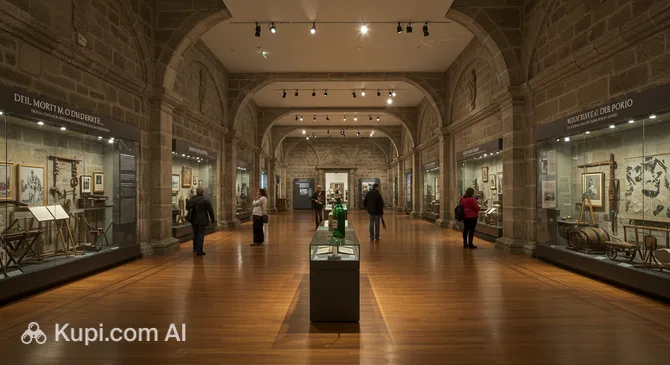
One of the gems of Vila Nova de Gaia is certainly the Ramos Pinto Museum. This is not just a museum, but a true immersion into the history of one of the most prestigious port wine houses. Visitors can learn all the intricacies of producing this noble drink, see vintage equipment, and a unique collection of early 20th-century advertising posters created by famous artists. Tours often conclude with a tasting, allowing guests to fully appreciate the rich heritage of Ramos Pinto and the taste of real port wine.

Ramos Pinto Museum. Illustration.
Source: Kupi.com AI

Traveler photos:

For nature lovers and those interested in environmental issues, the Water Pavilion is a must-visit. This museum is dedicated to the region's water resources, their importance to the local ecosystem, and methods for their preservation. The museum's exhibits introduce visitors to the history of water supply and emphasize the importance of water conservation. A visit to the museum is an educational experience and complements walks through the picturesque surroundings of Vila Nova de Gaia, perhaps including the Gaia Biological Park, where you can enjoy nature and see representatives of the local flora and fauna.

Water Park Museum. Illustration.
Source: Kupi.com AI

Traveler photos:

For those looking for evening entertainment, Vila Nova de Gaia has several options. Hard Club is one such place where visitors can enjoy live music and a club atmosphere. This venue is popular with those who want to continue their evening after port wine tastings and walks along the embankment, offering diverse musical programs and a chance to relax in a lively setting.

Hard Club. Illustration.
Source: Kupi.com AI

Traveler photos:

Beyond these attractions, Vila Nova de Gaia enchants with its embankments offering stunning views of Porto, numerous wine cellars where you can continue your acquaintance with port wine, cozy restaurants serving local cuisine, and, of course, the beautiful beaches on the Atlantic coast, such as Praia da Madalena or Praia de Lavadores. This city offers a rich and diverse experience for every traveler.

Local Cuisine

Vila Nova de Gaia is a true paradise for gourmets and, without a doubt, the world capital of port wine. It is here, on the banks of the Douro River, that the famous wine cellars are concentrated, where you can not only taste dozens of varieties of this noble drink but also immerse yourself in the centuries-old history of its production. The city's gastronomic scene is closely intertwined with wine traditions, offering unique flavor combinations.

The cuisine of Vila Nova de Gaia reflects the richness of northern Portugal and the bounty of the Atlantic Ocean. Among the dishes you definitely must try are the freshest fish and seafood. Enjoy the aroma of grilled sardines (sardinhas assadas), taste traditional bacalhau (cod) prepared in countless ways, or warm up with a rich seafood soup. A special place in the hearts of locals and tourists is held by the Francesinha — an incredibly hearty and appetizing sandwich with several types of meat and sausages, covered in melted cheese and generously drizzled with a spicy tomato and beer sauce. This dish is often served with French fries and pairs perfectly with a glass of local beer or young port wine.

Beyond main courses, don't miss the chance to try famous Portuguese desserts, primarily pastel de nata — delicate custard tarts in flaky pastry that go perfectly with a cup of coffee. Local markets and small bakeries offer fresh bread, regional cheeses, and other delicacies. The food culture in Vila Nova de Gaia is diverse: from traditional taverns and family restaurants serving home-cooked meals to modern establishments with fine dining. Many wine cellars also offer gastronomic pairings for their tastings. You can visit, for example, the Santa Catarina restaurant to experience the local cuisine.

The main drink of Vila Nova de Gaia is, of course, port wine in all its variety — from Rubies and Tawnies to Vintages and LBVs (Late Bottled Vintage). A port wine tasting in one of the historic cellars is a mandatory part of any itinerary. In addition to port, other Portuguese wines are popular here, especially from the Douro region (Vinho Verde). For non-alcoholic options, try fresh-squeezed juices and traditional lemonades.

Travel Tips

Planning a trip to Vila Nova de Gaia? Wonderful! These practical tips will help you better prepare and enjoy every moment in this charming city, famous for its port wines and breathtaking views of Porto.

  1. Clothing and Essentials: The climate in Vila Nova de Gaia is mild, with warm summers and wet, cool winters. In summer, pack light clothing, sunscreen, sunglasses, and a hat. For autumn, winter, and spring, layered clothing will be useful, including a sweater, jacket, and a raincoat or umbrella. A key point is comfortable shoes, as the city is built on hills and you will be walking a lot on cobblestones. Don't forget a European adapter for electrical appliances (Type F). When visiting active churches, show respect by choosing modest clothing that covers shoulders and knees.
  2. City Transport: Getting around Vila Nova de Gaia and neighboring Porto is easy. You can use the metro (Line D connects directly to Porto), buses, and even the scenic cable car (Teleférico de Gaia), which offers great views. The city is very walkable, especially along the Douro riverfront where the wine cellars are located. Taxis and ride-hailing apps (e.g., Uber, Bolt) are also available. Renting a car is only advisable if you plan trips outside the city, as parking in the center can be difficult.
  3. Financial Matters: The official currency in Portugal is the Euro (EUR). You can exchange currency at banks or exchange offices (câmbios); rates at the airport are usually less favorable. Credit and debit cards (Visa, Mastercard) are accepted in most hotels, restaurants, and shops. However, it's always useful to have some cash on hand for small cafes, markets, or in case a terminal is down. ATMs (Multibanco) are widespread. Tipping is not strictly mandatory but is welcomed as a token of gratitude for good service (usually 5-10% of the bill in a restaurant or rounding up the amount).
  4. Health and Safety: Pharmacies (Farmácias) are easily found by the green cross; information on 24-hour on-duty pharmacies is usually available on the doors of other pharmacies or online. If medical assistance is needed, EU tourists can use an EHIC card. Travel insurance is recommended. Vila Nova de Gaia is generally a safe city. Observe standard precautions: keep an eye on your belongings in crowded places (such as the Cais de Gaia embankment or on public transport) and avoid poorly lit or deserted areas at night.
  5. Communication: The official language is Portuguese. In tourist areas, hotels, and restaurants, many people speak English. Learn a few basic phrases in Portuguese: "Olá" (Hello), "Obrigado/Obrigada" (Thank you – m/f), "Por favor" (Please), "Sim/Não" (Yes/No), "Fala inglês?" (Do you speak English?). A local SIM card can be purchased at the airport or at mobile phone shops in the city. Wi-Fi is available in many cafes, restaurants, and hotels, as well as in some public areas.
  6. Local Etiquette: Portuguese people are generally polite and friendly. Greetings usually involve a handshake, especially when meeting for the first time. Use "Bom dia" (Good morning), "Boa tarde" (Good afternoon/evening), and "Boa noite" (Good night). Calm behavior is valued in public places. Showing respect for local traditions will always be appreciated.
  7. What to Avoid: You shouldn't loudly compare Portugal to Spain or assume that Portuguese is a dialect of Spanish; this can offend locals. Also, avoid excessively loud behavior, especially in residential areas and at night.
  8. Special Tip – Port Wine Cellars: Vila Nova de Gaia is the world capital of port wine! Be sure to visit one or more of the famous wine cellars (caves) located along the river. Many offer tours and tastings. We recommend booking them in advance, especially during peak season, to guarantee a spot and learn all about the production of this unique drink.

We hope these tips make your journey to Vila Nova de Gaia even more pleasant and rewarding. Enjoy its unique atmosphere, magnificent views, and, of course, a tasting of the famous port wine!

Entertainment & Nightlife

Evening and nightlife in Vila Nova de Gaia is mainly concentrated along the picturesque Cais de Gaia embankment. Famous for its port wine cellars, this area transforms after dark, offering visitors many options for relaxation. The atmosphere here is usually lively yet quite relaxed, with stunning views of the Douro River and Porto's historic center on the opposite bank.

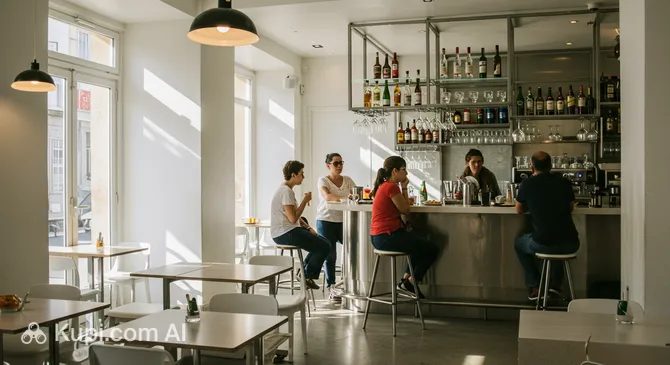
At Cais de Gaia, you will find many bars, restaurants with open terraces, and, of course, port wine tasting rooms, many of which are open until late evening. For those seeking a more club-like atmosphere, there are interesting options. For example, you can stop by Hard Club, known for its music and drinks, or visit Cafe Casa da Musica, which offers a more club-oriented format. Many restaurants, such as Santa Catarina, are also open late, allowing you to enjoy dinner with a view of Porto at night.

Hard Club. Illustration.
Source: Kupi.com AI

Traveler photos:

The atmosphere in the venues on Cais de Gaia is typically laid-back. The crowd is a mix of tourists and locals. The dress code in most places is casual or smart-casual. Bars and restaurants start filling up towards evening, while nightclubs and some bars liven up around midnight and stay open until the early morning. Live music is a common feature in many establishments, adding charm to evening walks.

Casa da Musica Café. Illustration.
Source: Kupi.com AI

Traveler photos:

For the best experience, it's recommended to arrive at Cais de Gaia closer to sunset to enjoy the views and find a table at your preferred spot. Prices at riverside establishments can be slightly higher than the city average due to the popularity of the location. The embankment is easily accessible on foot. At night, you can use taxis or ride-hailing services, which are widely available, to return to your hotel.

In terms of safety, Cais de Gaia and the adjacent tourist zones are well-lit and considered safe for evening and nighttime walks. However, as with any popular tourist destination, it is worth taking standard precautions. You can call a taxi through apps or ask the staff at a venue to do it for you.

During the day, Vila Nova de Gaia also offers interesting activities. Of course, the main attractions are the tours and tastings in the numerous port wine cellars. Additionally, you can visit educational museums, such as the Ramos Pinto Museum, or simply stroll through the city, enjoying its atmosphere and views of the Douro River.

Parks & Museums

Vila Nova de Gaia offers its guests not only world-famous wine cellars but also wonderful green oases for relaxation and fascinating museums that help to deeply understand the rich culture and history of this Portuguese city.

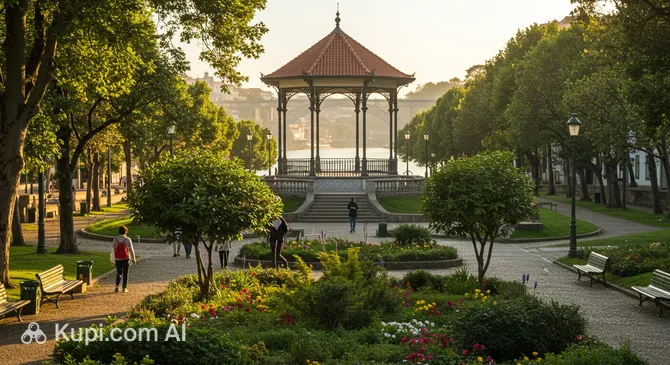
Among the city's green zones, several particularly attractive spots stand out. Jardim do Morro, located at the upper station of the cable car and near the Luís I Bridge, is one of the most popular places in Vila Nova de Gaia to admire spectacular panoramic views of Porto's historic center and the Douro River. It is the perfect place for a sunset picnic and enjoying the lively atmosphere. For a more peaceful and family-oriented holiday, Parque da Lavandeira is ideal — a vast urban park with shaded alleys, manicured gardens, playgrounds, and sports areas. Another noteworthy spot is Virtudes Park. This charming terraced garden offers visitors a tranquil atmosphere and beautiful views. While it may not be as large as other parks, its thoughtful landscaping and serenity make it a pleasant place for a walk and rest.

Virtudes Park. Illustration.
Source: Kupi.com AI

Traveler photos:

The cultural life of Vila Nova de Gaia is also vibrant. The city is proud of its museums, among which the Ramos Pinto Museum holds a special place. Visiting this museum is a true immersion into the history of one of the most famous port wine producers. Located in a historic building, it offers a glimpse into the past of winemaking through vintage offices, unique early 20th-century advertising materials, and, of course, tasting rooms. It's not just a museum, but a journey through time that reveals the soul of the region.

Ramos Pinto Museum. Illustration.
Source: Kupi.com AI

Traveler photos:

Another interesting site is the Water Pavilion. As the name suggests, its exhibition is related to the theme of water and may cover the history of the region's water supply, the significance of water resources, or hydraulic structures. This place will be especially interesting for those fond of engineering, ecology, or simply wanting to learn more about a less obvious but vital aspect of city life.

Water Park Museum. Illustration.
Source: Kupi.com AI

Traveler photos:

When speaking of historical and architectural landmarks, one cannot fail to mention the iconic Monastery of Serra do Pilar (Mosteiro da Serra do Pilar). Perched on a hill, this monastery with its unique round church is a UNESCO World Heritage site. Its viewing platform offers what are arguably the best views of Porto, the Luís I Bridge, and Vila Nova de Gaia itself, making it a mandatory stop.

For those seeking authentic experiences, we suggest strolling through the narrow streets of the colorful fishing district of Afurada. Here, you can still see traditional boats, drying nets, and feel the slow pace of local fishermen's lives. Also, look out for the numerous small chapels scattered throughout the city — each holds its own little story and adds charm to walks through Vila Nova de Gaia.

Getting Around

Getting around Vila Nova de Gaia is quite convenient thanks to a well-developed public transport system that is closely integrated with the transport network of neighboring Porto. This allows for easy access to various districts within the city as well as the center of Porto, located on the other side of the Douro River.

Main modes of transport in Vila Nova de Gaia:

Metro: The Porto Metro Yellow Line (D) passes through Vila Nova de Gaia, connecting it with the center of Porto and other areas. Metro stations such as Jardim do Morro, General Torres (also an important railway hub), and Santo Ovídio are key transport hubs. This is a fast and efficient way to travel.

Buses: The city is served by an extensive network of bus routes operated by various companies, including STCP (Porto buses that also run in Gaia) and local operators. Buses cover areas that the metro does not reach and provide links to the suburbs.

Suburban Trains: General Torres railway station is a major hub from which suburban trains (Comboios de Portugal) depart, connecting Vila Nova de Gaia with other cities and towns in the region.

Cable Car (Teleférico de Gaia): This is not only a means of transport but also a popular tourist attraction. The cable car connects the upper part of the city (near the Jardim do Morro metro station and the Serra do Pilar Monastery) with the Cais de Gaia embankment, where the famous wine cellars are located. The ride offers breathtaking views of the Douro River and the Dom Luís I Bridge.

Payment System and Tickets:

The unified Andante system is used for payment on the metro, most buses, and some suburban trains. This is a rechargeable card on which you can load trips or passes. There are different types of Andante cards:

  • Andante Azul (Blue): A card for single trips or a small number of them. It is purchased once (costs about €0.60) and then topped up with the required number of trips according to the zones.
  • Andante Touristic: A special pass for tourists offering unlimited trips for 24 or 72 hours across all zones.
  • Andante Metropolitano Monthly Passes: For longer stays.

The cost of a trip depends on the number of zones crossed (Z2, Z3, etc.). For most tourist routes between Vila Nova de Gaia and the center of Porto, a ticket for 2-3 zones (Z2 or Z3) is usually sufficient. A single trip on an Andante Azul card starts at approximately €1.30 (for zone Z2). Tickets can be purchased at vending machines in metro stations, at ticket offices, in shops with the Andante logo (Payshop), and at some kiosks.

Practical Tips for Tourists:

  • Purchase and Validation: The Andante card must be purchased and topped up before your first trip. It is critically important to validate the card before every entry into the metro (at the yellow validators on the platforms) or when entering a bus. Fines for fare evasion are significant.
  • Operating Hours: The metro usually operates from 06:00 to 01:00. Buses have varying schedules depending on the route and day of the week. At night, the frequency of trips decreases, or service may be unavailable on some lines.
  • Route Planning: Use online maps or apps to plan routes, such as Google Maps, the official Andante app, or transport company websites.

Alternative Ways to Get Around:

Taxis and Ride-sharing: Taxi services as well as popular ride-hailing apps (e.g., Uber, Bolt) are available in Vila Nova de Gaia. This is a convenient but more expensive option.

Walking: Many attractions, especially along the Cais de Gaia embankment and when crossing to Porto via the Dom Luís I Bridge (upper or lower level), are perfectly suited for walking.

Bike Rental: Bike rental services are emerging in the city, which can be a pleasant way to explore the waterfront and parks.

Overall, public transport in Vila Nova de Gaia is well-organized and allows tourists to comfortably explore the city and its surroundings.
Accommodation

In Vila Nova de Gaia, travelers will find a wide range of accommodation options to suit every taste and budget. There are affordable hostels and guesthouses, perfect for budget-conscious tourists, as well as comfortable mid-range hotels. For those seeking more privacy or planning a long stay, apartments and flats are available for rent, while luxury lovers can choose high-end hotels with a full range of services.

Areas along the Douro riverfront are particularly popular with tourists, offering picturesque views of Porto, as well as those in close proximity to the famous wine cellars and major transport hubs. Staying in these parts of Vila Nova de Gaia ensures easy access to the main attractions and convenient connections to other parts of the city and its surroundings.

While the provided list of attractions does not specify specific hotels, Vila Nova de Gaia offers many options, from cozy family-run inns to modern hotel complexes. Travelers can easily find a suitable hotel that meets their preferences and budget using popular online booking services.

When planning a trip to Vila Nova de Gaia, especially during the peak tourist season (usually the summer months and holiday periods), it is recommended to book accommodation in advance. This will not only guarantee availability but also help you choose the best option in terms of price and quality. Most hotels and apartments can be booked through well-known international online platforms, as well as directly on hotel websites. The price range varies from budget options to luxury offers, allowing every traveler to find the optimal solution.

Nearby Cities

For those looking to explore the surrounding area, Vila Nova de Gaia serves as an excellent starting point for day trips to several interesting nearby locations:

Very close by, just 4 km away, is the famous city of Porto, Portugal's second-largest city. Its historic center, a UNESCO World Heritage site, enchants with narrow streets, colorful houses, and, of course, views of the Douro River and the famous Luís I Bridge. It is an ideal place to immerse yourself in the region's history and culture and sample local wines.

Slightly further, about 10 km away, is Matosinhos, known for its beautiful sandy beaches and as a paradise for fresh seafood lovers. Here you can enjoy the ocean breeze, relax on the coast, and sample magnificent fish dishes at one of the many restaurants, making it a great choice for a relaxing day trip.

CityPopulationDistance
Mafamude38 9401 km
Porto1 278 2104 km
Madalena4 2004 km
Valadares10 6784 km
Valbom14 4074 km

These nearby destinations provide a glimpse into the diverse culture and landscapes of the region.

Shopping & Souvenirs

Vila Nova de Gaia offers diverse shopping opportunities, although the city is primarily famous for its wine cellars where you can purchase renowned port wine. Beyond that, you can find both modern shopping centers and traditional shops offering local goods and souvenirs.

Main shopping activity is centered along Avenida da República, where many shops of various categories are located. It's also worth paying attention to the Cais de Gaia embankment, where, in addition to wine cellars, you can find souvenir stalls and shops selling local products.

For those who prefer "under one roof" shopping, there are several large shopping centers in Vila Nova de Gaia. One of the most famous is El Corte Inglés Gaia, offering a wide range of goods, from clothing and cosmetics to electronics and household items. Another popular option is ArrábidaShopping, which also features many international and local brands, as well as a food court and cinema.

Be sure to visit Mercado Municipal da Beira-Rio. This renovated market by the Douro River offers not only fresh produce — fruits, vegetables, fish, and meat — but also gastronomic corners where you can taste local delicacies and buy handicrafts and souvenirs. The atmosphere here is very lively, especially on weekends.

The main souvenir from Vila Nova de Gaia is, of course, port wine. A bottle of quality port makes an excellent gift or memento of your trip. Also popular are items made from cork (bags, wallets, accessories), painted azulejo ceramic tiles, textiles with traditional patterns, and other handicrafts. In souvenir shops, you can find magnets, postcards, and other small items with city and Portugal symbols.

Most shops in Vila Nova de Gaia operate from Monday to Saturday, usually from 10:00 to 19:00 or 20:00; some smaller shops may close for a lunch break (siesta) from approximately 13:00 to 15:00. Shopping centers are generally open longer, often until 22:00 or 23:00, and operate without breaks, including Sundays. Cash (euros) and bank cards (Visa, Mastercard) are widely accepted. In small shops and markets, it is preferable to have cash on hand.

Tourists from non-European Union countries can use the Tax Free system and claim a VAT (IVA in Portugal) refund on purchases over a certain amount (usually from €61.50 on a single receipt in participating stores). To do this, you must ask the seller for a special Tax Free form, fill it out, and present it along with your purchases at customs when leaving the EU. Refunds can be received in cash or to a bank card.

Reached the end of the page?

That means the route is fully explored