Support

Flower Clock

About

Anapa, a popular resort city in Russia, is proud of one of its most original and photogenic landmarks—the Flower Clock. This is not just a decorative element, but a true work of landscape art and precision mechanics, located in the heart of the resort area and constantly attracting the attention of city visitors.
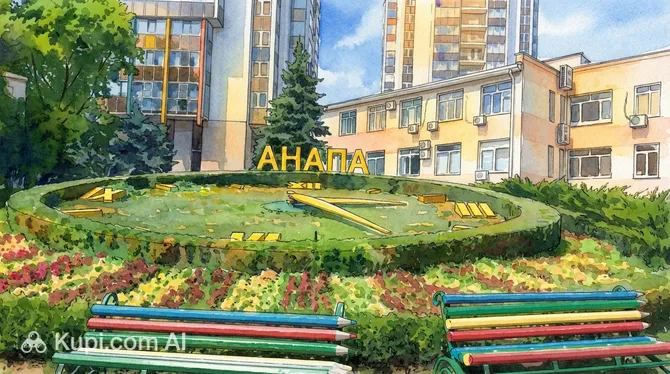
Flower Clock. Illustration.
Source: Kupi.com AI

Traveler photos:

The uniqueness of this clock lies in its living dial: a massive flowerbed about 10 meters in diameter is decorated with thousands of specially selected living flowers that create a bright and ever-changing pattern. The plants are chosen so that blooming continues throughout the entire resort season, delighting the eye with their beauty. The clock is equipped with a real clockwork mechanism made by Polish masters, and its hands, also decorated with flowers, show the exact time thanks to a modern electronic control unit.

The Flower Clock in Anapa is not only a functional chronometer but also one of the city's most recognizable symbols. It has become a favorite spot for walks, photo shoots, and meetings for both tourists and locals. It is a wonderful example of how urban space can be decorated with imagination and a love for nature, creating a unique atmosphere and making a vacation even more memorable.

Contacts

The Flower Clock in Anapa is a vibrant city landmark that typically does not have separate contact details for visitors. To find this art installation, head towards the central walking areas or use tourist maps of Anapa. You can also get more information at local tourist centers. Access to the Flower Clock is generally free and unrestricted by time, unless otherwise specified on-site.

How to contactContact
AddressUlitsa Lenina, Anapa, Krasnodarskiy kray, Russia, 353440
Phone number+7 861 333-15-61
Websiteanapagorkogo11.ru

What to Do

The Flower Clock in Anapa is more than just an original way to tell the time; it is one of the city's most photographed landmarks. Visitors can admire the large-scale and vibrant floral composition, which changes seasonally, providing a new picturesque backdrop for photos every time. It is a wonderful place to stop during a walk, enjoy the beauty of live flowers, and feel the peaceful atmosphere of the city park.

The clock's musical accompaniment adds a special charm. Every half hour, the mechanism plays a pleasant melody, which always catches the attention of passersby and adds an interactive element to the site. Watching the giant hands move across the floral dial and waiting for the melody is a small but delightful event for city guests.

The location of the Flower Clock makes it a convenient starting or continuing point for exploring Anapa. Popular walking routes to the beaches pass nearby, and other iconic sites, such as the Triumphal Arch and the "City of Military Glory" sculpture, are also close by. It is an excellent spot for relaxation, meetups, and leisurely family walks, especially during the summer season when the flowerbed is a riot of colors and scents.

Getting There

The Flower Clock is conveniently located in the central part of Anapa, making it easily accessible for tourists. Many visitors find this attraction on their way from the main hotels and resort complexes to the Black Sea coast, as it is situated between the "Vysokiy Bereg" (High Bank) area and the sandy beaches. If you are staying nearby or strolling through the city center, you can reach the clock on foot while enjoying the views of the central streets.

Reaching the Flower Clock is also convenient by public transport. Most of Anapa's city bus routes pass in the immediate vicinity of this popular site. You can check local bus schedules or ask which stop is closest to the clock. This is an economical and convenient way to travel, especially if you are coming from more distant parts of the city.

For travelers by car, finding the Flower Clock in Anapa is quite simple. The landmark is well-known and easy to locate using road signs or GPS navigation. There are parking areas nearby where you can leave your car and enjoy this beautiful spot at your leisure.

Nearest city: Anapa

History & Facts

The grand opening of the Flower Clock in Anapa (Russia) took place in June 2008, marking the start of another resort season. Since then, this unique composition has become more than just an original way to tell the time; it is now one of the most recognizable and beloved landmarks of the resort city. The living installation constantly draws the attention of both locals and numerous tourists, becoming a popular spot for souvenir photos and a symbol of a blooming Anapa.

The idea of creating such an unusual chronometer was not accidental and has interesting historical parallels. The inspiration for the Anapa Flower Clock came from similar compositions in European cities, while the concept itself dates back to the experiments of the famous Swedish botanist Carl Linnaeus. In 1775, he was the first in the world to implement the idea of a living clock based on the daily rhythms of plants—their ability to open and close their flowers at specific times.

The design and creation of this unique flowerbed clock were entrusted to experienced floral designers from the Zelenstroy company. They skillfully selected plant varieties and developed a composition that delights the eye with a riot of colors and shapes. The precise clockwork mechanism that moves the giant hands was specially ordered and manufactured in Poland, reflecting a meticulous approach to the project's implementation.

To ensure the Flower Clock always looks flawless, it requires daily and painstaking care. Every night, Zelenstroy employees carefully refresh the plants, water them, and monitor the condition of the entire composition. Thanks to their tireless work, this Anapa landmark greets every new day in all its glory, serving as a bright example of the harmony between nature and human craftsmanship.

Time Needed

You likely won't need much time to admire the famous Flower Clock in Anapa. Typically, exploring this colorful attraction in Russia takes between 15 and 30 minutes. This is enough time to appreciate the original floral composition and the clock mechanism itself, which keeps accurate time.

However, many visitors stay at the Flower Clock a bit longer. If you want to take beautiful photos, especially on a sunny day, or wait for the musical accompaniment that sometimes delights guests, your visit might be slightly extended. In any case, it is a pleasant and memorable place for a short stop during your stroll through resort Anapa.

Working Hours

The Flower Clock in Anapa is a unique attraction accessible for viewing at any time. Since it is located outdoors, you can visit it 24/7 and completely free of charge, so no advance booking or tickets are required. This makes it a convenient stop to include in any city walking route.

The clock delights visitors all year round. A special charm is added by its musical accompaniment, which, according to available information, operates throughout the day at specific intervals. To find out the exact schedule of the musical accompaniment, it is recommended to check on-site or on Anapa's tourism portals, as it may change depending on the season or city events.

Open 24 hours

Nearby

Visiting a vibrant attraction like the Flower Clock in Anapa is a pleasant experience in itself. However, to make your trip even more fulfilling, it is worth paying attention to other interesting sites located nearby. Exploring the surroundings will allow you to dive deeper into the city's atmosphere, discover new facets of its history and culture, and simply enjoy a nice walk from one iconic object to another.

There are several notable places near the Flower Clock that may interest the curious traveler. Check out the list of nearby attractions and plan your route to see as much as possible.

NameDistance
Scarlet Sails Ship Sculpture0.3 km
Gorgippia Archaeological Museum0.3 km
Sicilia Pizzeria Chain0.3 km
Great Patriotic War Memorial. Eternal Flame0.4 km
Matsoni0.4 km
White Hat Monument0.5 km
Rif Oceanarium0.7 km

Have you reached the end of the page?

So the route has been studied inside and out