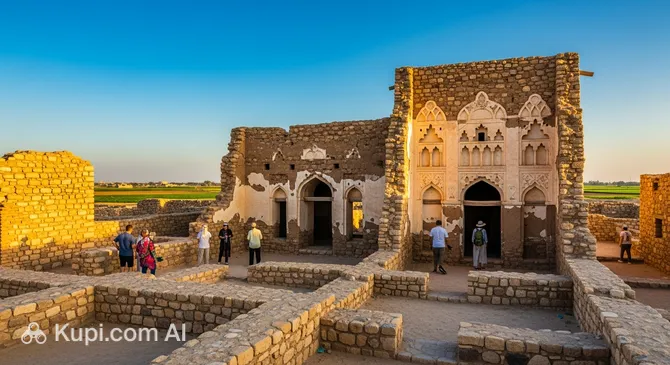
Sabya is a colorful and lively city located in the southwest of Saudi Arabia. As the administrative center of the governorate of the same name in the Jazan Region, the city occupies an important strategic position between the Red Sea coast and the majestic foothills of the As-Sirat Mountains. With a population of over 228,000, Sabya represents a vital regional hub where trade traditions and the authentic lifestyle of the kingdom's southern provinces intertwine.
Sabya. Illustration.
Source: Kupi.com AI
The city is not a typical tourist resort, which makes it particularly attractive to those seeking the real, unvarnished Arabia. The economic profile of Sabya has historically been linked to trade and crafts. One of the unique features of the surrounding area is rock salt mining, which has been an essential resource for locals for centuries. You can learn more about the rich past of this region by delving into the history of the city, which dates back to ancient times.
Thanks to its location on the region's main highway, Sabya serves as an indispensable transit point for travelers heading from Jazan to the mountain city of Abha. Visiting this city is an opportunity to see the daily life of a trade and craft center, stroll through traditional markets, and experience the hospitality of the locals away from the bustling metropolises. We invite you to discover this authentic corner of Saudi Arabia.
Weather Overview
Sabya is dominated by a hot semi-arid climate, typical of the southwestern part of the peninsula. Proximity to the Red Sea and the foothills of the As-Sirat Mountains creates special conditions: there is often high humidity, and summer temperatures can be extremely high. If you want to know more about the current weather in Sabya, we recommend checking the forecast just before your trip.
A typical summer in the city is characterized by average maximum temperatures of around 38°C — 39°C, though the heat can feel more intense due to the humidity. Winters here are very mild and pleasant: in January, the average temperature is about 25°C, and the nights bring long-awaited coolness (minimum around 22°C). Precipitation is rare, but between August and October, brief rains are possible, which sometimes turn into the intense downpours typical of this region.
The best time to visit Sabya is from November to March. During these months, the weather is most comfortable for strolling through local markets and exploring the surroundings, and the risk of extreme heat is minimal. Don't forget to bring sunscreen and light clothing made of natural fabrics to stay comfortable at any time of year.
Average monthly temperature
Average monthly precipitation
Interesting Facts
The name of the city, Sabya, has deep historical roots and, according to one version, originates from the ancient State of Saba (the Sabaean Kingdom), which once dominated the south of the Arabian Peninsula.
The city received the official status of a governorate in 1352 AH (Islamic calendar), marking its administrative strengthening within the kingdom.
Sabya has been known for centuries as a major center for rock salt mining; this unique industry remains an important part of the region's economic identity.
Due to its location, the city ranks 46th in population in the country and is the third-largest in the Jazan administrative district, maintaining its status as a key trading hub.
The city serves as a strategic transit bridge, connecting coastal Jazan with the highlands of Abha, which has historically made it a meeting point for different cultures and trade routes.
How to Get There
Sabya enjoys good road accessibility thanks to its location on a key transport artery in the southwest of the country. The city is situated on the main highway connecting major regional centers, making it a convenient stop when traveling through Jazan Province. If you are planning a visit, it is useful to check detailed information on how to get to Sabya in the most convenient way.
The city does not have its own airport, so air travelers usually use Jazan Regional Airport (GIZ), located just 37 km to the south. The trip from the airport to the center of Sabya by car or taxi takes about 45–60 minutes. You can also use the larger transport hub in the city of Abha (AHB), which is 160 km to the north; the drive from there takes about 2.5–3 hours along scenic mountain roads.
Railway communication is currently not developed in this region, so cars remain the primary mode of transport. Intercity buses connect Sabya with Riyadh and other major cities, but for maximum convenience and flexibility, renting a car or using taxis, which are the main form of transport here, is recommended.
Main Attractions
Sabya is primarily a trade and craft center, so you won't find standard tourist attractions or large museums here. However, the city is interesting for its atmosphere of "real" regional life. The main attractions can be considered the traditional shopping quarters and craft workshops. Ancient methods of processing materials are still preserved here, and a walk through the stalls where local craftsmen work allows you to touch the living heritage of the Jazan region.
The city's name itself is of interest to researchers, as tradition links this region to the legendary ancient Kingdom of Sheba (Saba). Although there are no specialized archaeological parks within the city limits, the very awareness of the antiquity of these lands gives walks through the old streets a special meaning. The proximity to the Red Sea (only about 26 km to the west) gives nature lovers the chance to head to the coast to enjoy views that remain practically untouched by mass tourism.
In the absence of classic monuments, the focus in Sabya shifts to exploring local identity. Visiting local markets where the famous rock salt from nearby deposits is sold, and observing the hustle and bustle of a trade hub at the intersection of the kingdom's important routes, are the main experiences this city offers its guests.
Local Cuisine
The gastronomy of Sabya is a vivid reflection of the traditions of southwestern Arabia, with a notable influence from neighboring Yemen. The local cuisine is famous for its heartiness and the use of aromatic spices. The diet is based on rice and meat dishes, such as Mandi or Kabsa, where the meat is slow-cooked in a special oven, gaining a unique flavor and tenderness. Freshly baked flatbreads and various types of hummus are also very popular here.
Being a commercial center, the city offers an excellent opportunity to try authentic street food at local markets. Look for small family cafes serving freshly prepared kebabs and spicy meat stews. Due to the proximity to the sea, charcoal-grilled fish with local seasonings is often featured on local menus. For a drink, be sure to try traditional Arabic coffee with cardamom or refreshing fruit juices.
The city's restaurant scene is more functional and home-style than refined. People eat where they trade—in cozy establishments near the bazaars, which are always noisy and crowded. This is the perfect place to experience the true taste of the region and enjoy dishes whose recipes have been passed down through generations, regardless of international tourism trends.
Travel Tips
When planning a trip to Sabya, it is important to remember that you are heading into the heart of traditional Saudi Arabia. These tips will help you feel confident and get the most out of your visit to this authentic city.
Clothing and Dress Code: Choose modest clothing that covers the shoulders and knees, in accordance with local traditions. Lightweight natural fabrics (cotton, linen) are the best choice for the hot climate.
Transport: The optimal way to get around is by renting a car or taking a taxi. Public transport within the city is not developed, so mobility depends on having a vehicle.
Finances: The official currency is the Saudi Riyal. Cards are accepted in shops and hotels, but always carry cash for purchases at markets and for paying for taxis.
Health and Safety: The city is safe, but due to its geographical location, it is advisable to stay informed of current local guidelines and follow standard precautions. Drink only bottled water.
Communication: The primary language is Arabic. English is not widely spoken, so download an offline translator or learn a few basic greeting phrases.
Local Etiquette: Greet locals politely; the right hand is used for eating and passing items. Respect prayer times when many establishments close.
What to Avoid: Do not photograph people without their explicit consent, especially women. Also, avoid public discussions of political or religious topics.
Specific Tip: Visit the city as part of a route between Jazan and Abha. This will allow you to see Sabya in the context of the whole region without any rush.
Sabya will reveal its unique atmosphere to you if you show respect for its customs and openness to new experiences. Enjoy your trip!
Entertainment & Nightlife
Entertainment in Sabya is calm, family-oriented, and deeply rooted in local traditions. There are no noisy clubs or bars, which is in line with the conservative culture of the region. The main evening leisure spots for locals and visitors alike are traditional cafes and restaurants, where one can enjoy a leisurely dinner and spend time in conversation. In the evening hours, when the heat subsides, the city squares and small parks come alive, becoming centers of social interaction.
For those looking for a more varied cultural program or modern entertainment, such as cinemas and large gaming zones, it is recommended to head to neighboring Jazan, located just 37 km to the south. Nevertheless, Sabya offers an authentic experience of visiting local markets, which take on a special atmosphere in the evening. This is an ideal place to observe city life and try street food among local families.
Daytime leisure in the city is often associated with trips to the nearby Red Sea coast or walks in the foothills. In Sabya itself, walks through the commercial streets, where unique handmade products can be found, are popular. Safety in the city is at a high level, and evening walks through the central illuminated areas are perfectly comfortable, while taxis are always available for late-night travel.
Parks & Museums
The cultural and natural infrastructure of Sabya is primarily represented by local public spaces. Due to the region's hot climate, green zones and small city squares become the main centers of attraction during the sunset hours. The main parks are concentrated in the central part and around administrative buildings, offering residents and visitors places to relax and walk in the shade of trees.
There are currently no specialized museums in the classic sense in Sabya. However, the role of a "living museum" is played by the traditional quarters and craft workshops, where you can see production processes that have remained unchanged for decades. The history of the city and its connection to the ancient land of Saba can be read in the architectural details of old buildings and in the stories of local elders, who readily share the legends of their land.
For those longing for a deeper immersion into history and art, a trip to Jazan or Abha is an excellent solution. Local history museums and cultural centers are located there, detailing the rich heritage of southern Arabia. In Sabya itself, it is worth enjoying the simplicity of the local parks and the authenticity of its commercial streets, which are valuable ethnographic sites in their own right.
Getting Around
The transport system in Sabya is fully adapted to local conditions and the needs of its residents. Public transport in the form of buses or trams is practically non-existent within the city, so the main mode of travel is by private car or taxi. The city is quite compact, and its central trading part can be explored quite comfortably on foot, especially in the morning or evening hours.
For trips over longer distances or to neighboring cities, tourists most often choose taxis. A car can be hailed on the street or ordered through mobile apps popular in Saudi Arabia. The cost of the trip is usually negotiated in advance or determined by the meter. If you plan to actively explore the surroundings and visit the foothills or the coast, renting a car is the best solution, as it will give you complete freedom of movement.
Since Sabya is located on a major highway, intercity bus routes pass through it, connecting the south of the country with the northern regions. Tickets for such trips can be purchased at ticket offices at bus stations. It is worth noting that the infrastructure is oriented toward motorists, so parking is available everywhere, and the road network within the city is simple and clear even for a foreign driver.
Accommodation
Since Sabya is primarily oriented toward trade and regional traffic, specialized tourist infrastructure is moderately developed. The main housing stock consists of small mid-range hotels and apartment hotels. These accommodation options are well-suited for business travelers and those using the city as a transit point on the way to Abha or Jazan.
You won't find international chain giants in the city itself, but local hotels offer basic comfort and traditional hospitality. Most accommodations are concentrated along the main roads and in the central part of the city, which is convenient for quick access to markets and transport interchanges. It is recommended to book accommodation in advance through online services, as demand for rooms from local entrepreneurs can be high during active trading periods.
If you prefer a wider selection of international-standard hotels with swimming pools and a full range of services, you might consider staying in Jazan. Located just half an hour away, Jazan offers many modern hotel complexes, from which you can easily make day trips to Sabya to explore its colorful markets and workshops.
Nearby Cities
Thanks to its favorable location at a crossroads, Sabya serves as an excellent starting point for exploring the southern region of the country. The city's surroundings offer a variety of landscapes, from coastal plains to majestic mountains, making short trips from the city rich and interesting.
Just 30 km to the south is Jazan—a major port city and the administrative center of the region. A trip there will allow you to enjoy walks along the modern corniche, visit large shopping malls, and see the life of a major seaside city. If you are drawn to nature and tradition, head to Al-Aidabi (34 km), famous for its green valleys, or to Al-Ahad Al-Masarihah (60 km), where you can experience the rural way of life.
For a longer journey to the north, Abha, located in the mountains, is ideal. The region around Sabya is rich in hidden gems, and even a short trip to neighboring Ad-Darb will provide new impressions of the diversity of Arabian nature. We recommend not limiting yourself only to the city and definitely exploring these unique locations.
Shopping & Souvenirs
Shopping in Sabya is primarily an immersion into the atmosphere of an Oriental bazaar. The city, being a major trade and craft hub, offers goods that are hard to find in modern metropolises. The main treasure of the local markets is the famous rock salt mined nearby. It makes an excellent and useful souvenir to remind you of your trip to this unique region.
Main shopping activities are concentrated in traditional markets (souks), where the rows are filled with textiles, spices, and handmade goods. Here, you should pay attention to handicrafts by local artisans: woven baskets, traditional clothing, and forged household items. There are no giant malls with global brands in Sabya, but this is exactly what allows you to focus on finding unique local items.
Shops and stalls are usually open from morning until lunch, after which they close for a long break and reopen in the evening, working until late at night. Cash is accepted in most places, but card payments are available in larger shops and pharmacies. For modern shopping centers and a wide selection of electronics or branded clothing, it's better to head to neighboring Jazan, leaving Sabya for the search of authentic Arabian artifacts.