Support

Cap Skirring

About

Cap Skirring is widely regarded as the jewel of the Casamance region and one of the most beautiful seaside destinations in West Africa. Known for its laid-back atmosphere and stunning natural beauty, this resort town offers a perfect escape for travelers seeking relaxation and sunshine. Located in the southwestern corner of Senegal, near the border with Guinea-Bissau, it stands out with its lush vegetation and tropical climate, providing a stark and vibrant contrast to the more arid landscapes found in the north of the country.
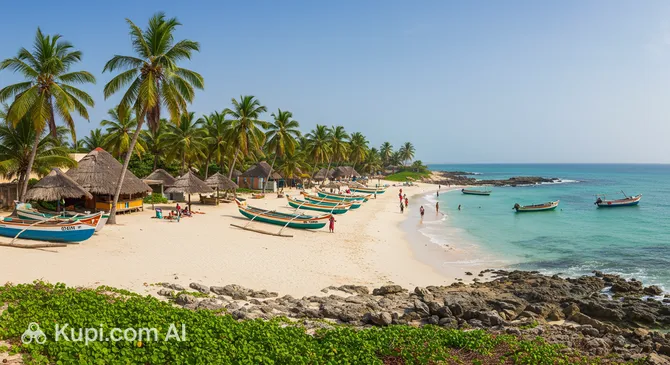
Cap Skirring. Source: Kupi.Binoculars

The town is situated along the Atlantic coast, featuring miles of pristine white sands framed by swaying coconut palms and dense forests. While it is celebrated today as a premier tourist hub, the history of Cap Skirring began as a small, traditional fishing village inhabited by the Diola people. This heritage remains visible in the local culture and the warm hospitality of its residents, even as the area has developed into a modern destination with an international airport and comfortable amenities.

Visitors are primarily drawn to Cap Skirring for its breathtaking beaches, which are often cited as some of the finest on the continent. Beyond sunbathing and swimming, the area is famous for its excellent fishing opportunities in the bolongs (mangrove channels) and the ocean. Golf enthusiasts can also enjoy a round at the local course, while nature lovers may explore the rich biodiversity of the surrounding lagoons by pirogue.

Whether you are looking to explore local craft markets, taste fresh seafood, or simply unwind by the ocean, Cap Skirring promises an unforgettable experience. It is a truly idyllic spot for your next vacation, inviting you to discover the serene charm of southern Senegal.

Weather Overview

The climate in Cap Skirring is tropical and inviting, characterized by consistent warmth throughout the year. Average monthly temperatures remain stable, generally hovering between 26°C and 28°C. Daytime highs frequently reach around 30°C, while the evenings remain pleasant with minimum temperatures rarely dropping below 21°C, creating a comfortable environment for outdoor activities.

Rainfall patterns distinctly divide the year into two seasons. The period from November to May is exceptionally dry, with virtually zero precipitation, making it the peak season for sun-seekers. Conversely, the summer months bring a shift in weather; from July to September, the region experiences frequent wet days, peaking in August. To plan your visit around these seasonal changes, you can check the detailed report on the weather in Cap Skirring.

Expect warm temperatures year-round with a long, sun-filled dry season and a humid period characterized by frequent rainfall from June through October.

Interesting Facts

Beyond its reputation as a premier seaside resort, Cap Skirring holds fascinating details that tell the story of its rapid transformation and unique local character. This destination is not just about sun and sand; it is a place where rural traditions and modern tourism coexist in surprising ways.
  • The famous "beach cows": One of the most photographed and unusual sights in Cap Skirring is the local cattle roaming freely on the white sands. It is quite common to see herds of cows strolling along the shoreline or resting near the water to cool off, sharing the beach peacefully with sunbathing tourists.

  • An airport born from a hobby: The town’s international airport has a humble and unique origin story. It was not built by the government for commercial transport, but originally constructed as a simple dirt landing strip in the late 1960s by members of the Ziguinchor Aero Club for their private leisure planes. It was later paved and expanded specifically to welcome jets bringing tourists directly from Europe to the resorts.

  • A village within a village: Despite being the economic engine of the area, Cap Skirring does not officially exist as an independent municipality. Administratively, it remains a district of the nearby traditional village of Kabrousse. Kabrousse is historically significant as the birthplace of Aline Sitoé Diatta, a revered heroine of Senegalese resistance, adding a layer of deep cultural heritage to the area.

  • A recent discovery: Until the 1960s, Cap Skirring was a tiny, isolated fishing hamlet hidden in the bush. It was "discovered" as a recreational spot by expatriates living in the regional capital, Ziguinchor, who would drive over for weekend beach trips. This eventually attracted major international holiday clubs in the 1970s, changing the face of the region forever.

How to Get There

Reaching this beautiful coastal destination is relatively straightforward, thanks to its own airport and proximity to regional hubs. For a detailed overview of all travel options, you can read more about how to get to Cap Skirring. Most international visitors arrive by air, either landing directly during the tourist season or connecting through major cities in Senegal or The Gambia.

The most convenient option is the local Cap Skirring Airport (IATA: CSK), which is located right in the town of Cap Skirring, just 4.5 km from the center. It welcomes domestic flights from Dakar as well as seasonal international charter flights, mainly from France. A transfer by taxi from the airport to most hotels and resorts is very quick, taking approximately 5 to 10 minutes.

Another common entry point is the Ziguinchor Airport (IATA: ZIG). It is not located in Cap Skirring but in the regional capital, Ziguinchor, about 51.6 km away. This airport serves as a vital link for regular domestic flights. From here, you can take a taxi or a collective bus to the coast; the journey typically takes around 1 hour and 40 minutes via a scenic paved road.

For many travelers, the journey begins at Blaise Diagne International Airport (IATA: DSS), located near Dakar, approximately 258 km north of Cap Skirring. As the country's main international hub with "Large" passenger traffic, it receives flights from all over the world. Since it is quite far, visitors usually connect to a domestic flight to Cap Skirring or Ziguinchor, or take the overnight ferry to Ziguinchor followed by a road transfer.

For clarity, here is a summary of the main airports:

Airport Name City Passenger Traffic Km from City
Blaise Diagne International Airport Dakar Large 258.4
Yundum International Airport Banjul Medium 108.9
Cap Skirring Cap Skirring Medium 4.5
Osvaldo Vieira Airport Bissau Small 126.5
Ziguinchor Ziguinchor Small 51.6

Main Attractions

While the town is famous for its shoreline, the attractions of Cap Skirring extend beyond the sand and surf. The region offers a mix of natural wonders and cultural landmarks that allow visitors to connect with the authentic spirit of Casamance. From exploring traditional villages to navigating winding waterways, here are the top places to experience.

Cap Skirring Beach is undeniably the main draw for most travelers and is often considered one of the most beautiful beaches in West Africa. Stretching for miles, this expanse of fine white sand is bordered by a curtain of coconut palms and lush vegetation. It is interesting to tourists not only for swimming and sunbathing but also for its tranquil atmosphere; unlike many crowded resorts, you can walk for hours here and find secluded spots. It is the perfect place to watch the sunset or observe the local fishermen bringing in their daily catch.

Just a few kilometers south of the main resort area lies Kabrousse, a traditional village that offers a deep dive into Diola culture. This village is historically significant as the birthplace of Aline Sitoé Diatta, a heroine of the resistance against colonial rule. Tourists visit Kabrousse to admire the traditional mud-and-thatch architecture and to witness the vibrant local life that has remained largely unchanged for generations. It provides a fascinating contrast to the modern hotels nearby, grounding your visit in the region's rich heritage.

For nature enthusiasts, an excursion into The Bolongs is an absolute must. These are the intricate saltwater channels and mangrove forests that weave through the Casamance landscape. Exploring them by pirogue (a traditional canoe) allows visitors to see a different side of Senegal, teeming with biodiversity. You can spot a wide variety of bird species, see oysters growing on mangrove roots, and enjoy the profound silence of the delta. It is a peaceful escape that highlights the unique ecosystem of the region.

To take a piece of Senegal home with you, a visit to the Cap Skirring Craft Market is essential. Located in the heart of the town, this lively market is filled with stalls showcasing the talent of local artisans. It is an excellent spot to find hand-carved wooden masks, colorful batik fabrics, leather goods, and jewelry. Beyond shopping, it offers a chance to interact with the craftsmen, watch them work, and practice the friendly art of bargaining, making it a fun and engaging cultural experience.

Local Cuisine

The local cuisine of Cap Skirring is a delightful reflection of its coastal location and the fertile abundance of the Casamance region. Unsurprisingly, fresh seafood is the star of the show here. Visitors can expect to feast on the catch of the day, which often includes high-quality fish like captain fish (capitaine), barracuda, and sole, usually served grilled simply with lime and spices to highlight their natural flavor. Giant prawns and lobsters are also readily available and are considered a gastronomic highlight for many tourists.

Since Cap Skirring is located in the Casamance, you are in the perfect place to try the region's most famous culinary export: Chicken Yassa (Poulet Yassa). Originating from this part of Senegal, the dish consists of chicken marinated in lemon juice, mustard, and plenty of caramelized onions, served over fluffy white rice. Another local specialty worth seeking out is mangrove oysters. These are harvested directly from the bolongs (river channels) and are typically grilled over a wood fire, offering a unique smoky and salty taste that defines the local palate.

To accompany your meal, the drink selection is equally vibrant. For a truly authentic local experience, try palm wine, often referred to as Bunuk. This alcoholic beverage is tapped fresh from palm trees and is deeply integrated into Diola culture; it can be consumed sweet and fresh or fermented for a stronger kick. For non-alcoholic options, the natural fruit juices are exceptional, particularly Bissap (made from hibiscus flowers), Bouye (baobab fruit), and fresh mango juice when in season.

The food culture in Cap Skirring is relaxed and unpretentious, perfectly matching the town's laid-back vibe. Dining often takes place in open-air restaurants known as "paillotes" or beach shacks, where you can eat with your feet in the sand while watching the ocean. While there are hotel restaurants offering international cuisine, the best flavors are found in these smaller, locally-run establishments where the ingredients are sourced fresh from the nearby markets and fishermen each morning.

Travel Tips

Visiting Cap Skirring offers a much more relaxed pace than the bustling streets of Dakar, but knowing a few local nuances will ensure your trip remains smooth and stress-free. To help you transition effortlessly from the airport to the beach chair, here are some practical pointers for navigating this charming corner of the Casamance.

  1. Dress for the Climate and Culture: Pack lightweight, breathable fabrics like cotton or linen to handle the tropical heat. While swimwear and shorts are perfectly acceptable at your hotel or on the beach, you should dress more modestly when visiting the village or local markets; covering your shoulders and knees is a sign of respect. Don't forget a universal travel adapter (Type C or E) and sturdy sandals for walking in the sand.

  2. Getting Around Town: Public transport in the Western sense (metros or scheduled buses) does not exist here. The best way to get around is by taxi. You will see them waiting at the airport and near major hotels. They rarely use meters, so it is essential to negotiate and agree on the fare before you get in. For short distances within the town, walking is pleasant and safe during the day.

  3. Managing Your Money: The local currency is the West African CFA Franc (XOF). While major resorts and high-end restaurants accept credit cards (Visa is more common than Mastercard), cash is king in the village, craft markets, and smaller eateries. There are ATMs in Cap Skirring, but they can occasionally be out of service or out of cash, so it is wise to bring a backup reserve of Euros or USD to exchange if needed.

  4. Health and Safety: Cap Skirring is generally very safe, but standard precautions apply. Avoid drinking tap water; stick to sealed bottled water which is widely available. Malaria is present in the region, so bring high-quality insect repellent and consider taking prophylaxis after consulting your doctor. Pharmacies are available in the town center for basic needs, but for serious issues, medical facilities are limited.

  5. Language and Connection: The official language is French, and it is widely spoken alongside local languages like Wolof and Diola. English is understood by staff in large hotels, but very few locals in the village speak it. Learning a few basic phrases like "Bonjour" (Hello) and "Merci" (Thank you) will go a long way. Wi-Fi is standard in hotels, but for reliable mobile data, you can buy a local SIM card (Orange or Free) cheaply at small shops in town.

  6. The Art of Greeting: In Senegal, greetings are a crucial social ritual. It is considered rude to jump straight into a question or transaction without first exchanging pleasantries. Always say hello, ask how people are doing, and shake hands (always use your right hand). If you are greeting a group, try to shake hands with everyone.

  7. Photography Rules: Avoid taking photos of locals without their explicit permission. Many people in the Casamance region are private and may find unauthorized photography offensive. Always ask with a smile first; if they decline, respect their wishes immediately. Also, avoid photographing government buildings or police checkpoints.

  8. Be Prepared for Power Cuts: While hotels usually have generators, power outages can occur in the general area. A practical "life hack" for Cap Skirring is to carry a small flashlight or a fully charged power bank, especially if you plan to walk to local restaurants in the evening, as street lighting can be sporadic.

By keeping these simple tips in mind, you will be able to focus less on logistics and more on the incredible hospitality and natural beauty that make Cap Skirring so special. Embrace the "teranga" (hospitality) of the locals, go with the flow, and enjoy your time in this tropical paradise.

Entertainment & Nightlife

Entertainment in Cap Skirring reflects the town's overall philosophy: relaxed, welcoming, and deeply connected to the outdoors. Unlike the high-energy, all-night clubbing scene of Dakar, the nightlife here is more about enjoying the tropical breeze, listening to live music, and socializing in open-air venues. The atmosphere is casually vibrant, with a mix of locals, expatriates, and tourists mingling in a friendly environment where the dress code is almost always "beach casual."

The nightlife is concentrated in two main areas: the resort hotels and the village center. Many of the large hotels and holiday clubs host their own evening entertainment, including traditional dance performances and live bands. However, for a more authentic experience, travelers head into the town itself. The main street comes alive after sunset, with small bars and restaurants turning up the music, ranging from Senegalese Mbalax and reggae to international pop.

If you are looking for specific places to enjoy the evening, La Casa is a popular spot located in the heart of the village. It serves as a restaurant by day and a lively meeting place by night, often featuring a bustling terrace where you can enjoy cocktails and conversation. Another well-known venue is Case Bambou, which offers a charming setting for dinner that often transitions into a relaxed bar vibe as the night progresses. For those seeking a classic beach bar atmosphere, Bar de la Mer is often cited as a great place to start the evening with a drink while watching the ocean, though the town's layout means many "night" spots are just a short taxi ride from the water.

Practical advice for enjoying the night involves timing and transport. The evening usually starts late, with dinner around 8:00 PM or 9:00 PM, and bars getting busier towards 10:00 PM or 11:00 PM. Prices are generally affordable, with beers and cocktails costing significantly less than in Europe, though imported spirits will be pricier. In terms of safety, Cap Skirring is one of the safer destinations in the region, but it is still advisable not to walk alone in unlit areas or on the beach late at night. The best way to get around is by taxi. Taxis are plentiful, but always agree on the fare with the driver before getting in, as meters are rarely used.

Regarding daytime entertainment, do not expect to find large amusement parks, multiplex cinemas, or grand museums. The "entertainment" here is nature-based. The Cap Skirring Golf Club is a major attraction for many, offering a scenic course that winds through the tropical landscape. For something more adventurous, renting quad bikes is a popular way to explore the surrounding dunes and bush. Cultural entertainment is found in the artisan workshops and small galleries scattered around the village, where you can watch local artists create wood carvings and textiles.

Parks & Museums

Unlike bustling metropolises filled with manicured city parks and grand exhibition halls, Cap Skirring offers a different kind of immersion. Here, the "parks" are wild, sprawling ecosystems, and the "museums" are often open-air villages that preserve centuries-old traditions. The region's cultural and natural heritage is woven directly into the landscape, inviting visitors to explore living history and untouched wilderness rather than static displays.

For nature lovers, the most significant protected area in the wider vicinity is the Basse Casamance National Park. Although access can sometimes be restricted to preserve its pristine condition, it remains a biodiversity hotspot of immense importance. The park is characterized by towering tropical forests and savannahs, serving as a sanctuary for diverse wildlife, including colobus monkeys, leopards, and hundreds of exotic bird species. Even exploring the buffer zones offers a glimpse into the dense, lush vegetation that defines this southern part of Senegal, providing a stark contrast to the arid north.

Closer to the coast, the natural environment itself functions as a vast green space. The dunes and coastal forests surrounding Cap Skirring are perfect for nature walks. These areas are often dotted with ancient baobab trees and kapok trees, which are not only botanical giants but also hold spiritual significance for the local population. Walking through these natural reserves allows travelers to observe the unique flora of the sub-guinean climate without venturing far from their accommodation.

In terms of cultural institutions, the Musée Kadioute in the nearby village of Boucotte Diola is a hidden gem that offers a profound look into local heritage. This open-air museum is dedicated to preserving the history and customs of the Diola people. Exhibits typically include traditional agricultural tools, hunting weapons, and ritual objects that explain the complex social structure and animist beliefs of the region. It is an educational stop that provides context to the ceremonies and way of life you might observe during your stay.

While there are no large formal art galleries, the region is famous for its traditional architecture, which serves as a testament to local ingenuity. The "Case à Impluvium" (mud huts with a funnel-shaped roof to collect rainwater) is a unique architectural style found in the Casamance. Although the most famous examples are further inland in villages like Enampore, you can see elements of this functional and distinct style in local constructions around Cap Skirring. These structures are masterpieces of sustainable design, built entirely from local earth, wood, and thatch.

For a more intimate cultural experience, look out for the small, informal art workshops scattered throughout the town. Local woodcarvers and painters often display their work in small roadside studios rather than formal galleries. A visit to these spots allows you to watch artisans transform teak and ebony into intricate masks and statues, offering a personal connection to the region's artistic expression that you won't find in a guidebook.

Getting Around

Travelers arriving in Cap Skirring should adjust their expectations regarding public transportation. Unlike major metropolitan areas, this coastal resort town does not have a formal public transport network. There are no subways, trams, or scheduled municipal bus lines operating within the town limits. Instead, the transport system is informal, relaxed, and relies almost entirely on taxis and walking, which aligns perfectly with the destination's laid-back atmosphere.

The primary mode of motorized transport for tourists is the taxi. You will easily recognize them, as they are typically older yellow and black sedans or standard cars waiting at designated spots. Taxis can be found parked in front of the airport terminal, near the main hotels, and in the village center. They serve as the main link between the seaside resorts, which are often secluded, and the markets or restaurants in the town. While they operate somewhat like private hires, it is also common to share a ride if you are heading in the same direction as locals, a practice that significantly reduces the cost.

Regarding payment, the system is strictly cash-based. There are no travel cards, mobile apps, or electronic ticketing machines. You must pay the driver directly in the local currency (CFA Francs). It is crucial to carry small denominations, as drivers often do not have change for large bills. Fares are not metered; instead, there is usually a standard rate for common routes (e.g., from a specific hotel to the village center), but for other trips, the price is subject to negotiation.

Practical advice for using taxis here is simple: always agree on the price before getting into the car. If you are unsure of the standard rate, ask the receptionist at your hotel for an estimate of what the fare should be. This gives you a baseline for negotiation. Taxis operate around the clock, but availability decreases significantly late at night. If you plan to stay out late at a restaurant or bar, it is wise to arrange a pickup time with a driver beforehand or ask the venue staff to call one for you.

For those who prefer more independence, renting a vehicle is a popular alternative. While standard car rentals are available, many tourists opt for bicycles, scooters, or quad bikes. These are excellent for navigating the sandy tracks and exploring the coastline at your own pace. Several local shops and hotels offer daily rentals. Additionally, the town center is quite compact, making walking a viable and pleasant option during the day, allowing you to soak in the local sights and sounds without the need for a vehicle.

For travel outside the immediate town, such as visiting nearby villages or the regional capital, the "Gare Routière" (bus station) offers Sept-places (seven-seat station wagons) and minibuses. These are the backbone of regional transport, departing only when full rather than on a fixed schedule. They offer a truly authentic experience for longer journeys but are generally not used for short trips within Cap Skirring itself.

Accommodation

Accommodation in Cap Skirring caters to a diverse range of travelers, making it a standout destination in Senegal. The town offers everything from luxurious all-inclusive resorts to charming, rustic guesthouses. It is well-developed for tourism yet manages to retain a low-key, village-like atmosphere. Whether you are looking for a full-service hotel with a swimming pool and entertainment or a quiet bungalow tucked away in a tropical garden, you will find options that suit both your preferences and your budget.

The vast majority of visitors choose to stay along the beachfront. This area is the heart of the resort town, where many properties offer direct access to the white sands and the Atlantic Ocean. Staying here means you can often walk from your room straight to a beach chair. For those seeking a quieter or more culturally immersive experience, the areas towards the village of Kabrousse or slightly inland near the town center offer smaller, family-run establishments. These locations are often just a short walk or taxi ride from the sea but provide a more authentic connection to local life.

A unique feature of lodging in this region is the prevalence of "campements". These are traditional, often locally-owned lodges that range from basic to very comfortable. They typically feature individual huts or bungalows built with local materials like thatch and wood, blending seamlessly with the environment. Staying in a campement is often more affordable than a standard hotel and offers a friendly, communal atmosphere where you can interact easily with hosts and other guests.

Regarding prices and booking, Cap Skirring generally offers good value compared to many other international beach destinations. Prices range from budget-friendly for simple rooms in a campement to higher rates for luxury suites in major resorts. While large hotels can be booked via major online platforms, many smaller establishments rely on direct bookings through their websites or by phone. A crucial booking tip: The peak tourist season runs from November to May. During these dry months, especially around Christmas and Easter, the best accommodations fill up quickly, so it is highly recommended to reserve your stay several months in advance.

Nearby Cities

For those looking to explore the surroundings, Cap Skirring serves as an excellent base for day trips to several interesting nearby locations:

City Population Distance (km)
Ziguinchor 205,294 54
Kaolack 172,305 211
Diourbel 100,445 259
Sedhiou 80,000 131
Kolda 62,258 202

Among the reachable destinations, Ziguinchor is the most popular and convenient option for a day trip. As the regional capital of the Casamance, it offers a distinct change of pace from the beach resorts. Visitors can explore its crumbling colonial architecture, visit the bustling Saint-Maur des Fossés market, or watch the dolphins in the river from the promenade. It serves as the historic and economic heart of the region, providing a deeper understanding of local life.

For those willing to venture further inland to experience the "deep Casamance," Sedhiou offers a journey into the cultural soul of the Mandinka people. Located on the banks of the Casamance River, it is known for its rich history and traditional music. Although the drive is longer, the route passes through lush landscapes and small villages that showcase the rural beauty of southern Senegal.

These nearby destinations offer a glimpse into the diverse culture and landscapes of the region.

Shopping & Souvenirs

Shopping in Cap Skirring is a delightful cultural immersion rather than a typical retail experience. The town does not feature high-end fashion boutiques or sprawling commercial centers; instead, it offers a vibrant scene focused on local craftsmanship and authentic Senegalese artistry. Visitors can expect a relaxed atmosphere where browsing often involves chatting with artisans, watching them work, and discovering unique handmade treasures that reflect the rich heritage of the Casamance region.

The main shopping activity is concentrated in the village center. Along the main road and the sandy paths branching off from the central roundabout, you will find a variety of small independent shops and stalls. These establishments are often family-run and sell a mix of beach essentials, colorful clothing, and local handicrafts. It is the perfect place to stroll in the late afternoon, soaking in the lively ambiance while looking for gifts or summer wear.

Travelers accustomed to modern retail therapy should note that there are no shopping malls in Cap Skirring. The retail landscape is traditional and small-scale. For basic necessities, imported food, and toiletries, there are a few "superettes" (small supermarkets) located in the town center, but for anything beyond daily essentials and souvenirs, the options are limited.

The crown jewel of the local shopping scene is undoubtedly the Village Artisanal (Craft Market). Located in the heart of the town, this is the go-to destination for tourists. It is a cluster of workshops and stalls where local artisans display their skills. Unlike a standard store, this market allows you to interact with the creators, often seeing woodcarvers shaping ebony or weavers creating textiles right before your eyes. There is also a local food market nearby where you can see piles of fresh fruits, vegetables, and the catch of the day, offering a colorful glimpse into daily life.

When it comes to souvenirs, Cap Skirring offers high-quality artisanal goods. The most popular items to bring back are intricate wood carvings made from teak or ebony, ranging from masks and statues to practical bowls. Batik and wax fabrics are also widely available and can be purchased as raw cloth or tailored into dresses and shirts. Other excellent choices include locally made jewelry, leather bags, sand paintings, and bags of roasted cashew nuts, which are a specialty of the region.

Stores and market stalls generally open around 9:00 AM or 10:00 AM and stay open until late in the evening, often taking a break during the hottest part of the day. Payment is almost exclusively in cash (West African CFA Franc). Credit cards are rarely accepted outside of major hotels, so it is essential to carry enough local currency. Bargaining is an integral part of the shopping culture here, especially in the craft market; it is expected that you will negotiate the price with a smile and a friendly attitude.

Tourists should not expect a tax-free refund system in Cap Skirring. The VAT refund schemes found in major European cities or at large international airports are not applicable to the small artisan purchases made in this village.

Reached the end of the page?

That means the route is fully explored