Support

Poseidon Statue

About

The Poseidon Statue is one of the most recognizable and iconic landmarks in the city of Gothenburg, located in Sweden. This majestic sculpture is not just a decoration but a true symbol of the city, drawing the attention of both locals and tourists. It stands proudly in Götaplatsen, right in front of the Gothenburg Museum of Art, creating an impressive ensemble.
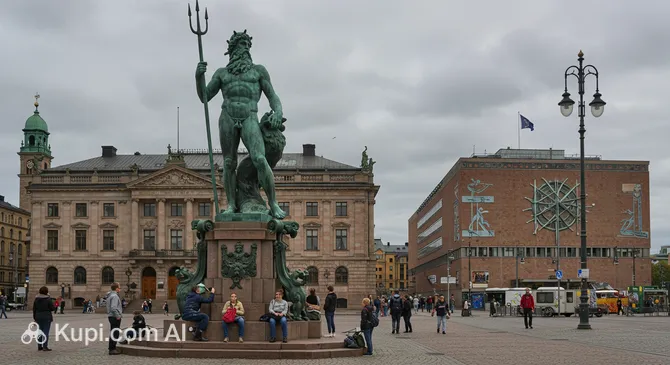
Poseidon Statue. Illustration.
Source: Kupi.com AI

Traveler photos:

The sculpture is a monumental depiction of the powerful ancient Greek sea god, Poseidon. The deity's figure is the central element of a striking fountain complex, giving it a special sense of dynamism and spectacle, especially during the warmer months when the fountain is active. This spot has become a popular point for photos and meetings, where you can feel the connection to the city's maritime soul.

The author of this outstanding work is the famous Swedish sculptor Carl Milles. The statue was created and installed in 1930. The Poseidon Fountain is rightly considered one of the gems of Milles' work, where the master brilliantly executed complex sculptural challenges and conveyed all the power and majesty of the sea ruler. The work on this monument was a significant milestone in his career and left a notable mark on Swedish art, continuing to fascinate admirers to this day.

Contacts

The Poseidon Statue is an iconic landmark in Gothenburg, which is generally open to the public and does not require advance contact for a visit. Since it is an open-air monument, it has no specific contact details.

You can find the exact location of the Poseidon Statue and plan your route using online maps or by contacting tourist information centers in Gothenburg upon arrival.

How to contactContact
AddressPoseidonstatyn, Götaplatsen 4, 412 56 Göteborg, Sweden
Phone number+46 31 365 00 00

What to Do

The main object of your attention will undoubtedly be the Poseidon Statue itself. This impressive monumental sculpture, one of the symbols of Gothenburg, provides a magnificent opportunity for detailed viewing and, of course, for taking memorable photos. Visitors can appreciate the sculptor's skill and the power radiating from the figure of the sea god.

The statue is ideally located on Götaplatsen square, right in front of the Gothenburg Museum of Art. This proximity makes it easy to combine a visit to both of these major attractions. The square surrounding the statue is a well-maintained public space where it's pleasant to spend time, relax on a bench, and enjoy the urban atmosphere while watching the city's daily life.

While at the foot of Poseidon, take note of the surrounding architecture. The Art Museum building, constructed in 1923 for Gothenburg's 300th anniversary, is a striking example of Neoclassical style and is built from the city's characteristic yellow "Gothenburg brick." Thus, a visit to the statue is not just an encounter with a work of art, but also a chance to appreciate the architectural character of Gothenburg.

Getting There

The Poseidon Statue rises majestically in the heart of Gothenburg, on the famous Götaplatsen square, right in front of the Gothenburg Museum of Art. Thanks to this prime central location, getting to this iconic attraction is very easy. If you are already in the city center, a pleasant walk is a great way to reach the statue. Many streets in Gothenburg are pedestrianized or designed for shared use by pedestrians and cyclists, making your journey comfortable and interesting.

For those who prefer public transport, Gothenburg offers an excellent network. You can easily find a bus or tram heading towards Götaplatsen. Check the nearest stops and routes; the trip won't take much time. Public transport is a convenient and fast way to reach Poseidon from anywhere in the city.

Another popular and eco-friendly way to get around Gothenburg is by bicycle. The city has a convenient bike-sharing system actively used by locals and tourists alike. You can purchase a three-day ticket or, if you're planning a longer stay, a seasonal pass. It's worth noting that the cycling season in Gothenburg is quite long, lasting until December 31st, so this mode of transport is available for most of the year. Cycling to the Poseidon statue will not only get you there quickly but also help you soak up the city's atmosphere.

Nearest city: Gothenburg

History & Facts

The Poseidon Statue, one of the most recognizable symbols of Gothenburg, was created by the prominent Swedish sculptor Carl Milles. The monument was officially unveiled in 1930. The statue stands majestically in front of the Gothenburg Museum of Art, which itself is a historical landmark—built for the 1923 World's Fair to commemorate the city's 300th anniversary. Thus, Poseidon became more than just an ornament; it became part of the celebration of a significant date in Gothenburg's history.

The statue's history has not been without dramatic moments. In 1980, the Poseidon Statue was vandalized: unknown assailants damaged the leg of the mighty sea god. This event caused a significant public outcry. Fortunately, thanks to the efforts of restorers, the sculpture was returned to its original state and continues to delight residents and guests today, serving as a reminder of the resilience of cultural heritage.

For Gothenburg, a city with a rich maritime history and traditions, the Poseidon Statue holds a special, deeply symbolic meaning. It personifies the city's inseparable connection to the sea, its dependence on waterways, and the vital role that seafaring and trade have always played in the development of Gothenburg. This monument is not just a work of art, but a tribute to the sea and those who have dedicated their lives to it, making it an integral part of Sweden's cultural and historical landscape.

Time Needed

Viewing the Poseidon Statue itself usually doesn't take much time. For most visitors, about 30 minutes is enough to see the sculpture from all sides, take photos, and appreciate the craftsmanship of this famous symbol of Gothenburg. This time is sufficient to get a general impression of the monument and its details.

However, it's worth considering that the Poseidon Statue is the central element of Götaplatsen, which itself is of significant cultural interest. Many tourists prefer not to limit themselves to just seeing the statue, but rather take a walk around the square and admire the architecture of the surrounding buildings, such as the Gothenburg Museum of Art, the City Theater, and the Concert Hall. If you also plan to soak in the atmosphere of Götaplatsen and perhaps visit one of these institutions, your total time in the area could be from 1 to 2 hours or even more, depending on your interests.

Working Hours

The Poseidon Statue in Gothenburg is generally a public monument located in an open space. This means that access to it is usually possible at any time of day and year-round, without the need to purchase tickets or make a reservation. You can approach and view the statue at your convenience.

However, it's always useful to check for current information on-site or on Gothenburg's official tourist resources. Occasionally, access may be temporarily restricted due to city events, restoration work, or other special circumstances. But in most cases, no special planning is required to see landmarks like the Poseidon Statue.

Open 24 hours

Nearby

Exploring the area around the Poseidon Statue in Gothenburg will allow you to dive deeper into the city's atmosphere and discover even more interesting spots. Often, the brightest impressions of a trip come from visiting not only iconic landmarks but also those in the immediate vicinity, which complete the overall picture and broaden your travel experience.

There are several noteworthy sites near the Poseidon Statue that may interest you. Below is a list of some of them, including distances, to help you plan your route more conveniently.

NameDistance
Gothenburg Concert Hall0 km
Gothenburg Museum of Art0.1 km
Pivo - Passion for Game0.2 km
Universeum0.5 km
Scandinavium0.5 km
Liseberg0.6 km
Gothia Towers & Upper House0.6 km

Have you reached the end of the page?

So the route has been studied inside and out