Support

Oslo Opera House

About

The Opera House in Oslo is not just the main stage for opera and ballet in Norway, but a true masterpiece of modern architecture and one of the capital's most striking landmarks. Located on the shores of Bjørvika Bay, it is home to the Norwegian National Opera and Ballet. The building was funded by the state and opened in 2008, becoming the largest cultural project in the country in many centuries.

The theater's architecture, designed by the Norwegian firm Snøhetta, is truly unique. From the outside, the building resembles a giant iceberg drifting in the waters of the Oslo Fjord. This concept, inspired by Scandinavian glaciers, was realized using white Italian marble and granite, giving the building a majestic and clean appearance. Through massive panoramic windows, visitors can observe the work in the theatrical workshops, creating a sense of openness and connecting art with everyday life.
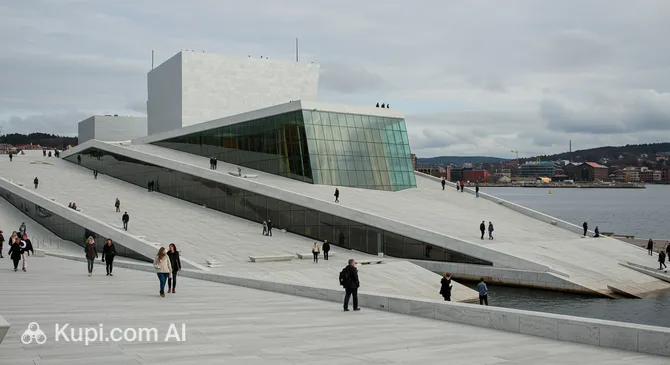
Oslo Opera House. Illustration.
Source: Kupi.com AI

Traveler photos:

The main feature of the Opera House is its famous slanting roof, which slopes right down to the water. It is fully open to the public, turning the theater into a popular social space. Anyone can freely walk to the very top of the building, which offers stunning panoramic views of the city and the fjord. This makes the Opera House not only a place for fine art enthusiasts but also a favorite spot for walks for both tourists and locals.

Contacts

To find out the current schedule, book tickets, or ask any questions, you can contact the Oslo Opera House administration. All necessary information is available on the official website as well as by phone.

How to contactContact
AddressKirsten Flagstads Plass 1, 0150 Oslo, Norway
Phone number+47 21 42 21 21
Websiteoperaen.no

What to Do

A visit to the Opera House in Oslo is a multifaceted experience that goes far beyond watching a performance. Of course, many people's main goal is to see a world-class opera, ballet, or concert performed by the Norwegian National Company. The acoustics of the main hall are considered among the best in the world, making every performance an unforgettable event. It is recommended to book tickets for popular productions in advance.

Even if you don't plan to attend a performance, the Opera House offers plenty of experiences. One of the most unique and popular activities is walking on the slanting roof of the building, which descends directly to the water. This area is fully open to the public, turning the theater into a popular social space where you can relax, have a picnic, and enjoy stunning panoramic views of the Oslo Fjord and the city. Access to the roof is free and open to everyone.

Don't limit yourself to just the exterior. The inside of the theater is just as interesting: you can freely enter the spacious foyer with its massive panoramic windows. There are also cafes and restaurants where you can enjoy a coffee with a view of the fjord. For those who want a peek behind the scenes, tours in English are available. During the 50-minute tour, guides show the stage, dressing rooms, and workshops where sets and costumes are made, while sharing insights about the architecture and theatrical life.

Getting There

Getting to the Opera House in Oslo is easy thanks to its prime location in the heart of the city. The building sits on the shores of Bjørvika Bay, just a few minutes' walk from the Central Railway Station (Oslo S) and the main transport hub, Jernbanetorget. This makes it easily accessible on foot from most central districts of the capital of Norway.

The most convenient way to reach the theater is by using Oslo's efficient public transport system. Almost all metro lines, as well as numerous bus and tram routes, stop at Jernbanetorget station. From there, it's a 5–10 minute walk to the Opera. You can also take trams that go to the Bjørvika stop, located in the immediate vicinity of the theater.

If you prefer comfort, you can always take a taxi, which will drop you off right at the entrance. For those traveling by car, paid parking is available near the Opera House. In good weather, cycling is a great option—the city has a well-developed bike-sharing system, and the route along the waterfront offers many pleasant views.

Nearest city: Oslo

History & Facts

The history of the Opera House in Oslo is a story of a long-awaited dream brought to life on an incredible scale. The idea of building a dedicated opera house dates back to the 19th century, but the project only truly gained momentum in the early 2000s. The Norwegian architectural firm Snøhetta, already famous for its design of the renowned Bibliotheca Alexandrina in Egypt, won the international competition. This set a high bar for the future symbol of the capital.

Construction took place from 2003 to 2007, and its official opening was held in 2008. This project became the largest cultural building in Norway since the construction of Nidaros Cathedral in Trondheim around 1300. As such, the Opera House is the largest public building constructed in the country in the last seven centuries, highlighting its colossal significance for national culture.

Immediately after its opening, the Opera House received worldwide acclaim. For its unique and bold design, the building was honored with numerous prestigious awards, including the European Union Prize for Contemporary Architecture – Mies van der Rohe Award in 2009. Rapidly becoming one of the most recognizable landmarks, the theater has become not just a stage, but a true symbol of the cultural and architectural rebirth of modern Oslo.

Time Needed

When planning a visit to the Oslo Opera House, keep in mind that the time spent can vary greatly depending on your interests. For a quick look, including a walk on the famous slanting roof and a visit to the futuristic foyer, 1 to 2 hours is usually enough. This is plenty of time to enjoy panoramic views of the city and the Oslo Fjord, take impressive photos, and feel the unique atmosphere of this architectural masterpiece.

If you want to learn more about the life of the theater, it's worth joining a backstage tour. These tours are typically conducted in English and last about 50 minutes. During the tour, you can see the main hall, rehearsal rooms, and workshops where sets and costumes are created. Thus, a visit including a tour will take about 2–2.5 hours. Also, don't forget that the theater building has cafes and restaurants where you can relax, which will add some time to your visit.

For full immersion into the world of art, plan to attend a performance. Watching an opera or ballet is a separate event that will take up an entire evening, usually from 2.5 to 4 hours, depending on the production. Thus, the Oslo Opera House offers flexible visiting options: from a quick hour-long walk on the roof to a complete cultural evening.

Working Hours

The Opera House in Oslo welcomes guests all year round, and access to the building is open even if you don't plan to attend a performance. The theater foyer can be visited Monday through Saturday from 11:00 to 22:00 and on Sunday from 12:00 to 22:00, or until the end of the last performance. The main highlight, the famous roof with its panoramic views, is generally accessible for walks for free and 24/7 during the summer months. However, please note that for safety reasons, roof access may be restricted in winter due to icy conditions.

If you wish to attend an opera, ballet, or concert, tickets can be purchased at the box office, which is open Monday through Saturday from 11:00 to 16:00 and on Sunday from 12:00 to 16:00 (or until the last intermission on performance days). It is highly recommended to book tickets for popular productions in advance to guarantee a seat. For the most accurate and up-to-date information on performance schedules, tour times, and potential changes in opening hours, it is always best to check the official Opera House website.

Nearby

Visiting the Opera House in Oslo is an excellent starting point for exploring the center of the Norwegian capital. Thanks to its location on the fjord's edge, the theater is surrounded by many other interesting spots within easy walking distance. Exploring the neighborhood will allow you to dive deeper into the city's culture and atmosphere, complementing your impressions of this architectural masterpiece with new discoveries.

A walk through the Bjørvika district, where the opera is located, is a pleasure in itself. It offers picturesque views, and both historical monuments and modern cultural sites are within walking distance. Below is a list of attractions located nearby that are worth including in your itinerary.

NameDistance
The Munch Museum0.2 km
Mamma Pizza0.5 km
HIMKOK Storgata Distillery0.8 km
Ekeberg Park1 km
Kiosken Bar1.1 km
Fuglen1.3 km
Hotel Continental1.3 km

Have you reached the end of the page?

So the route has been studied inside and out