Support

Vigeland Park

About

Vigeland Park (Vigelandsparken) is one of the most stunning attractions in Oslo, located in the picturesque Frogner district. Its main feature is that it is the world's largest sculpture park dedicated entirely to the work of a single artist—Gustav Vigeland. This fact makes it a truly unique place not only in Norway but in the entire world.
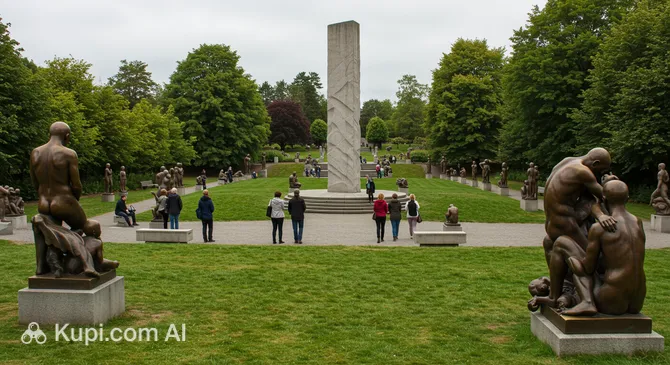
Vigeland Park. Illustration.
Source: Kupi.com AI

Traveler photos:

Spanning about 30 hectares, the park features more than 200 sculpture groups made of bronze, granite, and wrought iron. Each work of art reflects different aspects of human life: from birth to old age, complex relationships, joy, sorrow, and the entire spectrum of emotions. The central elements of the composition are monumental works such as the "Monolith," the "Fountain," and the "Wheel of Life."

Vigeland Park is not just an open-air art gallery, but also a favorite spot for walking and relaxation for both tourists and locals. It harmoniously combines monumental sculptures, scenic alleys, fountains, and manicured lawns, creating a unique atmosphere for quiet contemplation and rest. The park is open year-round and leaves a lasting impression at any time.

Contacts

Vigeland Park is a public space open 24/7, so it does not have a single dedicated tourist contact service. To reach the park, located in the Frogner district, you can use Oslo public transport—for example, take tram No. 12 to the "Vigelandsparken" stop or take the metro to "Majorstuen" station. If you are interested in more detailed information about the sculptor's work or wish to book a tour, it is recommended to contact the Vigeland Museum directly, which is located on the park grounds.

How to contactContact
AddressNobels gate 32, 0268 Oslo, Norway
Phone number+47 23 49 37 00
Websitevigeland.museum.no

What to Do

A visit to Vigeland Park is primarily an engaging walk among hundreds of unique sculptures, where each tells its own story of human feelings, relationships, and different stages of life. The iconic compositions that have become symbols of the park attract particular attention from tourists and locals alike. These include the Bridge, adorned with 58 bronze figures; the famous "Angry Boy"; the majestic Fountain; and, of course, the centerpiece—the Monolith. This 14-meter granite column, consisting of 121 intertwined human figures, symbolizes the struggle for spirituality and the cycle of life.

In addition to viewing the art, the park offers many other activities. The well-kept lawns are perfect for a leisurely picnic, while the wide avenues are great for observing locals as they cycle or exercise. It is a wonderful place to take striking photos against the backdrop of the most famous art objects. In the warmer months, the park is especially popular with families and anyone seeking inspiration or just wanting to relax surrounded by nature and art. In the evening, when the lights come on, the sculptures take on an even more mysterious and fantastical appearance.

Getting There

Getting to Vigeland Park is easy, as it is conveniently located in the western part of Oslo, in the Frogner district, and has excellent transport links to the city center. Thanks to the efficient public transport system, the journey doesn't take long. Most tourists and locals prefer to travel here by public transport to avoid the hassle of finding a parking spot.

The most convenient and popular way is to use public transport. Right at the main entrance to the park is the Vigelandsparken stop, which can be reached by tram No. 12, running through the city center. City buses No. 20, 28, 45, and 46 also serve this stop. Another option is to take the metro (T-bane) to Majorstuen station, which is a major transport hub. From there, a pleasant walk of about 10 minutes awaits you.

If you are traveling by car, there are parking spaces near the park, but keep in mind that they are paid and can be limited during the peak tourist season. Therefore, public transport is often a more reliable choice. For those who enjoy active recreation, cycling is a wonderful alternative: Oslo's well-developed cycling infrastructure makes reaching the park easy and enjoyable.

Nearest city: Oslo

History & Facts

The history of Vigeland Park is inextricably linked to the life and work of the prominent Norwegian sculptor Gustav Vigeland, who dedicated several decades to this monumental project. The idea of creating a monumental composition dedicated to human life originated with the artist at the beginning of the 20th century. A turning point came in 1921 when, after long negotiations, Vigeland entered into a unique agreement with the Oslo city authorities: in exchange for a new, spacious studio and land, he pledged to donate all his future works—including sculptures, drawings, and models—to the city.

Work on the park became the master's life's work. The active phase of creating the sculptures and planning the grounds lasted from 1907 to 1942. Gustav Vigeland worked on his creation until his death in 1943 but never saw it in its fully completed form. The park was finally finished only by 1950, when the last sculpture groups were installed. This lengthy creation process highlights the incredible scale and complexity of the project, which has become a unique cultural heritage of Norway.

A notable fact is that this ambitious project was funded not only by the city authorities but also through private donations; for example, the installation of the Main Gates was sponsored by a Norwegian bank. After the sculptor's death, his studio was converted into the Vigeland Museum, as agreed. Today, it houses the original plaster models for most of the park's sculptures, along with his personal belongings and drawings, allowing for a deeper understanding of the artist's creative vision.

Time Needed

To fully enjoy the atmosphere of Vigeland Park and see its main treasures, it is recommended to set aside 2 to 3 hours for your visit. This is generally enough time to stroll leisurely along the park's central axis and get to know the main sculpture groups, including the famous "Monolith," the "Fountain," and the compositions on the Bridge. You will also have time to take impressive souvenir photos and simply relax in nature, enjoying the unique blend of art and landscape design.

Of course, the duration of your visit can vary depending on your interests. If you are short on time, you can take a quick walk along the main avenues, focusing on the most famous works, which will take about one to one and a half hours. However, if you want to delve deeper into the artist's work, visit the adjacent Vigeland Museum, which houses his sketches and models, or have a picnic on one of the lawns, you could easily spend half a day at the park. In any case, this place in Oslo leaves an unforgettable impression, no matter how much time you spend here.

Working Hours

One of the main advantages of Vigeland Park is its exceptional accessibility. The park is open 24 hours a day, 365 days a year, and best of all, entry is completely free. This allows tourists to plan their visit without being tied to a specific time and without the need to book tickets in advance. You can enjoy a walk among the sculptures early in the morning or late at night when the illumination creates a special, mysterious atmosphere.

It is important not to confuse the park itself with the Vigeland Museum, which is located nearby. Unlike the park, the museum has specific operating hours and may charge an admission fee. The museum's schedule changes depending on the season, so it is highly recommended to check current information on its official website before visiting. This is especially important if you want to delve deeper into Gustav Vigeland's work and see the sketches, models, and other pieces by the master.

Open 24 hours

Nearby

Visiting Vigeland Park is undoubtedly one of the highlights of a trip to Oslo, but exploring its surroundings can make your journey even more rewarding. The Frogner district, where the park is located, and the adjacent areas are rich in other interesting sites that allow you to dive deeper into the culture and atmosphere of the Norwegian capital. A walk to nearby attractions will help form a more complete picture of this amazing city.

Many iconic sites are within walking distance or a short public transport ride away, making exploration of the neighborhood a convenient and pleasant addition to a visit to the famous sculpture park. From other park areas and museums to architectural landmarks, everyone will find something interesting nearby.

NameDistance
Frogner Baths0.4 km
The Royal Palace1.9 km
Gol Stave Church2.3 km
Hotel Continental2.3 km
National Museum2.3 km
Norwegian Museum of Cultural History2.3 km
Fuglen2.4 km

Have you reached the end of the page?

So the route has been studied inside and out