Support

Hovedøya kloster

About

On a picturesque island in the waters of the Oslo Fjord lie majestic ruins that preserve the memory of a medieval past. Hovedøya Abbey consists of the remains of a 12th-century Cistercian monastery that was once the spiritual and economic heart of the region. Today, it is a unique historical site where rugged stone walls blend harmoniously with northern nature.
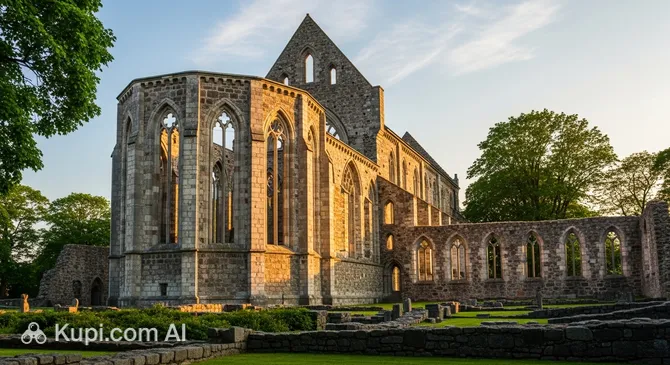
Hovedøya Abbey
Hovedøya Abbey. Иллюстрация. Источник: Kupi.com AI

Located very close to the bustling city center of Oslo, this site offers tourists a wonderful contrast between the modern capital and ancient tranquility. The ruins include fragments of a Romanesque church and later Gothic buildings adapted to the terrain of a small hill. Norway carefully preserves this monument, allowing guests to wander freely among the ancient foundations.

The significance of this place lies not only in its architecture but also in its history: at its peak, the monastery owned hundreds of farms and played a key role in the life of the country. Now, it is an ideal location for those seeking quiet, panoramic sea views, and a touch of authentic Scandinavian history.

Contacts

For those planning a self-guided visit, it is helpful to have the basic location details at hand. Although the monastery is an open-air historical monument, it has an official address and information resource.

How to contactContact
Address0150 Осло, Норвегия
Websitesnl.no

What to Do

The main activity here is a thoughtful exploration of the ancient ruins. You can roam freely among the remains of the monastic walls, studying architectural details and imagining how the monks lived hundreds of years ago. Information plaques are placed throughout the perimeter, providing detailed accounts of the purpose of each room and the history of its construction.

Hovedøya island is excellent for family recreation. Children enjoy climbing through the safe stone labyrinths, and after an educational walk, you can stop by a cozy cafe for local treats. In summer, the island turns into a popular spot for swimming and sunbathing — there are clean beaches and convenient cliffs for jumping into the water.

In addition to the monastery, it's worth noting the Victorian laboratory house and old military structures, including gunpowder cellars, which add a special character to the place. Be sure to bring a picnic basket: the island has many green lawns with stunning views of the fjord, where you can escape the city bustle surrounded by wild nature.

Getting There

The journey to the ruins begins with a boat trip. To reach Hovedøya island, you need to take a regular ferry that departs from the Rådhusbrygge 3 pier, located in the immediate vicinity of the City Hall. The trip across the waters of the Oslo Fjord takes only 15–20 minutes, turning the commute into a pleasant mini-excursion.

The pier itself is easy to reach by public transport: the nearest metro station (Nationaltheatret) and tram stops are just a few minutes' walk away. If you prefer comfort, you can call a taxi directly to the waterfront; however, keep in mind that car traffic is prohibited on the island itself.

Ferries run quite frequently, especially during the summer, but intervals may increase in winter. It is recommended to check the current schedule on the website of the city transport provider, Ruter, in advance. The ticket price usually corresponds to the standard fare for Oslo city transport.

Ближайший город: Oslo

History & Facts

The history of this site began on May 18, 1147, when Cistercian monks founded their monastery here. During the Middle Ages, Hovedøya Abbey grew into one of the most influential and wealthy institutions of which Norway was proud. It owned more than 400 properties, including valuable sawmills and fishing grounds, making the abbots key players in the region's economy.

The architectural ensemble combined the austerity of the Romanesque style with the elegance of Gothic elements. However, prosperity ended in 1532 during the Reformation: the monastery was looted and burned. In subsequent centuries, the ruins became a kind of "quarry" — their stones were used to strengthen and restore the famous Akershus Fortress in the 17th century.

In the 19th century, the island took on new significance. Military gunpowder magazines and artillery batteries were located here. Interestingly, during this period, the famous weapons designer Ole Herman Johannes Krag worked in the local Victorian house, known as the "laboratory." Today, these scattered layers of history — from monks' prayers to cannon fire — peacefully coexist in the silence of the island landscape.

Time Needed

To leisurely explore Hovedøya Abbey and soak in the island's atmosphere, it is best to set aside 2 to 4 hours. This is quite enough time to study the ruins, read the information stands, and stroll along the surrounding paths.

Keep in mind that about an hour will be spent on the ferry ride there and back. If you plan to have a picnic on the grass, visit the local cafe, or swim in the cool waters of the fjord on a summer day, you could easily spend half a day on the island.

Working Hours

The territory of the monastery ruins is accessible for visiting 24/7 and is completely free throughout the year. You can come here early in the morning to catch the mist over the fjord, or in the evening to admire the sunset among the ancient stones.

However, your visit directly depends on the ferry schedule. Water transport usually runs from 6:00 AM until midnight in the summer season, but there are significantly fewer trips in winter. To check the current vessel schedule, we recommend checking the Ruter.no website before departing.

Nearby

Hovedøya island is just one of the gems of the Oslo Fjord. After walking through the ruins and relaxing on the shore, you can continue exploring the cultural and natural heritage of the Norwegian capital, as many iconic sites are within a radius of just a few kilometers.

NameDistance
Astrup Fearnley Museum of Modern Art1.2 km
The Salmon1.3 km
National Museum1.7 km
Nobel Peace Center1.7 km
Ekeberg Park1.8 km
The Munch Museum1.8 km
Fram Museum1.8 km

Reached the end of the page?

That means the route is fully explored