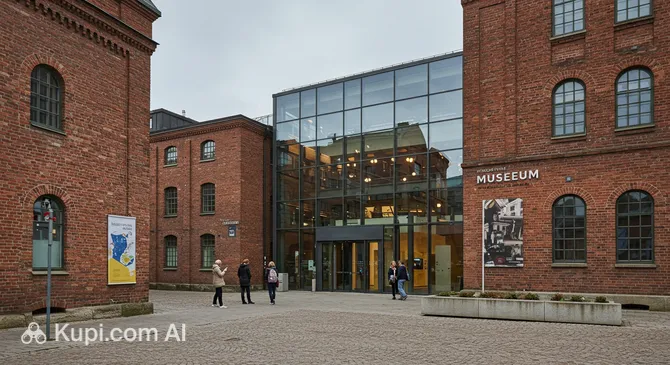
In the heart of the city of Norrköping, on an island in the middle of the Motala ström river, stands an unusual heptagonal building that locals affectionately call "The Iron" (Strykjärnet). This is the home of the Museum of Work—a unique space where the history of Sweden comes to life through the fates of ordinary people, their daily lives, and their labor achievements.
Traveler photos:
Unlike traditional galleries, this museum focuses not on dry dates, but on human stories. Its archives carefully preserve thousands of interviews and photographs documenting working life past and present. The museum occupies a former weaving factory built in 1917 and is a striking example of how industrial heritage can be transformed into a modern cultural center.
Today, the Museum of Work is not just about textile industry exhibitions; it is a platform for discussing important social topics such as ecology, gender equality, and the future of professions. A special place here is occupied by the EWK center for political illustration, offering a look at the world through the prism of sharp satire. This venue attracts over 200,000 visitors annually with its inspiring approach to history and completely free admission.