Support

Chur

About

Chur is not just the administrative center of the Graubünden canton, but an amazing city with a unique atmosphere, nestled comfortably in the heart of the Alps. Situated in the picturesque Rhine Valley at the confluence with the Plessur River, it serves as an important transport hub and a gateway connecting the south and north of Switzerland. With a population of about 35,000, Chur successfully combines the rhythm of a modern city with the tranquility of a mountain resort.

Chur. Illustration.
Source: Kupi.com AI

The heart of the city is its historical center, which is entirely pedestrianized. Here, among the winding streets, old houses, and cozy squares, the centuries-old history of Chur, which dates back to Celtic and Roman times, is easily visible. A walk through the Old Town is a journey through time that can be combined with visits to fashion boutiques, art galleries, and numerous cafes that create a lively and welcoming atmosphere.

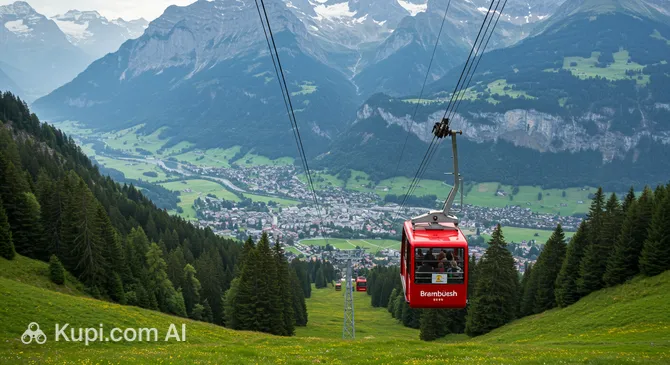
One of the city's main highlights is Mount Brambrüesch, which can be reached by cable car directly from the center. This makes Chur a unique place where alpine meadows and ski slopes are literally within walking distance of the city bustle. In winter, people ski here, and in summer, they go hiking or biking while enjoying breathtaking panoramas.

Chur is an ideal destination for those who want to feel the true spirit of the region, enjoy medieval charm, and still have access to all the comforts of civilization. Come here to see the harmonious fusion of ancient traditions and majestic nature.

Weather Overview

The climate of Chur is largely determined by its location in a deep Alpine valley, which ensures a clear change of seasons. Winters here are truly cold and snowy: in January, the average temperature drops to -5.3°C, and at night, frosts can reach -9.5°C. This time of year is great for lovers of a winter atmosphere, although the number of days with precipitation remains consistently high—about 14–17 days per month.

Summer in the city brings pleasant freshness rather than heat. In July and August, the air warms up to an average of +13.5°C, and daytime maximums rarely exceed +18.5°C. However, this period is characterized by increased humidity: May and the summer months are record holders for the number of "wet" days (up to 24 days in May and 22 in June-July), so an umbrella or raincoat will be indispensable companions on your journey.

Expect moderately warm summers with frequent rain and cold but picturesque winters. To choose the ideal time for your visit and prepare for the whims of the mountain climate, we recommend checking the weather in Chur by month in advance.

Average monthly temperature

Average monthly precipitation

Interesting Facts

In addition to its famous architectural monuments, Chur hides many fascinating details that reveal themselves only to the attentive traveler. This city is a true treasure trove of stories, where deep antiquity is harmoniously intertwined with the rhythm of modern life.

  • Chur officially holds the title of Switzerland's oldest city. Archaeological research confirms that the first settlements in this area appeared more than 5,000 years ago, making it a unique open-air historical monument.

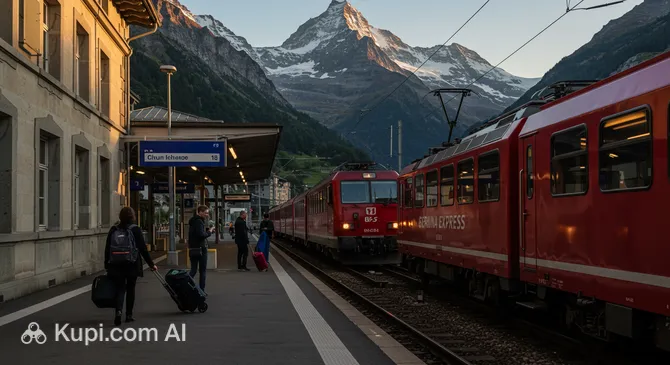
  • The city is a key point for railway romance enthusiasts: this is the starting point for the famous Bernina Express. This panoramic train follows a route included on the UNESCO World Heritage list and is considered one of the most beautiful in the world.

  • In the historical center, which is practically car-free, there is an unusual navigation system. Tourists can follow special red markers on the streets that lay out the optimal route to the main attractions, including the cathedral and the bishop's castle.

  • Every Saturday during the warmer months (from May to October), the central squares are transformed by farmers' markets. This is a great opportunity for visitors to try local products and experience the true taste of the Graubünden region.

Bernina Express. Illustration.
Source: Kupi.com AI

Traveler photos:

How to Get There

The city of Chur, being the capital of the Graubünden canton and an important transport hub, boasts excellent accessibility. Travelers can choose the most convenient route by combining a flight with a train or car journey. You can find out more about how to get to Chur by studying all available options, and below we look at the main air and rail gateways leading to this region.

Chur itself does not have its own airport, so tourists usually fly into major international hubs nearby. The most popular option is Zurich Airport (IATA: ZRH). This is the largest international airport in the country, located approximately 99.5 km from Chur. Thanks to Switzerland's excellent rail network, many choose to take a train directly from the terminal, but a car trip is also quite fast—it will take approximately 1.5 hours.

Another convenient option, especially for those traveling from Italy or looking for budget flights, is Orio al Serio Airport (IATA: BGY). It is located near the city of Milan, 131.5 km from Chur. This is a major hub for low-cost airlines. The journey by car from here will take about 2.5 hours, allowing you to enjoy the views while crossing the border.

For clarity, here is summary information on the main airports:

AirportPassenger trafficDistance
Altenrhein Airport84 10071 km
Friedrichshafen Airport339 55691 km
Zurich Airport31.2 mln100 km
Lugano Airport190 698106 km
Orio al Serio International Airport17.4 mln131 km

The railway is one of the most scenic and reliable ways to reach the capital of Graubünden. Chur has an important railway station where trains arrive from different parts of Europe, often with a transfer at major hubs.

A key transfer point is Zurich Hauptbahnhof (ZLP). This station is located 95.4 km from Chur. It is one of the busiest and most efficient railway hubs in the world, with regular direct InterCity trains. The travel time by train is just over an hour, which is often faster and more comfortable than driving.

From the south, Milan Centrale (XIK) serves as an important transport hub. It is located about 153.8 km from Chur. From here, you can begin an exciting journey through the Alps, which will be a highlight of your holiday in itself.

Below is a table with the nearest major railway hubs through which it is convenient to plan your route:

StationPassenger trafficDistance
Zürich Hauptbahnhof154.6 mln95 km
Lugano Railway Station11.2 mln104 km
Cadorna Railway Station15 mln149 km
Innsbruck Railway Station14.1 mln149 km
Milano Centrale Station120 mln154 km

Main Attractions

As Switzerland's oldest city, Chur offers travelers a unique opportunity to experience living history surrounded by the majestic Alps. Here, where every stone breathes antiquity, architectural monuments and natural beauty are concentrated to make your visit unforgettable. Here is a list of places you should definitely include in your itinerary.

Start your discovery with a walk through the Old Town. It is one of the best-preserved historical zones in the country and is completely car-free. A labyrinth of winding cobbled streets leads past medieval buildings with painted facades, cozy squares, and ancient fountains. You can wander endlessly here, examining the architectural details, looking into small boutiques, or enjoying coffee in outdoor cafes, soaking up the atmosphere of the past.

Brambrüesch Cableways. Illustration.
Source: Kupi.com AI

Traveler photos:

One of the city's main features is its direct connection to the mountains. Right from the center, you can hop on a lift and head upwards. The Brambrüesch cable car transports tourists from the city bustle to a sunny plateau in just a few minutes. This place is ideal for active recreation at any time of year: in summer, there are picturesque routes for hiking and mountain biking, and in winter, the slopes turn into trails for skiers and sledders, offering breathtaking panoramas of the Rhine Valley.

For lovers of sacred architecture, the Cathedral of the Assumption of the Virgin Mary is a must-visit. Located on a hill in the Bishop's Court area, this temple was built between the 12th and 13th centuries and is an impressive example of Romanesque and Gothic styles. A solemn atmosphere reigns inside, while the rich interior and ancient altars tell of Chur's centuries-old religious significance as a bishop's residence.

Chur is also known as the starting point for one of the most beautiful train journeys in the world. This is where the legendary Bernina Express begins. This panoramic train follows a route included on the UNESCO World Heritage list, crossing dizzying viaducts, tunnels, and mountain passes. Even if you do not plan a long trip, the sight of the red train against the mountain backdrop has become one of the symbols of the region.

Local Cuisine

The gastronomic scene of Chur is a delicious reflection of the Graubünden canton's traditions, where Alpine heartiness harmoniously blends with the refinement of neighboring Italy. Food here is not just about satisfying hunger, but a true ritual of immersion into local culture. The main dish that every visitor must try is Capuns. These are hearty rolls made from chard leaves, filled with a tender dough with pieces of dried meat and sausage, simmered in a creamy sauce with cheese.

Pasta lovers should look out for Pizzoccheri—a legacy of the southern valleys. These are flat buckwheat noodles served with potatoes, savoy cabbage, and a generous portion of melted cheese. As an appetizer or light snack, local establishments often offer "Bündnerfleisch"—thinly sliced air-dried beef—and the aromatic mountain cheese Bündner Bergkäse. The perfect end to a meal is a piece of the famous Engadiner Nusstorte (nut tart), which pairs perfectly with a strong coffee.

The region's wine list deserves special attention. Be sure to taste the wines from the Bündner Herrschaft area, often called the "Burgundy of Switzerland." Excellent varieties are produced here, especially Pinot Noir, which is famous far beyond the country's borders. In autumn, wine festivals and harvest celebrations take place in Chur, where you can personally appreciate the richness of local cellars.

The dining culture in the city is diverse: from cozy cafes with homemade pastries in the labyrinths of the Old Town to bustling farmers' markets where locals buy fresh bread, vegetables, and chocolate. If you want to combine lunch with breathtaking views, the Brambrüesch cable car will take you to mountain restaurants where traditional Alpine dishes taste even better in the fresh air.

Travel Tips

Preparing for a trip to the capital of the Graubünden canton requires attention to detail. This region combines urban comfort with the rugged character of the Alps, and life in Switzerland is subject to certain rules, the knowledge of which will save you time and money. To make your stay in Chur as carefree as possible, we have collected a list of proven recommendations.

  1. Clothing and Footwear. Weather in the mountains changes rapidly, so the best wardrobe principle here is layering. Even in summer, evenings can be cool, so a windbreaker is a must. Since the historical center is paved with cobblestones and many streets are on an incline, ditch the heels in favor of comfortable flat shoes. If you plan to go up Mount Brambrüesch, don't forget sunglasses and sunscreen—the sun at altitude is very active.
  2. Transport and Navigation. The historical center of Chur is compact and closed to cars, so it is best to explore it on foot. For trips to the surrounding area, public transport works perfectly. Taxis are expensive, so we recommend installing the SBB Mobile app. It will help you plan routes and buy tickets for trains and buses throughout the country.
  3. Finances. The national currency is the Swiss franc (CHF). Although euros may be accepted in large stores, change will be given in francs and at an unfavorable rate. Bank cards work everywhere, but for markets or small mountain cafes, it is better to have some cash. Remember that prices here are higher than the European average, so plan your budget with a margin.
  4. Communication. Be aware: the country is not in the EU, and European roaming often does not apply here or is very expensive. It is more profitable to purchase a local prepaid SIM card or activate an eSIM. Free Wi-Fi is available at the station, in most cafes, and on PostBus buses.
  5. Water and Health. Chur is a safe city where you can walk at any time. A useful tip for saving money: you don't necessarily need to buy water. There are many fountains in the city with pure alpine drinking water—just carry a reusable bottle with you. Pharmacies are easily recognized by the green cross.
  6. Local Etiquette. Residents value politeness and quiet. When entering a shop or addressing a passerby, it is customary to say hello with the local word "Grüezi" (Grew-tsi). On public transport and in restaurants, it is not customary to speak loudly, especially on the phone, so as not to disturb the personal space of others.
  7. Opening Hours and Punctuality. Do not plan shopping for Sunday—almost all shops are closed on this day, except for those at the station. Also, avoid being late: transport runs strictly on schedule, to the second. Being late for a meeting or excursion is considered a sign of disrespect.
  8. Guest Card. If you stay in a hotel in Chur for at least one night, be sure to ask for a Guest Card at reception. Often it entitles you to free travel on city transport and discounts on lifts or museums. This is a great way to optimize your expenses.

Chur is a place where order is harmoniously intertwined with hospitality. By following these simple tips, you will avoid awkward situations and be able to fully focus on enjoying the magnificent views of the region's oldest city.

Entertainment & Nightlife

Despite its status as the country's oldest city and its reputation as a quiet Alpine resort, Chur knows how to surprise with its vibrant evening program. Nightlife here is centered not so much in the historical center as in the famous Welschdörfli district. This area, located to the west of the Old Town, becomes a magnet for young people, tourists, and locals after sunset. Here, cozy pubs, noisy bars, and dance clubs sit side-by-side on one street, creating an atmosphere of an endless party, especially on Fridays and Saturdays.

The atmosphere in Chur's establishments is democratic and relaxed: strict dress codes are rare, and casual style is welcomed in most places. If you are looking for a place to start the evening, check out the popular Schall und Rauch bar, known for its wide selection of drinks and lively atmosphere. For those who want to continue the fun on the dance floor, the Street Café club opens its doors, having remained a focal point for music and dance lovers for many years. It is also worth visiting the Werkstatt cultural center—a unique space in a former workshop that often hosts concerts, parties, and theatrical performances.

Entertainment prices correspond to the general Swiss level: you can expect to pay between 15 and 20 francs for a cocktail on average, and about 7–9 francs for a glass of beer. The city is very compact, and it is safe to move around on foot at night, as the crime rate is extremely low. If you are tired, taxis are easy to find at stands near the station or by calling; taxi apps work here but are not as active as in larger cities. For "night owls," night buses run on weekends, taking guests to the surrounding areas.

During the day, Chur offers a more measured pace of leisure. Culture lovers can visit the Rhaetian Museum or the Forum Würth, while fans of outdoor activities will appreciate the proximity to nature. Literally from the city center, the Brambrüesch cable car will whisk you away into the mountains. This is an excellent option for a day adventure: in summer, you can walk through alpine meadows, and in winter, you can go skiing, only to return to the city in the evening and dive into the lights of Welschdörfli.

Parks & Museums

The cultural landscape of Chur is surprisingly rich for a city of its size: centuries of history coexist with modern art, and well-kept city gardens blend seamlessly into wild Alpine nature. For travelers wishing to take a break from the hustle and bustle and immerse themselves in local color, the city offers an impressive collection of museums and picturesque green spaces.

Among the city's green oases, Fontanapark holds a special place. This is the oldest city garden, laid out on the site of a former cemetery in the 17th century. Today, it is a cozy space with tall centuries-old trees, colorful flowerbeds, and a monument to the hero Benedict Fontana, where it is pleasant to take shelter in the shade on a hot summer day. Another popular recreation area is Quaderwiese—a vast green lawn in the city center, which locals call their "Central Park." People have picnics here, play frisbee, and simply enjoy the view of the surrounding mountains.

If you want something grander, the nature around the city itself acts as the main park. The Brambrüesch cable car will transport you from the city center to alpine meadows in a few minutes, which in summer turn into a flowering garden with panoramic views, ideal for walking in the fresh air.

To get acquainted with the history and art of the Graubünden region, it is worth visiting the key museums:

  • Rhaetian Museum (Rätisches Museum). Located in the magnificent Baroque mansion "Haus Buol," this museum is called the "memory of Graubünden." The exhibition covers the period from prehistoric times to the present day, telling about the life, crafts, and political history of the region. It is not just an exhibition of artifacts, but an interactive journey into the past.

  • Graubünden Art Museum (Bündner Kunstmuseum). This place is a must for lovers of architecture and painting. The museum combines the historical Villa Planta and a modern cubic building. The collection features works by famous Swiss artists, including the Giacometti dynasty and Angelica Kauffman, as well as temporary exhibitions of contemporary art.

  • Nature Museum (Bündner Naturmuseum). A great choice for a family visit. Here you can learn all about the flora, fauna, and geology of the Alps, see a collection of minerals, and find out which animals inhabit the local forests.

Walking around the city, it is impossible not to notice the architectural landmarks. In addition to the famous Cathedral, it is worth seeing the Obertor (Upper Gate)—a preserved part of the medieval fortifications that has become one of the symbols of Chur. Passing under its vaults, you feel as if you are crossing a time boundary into the ancient part of the city.

Insider Tip: For a truly unique experience, check out the Giger Bar in the Kalchbühl district. It was designed by Oscar-winning artist H.R. Giger, the creator of the "Alien," who was born in Chur. The bar's interior resembles being inside a fantastic biomechanical organism—it is a real work of art where you can enjoy a coffee or a cocktail.

Getting Around

The transport system in Chur, as in the entire region, is characterized by Swiss precision, comfort, and integration. Since the city is quite compact, there is no metro or tram system. The main burden of passenger transport is carried by an extensive bus network, which is efficiently complemented by rail services.

The main carrier within the city is Chur Bus. These buses run along major routes connecting the railway station, historical center, residential areas, and industrial zones. For trips to the nearest suburbs and neighboring villages, the famous yellow PostAuto (Postal Buses) are used. Intervals are usually 10–15 minutes during peak hours, and transport runs less frequently in the evening. It is important to remember that night routes (Nachtbus) operate mainly on Fridays and Saturdays, providing transport for visitors to clubs and bars.

The railway also plays a role in urban transport. The red trains of the Rhaetian Railway (RhB) function like a city rail (S-Bahn), linking Chur with surrounding settlements. This is an excellent way to quickly reach the outskirts or start a journey into the mountains.

The fare payment system is integrated into the TransReno tariff network. The price of a ticket depends on the number of zones crossed. Several convenient payment options are available for tourists:

1. Single tickets and day passes. These can be purchased from machines at stops (accept cards and coins) or at ticket offices at the station.

2. Mobile apps. The easiest way is to use the SBB Mobile or FAIRTIQ app. The latter works on a "check-in/check-out" principle: you swipe the screen when boarding and alighting, and the system automatically deducts the minimum cost for the journey taken.

A key life hack for tourists: if you stay in a hotel in Chur, you receive a personal Guest Card (Gästekarte). It entitles you to free travel on buses and trains within the city zone (Zone 1) and sometimes neighboring zones for the duration of your stay. Be sure to carry it with you along with an identification document.

Practical tips for using transport:

Buying a ticket. In most city buses, tickets are not sold by the driver. You must buy them from a machine at the stop or in an app before boarding.

Stops on request. For the bus to stop, press the button on the handrail in advance. The doors also do not open automatically—you need to press the button on the door itself.

Control. Boarding the bus is permitted through any door and there are no turnstiles, but inspectors work frequently. Fines for traveling without a ticket are very high.

As an alternative to public transport, bicycles are popular. There is a Rent a Bike point at the station where you can rent both regular city bikes and e-bikes for trips in hilly terrain. The city is also served by taxi services, with stands located at the railway station. Note that taxis here are expensive, and popular aggregators like Uber may operate with restrictions or fewer cars than in large cities.

A special type of transport is the cable car to Mount Brambrüesch. The station is located right in the city, and large gondolas lift passengers to altitude, acting as a link between urban infrastructure and the active recreation zone. This is not just an attraction, but a full part of the transport network for skiers and hikers.

Accommodation

The choice of accommodation in Chur is quite diverse, though not as extensive as in major metropolises. The city offers travelers a balanced mix of traditional Swiss hotels with centuries of history, modern business hotels, and more budget-friendly guesthouses. Since Chur is an important transport hub and a popular starting point for panoramic railway routes, you can find options for both a short overnight stay before a trip and a long, relaxed holiday surrounded by mountains.

When choosing an area to stay, you should focus on the purpose of your visit. The Historical Center (Altstadt) is ideal for those who want to immerse themselves in a medieval atmosphere. By staying here, you will be within walking distance of the main attractions, cozy cafes, and shops, but keep in mind that many hotels are located in old buildings that may not have elevators. This area is chosen for its romance and authenticity.

Another popular location is the railway station area. This is the most practical choice for travelers planning trips on famous trains like the Bernina Express. Staying here eliminates the need to order a taxi or walk a long way with suitcases for an early morning departure. More modern hotels with functional designs and good soundproofing predominate here.

The price range for accommodation in Chur corresponds to the general level in Switzerland: it can be described as "above average." There are few budget hostels, so thrifty tourists should book in advance. The cost of a room in a mid-range hotel varies depending on the season, peaking in the summer months and during the Christmas holidays. It is most convenient to use major international online platforms for booking, although contacting the hotel directly can sometimes yield a better offer or an upgraded room.

Booking Tip: Since Chur often serves as a transit point for panoramic express passengers, the best accommodation options near the station are snapped up very quickly. We recommend booking your accommodation at least 2–3 months before your trip, especially if your travel falls during the high season (July–August or December). Also, don't forget to ask about a guest card at check-in, which will save you money on transport during your stay.

Nearby Cities

For those who want to explore the surrounding area, Chur serves as an excellent starting point for day trips to several interesting nearby places. Thanks to the well-developed railway network and its convenient location in the Rhine Valley, it is easy to reach iconic Alpine resorts and colorful towns from here.

One of the most popular destinations is Davos. This city, located just a few dozen kilometers away, holds the title of the highest city in Europe. Tourists come here not only for the magnificent ski slopes but also to visit the museum of the expressionist Ernst Ludwig Kirchner or take a walk around the picturesque Davosersee.

Lovers of panoramic views should head to Arosa. A train journey on the Arosa Line directly from the center of Chur takes about an hour, but the journey itself, with its viaducts and tunnels, is already an adventure. Arosa is famous for its mountain lakes and the unique Arosa Bear Sanctuary, where rescued animals live in a natural environment.

Also worth noting is the resort of Bad Ragaz, known for its healing springs. Here you can relax in the famous Tamina Therme or walk through a mystical gorge. This place is often associated with the story of Heidi, which adds a fairy-tale charm to the trip.

CityPopulationDistance
Landquart8 84913 km
Arosa3 00014 km
Lenzerheide3 00014 km
Mels9 24223 km
Sargans6 30023 km

These nearby destinations provide an insight into the diverse culture and landscapes of the region.

Shopping & Souvenirs

Shopping in Chur is a unique experience that combines Alpine coziness with the variety of a large commercial hub. As the capital of the Graubünden canton and the largest city in the region, Chur offers the richest selection of shops between Zurich and Milan. Here, surrounded by mountains, you can find everything: from boutiques of international brands and sports outlets to tiny craft shops selling unique handmade items. The pedestrian zone of the historical center, where storefronts stand next to ancient facades, adds a special charm to the shopping experience.

The city's main shopping artery is considered to be Bahnhofstrasse. This street connects the railway station to the center and is full of department stores, clothing shops, and bookstores. Walking along it, you gradually enter the Old Town. Here, in the labyrinth of winding alleys such as Poststrasse and Reichsgasse, the most interesting local boutiques are hidden. This is an ideal place to find jewelry, exclusive clothing, and traditional Swiss goods in a medieval atmosphere.

For those who prefer one-stop shopping, the City West shopping center is worth noting. Located on the western outskirts of the city, it is the most modern mall in the region. It features major chain brands for fashion, electronics, and household goods. It is easy to reach by bus or car. In the very center of the city, the Manor department store is also popular, offering a wide range of products from cosmetics to delicacies.

A special touch of city life can be experienced at the local markets. Every Saturday morning (from May to October), a traditional Farmers' Market (Wochenmarkt) takes place in the Arcas, Ochsenplatz, or Obere Gasse squares. Local producers bring fresh vegetables, Alpine cheeses, homemade bread, and flowers. It is not just a place to shop, but also an important social point for the townspeople. In December, the city is transformed by one of the most beautiful Christmas markets in Switzerland, where you can buy handcrafted gifts and Christmas decorations.

When choosing souvenirs, look for the gastronomic symbols of the region. A must-buy is the famous Bündner Nusstorte—a hearty pastry with caramel and walnuts that has a long shelf life and travels well. Another delicacy is Bündnerfleisch, top-quality air-dried beef. Items featuring the ibex (Steinbock)—the heraldic symbol of Graubünden—are also popular, whether they are T-shirts, mugs, or wooden crafts. And, of course, in the shops near the station where the Bernina Express departs, you can always find high-quality Swiss knives and watches.

Shops in Chur are usually open Monday to Friday from 09:00 to 18:30, and on Saturdays they close slightly earlier—around 17:00. Sunday is a day off for most retail outlets, but shops located inside the railway station building are open daily and late, which is very convenient for tourists. Swiss francs (CHF) and bank cards are widely accepted, although cash is preferred at small market stalls.

Tourists residing permanently outside of Switzerland can use the Tax Free system when purchasing goods worth more than 300 francs in one store. Be sure to ask the seller to issue a special Tax Free Form and present it along with your passport and purchases at customs when leaving the country for a VAT refund.

Reached the end of the page?

That means the route is fully explored