Support

Davos

About

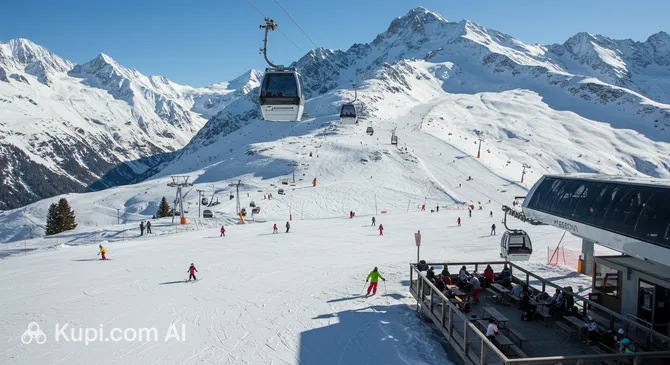
Davos is a true Alpine gem, nestled at an altitude of 1,560 meters above sea level. The city holds the proud title of the highest in Europe and is located in the picturesque Landwasser Valley, surrounded by dense coniferous forests and majestic peaks.
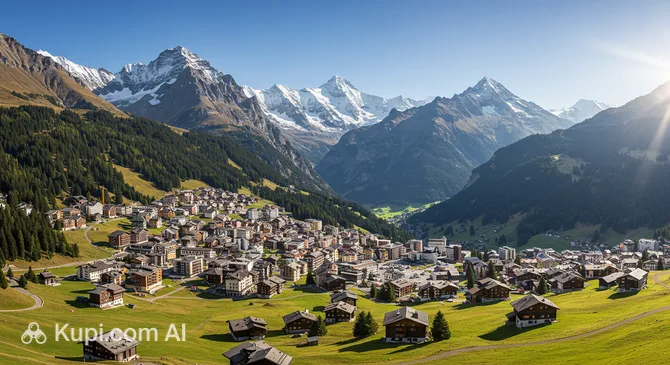
Davos. Illustration.
Source: Kupi.com AI

Located in the east of the country, in the canton of Graubünden, the resort boasts a unique microclimate with crystal-clear air. Switzerland is famous for its natural beauty, and here it is revealed in full. Despite a population of about 10,800 people, the city is surprisingly cosmopolitan: the coziness of traditional chalets sits alongside luxury hotels, lively bars, and boutiques.

The multifaceted history of Davos has turned it into a world-famous center of attraction. Today, it is not only the country's largest ski resort, attracting winter sports enthusiasts, but also the venue for the prestigious World Economic Forum, which gives it a special status and atmosphere.

Davos is worth visiting for the perfect balance of active leisure and peaceful enjoyment of nature. Whether conquering mountain slopes or taking leisurely strolls through the picturesque surroundings, this city will give you an unforgettable experience and the opportunity to breathe in the fresh Alpine air deeply.
Weather Overview

The resort's climate fully matches its high-altitude location: the air here is always fresh, thin, and cool. If you are planning a trip, the detailed weather in Davos will help you plan your wardrobe more accurately, as conditions can change quite quickly.

Winter here is real and Alpine, perfectly suited for winter sports. In the coldest months, January and December, the average temperature is about -7°C, and night frosts can reach -11°C. Precipitation during this period occurs frequently (up to 15–17 days a month), ensuring a stable snow cover.

The summer season brings a pleasant coolness that saves you from the city heat. In July and August, the thermometer rises to an average of +17°C during the day, but nights remain bracing. It is worth considering that spring and early summer are the wettest times: in May and June, 22 to 25 days of precipitation are recorded, so an umbrella or raincoat will be indispensable.

Expect cool summers with frequent rain and frosty winters with regular snowfall.

Average monthly temperature

Average monthly precipitation

Interesting Facts

In addition to its world-famous ski slopes and business meetings, Davos holds many fascinating stories that reveal the city from an unexpected side. Here are some facts that might surprise you:
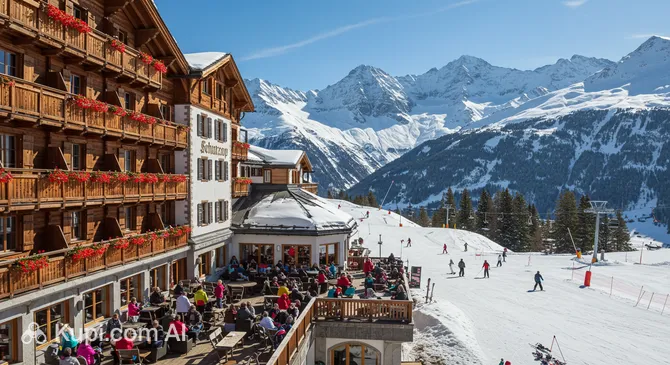
Schatzalp. Illustration.
Source: Kupi.com AI

Traveler photos:

  • Literary fame of "The Magic Mountain." It was the local landscapes and atmosphere that inspired Thomas Mann to create one of the major novels of the 20th century. The prototype for the sanatorium described in the book was Schatzalp — a former clinic turned into a luxury hotel, where the writer used to visit his wife.

  • Sherlock Holmes on skis. Arthur Conan Doyle, the creator of the famous detective, was not only a writer but also an avid sportsman. He became one of the pioneers of skiing in the region and actively popularized it among the British elite, proving that Davos is wonderful not only for treatment but also for active leisure.

  • The birthplace of "Treasure Island." Another literary giant, Robert Louis Stevenson, came here to improve his health in the healing Alpine climate. It was in Davos that he completed work on his legendary adventure novel "Treasure Island," now known by children and adults worldwide.

  • Snow science. The city is known not only for its resort life but also for serious science. It is home to the WSL Institute for Snow and Avalanche Research, whose unique developments and forecasts save the lives of mountaineers and skiers far beyond Switzerland's borders.

  • High-altitude record breaker. Davos is officially considered the highest city in Europe. While there are settlements located higher, it is its status as a city that makes it a unique urban center at such an impressive altitude.

How to Get There

When planning a trip to the heart of Graubünden, it is important to think about logistics in advance, as the resort is located high in the mountains. You can find all the details and alternative routes on the page how to get to Davos, and below we will look at the most popular ways to arrive via the nearest transport hubs.

Davos itself does not have its own airport, so travelers usually fly into major international hubs in neighboring cities or even countries and then continue the journey by land. The most convenient option is considered Zurich Airport (ZRH), located in the city of Zurich. This is Switzerland's largest aviation hub, receiving flights from all over the world. The distance to the resort is about 121 km, and the journey by taxi or transfer will take approximately 3 hours and 20 minutes, given the mountain terrain.

Another popular option, especially for those traveling through Austria, is Innsbruck Airport (INN). It is located in the city of Innsbruck, at a distance of about 125 km from Davos. The journey by car from here will take about 3.5 hours. You can also consider Friedrichshafen Airport (FDH) in Germany (Friedrichshafen city), located 99 km away. A trip from there will require about 3 hours of time.

For clarity, here is summary information on the main airports:

AirportPassenger trafficDistance
Altenrhein Airport84 10079 km
Friedrichshafen Airport339 55699 km
Lugano Airport190 698114 km
Bolzano106 629120 km
Zurich Airport31.2 mln121 km

Railway travel in Switzerland is a pleasure in itself thanks to the scenic views. There are railway stations in Davos (for example, Davos Platz and Davos Dorf), but there are no direct trains from far abroad — a transfer will be required. The main transfer hub for most tourists is Zurich Hauptbahnhof (Zurich main station). It is located 117 km from the resort. From here, trains depart toward Chur or Landquart, where you transfer to the famous Rhaetian Railway, leading directly into the mountains.

If you are traveling from the south, a key point may be Milan Centrale station in Milan (Italy). It is further away, approximately 154 km from Davos. The journey from there by car will take more than 4 hours, or you can use a train with transfers across the Swiss border.

Below is information on the major railway stations through which tourist routes often pass:

StationPassenger trafficDistance
Lugano Railway Station11.2 mln112 km
Zürich Hauptbahnhof154.6 mln117 km
Innsbruck Railway Station14.1 mln130 km
Milano Centrale Station120 mln154 km
Porta Garibaldi Station25 mln155 km

Main Attractions

Davos offers tourists much more than just the status of a business capital. It is a vast Alpine adventure playground where everyone will find something to their liking: from conquering steep peaks to relaxing in thermal waters. The city and its surroundings are divided into several key zones, each with its own unique character.

The undisputed king among local ski areas is Parsenn. It is the region's classic and largest resort, connecting Davos with neighboring Klosters. The slopes here are wide and sunny, making them ideal for high-speed carving and long, leisurely descents. The hallmark of the place is the legendary 12-kilometer run leading down to the valley — a true test of endurance rewarded with stunning views.

Parsenn. Illustration.
Source: Kupi.com AI

Traveler photos:

On the opposite side of the valley lies Jakobshorn, often referred to as the "fun mountain." It is a hub for snowboarders, freestylers, and the youth. A high-energy atmosphere reigns here: excellent fun parks, a half-pipe, and many mountain huts with music and après-ski parties. A breathtaking panorama opens from the summit, and the sunny terraces are perfect for relaxing and sunbathing even in winter.

For those who prefer a more peaceful and contemplative holiday, Schatzalp is a must-visit. You can ascend here by funicular right from the city center in just a few minutes. This is the "Magic Mountain" from Thomas Mann's novel, where today you can stroll through a unique Alpine botanical garden, admire historic architecture, or have fun sledding back down to the city.

After an active day in the mountains, the best place to recharge is the eau-là-là pool and spa. This modern wellness complex is a true oasis of relaxation. Guests can enjoy heated pools (including an outdoor one where you can swim surrounded by snow), various saunas, steam baths, and hot tubs. It is the perfect end to the day, allowing you to relieve fatigue and warm up after the frosty air.

Local Cuisine

Davos's gastronomic palette is a cozy union of centuries-old Alpine traditions and modern culinary trends. Located in the heart of the canton of Graubünden, the city offers tourists unique local dishes. Be sure to try "capuns" — hearty dough rolls stuffed with meat and herbs, baked in a delicate cream sauce, or the famous "Bündnerfleisch" — air-dried beef served in thin slices as an appetizer.

A winter holiday in the mountains is impossible to imagine without Swiss cuisine classics. After a long day on the skis, local restaurants invite you to warm up with a pot of real cheese fondue or a portion of aromatic raclette. Game dishes and potato gratins made from products from nearby Alpine farms are particularly popular.

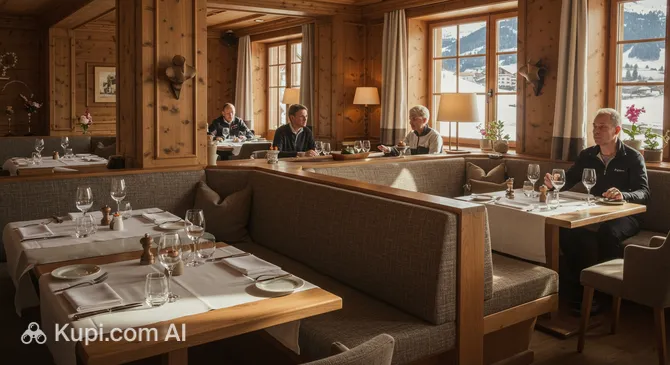
Grischa Hotel Davos Restaurant. Illustration.
Source: Kupi.com AI

Traveler photos:

The choice of establishments in the city is huge: from street food stalls at markets selling hot sausages and homemade pies to fine dining. If you are looking for an elegant dinner spot, it is worth visiting the restaurant at the Grischa Hotel in Davos, which is famous for its attention to ingredient quality and cozy atmosphere.

For those with a sweet tooth, Davos has prepared its own temptations. The region's main dessert is the nut cake (Nusstorte), whose flavor is perfectly complemented by a cup of hot chocolate or coffee. You can enjoy fresh pastries and traditional desserts by stopping at the Weber Bakery-Confectionery-Café — a popular spot for both locals and tourists.

The drink culture here is also top-notch. On cold evenings, mulled wine with Alpine herbs or local herbal liqueurs will warm you up. Wine lovers should appreciate varieties from the neighboring Graubünden valleys. And for those who want to dive into the resort's evening life, Fuxägufer is an excellent location to grab a drink in a relaxed setting.

Travel Tips

Welcome to Davos — a city where majestic Alpine peaks meet world-class service! To make your journey to the "Magic Mountain" perfect and comfortable, we have gathered the most important practical recommendations to help you feel right at home here.

  1. Clothing and gear. The weather in the mountains is changeable, so the principle of layering is your best friend. In winter, be sure to take high-quality thermal underwear and a windproof jacket. In summer, despite the warm days, evenings can be cool, so a fleece jacket and a light raincoat are essential. Comfortable, broken-in trekking shoes are necessary in any season if you plan to walk on the slopes and not just along the city promenade.
  2. Transport and guest card. The most convenient way to get around Davos is by buses, which run with perfect precision. The main life hack: when checking into a hotel or apartment (even for one night), you will be given a Davos Klosters Premium Card. It entitles you to free travel on local public transport and significant discounts on ski lifts during the summer season. Taxis here are expensive, so the bus is the ideal choice.
  3. Finances. The country's currency is the Swiss Franc (CHF). Although bank cards are accepted almost everywhere, from supermarkets to funicular ticket offices, always have some cash with you to pay in small mountain huts or buy souvenirs. Keep in mind that Switzerland is an expensive country: plan your budget with a margin. Tips are usually already included in the bill, but rounding up the amount or adding a small extra for good service is welcome.
  4. Health and adaptation. Davos is located at an altitude of 1,560 meters, and some tourists need time to acclimate. In the first few days, you may feel slight fatigue or shortness of breath — this is normal. Drink more water, use sunscreen (the mountain sun is very active even in winter), and do not overexert yourself physically immediately upon arrival. Pharmacies are marked with a green cross, but many medicines are only sold by prescription.
  5. Communication. The official language here is German (Swiss dialect), but thanks to its status as an international resort, English is understood everywhere. For connectivity, it is more profitable to buy a local SIM card (e.g., Swisscom or Sunrise) or use an eSIM, as roaming for foreign operators can be very expensive. Learn the word "Grüezi" — it is a universal greeting that locals really like.
  6. Local etiquette. Politeness is the foundation of local society. It is customary to greet staff in shops and even strangers on mountain trails. Keep quiet in public places and hotels after 10:00 PM. Punctuality is also highly valued here: if you have a tour or a restaurant table booked, try not to be late even by a minute.
  7. What to avoid. Never walk on trails intended for cross-country skiing (they have special "Loipe" markings). This is considered bad manners, as boot prints ruin the track and interfere with athletes. Also, avoid crossing the street in the wrong place — drivers are disciplined but expect the same from pedestrians.
  8. Water and shops. You can safely drink water in Davos directly from the tap — it is pure, comes from mountain springs, and is not inferior in quality to bottled water. Remember that on Sundays most shops are closed (only service points at the station and gas stations are open), so it is better to stock up on groceries in advance.

By following these simple rules, you can avoid minor inconveniences and focus on the main thing — the incredible landscapes and the atmosphere of Alpine coziness. We wish you an unforgettable holiday and vivid impressions in the heart of Graubünden!

Entertainment & Nightlife

Entertainment and nightlife:

Davos is famous not only for its ski slopes and business forums but also for its vibrant nightlife. After sunset, the city is transformed: skiers and snowboarders descend from the mountains to immerse themselves in the après-ski atmosphere, which is considered one of the best in the Alps. The epicenter of night entertainment is the Davos Platz area and the famous Promenade street, where most bars, clubs, and discos are concentrated.

The evening here usually starts as early as the afternoon on the slopes, especially in the Jakobshorn area, and then the fun smoothly moves into the city. The crowd in the venues is very diverse: from rowdy young groups in sports gear to elegantly dressed guests from luxury hotels. The dress code in most bars is casual, but for visiting nightclubs or hotel lounges, it is worth choosing a smart casual style.

If you are looking for a place with history and a special aura, be sure to visit the Grandhotel Belvedere. Its bar and lobby are legendary locations that often host live piano concerts, and bartenders prepare exquisite cocktails. It is an ideal place for a quiet and respectable evening in classic interiors.

For those who prefer a more relaxed and cozy setting, the Fuxägufer bar is an excellent choice. A warm Alpine chalet atmosphere prevails here, where you can enjoy a glass of wine or beer while discussing the day's conquered peaks with friends. During high season (winter and summer), life in such establishments is buzzing until late at night.

Practical tips and safety:

Davos is a very safe city, and nighttime walks carry no risks. However, it is worth keeping transportation in mind. On Fridays and Saturdays, a special night bus, the "Nachtbus," runs through the city, taking late-night revelers back to their hotels until early morning (usually until 3:00–4:00 AM). Taxis in Switzerland are an expensive pleasure; a short trip can cost 20–30 francs, so the bus is a great alternative. The average price of a cocktail in a bar ranges from 15 to 25 francs, while beer costs around 7–9 francs.

For those who want to diversify their leisure time during the day or early evening, the city also offers a cultural program. You can visit the Winter Sports Museum to learn the history of skis and sleds, or stop by the Kirchner Museum, dedicated to the work of the famous expressionist. There is also a cinema and a casino in town, offering entertainment for all tastes once the lifts are closed.

Parks & Museums

Davos harmoniously combines the dynamics of a world-famous resort with the tranquility of untouched nature. For those who want a break from the ski slopes or business meetings, the city offers magnificent green areas and a rich cultural program, allowing for a deeper understanding of the history and art of this Alpine region.

One of the main natural attractions is Lake Davos (Davosersee). In summer, it is a popular spot for swimming, windsurfing, and sailing, while the picturesque path around the lake, about 4 kilometers long, is perfect for leisurely strolls and jogging. Another oasis of flora is the famous Alpinum botanical garden, located on the slopes of Schatzalp. Here, at an altitude of almost 1,900 meters, a unique collection of thousands of species of high-altitude plants from around the world is gathered, including rare edelweiss and gentians.

The city's cultural life is equally vibrant. The jewel of Davos's museum world is the Kirchner Museum. It is dedicated to the work of the outstanding German expressionist Ernst Ludwig Kirchner, who lived here for the last 20 years of his life. The museum building itself is a masterpiece of modern architecture, perfectly integrated into the landscape.

To dive into the region's sporting past, it's worth checking out the Winter Sports Museum (Wintersportmuseum). The exhibition fascinatingly tells the story of how Davos became a mecca for skiers and demonstrates the evolution of equipment — from the first wooden skis to the famous "Davos sleds." This place will be of interest not only to sports fans but also to anyone fascinated by the history of daily life.

For those seeking authentic experiences away from the tourist crowds, we recommend heading to the side valley of Sertig (Sertigtal). This is a protected area with traditional wooden houses, an old church, and a majestic waterfall at the end of the path — the perfect place to feel the spirit of old Switzerland.

Getting Around

The public transport system in Davos is organized with the precision and comfort typical of the region. Since the city has an elongated shape and is located along the valley, moving between its main parts — Davos Dorf and Davos Platz — is an integral part of the tourist experience. The core of the city's transport network consists of buses from the local company VBD (Verkehrsbetrieb der Landschaft Davos), which run frequently and strictly on schedule, connecting hotels, lifts, and stations.

A unique feature of the city's transport system is the use of the railway as full-fledged urban transport. The famous red trains of the Rhaetian Railway (RhB) connect the resort's two main stations. A train ride between the Dorf and Platz districts takes only a few minutes and is often faster than the bus during peak hours. It's not just a way to get around, but also an opportunity to enjoy the views from the panoramic windows even during a short trip.

For tourists in Davos, there is an incredibly convenient payment system. Every guest staying at least one night in official hotels or apartments receives a Davos Klosters Premium Card. This card is your "golden key" to transport: it entitles you to free travel on local buses and trains (2nd class) between Klosters Dorf and Filisur stations. The card will be given to you at reception upon check-in or sent digitally to your smartphone.

If you arrived in the city without an overnight stay or have not yet received your guest card, tickets can be purchased at machines at the stops (they accept coins and cards) or through the SBB Mobile app, which is the standard for the entire transport system that Switzerland is famous for. Important to remember: tickets must be purchased before boarding. Bus drivers generally do not sell tickets, and ticket inspectors work regularly. Fines for fare evasion here are quite substantial.

A historical highlight of the transport network is the funicular to Mount Schatzalp. It departs directly from the center of Davos Platz and in just 4 minutes lifts passengers 300 meters above the city. While technically a tourist attraction, for many it serves as a convenient "elevator" to walking trails and restaurants. Note that travel on it may not be included in the standard free package of the guest card (depending on the season and card type), so check the conditions at the ticket office.

As for alternative ways of moving around, taxis in Davos are available but are quite expensive even by local standards. Cars usually wait for customers at stations, or they can be called by phone. Popular international taxi apps (like Uber) may be less common here than in large metropolises, or they may operate with restrictions. In summer, bicycles or e-bikes become an excellent alternative — rental points are located at stations and sports shops, and the cycling infrastructure is excellently developed.

Accommodation

Davos offers travelers a wide range of accommodation options, ranging from luxurious historic palaces to budget-friendly youth hostels and cozy apartments. Despite its reputation as an elite resort, you can find housing for different budgets here, although the general price level matches high Swiss standards. Most tourists choose between classic full-service hotels and chalet rentals, which is especially convenient for large groups or families.

Geographically, the resort is divided into two main parts: Davos Dorf and Davos Platz. If your primary goal is skiing in the Parsenn area, it is more convenient to stay in Davos Dorf, as the funicular station is located there. Davos Platz is better suited for those who want to be at the center of the action: the main nightlife, shops, and restaurants are concentrated here, as well as the lift to Jakobshorn. Thanks to an excellent transport system, moving between areas is easy, so your choice of location does not limit your access to entertainment.

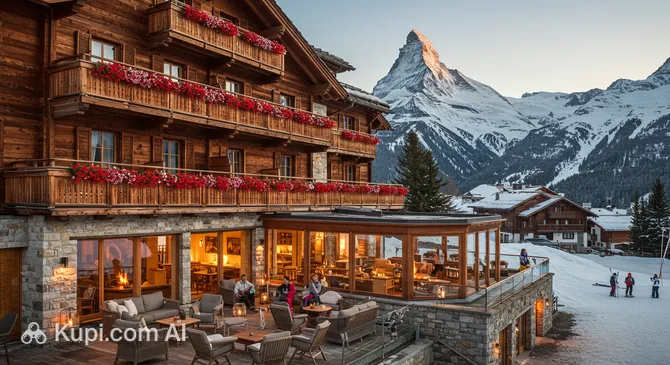
The city's hotel stock is rich in iconic places. A true legend of the resort is the Grandhotel Belvedere. This is not just a place to sleep, but a historical monument of hospitality where world leaders and celebrities stay. The hotel offers top-class service and a "Belle Époque" atmosphere combined with modern comfort.

Waldhuus Davos. Illustration.
Source: Kupi.com AI

Traveler photos:

For those who prefer Alpine coziness and a family atmosphere, the Waldhuus Davos is an excellent choice. This hotel, built in the style of a traditional chalet, is located in a quiet spot on the edge of the forest but still close to the center. It is known for its attention to small guests and excellent wellness services, making it an ideal option for holidays with children.

Booking tip: Davos is an extremely popular destination, and on peak dates (Christmas, New Year, February holidays), housing demand exceeds supply. Particular attention should be paid to the dates of the World Economic Forum (usually in January), when prices skyrocket and available rooms disappear six months in advance. Plan your trip and book your hotel at least 3–4 months before your visit.

The price range in the city can be described as "mid-range plus" and "luxury." There are few budget offers, but they exist in the hostel and guesthouse (Gasthaus) segment. It is most convenient to book accommodation through major online aggregators or directly on hotel websites. Remember that when checking into official accommodation, you receive a guest card that entitles you to free travel, which significantly saves on the transport budget.

Nearby Cities

For those who want to explore the surroundings, Davos serves as an excellent starting point for day trips to several interesting nearby places. The resort's location allows for easy access to historical centers and cultural attractions that will provide vivid impressions and complement your mountain holiday.

One of the most popular destinations is Chur — the capital of the canton of Graubünden and the oldest city in the country. It is located very close and attracts tourists with its picturesque old center, which is entirely pedestrianized. Here you can stroll through winding streets, visit the Bishop's Palace, see the 12th-century cathedral, and enjoy shopping in numerous boutiques. Chur also serves as an important transport hub from where famous panoramic trains depart.

If you are willing to travel a bit further, be sure to visit St. Gallen. This city is world-famous for its abbey complex, a UNESCO World Heritage site. The main gem here is the Abbey Library with its stunning Rococo interiors and ancient manuscripts. It is an ideal place for those who want to touch the rich history and culture of the region.

CityPopulationDistance
Klosters4 0008 km
Arosa3 00012 km
Lenzerheide3 00023 km
Chur35 03824 km
Landquart8 84928 km

These nearby destinations provide an insight into the region's diverse culture and landscapes, making your journey through Switzerland even more rewarding.

Shopping & Souvenirs

Shopping in Davos is characterized by the understated luxury and practicality typical of Alpine resorts. While you won't find giant shopping malls here, the city offers an excellent selection of boutiques, sports shops, and stores with local delicacies. The main focus is on high-quality gear, Swiss watches, jewelry, and gastronomy.

The resort's main shopping artery is the Promenade. It stretches through the entire city, connecting the Davos Platz and Davos Dorf districts. Most of the shops are concentrated here: from international clothing brand boutiques to specialized sports salons where you can buy or rent the latest ski and snowboard equipment. A walk along the Promenade is a great way to combine shopping with sightseeing.

As for souvenirs, Davos traditionally offers famous army knives, watches, and, of course, chocolate. Particular attention should be paid to local gastronomic specialties. The main sweet symbol of the region is Bündner Nusstorte — a hearty pie filled with caramelized walnuts. For the freshest pastries and sweet gifts, we recommend stopping by Weber Bakery-Confectionery-Café, where old recipes are honored.

In addition to sweets, Bündnerfleisch — air-dried beef — is popular and will make a great addition to your home table. It can be bought at local butcher shops or supermarkets. Also, look out for local crafts: wooden toys and textiles with traditional patterns.

Most shops in Davos are open from Monday to Friday from 09:00 to 18:30, and on Saturdays, they close earlier — around 16:00 or 17:00. On Sundays, only souvenir shops, station shops, and bakeries are open. Bank cards and cash (Swiss francs) are accepted almost everywhere. Large tourist spots may accept Euros, but change will be given in Francs.

For tourists living outside of Switzerland, the Tax Free system is available. When purchasing goods worth over 300 Francs in one store, you can issue a receipt for a VAT refund. Be sure to have your passport with you and ask the seller to fill out the appropriate form (Global Blue or other) to get some of your money back when leaving the country.

Reached the end of the page?

That means the route is fully explored