Support

St Moritz

About

St. Moritz is more than just a resort; it is a true legend of Alpine tourism and one of Europe’s most brilliant gems. Nestled in the picturesque Upper Engadin valley at an altitude of 1,856 meters above sea level, this town attracts travelers with its unique atmosphere of luxury and comfort. Here, in the heart of the Canton of Graubünden, Switzerland is revealed in its most magnificent form: crystal-clear air, majestic mountain peaks, and the shimmering surface of the lake create breathtaking landscapes.

St. Moritz. Illustration.
Source: Kupi.com AI

Despite its compact size and a population of about 5,200, the town offers all the necessary infrastructure for a premium vacation. The local climate is often referred to as a "champagne climate": the air here is dry, sparkling, and incredibly fresh, while the sun shines on guests for an average of 322 days a year. This is a place where tradition harmoniously intertwines with modern trends, creating ideal conditions for both relaxation and active leisure.

St. Moritz is rightfully considered the birthplace of winter tourism. The unique history of St. Moritz is inextricably linked with sporting achievements: the town has twice hosted the Winter Olympic Games and numerous world championships. However, life here is vibrant not only in winter. In summer, the resort transforms into a center for wellness retreats, thanks to its healing thermal springs known since ancient times.

Guests can look forward to not only magnificent ski slopes but also a rich social life. A stroll along the famous Via Serlas will delight shopping enthusiasts, while numerous Michelin-starred restaurants will surprise even the most discerning gourmets. Visiting St. Moritz is worth it to experience this unique cocktail of natural beauty, high style, and impeccable service.

Weather Overview

The climate of this high-altitude resort is characterized by a harsh nature in winter and a pleasant, bracing freshness in summer. Due to its location in the Alps, it never gets exhaustingly hot, though the weather can be changeable. The current weather in St. Moritz is an important factor when planning your trip, especially if you intend to spend a lot of time outdoors.

Winter months here are truly frosty: in January, the average temperature stays around -10.1°C, often dropping to -14°C at night. This creates ideal conditions for winter sports and guarantees snow. Summer in the valley is mild and cool: in the warmest months, July and August, the air warms up to an average of only +10...+15°C. Travelers should be prepared for the fact that the spring-summer season, particularly May and June, is characterized by high humidity and a large number of rainy days (up to 24 days per month).

Overall, expect a cool summer with frequent rain and cold, snowy winters that turn the town into a fairytale setting.

Average monthly temperature

Average monthly precipitation

Interesting Facts

Beyond its main attractions, St. Moritz holds many fascinating secrets and historical records that make it unique, even by the standards of event-filled Switzerland.

Saint-Moritz Swiss Alps Resort. Illustration.
Source: Kupi.com AI

Traveler photos:

  • Birthplace of Winter Tourism. It is widely believed that winter holidays in the Alps began right here in 1864. Hotel owner Johannes Badrutt made a bet with English guests, promising them they could enjoy the winter sun in the mountains in their shirtsleeves. The English arrived at Christmas, stayed until Easter, and returned home tanned, introducing the world to the St. Moritz Resort in the Swiss Alps as a winter destination.

  • Double Olympic Glory. It is the only city in Switzerland to have had the honor of hosting the Winter Olympic Games twice—in 1928 and 1948. Sporting traditions remain strong here today, from bobsleigh championships to prestigious horse races on the frozen lake ice.

  • Pioneer of Electrification. The city has always been at the forefront of technical progress. In 1878, the first electric lights in the Swiss Alps were switched on here. Furthermore, St. Moritz hosted the first golf tournament in the mountains, and in 1935, one of the country's first ski lifts began operating here.

  • Patented Sun. The city's symbol—a shining sun—is officially protected by law as a trademark. This is not just a marketing gimmick: statistics confirm that the sun shines here an average of 322 days a year, an incredible figure for a mountainous area.

  • Roman Heritage. Long before skiers arrived, people visited these parts for their health. Legends and archaeological finds suggest that the healing properties of the local iron-rich thermal springs were appreciated as far back as the ancient Roman legionnaires.

How to Get There

Reaching this high-altitude resort can be done in various ways, but most travelers choose a combination of a flight followed by a scenic train ride or transfer. Since the town is located high in the Alps, logistics require some planning. You can find more details on how to get to St. Moritz by exploring all available routes and modes of transport.

St. Moritz itself does not have a civilian airport for regular commercial flights (the nearby Samedan airfield serves private aviation only). Tourists typically fly into airports in neighboring Italy or major Swiss cities. One of the most popular options is Milan Malpensa Airport (MXP) in Milan. It is located about 129 km from the resort. This is a major international hub receiving flights from all over the world. The journey from there by car or bus takes about 3.5 hours.

Another convenient option is Orio al Serio Airport (BGY), also located in the Milan area (Bergamo), about 91 km from St. Moritz. This airport is often chosen by those flying with low-cost carriers. The trip by taxi or shuttle takes approximately 2.5–3 hours. You can also consider Lugano Airport (LUG) in the city of Lugano (about 90 km away), although it serves significantly fewer flights.

For your convenience, here is a summary of the main airports:

AirportPassenger trafficDistance
Lugano Airport190 69890 km
Orio al Serio International Airport17.4 mln91 km
Altenrhein Airport84 100112 km
Bolzano106 629115 km
Milano Linate Airport10.6 mln122 km

Traveling by train to St. Moritz is considered a pleasure in itself, thanks to famous panoramic routes like the Glacier Express and the Bernina Express. St. Moritz has its own railway station, but long-distance international trains usually arrive at major transport hubs where you will need to transfer.

Tourists often arrive at Zurich Hauptbahnhof in Zurich (approximately 140 km from the resort). This is Switzerland's largest railway station with a massive passenger flow. From here, trains depart for Chur, where you can transfer to the Rhaetian Railway, which leads directly to St. Moritz. The total travel time is about 3–4 hours, but the views out the window are well worth it.

An alternative route lies through Italy. You can travel to Milan Centrale Station in Milan, located 122 km from St. Moritz. From there, it is convenient to take a train to Tirano and then transfer to the famous red train that climbs into the mountains toward the resort.

Below are the nearest major railway hubs convenient for planning your route:

StationPassenger trafficDistance
Lugano Railway Station11.2 mln87 km
Milano Centrale Station120 mln122 km
Porta Garibaldi Station25 mln123 km
Rogoredo Railway Station7.5 mln126 km
Cadorna Railway Station15 mln128 km

Main Attractions

St. Moritz is a town where architecture and nature compete in splendor. A stroll through the resort feels like a journey through an open-air gallery: historical buildings stand alongside futuristic villas, and mountain peaks are reflected in the mirror-like surface of the water. For tourists, it is an opportunity to touch the world of high fashion, sports, and aristocratic traditions.

Lake St. Moritz
The absolute center of attraction at any time of year is Lake St. Moritz. In summer, its promenade becomes the perfect spot for leisurely strolls and morning runs, with sailboats gliding across the water. In winter, the lake transforms into a grand ice arena: this is where the famous "White Turf" horse races and snow polo matches take place. It is a place where you can feel the pulse of the resort and enjoy panoramic views of the Engadin Valley.

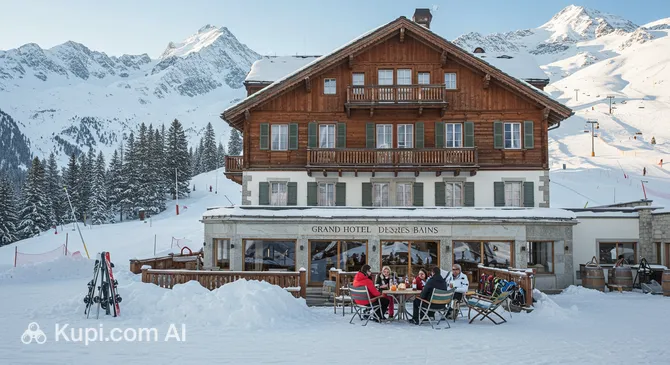
Grand Hotel des Bains
The majestic Grand Hotel des Bains, located in the St. Moritz Bad area, deserves special attention. This building, resembling a snow-white palace, is not just a place to stay but a true historical monument. This is where the tradition of balneological holidays began, thanks to the healing mineral springs. Tourists come here to admire the classical architecture, visit the casino, or enjoy direct access to the Corviglia ski slopes.

Grand Hotel des Bains. Illustration.
Source: Kupi.com AI

Traveler photos:

Suvretta House
Rising like a fairytale castle hidden among an Alpine forest is the Suvretta House complex. This legendary hotel is located somewhat away from the bustling center, offering an atmosphere of exceptional privacy and luxury. It interests travelers as a prime example of top-class traditional Swiss hospitality. Even an external view of this grand building, with its turrets and manicured grounds, leaves a lasting impression.

The Leaning Tower
The symbol of the historical part of the city is the Leaning Tower (Schiefer Turm), dating back to the 12th century. It is all that remains of the destroyed Church of St. Mauritius. With a tilt of 5.5 degrees, it boldly rivals its famous "colleague" in Pisa. The tower serves as a reminder of the settlement's ancient roots and is a popular spot for photos against the backdrop of mountain peaks.

Local Cuisine

The culinary traditions of St. Moritz are a delightful blend of the rustic heartiness of the Engadin region and the sophistication of haute cuisine. The city's gastronomic scene is so diverse that you can find everything from cozy chalets with home-cooked meals to Michelin-starred restaurants. Local cuisine is based on high-quality farm products: Alpine milk, cheeses, game meat, and fresh fish from the icy mountain lakes.

The main gastronomic symbol of the region is rightfully considered the Engadine nut tart (Engadiner Nusstorte). This sweet temptation, made of shortcrust pastry with a thick filling of caramelized walnuts, is sold in almost every pastry shop and makes an excellent souvenir. For a hearty lunch, order Capuns—appetizing chard leaf rolls filled with dough and smoked meat, baked under a delicate creamy cheese sauce. Also popular is Pizokel, a homemade buckwheat pasta traditionally served with potatoes and Savoy cabbage.

Suvretta House. Illustration.
Source: Kupi.com AI

Traveler photos:

The culture of dining here is inextricably linked with enjoying the views. Lunch on a sunny terrace with a panorama of snow-capped peaks is a mandatory ritual for every traveler. Between ski runs, tourists warm up with a cup of thick hot chocolate or try local herbal liqueurs. For those seeking an exceptional gastronomic experience in a historical atmosphere, the famous Suvretta House opens its doors, where you can enjoy both traditional Swiss and French cuisine surrounded by authentic luxury.

Authentic food lovers should visit the local farmers' markets, where fresh bread, mountain honey, and aromatic sausages are sold. Additionally, the city regularly hosts prestigious culinary festivals where world-renowned chefs turn food preparation into a true art form.

Travel Tips

Welcome to St. Moritz! To ensure your trip to this high-altitude Alpine paradise is flawless and leaves only pleasant memories, we have prepared a list of important practical recommendations to help you feel confident in any situation.

  1. Clothing and Essentials: Dress in layers and protect your eyes. Mountain weather is changeable: even on a sunny summer day, it can be cool in the shade or in the evening, so a windbreaker or warm sweater is a must. In winter, high-quality thermal clothing is necessary. The most important accessories are sunglasses and sunscreen with a high SPF, as the famous "St. Moritz sun" is very intense at 1,800 meters. Also, bring a power adapter (Type J), as standard European plugs do not fit all Swiss sockets.

  2. Transport: Rely on buses and trains. The public transport system (Engadin Bus and Rhaetian Railway) works with Swiss precision. Renting a car to get around town doesn't make much sense due to expensive parking and the resort's compactness. Taxis here are a very expensive pleasure, so for short distances, it's better to walk and enjoy the fresh air.

  3. Finances: Use francs and cards. The official currency is the Swiss franc (CHF). Although Euros may be accepted in many tourist spots, the exchange rate will be unfavorable and change will be given in francs. Credit cards are accepted almost everywhere. Be prepared for the fact that St. Moritz is a premium resort, and prices here are higher than the European average. Tips are often already included in the bill, but rounding up the amount or adding an extra 5-10% for excellent service is considered good manners.

  4. Health and Safety: Be mindful of the altitude and stay hydrated. The town is very safe; you can walk peacefully at any time of day. Pharmacies (Apotheke) are well-stocked but may be closed at night (look for the emergency schedule on the door). The main health consideration is altitude adjustment: drink more water in the first few days, use moisturizer, and don't overexert yourself physically.

  5. Communication: English is a universal helper. The main language of the canton is German, but staff in hotels, shops, and restaurants speak English perfectly. A local cultural feature is the Romansh language. Try greeting locals with “Allegra!” instead of a standard "Hello"—it will bring a genuine smile and show respect. Wi-Fi is available in most hotels and public areas.

  6. Local Etiquette: Politeness and punctuality. In the Swiss mountains, it is customary to greet people you meet on hiking trails. In public places, transport, and restaurants, restraint is valued: loud conversations (including on the phone) are considered bad form. Respect queues and follow the rules of conduct on ski slopes.

  7. What to Avoid: Don't be late. If a bus is scheduled to depart at 14:03, it will leave exactly at 14:03. Being even a minute late guarantees you'll have to wait for the next one. Also, avoid visiting fine-dining restaurants in ski boots or sportswear in the evening—many establishments have a smart casual dress code.

  8. Useful Pro Tip: Guest Card. If you are staying in a hotel or apartment for more than one night (especially in summer), be sure to ask about the "Mountain Railways Included" card or a public transport pass. Many accommodations provide guests with free access to the lifts and buses of the Engadin region, which can significantly save your budget.

St. Moritz knows how to charm at first sight, and by following these simple tips, you can avoid minor mishaps and focus entirely on the main thing—enjoying the magnificent landscapes, sports, and unique atmosphere of a luxury holiday.

Entertainment & Nightlife

The nightlife in St. Moritz is just as glamorous and exclusive as its daytime activities. Here, the concept of a "nightclub" often blends with that of an elite lounge or a bar within a five-star hotel. The epicenter of evening activity is the St. Moritz Dorf district. It is here, on the central streets and in the lobbies of historic hotels, that an international crowd gathers to discuss the day on the slopes to the sound of live jazz or sets by trendy DJs.

The après-ski culture here is taken to the absolute maximum. The evening often begins during the day on mountain terraces and moves smoothly into the city by night. One of the most famous places for spirits connoisseurs is Devil’s Place, which is listed in the Guinness World Records for having the world's largest whisky collection. For those looking to dance until dawn, the legendary King’s Social House—Switzerland's oldest nightclub, where world-famous celebrities are often seen at the decks—opens its doors. The dress code in most venues is "smart casual" or "elegant," and some clubs require evening attire.

Grand Hotel des Bains. Illustration.
Source: Kupi.com AI

Traveler photos:

If you prefer a more relaxed and aristocratic atmosphere, consider the establishments within the grand hotels. For example, the bar at the Grand Hotel des Bains offers an exquisite cocktail menu in historical interiors where you can feel the spirit of the Belle Époque. It is the perfect place to start the evening before heading to the casino or dinner. Fans of fine gastronomy and quiet evenings should definitely visit Suvretta House, where dinners turn into real social events requiring an appropriate wardrobe and mood.

In addition to bars and clubs, evening leisure in St. Moritz is rich in cultural events. The city is home to Casino St. Moritz, located at the Kempinski Hotel, where you can try your luck at roulette or blackjack. During the day and early evening, the cultural program might include a visit to the Segantini Museum with its famous dome or the many contemporary art galleries found throughout the city. In winter, night skiing on the illuminated Corvatsch slopes is popular, often concluding with parties right on the mountain.

Practical tips for tourists:

Prices for nightlife in St. Moritz reflect the resort's status: a cocktail in a good bar starts at around 25–30 Swiss francs (CHF). The city is perfectly safe for nighttime walks, with a crime rate near zero. However, keep transport in mind: taxis are expensive at night, and services like Uber may be unavailable. A Night Bus runs between the Dorf and Bad districts during the high season; it is best to check the schedule at your hotel reception in advance.

Parks & Museums

St. Moritz is not only the capital of winter sports but also a true treasure trove for connoisseurs of art and pristine nature. The town and its surroundings offer a wonderful contrast: peaceful walks through Alpine forests blend harmoniously with visits to world-class galleries that preserve the cultural code of the Engadin region.

Natural Areas and Parks

Although the town itself is compact, it is surrounded by a magnificent natural "park." The main green artery is the area around Lake St. Moritz, but the true natural paradise is considered to be Lake Staz (Lej da Staz), located in the famous Stazerwald forest. This spot is just a few kilometers from the center and is ideal for leisurely strolls. Here, surrounded by centuries-old larches and pines, silence reigns, broken only by birdsong. In summer, the lake water warms up enough for swimming, while the picturesque paths attract Nordic walkers and picnickers.

Another important natural attraction in the region is its proximity to the Swiss National Park. Although it is not located within the town itself, the St. Moritz Resort in the Swiss Alps serves as an excellent starting point for a trip to this unique reserve. It is the oldest national park in the Alps, where nature is left in its original state: leaving the trails is forbidden, allowing you to see rare animals such as chamois, marmots, and golden eagles in their natural habitat.

Museums and Cultural Heritage

The city's cultural landscape is inseparable from the Segantini Museum. The building with its powerful stone dome, overlooking the lake, is an architectural masterpiece in itself. The museum is dedicated to the work of Giovanni Segantini, a prominent symbolist painter who glorified Alpine landscapes. The main exhibit is the monumental triptych "Nature, Life, Death." Visiting this place is almost a spiritual experience, allowing you to view the Alps through the eyes of a great master.

To immerse yourself in the region's history, visit the Engadin Museum (Museum Engiadinais). It is housed in a purpose-built building that mimics a traditional Engadin house. Inside, historical interiors have been recreated, some of which are several hundred years old. Visitors can see the famous rooms paneled with aromatic Swiss stone pine, antique furniture, costumes, and everyday items. It is the best place to understand how highlanders lived before the era of luxury tourism arrived.

Insider Tip

Don't miss the Forum Paracelsus in the St. Moritz Bad district. This small but atmospheric cultural space is dedicated to the history of local healing springs. Here you can see the ancient bronze tapping of the Mauritius spring, dating back to 1411 BC, and learn about the balneological traditions that transformed this village into a world-class resort. Admission is usually free, and the hall's acoustics create a wonderful sense of peace.

Getting Around

Public transport in St. Moritz is organized with the region's typical precision and comfort, allowing tourists to easily manage without a private car. The backbone of city mobility is the extensive Engadin Bus network. Bright red buses run between the main areas of the resort (St. Moritz Dorf and St. Moritz Bad) and connect the town with neighboring picturesque villages such as Pontresina, Silvaplana, and Maloja. Additionally, the Rhaetian Railway (RhB) trains enhance the transport system and are convenient for traveling to more distant parts of the valley.

The fare system is based on a zone principle: the price of a ticket depends on the number of zones crossed. For single trips, it is most convenient to use the ticket machines at stops (accepting cards and cash) or the SBB Mobile app, which is a universal assistant for getting around the entire region. The app also features EasyRide, which automatically calculates the optimal fare based on your actual route. Fairtiq is another popular app. If you plan to travel a lot, it is more cost-effective to purchase a day pass (Tageskarte).

The top pro tip for tourists in St. Moritz is to use the guest card. Most hotels and apartments provide a special pass for bookings of two nights or more (in summer—"Mountain Railways Included," and in winter, "Sleep + Ski" offers are common), which entitles you to free travel on buses and trains in the Engadin region, and sometimes on mountain lifts. Be sure to check for this option upon check-in—it can significantly save your budget as single tickets here are quite expensive.

It is important to remember the rules and etiquette: transport runs strictly on schedule, which can be found at every stop or in the app. You can usually board the bus through any door, but in the evening or on less busy routes, the driver may ask to see your ticket upon entry. Tickets bought from a machine often do not require validation (the validity time is printed on them), but if you have a multi-trip pass without a date, it must be validated in the orange machine on the platform or inside the vehicle. On Fridays and Saturdays during the high season, night buses (Nachtbus) operate, which is convenient for nightlife lovers.

Alternative modes of transport include taxis, though prices in St. Moritz are extremely high and familiar ride-hailing apps may have limitations. In summer, e-bikes are a great substitute, with rental points located at the railway station and in the town center. Walking is also popular, but keep the terrain in mind: the elevation difference between the lake area and the town center (Dorf) is noticeable, though it can be navigated with convenient escalators and elevators.

A unique feature of the transport system is its integration with mountain infrastructure. The funicular leading from the town center (Schulhausplatz) to the Corviglia ski area is effectively part of the public transport. Furthermore, St. Moritz railway station itself is not just a station, but the starting point for panoramic trains listed as UNESCO World Heritage sites, turning even a short trip into an unforgettable excursion.

Accommodation

Where to stay:

Accommodation in St. Moritz is a journey into the world of Alpine luxury and impeccable service. The resort is primarily known for its premium segment: the concentration of five-star hotels per square kilometer is one of the highest in the world. However, the range of options is not limited to palaces; tourists can find cozy family hotels, high-quality apartments for long-term rental, and even modern hostels that meet high Swiss standards.

When choosing a location, consider the two main districts. St. Moritz Dorf is situated on a hillside and is considered the center of social life. Staying here is prestigious and convenient for those who want to be near the best boutiques, restaurants, and nightclubs. It also offers the most breathtaking views of the valley. St. Moritz Bad, located in the lower part of the town by the lake, offers a quieter atmosphere and direct access to thermal springs and the Signalbahn ski lift. This area is often chosen by families and athletes.

The historical hotels, which are attractions in their own right, deserve special mention. The Bad district is dominated by the majestic Grand Hotel des Bains, which resembles a snow-white palace and offers guests direct access to the ski area. Another striking example of exclusive relaxation is Suvretta House, located in a secluded spot among the forest. This hotel preserves an atmosphere of aristocratic comfort and is ideal for those seeking peace and the highest level of service.

Price ranges at the resort vary from high to very high, especially during peak winter dates (Christmas, New Year, February). Budget accommodation in the St. Moritz context will cost more than the European average. It is recommended to book housing well in advance: the best options are snapped up 4–6 months before the season starts. In summer, the demand decreases, and prices become more affordable. For booking, it is convenient to use both major international platforms and direct hotel websites, where special package offers including ski passes can often be found.

Nearby Cities

For those wishing to explore the surrounding area, St. Moritz serves as an excellent starting point for day trips to several interesting nearby locations:

Just an hour and a half to two hours away via a scenic railway is Chur—the capital of the Canton of Graubünden and officially Switzerland's oldest city. It is an ideal spot for history buffs: here you can wander through the winding, car-free streets of the Old Town, visit the Bishop's Palace, and soak up the medieval atmosphere. The route to Chur often follows the famous Albula line, a UNESCO World Heritage site, making the journey just as impressive as the destination itself.

If you wish to swap Alpine coolness for Mediterranean warmth, head south to the Italian-speaking Canton of Ticino. The city of Lugano offers a completely different cultural experience: palm trees, lakefront promenades, and Lombardy Renaissance-style architecture. You can take a stroll through Parco Ciani or ride the funicular up Mount San Salvatore for panoramic views.

Equally interesting is Bellinzona, famous for its three castles, which are also UNESCO-protected. It is a fortress city where powerful fortifications serve as a reminder of the land's strategic importance in the past. Visiting the local Saturday market and exploring Castelgrande, Montebello, and Sasso Corbaro castles makes for a packed and exciting day trip.

CityPopulationDistance
Pontresina2 0005 km
Lenzerheide3 00034 km
Davos10 86235 km
Arosa3 00035 km
Sondrio21 64236 km

These nearby destinations provide a glimpse into the diverse culture and landscapes of the region, from the rugged mountains of Graubünden to the sunny shores of Ticino's lakes.

Shopping & Souvenirs

Shopping in St. Moritz is not just a trip to the stores; it is a true luxury attraction set against the backdrop of Alpine peaks. The town is often called the world's highest shopping window. Here, the concentration of premium boutiques per square meter can rival Paris or Milan. However, besides high fashion, the resort also offers cozy shops with unique local products that serve as excellent reminders of your trip.

The heart of glamorous shopping is the famous Via Serlas. This is the resort's "golden mile," home to flagship boutiques of the world's leading fashion houses: from Chanel and Gucci to Louis Vuitton and Prada. A walk down this street feels like a fashion show, where shop windows sparkle with jewelry and the latest clothing collections. For those seeking sports gear, many specialized shops in the town center (Dorf area) offer top-level equipment for skiers and snowboarders.

There are no large shopping malls in the traditional sense here—the retail format focuses on intimacy and exclusivity. Instead of huge complexes, tourists will find elegant passages and shopping galleries within five-star hotels. However, foodies should check out the legendary pastry shops and delicatessens in the village square, where high-quality products can be found.

If you are looking for authentic souvenirs, look for Engadin products. The main gastronomic brand is the Engadine nut tart (Nusstorte), which is best purchased from local bakeries. Handmade Swiss chocolate products, local cheeses, and cured meats are also highly valued. Don't forget the classics: Swiss watches and army knives are available in a wide variety here. Unique item seekers should look for pieces featuring traditional Engadin embroidery or wood carving.

Shops in St. Moritz are typically open Monday to Friday from 09:00 or 10:00 to 18:30, and on Saturdays, they close a bit earlier—around 16:00 or 17:00. During the high season (winter and summer), many boutiques are also open on Sundays, and lunch breaks are shortened or canceled. Credit cards and cash (Swiss francs) are widely accepted.

For tourists living outside of Switzerland, the Tax Free system is available. For a one-time purchase of goods over 300 Swiss francs (in one store), you are entitled to a VAT refund. Be sure to ask the seller to issue a special Tax Free Form and present it along with your passport and purchases when leaving the country to receive your refund.

Reached the end of the page?

That means the route is fully explored