Support

Pontresina

About

Pontresina is a charming alpine retreat where the majesty of high mountains harmoniously blends with the cozy atmosphere of a traditional village. Located in the sunny and wind-sheltered Upper Engadine valley, this resort is often called the "quiet neighbor" of fashionable St. Moritz. Here, time flows a little slower, allowing guests to savor every moment amidst pristine nature.

Geographically, the town is situated in the canton of Graubünden, Switzerland, at an altitude of about 1,800 meters above sea level. Thanks to its unique location, Pontresina is famous for its dry, clear air and a high number of sunny days. Despite a modest population of about 2,000 people, life here is vibrant year-round: it is a paradise for skiers in winter and for climbers and hikers in summer.
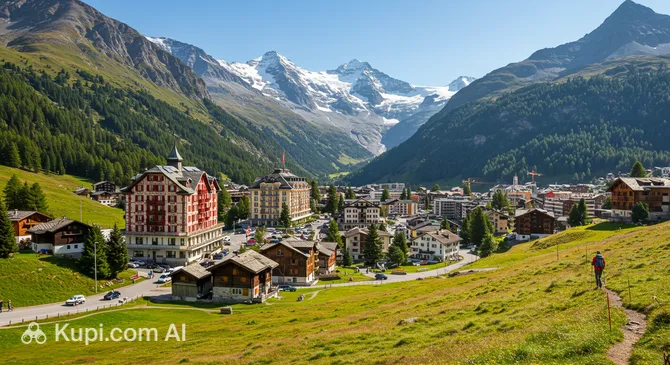
Pontresina. Illustration.
Source: Kupi.com AI

The town's appearance is unique: elegant Belle Époque hotels stand alongside massive stone houses decorated with sgraffito — a traditional plaster engraving technique. The rich history of Pontresina is closely linked to the passage through the Bernina Pass, which for centuries shaped its role as an important transit and tourism hub. A walk through the old quarters will give you the feeling of traveling back in time.

Among the main attractions, the legendary Bernina Express stands out — a panoramic train whose route is included in the UNESCO Heritage List. No less impressive are the natural wonders: the Bernina Massif with its sparkling glaciers, such as Morteratsch, and the viewpoint on Muottas Muragl, which offers perhaps the best view of the valley of lakes. The surrounding area is also known for its population of alpine ibex, which can be seen very close to the village in the spring.

Pontresina is ideal for those seeking a balance between active recreation and relaxation. Come here to breathe the purest mountain air, walk through a fragrant larch forest, and discover the true magic of the Alps.

Weather Overview

The climate of Pontresina can be described as typically alpine: harsh, snowy winters and cool, fresh summers prevail here. The coldest month is January, with an average temperature of -10.2°C and nighttime frosts down to -14.1°C. This time is ideal for skiing and snowboarding enthusiasts, as the snow cover is reliable and daytime temperatures rarely rise above -5°C.

The summer season brings a long-awaited warming, but it never gets hot. In July and August, the air warms up to an average of +10.5°C, with maximum values reaching a comfortable +15°C. When planning your trip, keep in mind that the weather in Pontresina can be changeable, especially in spring and summer.

Expect a cool summer with a high probability of precipitation and freezing winters. Interestingly, May and the summer months are the wettest: the number of days with precipitation can reach 20–24 per month, so a waterproof jacket will be an essential part of your wardrobe in any season.

Average monthly temperature

Average monthly precipitation

Interesting Facts

Beyond its main attractions, Pontresina holds many fascinating secrets and little-known features that reveal themselves only to the most curious travelers. Behind the facades of traditional Engadine houses and the grandeur of glaciers lie stories that make this place truly unique.

  • Saracen influence in the name: A persistent legend claims the town's name comes from the Latin Pons Sarisina, meaning "Bridge of the Saracens." Historians suggest that in the 10th century, Arab travelers and conquerors crossed these passes and built an ancient crossing over the mountain stream, giving the settlement its name, although the bridge itself has not survived to this day.

  • Spring invasion of the Ibex: Pontresina is known for an amazing natural phenomenon observable in the spring. In April and May, when snow still lies in the high mountains but the first greenery appears in the valley, a huge colony of Alpine ibex descends right into the residential quarters. Tourists can observe these majestic animals grazing by the roadsides, practically within arm's reach.

  • Hand-tame birds of the Tais Forest: In the Tais larch forest (God da Tais) adjacent to the resort, remarkably friendly birds reside. Local tits, nuthatches, and nutcrackers are so accustomed to people that they aren't afraid to land on the palms of passersby to peck at nuts or seeds, creating a magical sense of union with nature.

  • Secrets of the Santa Maria Church: The ancient Santa Maria Church, located slightly away from the center, hides true treasures of medieval art inside. Its walls are decorated with rare frescoes from the 12th–15th centuries, which were hidden for centuries under layers of Reformation-era whitewash and were only accidentally discovered and restored in the 20th century.

How to Get There

Traveling to the heart of the Alps requires a bit of planning, as Pontresina is located in a high-altitude valley remote from major metropolises. However, the journey itself is a scenic adventure. You can find out more details on how to get to Pontresina, including all available routes and modes of transport, but most often, tourists choose a combination of air travel and ground transfer.

Since the town of Pontresina itself does not have its own airport, travelers usually fly into neighboring Italy or major Swiss cities. One of the most popular options is Milan Malpensa Airport (IATA: MXP). It is located in the city of Milan, approximately 133 km from the resort. This is a major international hub receiving flights from all over the world. The journey from here by taxi or rental car takes about 3 hours and 40 minutes, passing through picturesque mountain passes and tunnels.

Another convenient option is Orio al Serio Airport (IATA: BGY), also known as Milan-Bergamo Airport. It is located in Milan (closer to Bergamo) and is 92.3 km from Pontresina. This airport is often chosen by those flying with low-cost carriers. A car transfer from here takes approximately 2 hours and 40 minutes. You can also consider flying through Lugano Airport (IATA: LUG), located in the city of Lugano (93.8 km), which also requires about 2.5 hours of driving on mountain roads.

For convenience, here is a summary of the main airports:

AirportPassenger trafficDistance
Orio al Serio International Airport17.4 mln92 km
Lugano Airport190 69894 km
Bolzano106 629109 km
Altenrhein Airport84 100113 km
Milano Linate Airport10.6 mln124 km

Railway connections in this region are excellent, and a train ride often becomes a highlight in itself. Keep in mind that major international expresses do not arrive directly in the center of the alpine village. The nearest major hub is Milan Centrale Station. It is located in the city of Milan, about 124 km from Pontresina. From here, tourists usually transfer to regional trains toward Tirano, where the route of the famous Rhaetian Railway begins, leading directly to the resort. The entire journey by car from the station would take about 3.5 hours.

Another convenient entry point can be the Lugano Railway Station, located in the city of Lugano, approximately 91.5 km from the destination. The journey from this station by taxi or bus takes about 2 hours and 40 minutes. Train travel in Switzerland is characterized by precision and comfort, allowing you to enjoy views of lakes and mountains right from your carriage window.

Below is information about the nearest major railway stations:

StationPassenger trafficDistance
Lugano Railway Station11.2 mln91 km
Milano Centrale Station120 mln124 km
Porta Garibaldi Station25 mln125 km
Rogoredo Railway Station7.5 mln128 km
Cadorna Railway Station15 mln132 km

Main Attractions

Pontresina offers travelers an amazing variety of experiences: from breathtaking glaciers to cozy cultural corners. Everyone will find something to their liking here, whether it’s a peaceful walk through a protected valley or conquering mountain peaks. Here are a few places that you should definitely include in your travel itinerary.

One of the most picturesque natural attractions is the Val Roseg. This is a unique car-free zone that can be reached on foot, by bicycle, or, most romantically, in a traditional horse-drawn carriage. Travelers are drawn here by the incredible silence, broken only by the sounds of nature, and the chance to see wild animals, such as chamois and deer, in their natural habitat. At the end of the route, a cozy restaurant with glacier views awaits, where you can relax after your walk.

It is impossible to visit here and not see the Morteratsch Glacier. It is the third-largest glacier in the Eastern Alps, and a convenient themed trail leads to its "tongue." The walk takes less than an hour and is suitable even for families with children. Information boards along the way show where the ice edge was in different years, clearly demonstrating the history of the glacier's retreat. At the end of the trail, a majestic view of the Bernina Massif opens up, leaving an indelible impression of its power.

For lovers of panoramic views, a trip up Diavolezza is a must. A cable car will take you to an altitude of nearly 3,000 meters, where a viewing platform is located. From here, you can see the so-called "Ballroom of the Alps" — an amphitheater of sparkling peaks and eternal snows. In winter, this place attracts skiers with challenging slopes, while in summer, you can simply enjoy the mountain sun and fantastic landscapes.

To better understand the region's culture and history, stop by the Museum Alpin. It is housed in an old building from 1716 that preserves traditional Engadine architecture with thick walls and small windows. The museum's exhibition tells the story of the development of summer and winter tourism, local hunting, geology, and the daily life of the valley's inhabitants. It is the perfect place to spend time productively and learn how a small mountain village transformed into a popular international resort.

Local Cuisine

The gastronomic scene in Pontresina is a magnificent reflection of the Graubünden region, where rugged alpine traditions intertwine with the refined influence of neighboring Italy. The food here is hearty, warming, and incredibly delicious, making it perfect for recharging after a day spent on mountain slopes or hiking trails. Local restaurants take pride in using products from Engadine valley farmers, turning simple ingredients into true culinary masterpieces.

The main dish every guest must try is Capuns. It is not just food, but a true symbol of the canton: small rolls made of spätzle dough with dried meat added, wrapped in chard leaves and stewed in a cream sauce with cheese. Every household and restaurant has its own secret recipe for this delicacy. Another signature of the region is Bündnerfleisch, thin slices of air-dried beef that are cured in the pure mountain air for several months. They are usually served as an appetizer with wine or as part of a meat platter.

For those with a sweet tooth, Pontresina will be remembered for the famous Engadine Nut Torte (Engadiner Nusstorte). This dense, caramel pie, filled to the brim with walnuts, has a long history and keeps perfectly, so tourists often take it home as a tasty souvenir. Also, on a cold day, the thick and hearty Graubünden Barley Soup, prepared with vegetables and smoked meats, warms you up perfectly.

Among drinks, a special place is held by wines from the Bündner Herrschaft region, often called the "Burgundy of Switzerland." The local Pinot Noir is considered one of the best in the country and perfectly complements the taste of meat dishes. If you want to try something completely unique, order a small glass of Iva liqueur. This fragrant drink is infused with the flowers of the alpine musk yarrow and has a specific but pleasant herbal taste that, as locals say, conveys the very spirit of the mountains.

The dining culture in Pontresina ranges from cozy family establishments to fine dining. Locals and tourists love to spend evenings in traditional "stübli" — small restaurants paneled in fragrant Swiss stone pine, where an atmosphere of home comfort prevails. At the same time, many of the resort's hotels offer exquisite gourmet dinners. A feature of the region is also the mountain hut culture: lunch at high altitude with panoramic views of glaciers and the valley is considered a mandatory part of any tourist program.

Travel Tips

Pontresina is a welcoming yet detail-oriented high-altitude resort, so a little preparation will make your stay here as comfortable and worry-free as possible. Here are several proven recommendations to help you feel at home in the Engadine valley.

  1. Clothing and Equipment: Mountain weather at an altitude of 1,800 meters is changeable, so dress in layers. Even in summer, you will need a fleece jacket and a windbreaker for evenings, and in winter, high-quality thermal underwear. Be sure to bring comfortable trekking shoes with non-slip soles for walks. Don't forget sunglasses and sunscreen with high SPF — the mountain sun here is very active year-round.

  2. Transport: There is no need to rent a car in Pontresina and its surroundings. The public transport system (Engadin Bus and the red trains of the Rhaetian Railway) works with Swiss precision. Check with your hotel about a guest card: often, public transport is included in the stay, allowing for significant savings.

  3. Finances: The national currency is the Swiss Franc (CHF). Although cards are accepted almost everywhere, including supermarkets and lift ticket offices, always carry some cash. You may need it in small mountain huts or souvenir shops. Prices here are higher than the European average. Tipping is usually already included in the bill, but rounding up the amount or an extra 5–10% for excellent service is considered good manners.

  4. Health and Water: You can and should drink water straight from the tap or from street fountains — it is crystal clear and delicious here. Pharmacies (Apotheke) work standard hours, and 24-hour ones may not be nearby, so it's better to bring a basic first-aid kit. The safety level is very high; you can walk safely at any time of day.

  5. Communication and Sockets: The main language of communication is German, but many locals speak English and Italian. The Romansh language gives the region a special charm: learn the word "Allegra" — it is a traditional greeting that will instantly endear you to the locals. Note: Swiss sockets (Type J) differ from standard European ones, so you may need an adapter.

  6. Local Etiquette: In Switzerland, silence and personal space are highly valued. In public places, try not to speak too loudly. It is customary to greet fellow travelers on hiking trails. Punctuality here is not just politeness but a way of life, so arrive on time for excursions or meetings.

  7. What to Avoid: You should not go on mountain trails in urban footwear (sneakers or dress shoes) — this can be dangerous and will draw disapproving looks. Also, avoid making noise on Sundays and after 10:00 PM — compliance with "quiet hours" is strictly monitored here.

  8. Useful Hack: If you are planning a summer visit and staying at a hotel for more than one night, ask about the "Mountain Railways Included" offer. Many hotels provide free access to the funiculars and cable cars of the Upper Engadine region, opening up endless possibilities for panoramic walks without extra cost.

Pontresina is a place where nature dictates its rules, but by following them, you will have an unforgettable holiday experience. Enjoy the purest alpine air, respect local traditions, and the mountains will reward you!

Entertainment & Nightlife

The nightlife in Pontresina is significantly different from the noisy parties of neighboring St. Moritz. An atmosphere of understated elegance, coziness, and alpine tranquility prevails here. Instead of loud discos and neon signs, the resort offers guests evenings in sophisticated lounges, traditional wine cellars, or bars with live music. It is an ideal destination for those who appreciate quality conversation, good wine, and a relaxing environment after an active day in the mountains.

The epicenter of evening activity is the main street — Via Maistra. Most hotels and restaurants are concentrated here, with doors open not only to guests but to everyone. The crowd here is respectable: during the day, you'll see sporty tourists in ski gear enjoying après-ski, and as night falls, the style shifts to "smart casual." In most establishments, the dress code is relaxed, but a more formal style is welcome in the bars of five-star hotels.

Among the places worth visiting, the Pitschna Scena bar at the Hotel Saratz stands out. It is one of the liveliest spots in town, styled like a rustic tavern, frequently hosting live music concerts ranging from jazz to rock. Here, you can order excellent burgers and cocktails in a laid-back atmosphere. On the other end of the nightlife spectrum is the luxurious Kronenhof Bar in the historic Grand Hotel. Neo-Baroque interiors, soft lighting, and the sounds of a piano create the perfect backdrop for a romantic evening with a glass of champagne or a signature cocktail.

If you crave dancing until dawn and social glitz, head to neighboring St. Moritz, just a 10-minute drive away. The concentration of world-class nightclubs and bars is much higher there. You can get there and back by taxi or the Nightliner night bus, which runs between the villages of the Engadine valley on weekends and during the high season. It is a safe and convenient way to travel.

In terms of safety, Pontresina is one of the calmest places in Europe. Night walks along illuminated streets are perfectly safe, even alone. Prices for drinks and entertainment match high Swiss standards: a cocktail in a bar can cost between 18 and 25 francs, and a glass of wine from 8–10 francs. When planning your evening, keep in mind that most restaurant kitchens close around 10:00 PM, though bars may stay open until midnight or 1:00 AM.

During the day, the town's entertainment program shifts toward cultural and active leisure. In addition to the previously mentioned natural beauties, guests can visit local spas with pools and saunas, which are available in many large hotels and open to outside visitors. An indoor entertainment center with bowling and a cinema is also popular, providing an excellent alternative on rainy days.

Parks & Museums

In Pontresina, the concept of a classic city park takes on a completely different meaning. There is no need to create artificial green oases here, as the village itself is literally immersed in centuries-old forests and alpine meadows. The resort's cultural space is also not limited to the walls of buildings: the history of the Engadine region lives on the facades of houses and in small but carefully curated exhibitions.

The main natural recreation area within the settlement is the Tais Forest (God da Tais). It is not just a forest area, but a well-maintained park with convenient paths, protected from the winds by mountain slopes. Majestic larches and Swiss stone pines grow here, creating a special microclimate. The forest is ideal for leisurely walks: benches are placed for contemplating the panorama, and the sunbeams filtering through the needles create an atmosphere of peace. This is a place where nature becomes a natural extension of the urban environment.

Another interesting landscape feature is the Ricola Herb Garden, located near the center. It is a small but educational botanical corner where dozens of species of alpine plants used in traditional medicine and cooking are gathered. The garden is laid out in neat terraces, with each plant accompanied by an information board. Tourists can not only see how mint, sage, or thyme grow in harsh mountain conditions but also enjoy the rich aroma that intensifies under the warm Engadine sun.

The central element of the resort's cultural life is the Museum Alpin. It is located in the historic Chesa Delnon building, constructed in 1716, which is an architectural masterpiece in its own right. The museum's exhibition is a deep dive into the lives and traditions of the valley's inhabitants. Here you can see collections of minerals mined in the local mountains, antique furniture and utensils, as well as learn about the development of mountaineering and summer tourism. Of particular interest is the library and the section dedicated to local fauna, making the museum engaging for both adults and children.

While Pontresina lacks major world-class art galleries, historic hotels and small private halls often serve as exhibition spaces. For example, the lobbies of grand hotels often display works by local artists and photographers inspired by the beauty of the Engadine. Additionally, pay attention to the Show Dairy (Sennerei Pontresina), which can be called a "living museum" of gastronomy. Visitors can observe the traditional process of cheese making in copper vats, learning about the centuries-old technologies that made Switzerland famous worldwide.

Insider Tip: View the main street, Via Maistra, as an open-air museum. Look for the sgraffito technique — unique plaster carvings decorating the facades of old houses. Each ornament has its own meaning, protecting the home or telling a family's story, turning an ordinary walk into a real tour of architectural history.

Getting Around

The transport system in Pontresina, as in the entire Engadine region, operates with exemplary precision and comfort, making a personal car entirely unnecessary. Despite the town's modest size, connections between the center, the railway station, and mountain lifts are perfectly organized. Public transport is fully integrated into the Swiss network, allowing for easy planning of routes of any complexity.

The backbone of the transport network is the Engadin Bus. This is a modern and eco-friendly mode of transport running on schedule from early morning until late evening. Buses connect Pontresina with neighboring St. Moritz, Samedan, and other villages in the valley. It is important to remember that many stops work "on request": to get off, you must press a button in the cabin, and to board, signal the driver with your hand while standing at the stop.

Railway communication is represented by the famous Rhaetian Railway (RhB). The red trains, which have become a symbol of the region, run through Pontresina station, located in the lower part of the village. As this route is part of the UNESCO heritage, a regular trip here turns into a panoramic excursion. The trains are ideal for trips to glaciers or neighboring Italy (Tirano), but they are rarely used for moving within the town itself due to the station's distance from most hotels.

A special place in the transport infrastructure is held by mountain railways and cable cars. The funicular to Muottas Muragl and the lift to Diavolezza operate as part of the general network. They transport tourists to viewing platforms and the start of trekking routes. Pay attention to the operating hours: lifts close quite early, usually between 16:30 and 17:30, depending on the season.

The fare payment system may seem complicated to a newcomer, but it is very logical. Tickets can be purchased at station machines (accepting cards and cash) or via the SBB Mobile app, which is the most convenient tool for a tourist. In the app, you can plan a route and buy a ticket in "one click." You do not need to validate electronic tickets; just show the QR code to the inspector.

There are several advantageous offers for tourists. If you plan to travel extensively across the country, it makes sense to purchase the Swiss Travel Pass. However, the most useful hack for guests of Pontresina is the guest card. During the summer season, many hotels provide a "Mountain Railways Included" pass for bookings of two nights or more, giving the right to free use of mountain lifts and often including public transport in the Upper Engadine region. Be sure to clarify this upon check-in.

As an alternative to public transport, e-bikes are popular. Due to the mountain terrain, e-bikes are much more in demand here than regular bicycles; rental points are located in the city center and at the station. Taxis in Pontresina are available but expensive even by local standards, so they are usually booked only for transfers with luggage or night trips when buses are no longer running.

A unique "transport highlight" of Pontresina is the horse-drawn carriages (Omnibus) that run into the Val Roseg valley. This is the only permitted mode of transport on this route (besides bicycles and walking). A ride in such a carriage is not just a way to reach the restaurant by the glacier, but a true historical tradition that is worth trying at least once.

Accommodation

Accommodation in Pontresina is an opportunity to experience alpine aristocracy without sacrificing home comfort. The resort offers an impressive variety of options: from luxurious Belle Époque palaces to a democratic youth hostel and traditional apartments. The level of service here is consistently high, which is a hallmark of Switzerland, regardless of the number of stars on the chosen hotel's facade.

The resort's geography is simple: the town is stretched along the main street, Via Maistra. The choice of location depends on your preferences. The Lower Pontresina (Laret) district, with its historical architecture and tranquility, is ideal for those who love privacy and proximity to the railway station. Upper Pontresina (Giarsun) is a livelier part where shops, restaurants, the Rondo congress center, and the Bellavita water complex are concentrated. Thanks to the village's compactness, access to ski lifts and walking trails is convenient from any point.

The historic grand hotels, resembling fairytale castles, deserve special attention. Many of them have been managed by the same families for several generations, carefully preserving traditions of hospitality. Interiors in such places often combine late 19th-century elegance with modern amenities and luxurious spas. For those who prefer independence, apartments in old Engadine houses with thick walls and small, cozy windows are an excellent choice.

Booking Tip: Pontresina is extremely popular, so it is worth planning your trip in advance. For peak dates (Christmas, February, July-August), it is better to book accommodation 4–6 months ahead. Be sure to check seasonal offers: in summer, many hotels offer a card providing free travel on all mountain railways and lifts in the Upper Engadine region for bookings of two nights or more.

Pricing policies range from medium to high. There are few budget options (hostels or simple guesthouses), so they fill up first. 3–4 star hotels often offer attractive half-board packages (breakfast and a multi-course dinner), which can significantly save on restaurant costs. While online aggregators are convenient, booking directly through the hotel's website often yields pleasant bonuses: from a welcome drink to a free transfer from the station.

Nearby Cities

For those looking to explore the surroundings, Pontresina serves as an excellent starting point for day trips to several interesting nearby locations. Thanks to the well-developed railway network and picturesque motorways, you can easily change scenery and get acquainted with the culture of neighboring regions.

The closest is Chur — the capital of the Graubünden canton and the oldest city in the country. The trip here takes about an hour and transports you into a medieval atmosphere. Chur attracts tourists with its beautifully preserved old center, where you can wander endlessly through winding streets, visit the majestic cathedral, and numerous museums. It is a great option for those who want to combine a mountain holiday with urban cultural leisure.

If you are willing to drive a bit further for a southern flair, head to Lugano. This city offers a striking contrast to alpine Pontresina: a Mediterranean atmosphere prevails here, palms grow, and life flows to the rhythm of the Italian "dolce vita." A walk along the Lugano lakefront and Ciani Park will provide bright impressions and the feeling of eternal summer.

Also worth noting is Bellinzona, famous for its three castles included in the UNESCO World Heritage List. Powerful fortress walls and towers rising above the valley are living testimony to the region's rich history. This place is a must-visit for lovers of architecture and fortifications.

CityPopulationDistance
St. Moritz5 2005 km
Davos10 86235 km
Arosa3 00036 km
Sondrio21 64236 km
Tirano9 05037 km

These nearby destinations allow you to get a glimpse into the diverse culture and landscapes of the region, making your journey through Switzerland even more rich and multifaceted.

Shopping & Souvenirs

Shopping in Pontresina is characterized by restraint and high quality, typical of the entire Engadine region. You won't find noisy malls or endless rows of mass-market brands here. Instead, the resort offers guests cozy boutiques, family-run shops, and specialized stores where the focus is on authenticity, craftsmanship, and functionality. It is the perfect place for leisurely shopping between mountain walks.

The heart of the town's commercial life is the main street — Via Maistra. Strolling along it, tourists can find almost everything they need: from high-end sports equipment and warm clothing to exclusive jewelry and interior items. The shop windows here are tastefully decorated, often combining modern goods with elements of traditional alpine decor.

There are no large shopping centers in the usual sense in Pontresina, which preserves the village's intimate atmosphere. If your goal is world-class luxury brand boutiques or large department stores, head to neighboring St. Moritz, located just a few kilometers away. In Pontresina itself, the retail format is represented by individual shops located on the ground floors of historic buildings and hotels.

The Laret Market, held every two weeks on Thursdays during the summer, deserves special attention. It is not just a place for shopping but a true street festival with live music and entertainment. Here, local farmers and artisans offer the freshest products, homemade pastries, handmade textiles, and unique crafts made of wood and stone. The atmosphere at the market is incredibly friendly and festive.

As souvenirs from Pontresina, consider bringing back gastronomic delicacies. First and foremost is the famous Engadine Nut Torte (Nusstorte), sold in local confectioneries. Cheeses from the local Sennerei Pontresina dairy, Bündnerfleisch dried meat, and fruit bread are also popular. Lovers of unique items will enjoy jewelry featuring local minerals or cosmetics based on alpine herbs.

Most shops operate from Monday to Friday from 08:30 or 09:00 to 18:30; on Saturdays, the working day is often shortened to 16:00 or 17:00. Note that many small shops close for a lunch break from 12:00 to 14:00. On Sundays, only bakeries, souvenir kiosks, and station shops are open, although the schedule may be more flexible during the high season (winter and summer).

Swiss francs (CHF) and major credit cards are widely accepted. Switzerland has a Tax Free system for tourists residing outside the country. If the amount of your purchase in one store exceeds 300 francs, you can request a special tax refund form to be presented at customs when leaving the country.

Reached the end of the page?

That means the route is fully explored