Support

Lake Manyara Airport

About the Airport

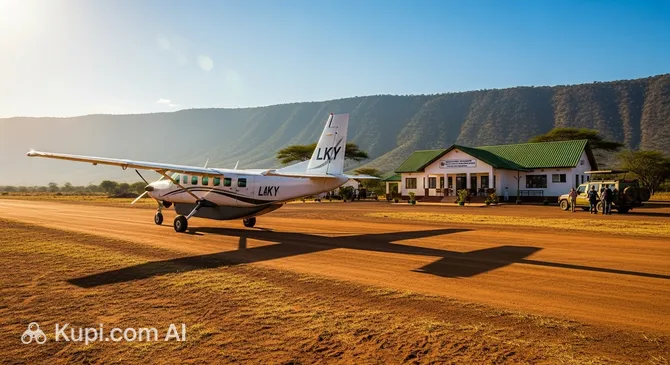
Lake Manyara Airport. Source: Kupi.com Binoculars

Lake Manyara Airport is not merely a transport hub, but a true runway in the heart of wild Africa, where the journey begins even before you touch the ground. The approach for landing here turns into a breathtaking excursion: the view from the window reveals stunning panoramas of the Great Rift Valley and the shimmering lake, painted in pink hues thanks to thousands of flamingos. This cozy airfield is devoid of the stress and noise of megacities, offering tourists an instant immersion into the safari atmosphere literally from the first minute of arrival. There are no long queues here; instead of the roar of large airliner turbines, you will be greeted by the sounds of nature and the warm wind of the savannah.

IATA Code LKY
ICAO Code HTLM
City Mto wa Mbu (Northern Tanzania)
Distance to Centre ~2 km to Mto wa Mbu village
Status Domestic (local)
Passengers per Year About 30,000 (predominantly tourist traffic)
Schedule Depends on the season and airline load

Features and Advantages of the Airport

Lake Manyara Airport plays a key role in the logistics of Tanzania's northern tourist circuit. Despite its modest size, it possesses a number of undeniable advantages for travellers:

  • Strategic Location: The airfield is situated literally on the top of the Rift Valley escarpment. It is an ideal starting point not only for visiting Lake Manyara Park but also for transfers to the Ngorongoro Crater or Tarangire Park.
  • Time Saving: Flying here from Arusha or Zanzibar replaces long hours of tiring road travel, allowing you to devote more time to observing wildlife.
  • Scenic Views: Take-off and landing at LKY are considered some of the most beautiful in the region due to the unique landscape combining the lake, forest, and rocky cliffs.
  • Absence of Bureaucracy: Thanks to its status as a small local airfield, all arrival and departure procedures are conducted as quickly as possible and in a relaxed atmosphere.

Contact Information

Lake Manyara Airport (LKY) is a small airfield (airstrip) serving primarily tourists arriving for safaris in Lake Manyara National Park. Due to its size and specific nature, it does not have a standard set of contacts like major international airports. All flight coordination and passenger service are handled directly by the airlines.

  • Official Website: The airfield does not have a separate website. It is managed by the Tanzania Airports Authority (TAA), but detailed information about LKY is absent from their general resource.
  • Inquiry Service Phone: There is no direct public telephone number for the airfield. For all questions related to schedules, booking, or flight status, it is necessary to contact the airline whose services you are using.
  • Airport Address: Lake Manyara Airstrip, Mto wa Mbu, Tanzania. The airfield is located next to the entrance of the national park.
  • Email: A specialised email address for contacting the airport is not provided.
  • Social Media: The airport does not maintain official pages on social networks.
  • Lost Luggage Information: If your luggage has been lost or damaged, you should immediately contact your airline's support service. The staff on the airstrip are not authorised to resolve such issues.
  • Passenger Support Contacts: All support for travellers is provided by representatives of the air carriers (e.g., Coastal Aviation, Auric Air) operating charter and scheduled flights to Lake Manyara.

How to Get to the Airport

Lake Manyara Airport (LKY) is, in essence, an airstrip located in immediate proximity to Lake Manyara National Park. Its unique position in the heart of the wilderness of Tanzania defines the specific nature of transport. There are no familiar city routes here, and the journey from the airfield to your lodge becomes the start of an exciting safari in itself.

Transfer within a Safari Tour
This is the most common and convenient method. The vast majority of tourists arrive at Lake Manyara as part of a pre-arranged safari. In this case, a representative of your tour operator will meet you right at the aircraft in a safari jeep (usually a Land Cruiser or Land Rover). This vehicle will serve as both your transfer and transport for wildlife viewing. The cost of this service is usually already included in the total safari package price, eliminating any logistical worries.

Taxi and Private Transfer
For independent travellers, there is an option to book a private transfer. It is important to understand that this is not a standard city taxi, but a four-wheel-drive vehicle that must be booked in advance through your hotel, lodge, or a local transport company in the nearby town of Mto wa Mbu. The trip from the airfield to most lodges in the park takes from 15 to 40 minutes, depending on their location. The price for such services is negotiable and can be quite high, so always agree on it when booking.

Car Rental
It is impossible to rent a car directly at Lake Manyara Airport. If you are planning an independent trip, you should rent a suitable 4x4 SUV in a major city, for example, in Arusha, and drive to the park from there. This option gives maximum freedom but requires experience in driving on African roads and off-road terrain, as well as prior study of park rules, including the payment of entry fees.

Public Transport and Parking
Due to the airfield's location within a protected natural area, no forms of public transport (buses, trains, or local "dala-dala" minibuses) run here. Regarding parking, there are no organised long-term parking lots at the airfield. It is simply an airstrip with minimal infrastructure for arrival and departure, so leaving a car here for several days is not possible.

Main Recommendation
The best way to organise your trip to/from Lake Manyara Airport is to arrange a transfer in advance. Whether it is part of your safari package or a separately booked vehicle, preliminary planning is the key to a calm and pleasant start to your adventure in one of Tanzania's most picturesque parks.

Terminals and Map

Lake Manyara Airport (LKY) is essentially a small airfield (or airstrip) serving charter and scheduled flights for tourists heading to the national park and nearby lodges. Its infrastructure differs significantly from major international airports, and it is important to understand this when planning your trip.

The airport operates one small terminal, which is a modest building designed to serve both arriving and departing passengers. There is no division into multiple terminals or complex walkways. All infrastructure is concentrated in one place, making navigation extremely simple. In essence, it is impossible to get lost here.

Departure and arrival zones are nominal and are often located in the same room. Upon arrival, passengers disembark from the aircraft and almost immediately meet representatives of their hotels or safari operators. The departure zone is a small waiting hall where you can wait for boarding. Amenities here are minimalist and usually include a check-in counter, a waiting area, and basic sanitary facilities.

Check-in and security screening procedures are very quick, as the airport serves small aircraft with a low number of passengers. Check-in often amounts to checking your name on a list with an airline representative. Security screening, if conducted, is in a simplified format. It is usually recommended to arrive at the airport 30-45 minutes before departure — this time is more than sufficient. The main recommendation for navigation is simply to follow the instructions of the airline staff or your guide, who will meet you and assist with all formalities.

Airport History

Lake Manyara Airport (LKY) is not a major international hub with a history rich in events, but rather a key airstrip for safari tourism in northern Tanzania. Its history is closely intertwined with the development of tourist infrastructure around the famous Lake Manyara National Park. Unlike large airports, it does not have an exact founding date recorded in official chronicles.

The main stage of the airfield's development occurred in the second half of the 20th century, when the region began to gain popularity among travellers from all over the world. Initially, it may have been a simple dirt strip for small private planes. As demand grew for air safaris, which significantly save time compared to jeep journeys, the infrastructure gradually improved. Development mainly consisted of maintaining and levelling the runway to safely accommodate light turboprop aircraft, such as the Cessna Caravan or Twin Otter.

In the history of Lake Manyara Airport, there are no loud events, records, or massive reconstructions like those of major air harbours. Its main mission has always been utilitarian — to serve as a fast and convenient gateway to the world of wildlife. All modernisations here are aimed at ensuring flight safety and minimal comfort for arriving tourists before their departure to lodges and camps.

The most interesting fact from the "history" of this airport is its role. It is not just a transport facility, but an integral part of the adventure. Even during landing, passengers can see breathtaking landscapes of the Great Rift Valley and Lake Manyara itself from above. Thus, the history of the airport is written not by years and events, but by thousands of travellers for whom an unforgettable African safari began from this very runway.

Services and Amenities

Lake Manyara Airport (LKY) is a small regional airfield that serves as the main air gateway for tourists heading to Lake Manyara National Park and the adjacent reserves in northern Tanzania. It is important to understand that this is an airstrip with basic infrastructure, not a large international airport, so the range of services here corresponds to its status and size.

Passengers have access to a small terminal with a waiting lounge where one can take shelter from the sun while waiting for a flight. Amenities here are minimal but sufficient for a short stay.

  • Dining and Shops: As a rule, there are no full-service restaurants or cafes at the airport. Sometimes a small kiosk operates where you can buy bottled water, soft drinks, and light snacks. The selection of souvenirs is also extremely limited, so it is better to take care of purchases in advance.
  • Technology: Wi-Fi services are usually unavailable, and the number of sockets for charging electronic devices is severely limited. It is recommended to carry a portable power bank and arrange mobile internet in advance.
  • Financial Services: There are no bank branches, ATMs, or currency exchange points at Lake Manyara Airport. All financial transactions should be conducted in major cities, for example, in Arusha.
  • Medical Assistance and Special Needs: Specialised medical points are absent, however, airfield staff can provide basic first aid. For passengers with children and people with disabilities, employees will assist with boarding and disembarking, but special infrastructure (ramps, mother and child rooms) is not provided.
  • Accommodation and Business Services: There are no hotels directly on the airport territory. The nearest accommodation options are numerous safari lodges and camps located in the vicinity of the national park. Business centres and conference rooms are absent at the airport.

Overall, Lake Manyara Airport effectively fulfils its main function — the fast and convenient delivery of travellers to the start of their African adventure. The staff are friendly and always ready to help within the limits of available possibilities.

Where to Eat

When planning a journey through Lake Manyara Airport (LKY), it is important to realise that this is a small airstrip serving mainly charter flights for safari tourism. Unlike major international airports, the infrastructure here is very limited, and this applies fully to dining options.

The Lake Manyara Airport building lacks full-service restaurants, cafes, or dining establishments. Travellers will not find venues here offering hot meals, diverse menus, or specialised cuisine. At best, a small kiosk may be operating on the premises, selling bottled water, carbonated drinks, and packaged snacks such as crisps, biscuits, or nuts. The assortment is extremely limited, and opening hours may depend on the flight schedule.

In this regard, we strongly recommend tourists to take care of meals in advance. The best solution is to have a full meal at your lodge or hotel before leaving for the airport. It is also sensible to bring along a sufficient amount of drinking water and a light snack. This is especially important for travellers with children or specific dietary needs (vegetarian, gluten-free, Halal, etc.), as finding suitable options on-site will be impossible.

Travel Tips

Flying through Lake Manyara Airport is an integral part of your safari adventure. It is a small airstrip serving charter and scheduled flights to Lake Manyara National Park. Preparation for such a flight differs slightly from travelling through a major international hub, and our tips will help you make it as comfortable as possible.

Arrival at the Airport and Check-in. For domestic flights on small aircraft, it is usually sufficient to arrive approximately 1 hour before departure. Procedures here take place quickly and without unnecessary fuss. Check-in and security checks are of a more personal, informal nature. Nevertheless, it is always recommended to verify the recommended arrival time with your airline or tour operator in advance.

Seat Selection and Hand Luggage. Try to get a window seat! Flights over Tanzania, especially in the Great Rift Valley area, reveal breathtaking views that you will not want to miss. The main rule for luggage on safari flights is strict limits on weight and bag type. Most airlines accept only soft bags (duffels) weighing no more than 15 kg, including hand luggage. Hard suitcases with wheels may simply not fit into the small luggage compartment of the aircraft. Standard rules for carrying liquids (up to 100 ml in a transparent bag) also apply.

Customs Control and Transfers. Lake Manyara Airport serves exclusively domestic flights, so there is no international customs control here. You will pass through it at the first airport of arrival in the country (for example, in Kilimanjaro or Dar es Salaam). If you have a connecting flight planned, clarify the details with the pilot or company representative. Most often, a "transfer" here means meeting your guide for transport to a lodge or the next national park.

How to Save and What to Do in Case of Delay. To avoid surcharges for excess weight, weigh your luggage in advance. Prices for food and drinks in the airfield area can be high, so it is better to bring a bottle of water and a light snack with you. Flights of small aircraft depend heavily on weather conditions and may be delayed. In this case, keep a book and a charged power bank with you, and stay in touch with the airline representative. Remember that the infrastructure here is minimal, so it is worth being prepared to wait in simple but authentic conditions.

Reached the end of the page?

That means the route is fully explored