Support

Maasai Mara (Olare)

About the Airport

Olare Airstrip is not just a runway; it is your personal gateway to the very heart of the wild nature of Kenya. Forget about familiar terminals and the hustle and bustle of large aviation hubs. Landing here marks the beginning of your safari adventure, where the runway stretches across the savannah, and the first to greet you might be a giraffe or a herd of antelopes. This small airfield serves numerous lodges and camps in the famous Maasai Mara reserve, allowing travelers to immerse themselves in the world of wild animals as quickly as possible.
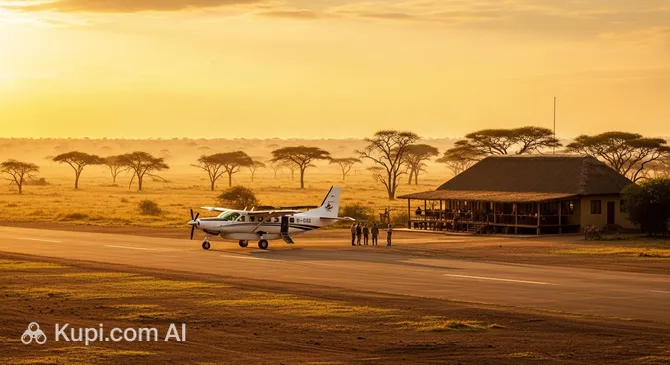
Maasai Mara (Olare). Source: Kupi.com Binoculars
IATA Code OLG
ICAO Code HKOL
City Maasai Mara
Distance to Center Located directly within the Olare Motorogi Conservancy
Status Domestic (Safari Airstrip)
Annual Passengers Exact data unavailable; primarily serves safari lodge tourists
Popular Airlines Safarilink, AirKenya Express, Governor's Aviation, Mombasa Air Safari

Features and Advantages of Olare Airport

The main advantage of this airfield is its unique location. Instead of spending many hours on a road transfer from Nairobi, you land right in the center of the action, just a few minutes' drive from luxurious safari camps. The flight itself, on a small aircraft over the Great Rift Valley and the plains of Maasai Mara, is an unforgettable sightseeing excursion.

Do not expect traditional infrastructure here. The "terminal" is typically a simple canopy or a spacious clearing where representatives from your lodge are already waiting for you in jeeps. Flight check-in and baggage handling are quick and informal. This is a perfect example of how aviation can blend harmoniously with nature, providing comfortable access to the most remote and breathtaking corners of the planet.

Contact Information

Maasai Mara (Olare) Airport (OLG) is a small airfield primarily serving private and tourist flights. Consequently, it does not have centralized contact services like major international airports. All necessary information and support are provided by the airlines and safari lodges.

  • Official Website, Phone, and Social Media: Olare Airstrip does not have an official website, a public telephone number, or social media pages. Flight coordination and passenger services are handled directly by the air carriers.
  • Address: The airfield is located in the Olare Motorogi Conservancy, within the Maasai Mara National Reserve in Kenya.
  • Email: There is no direct public email for the airfield. Please use the contact details of your airline or travel agency for communication.
  • Lost Luggage Information: In case of loss or damage to luggage, you must immediately contact the representative of the airline that operated your flight. The carrier is responsible for the luggage and handles the search.
  • Passenger Support Contacts: For all questions related to your flight, schedule, tickets, or special needs, please contact your airline's support service or your tour organizer (safari lodge, tour operator).

How to Get to the Airport

Maasai Mara (Olare) Airport is essentially a runway in the very heart of the famous Maasai Mara reserve in Kenya. The transport system here is radically different from urban areas, and there are limited ways to reach the airfield. The main rule is to plan all movements in advance.

Transfers from Lodges and Safari Companies — this is the primary and most reliable method of transportation. Typically, when booking accommodation or a safari tour, the transfer to/from the nearest airstrip is already included in the price. You will be met by a lodge representative in a four-wheel-drive vehicle (usually a Toyota Land Cruiser or Land Rover), which is perfectly suited for the reserve's off-road conditions. Such trips often turn into an additional mini-safari, as you may encounter wild animals along the way.

Taxis and Public Transport. It is impossible to find a taxi in the traditional sense in Maasai Mara, just as there is no public transport—buses or trains do not run here. All transport is provided by private companies and lodges. Attempting to find a car on the spot will likely be unsuccessful, so booking a transfer is mandatory.

Car Rental. Self-driving in the reserve is not recommended for tourists without experience driving on African off-road terrain. The roads here are dirt tracks without signs, and it is easy to get lost without a guide. If you still decide to rent a car, you must do so in major cities, such as Nairobi, and you will need a reliable 4x4 SUV. Parking at Olare Airstrip is informal—cars simply stop in the open area to pick up and drop off passengers.

Travel Time and Recommendations. The travel time from your lodge or camp to the airfield can vary from 15 minutes to an hour and a half. This depends on the remoteness of your accommodation, road conditions (especially during the rainy season), and even "traffic jams" caused by animals. Please note that Maasai Mara is served by a network of small airfields, such as Maasai Mara (Olkiombo) or Kichwa Tembo, and your flight might be routed to the one closest to your accommodation. Always confirm flight and transfer details with your tour operator or lodge.

Terminals and Map

Maasai Mara (Olare) Airport, known by the code OLG, is not an airport in the traditional sense, but rather a small airstrip serving private and charter flights for safari lodges in the famous Maasai Mara reserve. Its infrastructure is simplified to the maximum and is part of the authentic African adventure.

In fact, there are no terminals in the classical sense at Olare Airport. The entire infrastructure consists of one small building or even a simple canopy, which serves simultaneously as the waiting area, check-in, arrival, and departure zone. There is no separation into domestic and international flights, as the airfield only receives light aviation from other airports in Kenya.

Procedures at Olare Airport are very fast and informal. Flight check-in often consists of a pilot or airline representative verifying names against a list. Security screening is generally minimal or non-existent. The entire process from arriving at the airfield to boarding the plane usually takes no more than 20-30 minutes. Luggage is loaded and unloaded manually right on the airfield.

Navigation at Olare Airport is extremely simple: it is impossible to get lost here. The main recommendation for travelers is to follow the instructions of the pilot or the safari lodge representative meeting you. They coordinate all passenger actions: from disembarking the jeep to boarding the small Cessna or Twin Otter aircraft. The entire atmosphere resembles a private flying club rather than a public transport hub.

Airport History

The history of Olare Airstrip (OLG), often referred to as Maasai Mara Airport, is not a tale of giant terminals and multi-million passenger flows. It is a story of how aviation opened access to one of the most amazing corners of wild nature on the planet. The airfield does not have an exact founding date like major international hubs, as its emergence and development are inextricably linked to the growth of safari popularity in Kenya in the second half of the 20th century.

Initially, it was likely just a simple dirt strip cleared for the needs of early safari camps and researchers. With the growth of tourist flow and the appearance of luxury lodges in private conservancies adjacent to the main Maasai Mara reserve, a need arose for a more reliable and faster way to transport guests from Nairobi. Thus, the Olare airstrip gradually turned into a key transport hub for the northern part of the Mara ecosystem. Its development is not so much about building new terminals as it is about maintaining and improving the quality of the strip itself for the safe reception of light aircraft, such as the Cessna Caravan, which are the main mode of transport for fly-in safaris.

The main "historical events" witnessed by the airfield repeat from year to year—this is the Great Migration of wildebeest and zebras. It is to see this grand spectacle that the majority of travelers fly here. The airfield has not been the scene of significant historical incidents but has become an important part of the infrastructure supporting both tourism and conservation activities in the region. Its existence allows not only for the transport of tourists but also for the rapid deployment of rangers, veterinarians, and researchers working to preserve the unique fauna.

An interesting fact from the "history" of the airfield lies in the very experience of arrival and departure. There are no familiar terminal buildings, waiting halls, or luggage belts here. Often, the "terminal" is simply a canopy or a picturesque tree under which guests await their safari jeep. The runway is not fenced off from the savannah, so pilots often have to make an extra circle before landing to ensure there are no giraffes, zebras, or antelopes on the strip. Thus, Olare Airstrip is not just a point on the map, but a unique location where the adventure begins literally the moment the landing gear touches the ground.

Services and Facilities

Olare Airport (OLG) in Maasai Mara is essentially a landing strip (airstrip) serving safari lodges and camps in the eponymous reserve. It is important to understand that this is not a large international terminal, so the range of services here is minimal and focused on the quick and convenient transport of tourists to their place of rest. The infrastructure is created for functionality, not for long waiting periods.

Dining, Shops, and Lounges. You will not find restaurants, cafes, or duty-free shops within the Olare Airstrip grounds. The most you can expect is a small kiosk with beverages and snacks. The waiting area usually consists of a simple covered space or an open area with benches where passengers wait for their flight or transfer from the safari lodge. Full meals are provided at the camps and lodges. There are no dedicated VIP lounges here.

Connectivity and Finance. Wi-Fi is generally unavailable at the airfield. Charging stations for mobile devices are also extremely rare, so it is strongly recommended to charge all your gadgets in advance and bring a portable power bank. There are no ATMs or currency exchange points at Olare Airport. All financial matters, including exchanging money for Kenyan shillings, are best settled in advance in major cities, such as Nairobi.

Specialized Services. Basic first aid services may be provided by staff, but there is no full-fledged medical center here. In emergencies, assistance is organized through your safari lodge, which usually has established links with medical evacuation services. Similarly, facilities for passengers with children or those with limited mobility are not provided by the airfield itself. However, lodge staff meeting guests are always ready to assist. Key point — inform your tour operator or lodge in advance of any special needs so that necessary support can be organized for you.

Accommodation and Business Services. There are no hotels directly on the Olare Airstrip grounds, as its main task is to serve as a transport hub for the numerous safari lodges and camps scattered across the reserve in Kenya. These are where you will be staying. Conference rooms or business centers are also absent—this place is intended exclusively for leisure and immersion in wild nature.

Where to Eat

When planning a trip through Maasai Mara (Olare) Airport, it is important to understand its specific nature. This is a small airstrip that serves guests of safari lodges in the reserve, not a large commercial airport. Consequently, there is no familiar selection of restaurants and cafes that can be found in major aviation hubs.

The infrastructure at Olare (OLG) is typically very simple and consists of a small waiting area. There are no permanent dining establishments here. Sometimes a small kiosk may be operating where you can purchase bottled water, soft drinks, and simple snacks, such as chips or biscuits. Do not count on a full lunch or dinner in the airport building.

Meals for travelers are usually organized by their safari lodges. Many hotels provide their guests with packed lunches or snacks before departure, especially if departure coincides with meal times. We strongly recommend clarifying this point in advance with your lodge and having your own small supply of water and a light snack. This is especially relevant in case of potential flight delays.

Thus, there are no special offerings at Olare Airport, such as vegetarian, Halal, or gluten-free meals. All issues related to dietary restrictions should be resolved directly with your hotel or camp, which provides your meals during your stay in the reserve.

Traveler Tips

Flights from Maasai Mara (Olare) Airport offer a special experience that differs significantly from traveling through major international hubs. To ensure your adventure in Kenya goes smoothly, use these tips designed specifically for small airstrips in the savannah.

Arrival and Check-in: Unlike large airports, there is no need to arrive 3-4 hours before departure here. Arriving 1-1.5 hours before your flight departs is sufficient. The check-in process is usually very quick and takes place at a small counter with an airline representative. Security checks are also simplified and may include a manual luggage search.

Luggage — The Most Important Aspect: Airlines operating flights to Maasai Mara use small aircraft with limited cargo holds. Therefore, a strict rule applies: only soft bags (duffels, sports bags) weighing no more than 15 kg per person, including hand luggage, are accepted. Hard-shell suitcases may not be allowed on board. Standard restrictions for hand luggage, such as the ban on carrying liquids over 100 ml and sharp objects, also apply.

Seat Selection: On such flights, seats are generally not assigned, and free seating applies. Try to take a window seat. Flying over the savannah at a low altitude is already part of the safari! You will be able to enjoy stunning views and perhaps even see animals from the air.

Transfers and Customs: Most flights from Maasai Mara arrive in Nairobi at Wilson Airport, which serves domestic and charter flights. If you have a subsequent international departure, it will likely be from a different airport — Jomo Kenyatta International Airport (NBO). Allow sufficient time (at least 3-4 hours) for the transfer between airports. Since this is a domestic flight, there is no customs or passport control at Olare Airport.

Savings and Delays: To save money, book tickets in advance, especially during the high season. Always check luggage allowances with your airline to avoid extra charges. In case of flight delays (often due to weather conditions), remain calm. Facilities at the airport are minimal, so have a book or a charged power bank with you. The airline representative on-site will be your main source of information.

Reached the end of the page?

That means the route is fully explored