Support

Turkmenbashi

About

Welcome to Turkmenbashi, the primary port city of Turkmenistan. Situated on the eastern coast of the Caspian Sea in the Balkan Region, this city serves as a vital maritime gateway and offers a unique blend of industrial energy and seaside tranquility. With a population of approximately 73,000 residents, it presents a distinct atmosphere where the rugged beauty of the desert landscape meets the calming waves of the sea.

The city has undergone significant transformations over the years, evolving from a strategic outpost into a modern hub. Exploring the history of Turkmenbashi reveals its roots as a 19th-century settlement formerly known as Krasnovodsk, which has since grown into an important center for trade and transport. The climate here is generally desert-like, with hot summers and mild winters, making the coastal breeze a refreshing feature for visitors.

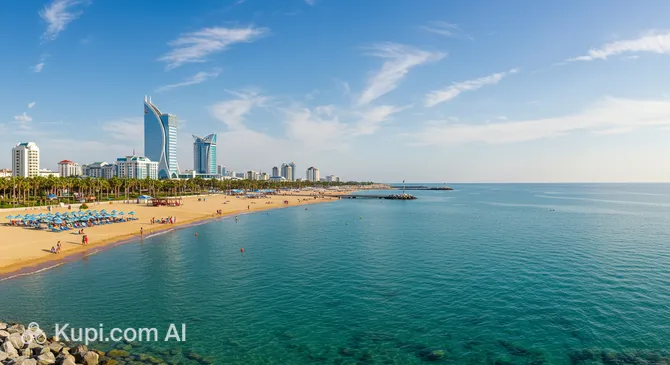
Turkmenbashi. Source: Kupi.Binoculars

Travelers are often drawn to the nearby Avaza National Tourist Zone, a rapidly developing resort area boasting modern hotels, yacht clubs, and pristine beaches just a short drive from the city center. Within the city itself, the Museum of Regional History offers fascinating exhibits on the local flora, fauna, and cultural heritage, while the bustling seaport provides a glimpse into the daily life of this maritime community.

Whether you are looking to relax by the Caspian shore or explore the unique geological features of the surrounding region, Turkmenbashi is an intriguing destination. It stands as a welcoming entry point for those eager to discover the western wonders of the country.

Weather Overview

The climate in Turkmenbashi is characterized by hot, dry summers and cool winters, influenced significantly by its location on the Caspian Sea. During the peak summer months of July and August, average temperatures hover around 29°C, with daily highs frequently reaching nearly 33°C. This period is exceptionally dry, often seeing no precipitation at all, which makes it an ideal time for beach activities in the nearby resort zones.

As the seasons shift, temperatures drop noticeably, with winter averages in January and December falling to between 5°C and 7°C. While rainfall is sparse throughout the year—typically recording just 0mm to 1mm per month—the cooler season does bring a few wet days. For a more detailed breakdown of seasonal conditions, you can check the weather in Turkmenbashi to help plan your packing list. Generally, visitors can expect hot, sunny weather in the summer and cool, relatively dry conditions during the winter.

Interesting Facts

Beyond the main attractions, Turkmenbashi holds many fascinating secrets that reveal its layered history and unique geography. From its origins as a strategic fortress to its role in cinema and transport, the city offers curious travelers much more than just a seaside view.

  • A Palace for Trains: The city’s railway station is not just a transit hub but an architectural gem. Built in 1895 by the renowned architect Alexei Benois, the station features a stunning Moorish-inspired design with intricate detailing. It stands as one of the oldest and most beautiful railway structures in Central Asia, surviving historical upheavals to welcome travelers to this day.

  • The "Red Water" Mystery: Before it was renamed in 1993, the city was known as Krasnovodsk, a Russian translation of the local toponym "Kyzyl-Su," which means "Red Water." Local legends suggest this name was inspired by the pinkish hue the water in the bay takes on at sunset, reflecting the surrounding granite rocks.

  • Walking Below Sea Level: When you stroll through the streets of Turkmenbashi, you are technically walking below the level of the world's oceans. Since the Caspian Sea sits approximately 28 meters (92 feet) below global sea level, the coastal areas of the city are situated in a significant geological depression, a quirk shared by few other inhabited places on Earth.

  • A Cinematic Backdrop: The city's stark, unique landscapes and industrial atmosphere have long attracted filmmakers. The region served as the primary filming location for the 1956 classic The Forty-First, which utilized the dramatic coastal dunes to depict the rugged beauty of the area. It also featured prominently in the 1988 film Days of Eclipse, which captured the city's distinctive mood and architecture.

How to Get There

Reaching this coastal city is relatively straightforward, as it serves as a major transportation hub for western Turkmenistan. Whether you are arriving by air from the capital or considering a cross-Caspian journey, you can find more about how to get to Turkmenbashi to help you plan your route efficiently.

The most convenient entry point is the local Turkmenbashi Airport (IATA: KRW), located directly in the city of Turkmenbashi. It is a modern facility that handles both domestic flights from Ashgabat and select international connections. Situated just 6.4 km from the city center, the airport is very accessible; a trip by taxi or bus typically takes approximately 30 minutes. With an annual passenger traffic of around 420,000 people, it offers a comfortable and uncrowded arrival experience.

For international travelers exploring the wider region, Heydar Aliyev International Airport (IATA: GYD) is another significant hub to consider, although it is located in Baku, Azerbaijan. It sits approximately 255 km away across the Caspian Sea. While you cannot take a taxi directly from this airport to Turkmenbashi, it serves as a key gateway for those planning to take the ferry across the Caspian or connect via a flight. It is a large international airport serving over 7 million passengers annually.

For clarity, here is a summary of the main airports:

Airport Name City Passenger Traffic Km from City
Heydar Aliyev International Airport Baku Large 255.4
Turkmenbashi Airport Turkmenbashi Medium 6.4

Travel by train is another popular and scenic way to reach the city. Turkmenbashi serves as the western terminus of the Trans-Caspian Railway, connecting the Caspian coast with the capital, Ashgabat, and other major cities in the east. The railway station is an architectural landmark in itself and offers regular overnight sleeper trains, which are a reliable and affordable option for traversing the country's desert landscapes.

Main Attractions

One of the most prominent draws for visitors is the Avaza National Tourist Zone. Located just a short drive from the city center, this massive resort complex stretches along the pristine coast of the Caspian Sea. It is a modern marvel featuring an array of high-rise luxury hotels, yacht clubs, and recreational parks. Tourists flock here to enjoy the sandy beaches, aqua parks, and the striking architecture that illuminates the coastline at night, making it a perfect spot for relaxation and leisure.

For those interested in the cultural and natural heritage of the region, the Museum of Regional History is a must-visit destination. The museum houses a diverse collection that ranges from archeological finds and ethnographic displays to exhibits showcasing the unique flora and fauna of the Caspian Sea and the surrounding desert. It provides a deep dive into the traditions of the local people and the geological evolution of Western Turkmenistan.

A significant historical and architectural landmark in the city is the Church of St. Michael the Archangel. Built in 1895, this Russian Orthodox church is one of the few surviving religious structures from the 19th century in the region. Its sturdy stone walls and modest yet elegant design stand as a testament to the city's multicultural past. Visitors appreciate the peaceful atmosphere and the opportunity to see a well-preserved piece of history amidst the modernizing city.

Finally, no trip to Turkmenbashi is complete without experiencing the Caspian Sea Coast itself. Whether you are walking along the seaside promenades or watching the ships navigate the busy port, the connection to the sea is palpable. The coastal area offers stunning sunsets where the sky meets the water, providing excellent photo opportunities and a refreshing escape from the desert heat found inland.

Local Cuisine

The culinary scene in Turkmenbashi is distinct from the rest of Turkmenistan due to its prime location on the shores of the Caspian Sea. While the national cuisine is heavily dominated by meat dishes like mutton and lamb, this coastal city is the undisputed capital of seafood in the country. Visitors here have the unique opportunity to taste fresh catches that are difficult to find elsewhere in the region, making it a gastronomic destination in its own right.

The star of the local table is undoubtedly fish, known locally as balyk. The most famous dish to try is fish shashlik (kebabs), typically made from sturgeon or other Caspian varieties. Chunks of fresh fish are marinated, skewered, and grilled over charcoal, resulting in a smoky, tender delicacy that is a must-try for any traveler. Another local favorite is smoked fish, which is often sold in markets and by the roadside; its rich flavor pairs perfectly with fresh flatbread.

Beyond seafood, traditional Turkmen staples are widely available and delicious. You can enjoy plov (pilaf), a hearty dish of rice, carrots, and meat, or manty, which are steamed dumplings filled with spiced meat and onions. For a quick and filling meal, look for dograma, a traditional soup made by crumbling bread into broth with boiled meat. Bread, or chorek, baked in traditional clay ovens (tamdyrs), is an essential part of every meal and is considered sacred in the local culture.

When it comes to beverages, green tea (gok chai) is the drink of choice, consumed at all times of the day to cool down and aid digestion. For a truly authentic taste of the desert regions surrounding the city, adventurous eaters should try chal, a fermented camel milk drink known for its sparkling, slightly sour taste and refreshing properties. It is widely believed to be excellent for health, especially during the hot summer months.

Dining in Turkmenbashi offers a mix of experiences, from casual eateries to upscale venues. The local bazaars are the best places to immerse yourself in the food culture, where you can buy fresh produce, dried fruits, and the famous smoked fish directly from vendors. For a more formal dining experience, the restaurants in the Avaza National Tourist Zone offer international and local menus with views of the sea, while the city center hosts smaller cafés serving authentic homemade dishes.

Travel Tips

Visiting Turkmenbashi offers a distinct experience compared to the rest of the region, thanks to its unique position between the vast desert and the Caspian Sea. To ensure your journey through this port city is as relaxing as the coastal breeze, here are some practical essentials to keep in mind for a smooth trip.

  1. Dress for the Wind and Culture: While the city has a relaxed seaside vibe, it is still part of a conservative country. In the city center, it is respectful to dress modestly, covering shoulders and knees. However, swimwear is perfectly acceptable within the resorts of the Avaza National Tourist Zone. Be sure to pack a windbreaker or a light jacket, as the Caspian winds can be strong and chilly, even on sunny days.

  2. Cash is Essential: The local economy operates almost entirely on cash. Credit cards are rarely accepted outside of top-tier hotels in Avaza. You should bring clean, crisp US dollars (undamaged and post-2009 series) to exchange for the local currency, the Manat. Official exchange points are available at the airport, banks, and major hotels.

  3. Getting Around: Public transport options like buses exist but can be confusing for non-locals. The most convenient way to navigate the city or reach Avaza is by taxi. Taxis are plentiful and affordable, but they often lack meters, so it is customary to agree on the fare with the driver before getting into the car.

  4. Language Barrier: English is not widely spoken outside of major hotels. Knowledge of Russian is extremely helpful, as it serves as the lingua franca for communication between different groups. Downloading an offline translation app or learning a few basic phrases in Turkmen or Russian will greatly enhance your interactions.

  5. Connectivity Challenges: Internet access in Turkmenistan is slow and heavily restricted; many popular social media sites and messaging apps may be blocked. Wi-Fi is available in high-end hotels but can be unreliable. It is best to inform family and friends beforehand that you might be offline for parts of your trip.

  6. Photography Rules: Be extremely cautious with your camera. It is strictly forbidden to photograph government buildings, military sites, police officers, or the airport. If you are unsure whether a building is "sensitive," it is safer to keep your camera away to avoid questioning by authorities.

  7. Health and Water: Do not drink tap water. Always stick to bottled water for drinking and brushing your teeth. Pharmacies (marked as Apteka) are easy to find in the city center and generally stock standard medications, but bringing your own supply of essential prescription drugs is recommended.

  8. Market Etiquette: If you visit the local bazaar to buy the famous smoked fish, feel free to haggle politely. It is part of the local culture and can be a friendly interaction. However, always remain respectful and keep a smile on your face during the negotiation.

By keeping these tips in mind, you will be well-prepared to navigate the local customs and enjoy the hospitality of Turkmenbashi. Whether you are negotiating a taxi ride to the beach or enjoying fresh seafood, a little preparation goes a long way in this fascinating corner of the Caspian.

Entertainment & Nightlife

Entertainment and nightlife in Turkmenbashi offer a study in contrasts, split between the quiet, traditional atmosphere of the city center and the glittering lights of the nearby resort area. While the main town tends to wind down early, the Avaza National Tourist Zone comes alive after sunset, serving as the primary hub for evening leisure. Here, the nightlife is concentrated within the high-end hotels and recreational complexes, which host the region's most popular bars, discos, and late-night restaurants.

For those seeking a vibrant atmosphere, the hotels in Avaza are the place to be. Unlike typical cities with dedicated nightclub districts, the party scene here is vertical, located inside the major resorts. The Yelken Yacht Club is a standout venue, offering a sophisticated setting where visitors can enjoy evening drinks by the marina. Another popular spot is the entertainment center within the Berkarar Hotel, which often features disco nights and a lively crowd. The atmosphere in these venues is generally upscale yet relaxed, with a dress code that leans towards smart-casual. Most bars and clubs operate late into the night, particularly during the summer tourist season.

If you prefer a more cultural or laid-back evening, the city center offers its own charm. A stroll along the seaside promenade provides a refreshing break from the desert heat, with local families enjoying the cool breeze. For a touch of high culture, the State Drama Theatre of Balkan Region (Kemine State Drama Theatre) in the city center stages performances that, while mostly in the local language, offer a glimpse into Turkmen artistic traditions. The area around the theater is pleasant for a quiet night walk, illuminated by streetlights and safe for pedestrians.

Practical planning is essential for a night out in Turkmenbashi. Since the main nightlife is in Avaza, about a 20-minute drive from the city center, you will need to rely on taxis. Public transport is scarce at night, so it is best to arrange a ride or flag down a taxi; always negotiate the fare before getting in. Prices in Avaza’s venues are significantly higher than in the city, comparable to international standards, so ensure you carry enough local cash (Manat), as card payment facilities can be inconsistent.

Safety is rarely a concern for visitors. The city and the tourist zone are heavily patrolled and well-lit, making them safe for evening exploration. However, it is advisable to stick to the main promenades and hotel areas rather than wandering into unlit residential outskirts. If you need to return to your accommodation late at night, asking your hotel or restaurant to call a trusted taxi is the most reliable option.

During the daylight hours, the entertainment focus shifts to family-friendly activities. The seaside amusement parks in Avaza feature Ferris wheels and rides that offer panoramic views of the Caspian Sea. In the city, the local parks and the seafront boulevard are perfect for leisurely afternoons before the evening festivities begin.

Parks & Museums

While Turkmenbashi is primarily known as a bustling port and industrial hub, the city and its surroundings offer a surprising array of green spaces and cultural institutions. Nestled between the arid desert hills and the deep blue of the Caspian Sea, the area provides travelers with opportunities to explore manicured gardens, learn about local heritage, and admire unique architectural landmarks.

Avaza Park Complex is the crown jewel of the region's green spaces, located within the nearby National Tourist Zone. This extensive area transforms the desert landscape into a lush oasis featuring wide promenades, interactive dancing fountains, and carefully maintained flower beds. It is an ideal spot for an evening stroll, where visitors can enjoy the cooling sea breeze while admiring the modern sculptures and the canal system that winds through the resort area.

For a more natural experience close to the water, the Seaside Promenade in the city center offers a traditional coastal atmosphere. Unlike the polished luxury of Avaza, this area provides a glimpse of local life, where residents gather to walk along the shore. It is particularly scenic at sunset, offering unobstructed views of the ships entering the harbor and the sun dipping below the Caspian horizon.

The cultural heart of the city is the History Museum of Balkan Region. This facility is essential for anyone wanting to understand the unique identity of western Turkmenistan. The exhibits cover a wide range of topics, from the geological history of the Caspian Sea—showcasing fossils and marine life like the Caspian seal—to ethnographic displays featuring traditional Turkmen carpets, jewelry, and yurts. It provides excellent context on how the local population has adapted to life between the sea and the desert over centuries.

Among the architectural highlights, the Church of St. Michael the Archangel stands out as a significant historical site. Built in 1895 by the Russian community, this Orthodox church is constructed from local beige stone and features a distinctive blue dome. It remains an active place of worship and a symbol of the city’s multicultural past, having survived the Soviet era to become one of the best-preserved religious structures in the region.

Another poignant site is the Japanese Memorial, located near the city. This quiet monument is dedicated to the Japanese prisoners of war who were detained in the region following World War II and contributed to the construction of several local buildings. It is a place of solemn reflection and serves as a reminder of the city's connection to global historical events.

For a truly authentic experience, venture up to the foothills surrounding the city for a panoramic view of the bay. While not a formal park, these elevated spots offer the best vantage points to see the contrast between the rugged mountains, the industrial port, and the endless sea. It is a favorite local secret for photographers seeking to capture the scale of the landscape.

Getting Around

The public transport infrastructure in Turkmenbashi is relatively simple and designed to meet the needs of a compact coastal city. Unlike larger metropolises, there is no underground metro, tram, or trolleybus network here. Instead, the city relies heavily on a system of municipal buses and fixed-route minibuses, known locally as marshrutkas, which connect the residential districts with the city center, the seaport, and the nearby resort area.

Payment for public transport is almost exclusively cash-based. There are no electronic travel cards, mobile apps, or ticket vending machines available for short-term visitors on city buses. Passengers typically pay the driver directly upon boarding or exiting the vehicle. The fares are extremely affordable, usually costing just a few local coins or small banknotes. It is essential to carry small change in the local currency, as drivers may not always have enough cash to break large denominations.

For tourists, taxis are often the most convenient and comfortable alternative to buses. You will find both official taxis and private cars operating as informal cabs throughout the city. Taxis are plentiful and can be hailed on the street or found at designated stands near markets and the railway station. Since meters are rarely used, it is standard practice to negotiate and agree on the fare with the driver before starting your journey. Shared taxis are also a popular method for travel between the city center and the Avaza National Tourist Zone.

Operating hours for buses generally run from early morning until around 8:00 PM or 9:00 PM. After this time, the frequency drops significantly, and taxis become the only reliable option. Visitors should be aware that route maps and schedules are not widely displayed at bus stops. Therefore, asking locals or hotel staff for the correct bus number and destination is highly recommended before heading out.

While standard car rental services without a driver are virtually non-existent for tourists, renting a car with a local driver is a feasible option for day trips. Additionally, within the Avaza resort district, there is a unique transportation feature: a scenic cable car system and a man-made canal with boats. While these serve more as leisure attractions than practical urban transit, they offer a delightful way to navigate the expansive tourist zone while enjoying views of the coast.

Accommodation

Accommodation in Turkmenbashi is defined by a sharp contrast between the functional options in the city center and the lavish developments in the nearby resort area. Generally, the range includes older, Soviet-style hotels within the town itself—suitable for transit passengers—and a vast array of modern, high-end resorts located just a short drive away. Visitors will find that the choice of where to stay depends largely on the purpose of their visit: a quick stopover or a leisure holiday.

The most popular area for tourists is undoubtedly the Avaza National Tourist Zone. Situated approximately 20 minutes from the city center by car, this dedicated resort district stretches along the Caspian coast. It is home to dozens of gleaming, white-marble hotels that offer 5-star amenities, including private beaches, swimming pools, and spa centers. This area is designed specifically for vacationers and is where the majority of international visitors choose to stay for comfort and access to recreational facilities.

In contrast, the City Center offers fewer and more modest options. Hotels here are primarily practical, catering to travelers arriving by ferry or train who need a place to sleep before moving on. These establishments are often older and simpler, lacking the resort-style luxury of Avaza, but they provide convenient access to the seaport, the railway station, and local markets. Staying in the town offers a more authentic glimpse into daily life but comes with fewer English-speaking staff and amenities.

Booking Tip: Booking accommodation in Turkmenbashi, particularly in Avaza, can be challenging to do independently online. Most major international booking platforms do not list these properties. It is highly recommended to book your stay through a recognized travel agency or tour operator well in advance, especially if you plan to visit during the peak summer months of July and August.

The price range varies significantly by location. The resorts in Avaza are priced at a premium, often comparable to international mid-range to luxury standards, and payment is typically expected in US dollars or by credit card (though card machines can be unreliable). City hotels are generally more affordable and budget-friendly. Regardless of where you stay, confirm your reservation and payment method before arrival to ensure a smooth check-in experience.

Nearby Cities

For those looking to explore the surroundings, Turkmenbashi serves as an excellent base for day trips to several interesting nearby locations:

The most accessible destination for a day trip is Balkanabat, located approximately two hours to the east. As the capital of the Balkan Region, it sits at the foot of the picturesque Balkan Dagh mountains. Visitors often stop here to admire the "Monument to the Desert Explorers" and to experience the change in landscape from the coastal dunes to the rugged mountain terrain. It serves as a key logistical hub for those venturing further into the unique geological formations of western Turkmenistan.

Further inland lies the town of Serdar, formerly known as Kyzyl-Arvat. Historically significant as one of the first major stations on the Trans-Caspian Railway, it offers a glimpse into the country's transit history and is known for its traditional carpet weaving. While it is a longer drive, the route passes through the dramatic starkness of the desert, making the journey itself an attraction for those who appreciate vast, open horizons.

Although not a city, the Yangykala Canyon is arguably the most famous excursion in the area. Often accessed via 4x4 vehicles from Turkmenbashi or Balkanabat, this natural wonder features stunning bands of red, pink, and yellow rock walls that were once underwater reefs. It is a spectacular spot for photography and can be visited as part of a long day trip.

City Population Distance (km)
Ashgabat 828100 515
Dashoguz 288000 621
Mary 208682 815
Balkanabat 89785 127
Serdar 89582 308

These nearby destinations offer a glimpse into the diverse culture and landscapes of the region, ranging from industrial mountain towns to the vast capital in the distance.

Shopping & Souvenirs

Shopping in Turkmenbashi offers a distinctively local experience that contrasts sharply with the polished retail environment of the capital. Rather than vast shopping malls and international luxury brands, the city’s commercial scene is defined by bustling traditional markets and small, independent shops. For tourists, the primary appeal lies in exploring these authentic spaces to discover regional specialties, particularly those derived from the Caspian Sea.

The main shopping activity is concentrated in the city center, particularly along the streets surrounding the central market area. Here, visitors can find a variety of small convenience stores, pharmacies, and clothing boutiques selling local and imported goods. While there is no designated "shopping mile" in the Western sense, a walk through the central district provides access to most daily necessities and offers a window into the everyday life of the local residents.

While Turkmenbashi is not known for large-scale retail complexes, there are smaller shopping centers that offer a more modern environment. The Kenar Shopping Center is one of the notable spots in the city where you can find household goods, clothing, and electronics under one roof. Additionally, visitors staying in the Avaza National Tourist Zone will find modern retail arcades within the larger hotel complexes and the dedicated Avaza Shopping Center, although these tend to be pricier and geared specifically towards vacationers.

The true heart of the city's commerce is the Turkmenbashi Bazaar. This vibrant market is an essential stop for any traveler. Unlike the dry goods markets in the interior of the country, this bazaar is famous for its fresh produce and, most importantly, its seafood. The fish section is the highlight, where vendors display the day's catch from the Caspian Sea. It is a lively, aromatic, and colorful place that offers the most authentic shopping atmosphere in the city.

When it comes to souvenirs, the undisputed specialty of Turkmenbashi is smoked fish, locally known as balyk. Sturgeon and other Caspian varieties are smoked to perfection and are highly sought after by visitors from other parts of Turkmenistan. Other popular items include traditional Turkmen handicrafts, such as hand-woven carpets, embroidered skullcaps (tahya), and camel wool accessories, which can often be found in the bazaar or small souvenir shops in Avaza.

Most shops in the city open around 9:00 AM and close by 8:00 PM or 9:00 PM, while the bazaars start much earlier, often at sunrise, and wind down by late afternoon. Cash is the primary method of payment throughout the city. While high-end hotels in Avaza may accept credit cards, vendors in the bazaar and smaller city shops deal exclusively in the local currency, the Manat. It is essential to carry enough cash in small denominations for purchases.

Travelers should be aware that tax-free shopping or VAT refund schemes are generally not available for tourists in Turkmenbashi. Furthermore, if you plan to purchase caviar or carpets to take home, be sure to ask for the necessary export certificates and receipts, as customs regulations for these items are strictly enforced at the airport and borders.
Nearby cities

Reached the end of the page?

That means the route is fully explored