Support

Lviv

About

Lviv is often celebrated as the cultural soul of the nation and one of the most charming destinations in Eastern Europe. Known for its cobblestone streets, aromatic coffee houses, and a unique blend of architectural styles, the city offers an atmosphere that feels both deeply historic and vibrantly modern. It is a place where Central European traditions meet Ukrainian hospitality, creating a truly distinct vibe that captivates visitors from the moment they arrive.

Geographically, the city is situated in the western part of Ukraine, in the foothills of the Carpathians. It serves as the administrative center of the Lviv Oblast and is a major cultural and economic hub with a population of over 720,000 residents. The climate here is humid continental, characterized by mild summers and snowy winters, making it a picturesque destination year-round, especially during the festive winter season or the blooming spring.
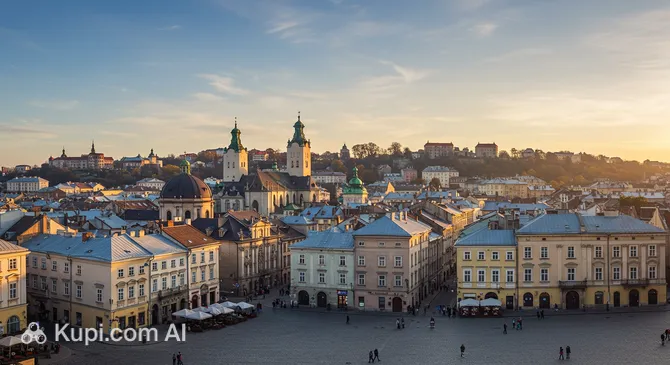
Lviv. Source: Kupi.Binoculars

The city's historic center is a UNESCO World Heritage site, renowned for its remarkably preserved buildings. The rich history of Lviv is reflected in its diverse architecture, ranging from Renaissance and Baroque to Art Nouveau. Travelers are often drawn to the magnificent Rynok Square, the heart of city life, and the splendid Lviv National Opera, which is considered one of the most beautiful opera houses in Europe. For panoramic views, a hike up to the High Castle Park offers a breathtaking look at the city's spires and rooftops.

Whether you are exploring its mysterious courtyards, enjoying a cup of legendary local coffee, or admiring the intricate facades, Lviv promises an unforgettable experience. It is a welcoming city that invites you to slow down and savor every moment of your journey.
Weather Overview

Lviv experiences a humid continental climate, meaning the city enjoys four distinct seasons, each offering a unique backdrop for your visit. To help you pack appropriately for your trip, it is helpful to review the specific weather in Lviv before you travel.

Summers are generally warm and are considered the most comfortable time for sightseeing. August is typically the warmest month, with an average temperature of 20.1°C and daily highs reaching up to 25.1°C. However, the city is known for its changeable weather; even in July, you might encounter around 16 wet days, so carrying an umbrella is always recommended.

Winters are cold and atmospheric, often dusting the historic architecture in snow. January is usually the coldest month, with average temperatures hovering around -0.5°C and dipping to -2.9°C. Generally, you can expect warm summers with occasional rain and cold winters that are perfect for enjoying the city's cozy coffee culture.

Interesting Facts

Beyond the main attractions, Lviv holds many fascinating secrets and historical curiosities that often escape the casual observer. From underground rivers to world-changing inventions, the city's past is as colorful as its architecture.
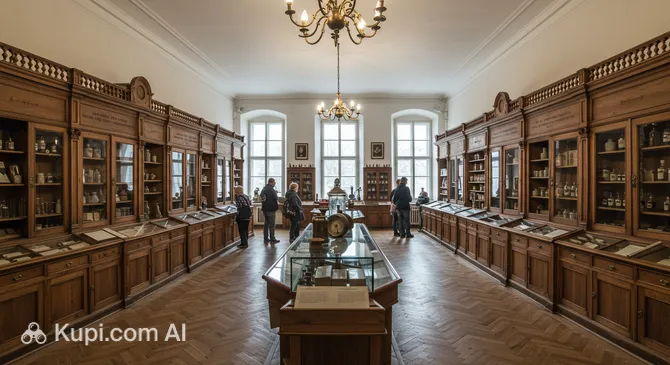
Pharmacy Museum. Source: Kupi.Binoculars
  • The Poltva River flows directly beneath the city center, having been diverted into an underground tunnel in the late 19th century; the magnificent Lviv National Opera was actually built right on top of this hidden waterway.

  • Lviv is the birthplace of the kerosene lamp, which was invented here in 1853 by local pharmacists Ignacy Łukasiewicz and Jan Zeh, a discovery that helped illuminate the world before the era of electricity.

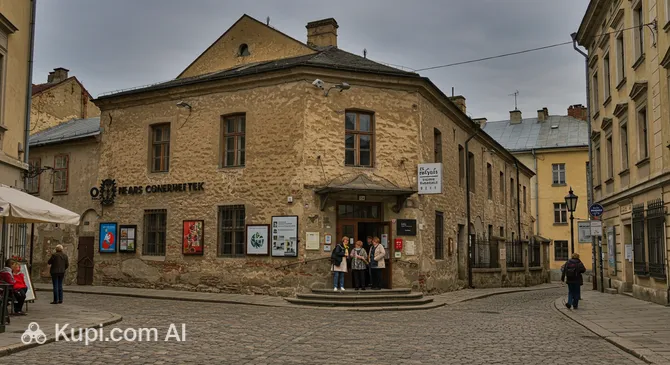
  • The city is home to the Pharmacy Museum, located in a building that has been functioning continuously as a drugstore since 1735, preserving centuries-old pharmaceutical equipment and ancient alchemy traditions.

  • Lviv boasts its own Statue of Liberty, situated atop the Museum of Ethnography and Crafts; unlike the famous New York landmark, this sculpture is seated and is sometimes affectionately called the "lazy" Statue of Liberty.

  • Leopold von Sacher-Masoch, the renowned writer whose name inspired the term "masochism," was born in this city, and his legacy is remembered today through a whimsical statue and themed establishments in the historic center.

How to Get There

Reaching Lviv is the first step to exploring its cobblestone streets and historic charm. The city is well-connected and serves as a major transportation hub in Western Ukraine. For a comprehensive overview of all travel options, routes, and tips, you can read more about how to get to Lviv.

The most direct way to arrive by air is through Lviv International Airport (LWO). This facility is conveniently located within the city limits, approximately 6.1 km from the center. It is the main international gateway for the region, handling a large volume of passengers annually. A trip from the terminal to the downtown area typically takes around 30 minutes by taxi or bus, making it a very accessible entry point for visitors.

Travelers may also consider flying into neighboring Poland and crossing the border by land. Rzeszow International Airport (RZE) is a significant alternative located in the city of Rzeszow, about 147 km from Lviv. This airport serves as a key regional hub with medium to large passenger traffic. The journey from Rzeszow to Lviv usually involves a transfer or a longer drive, taking approximately 4 hours depending on border traffic.

For clarity, here is a summary of the main airports:

Airport Name City Passenger Traffic Km from City
Lviv International AirportLvivLarge6.1
Rzeszow International AirportRzeszowLarge147.3
Lublin AirportŚwidnikMedium181.6
Ivano-Frankivsk AirportIvano-FrankivskSmall116.5
UzhgorodUzhhorod185.8

In addition to air travel, the railway network provides connections to the surrounding areas. While Lviv itself is a major rail junction, travelers in the vicinity can also utilize the Drohobych Railway Station in the city of Drohobych, which is about 66 km from Lviv. From there, you can get a taxi or bus to reach Lviv, a journey that generally takes about 2 hours.

Below is a list of regional railway stations listed by distance:

Station City Passenger Traffic Km to Center
Brest Central StationBrestLarge252.7
Zhabinka Railway StationZhabinkaMedium262.7
Kobryn Railway StationKobrynMedium266.1
Novohrad-Volynskyi Railway StationZviahelMedium268.6
Drohobych Railway StationDrohobych66.2

Main Attractions

Attractions:

Lviv is a city where history is etched into every facade, but certain landmarks stand out as essential experiences for any visitor. From spiritual sanctuaries to architectural marvels, the city's top sights offer a deep dive into its multicultural past and artistic heritage.

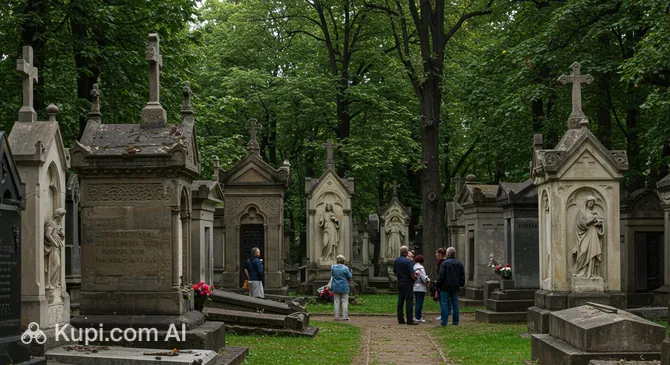
One of the most unique and atmospheric places to visit is the Lychakiv Cemetery. Far more than just a burial ground, this sprawling necropolis is a protected historical reserve and an open-air museum of sculpture. Established in the late 18th century, it is the final resting place of notable writers, politicians, and artists. Tourists are drawn here by the hauntingly beautiful statues, ancient chapels, and the peaceful, park-like atmosphere that invites quiet reflection on the city's past.

Lychakiv Cemetery. Source: Kupi.Binoculars

Perched atop a hill overlooking the city, St. George's Cathedral is a breathtaking example of Rococo architecture. Its striking yellow facade and expressive sculptures make it visible from many points in Lviv. As the mother church of the Ukrainian Greek Catholic Church, it holds immense spiritual significance. Visitors are captivated by its grandiose exterior and the ornate interior, which includes a crypt and a bell tower offering lovely views of the surrounding area.

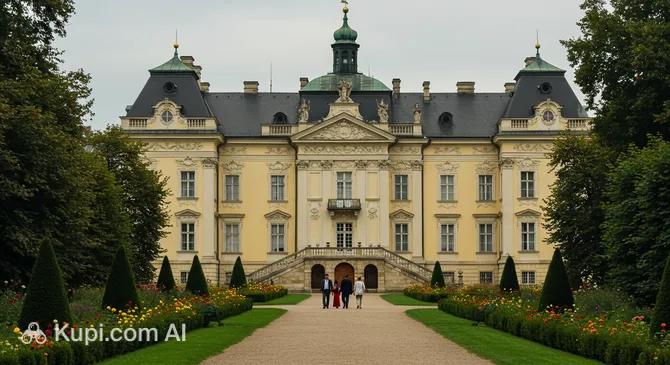
For a taste of aristocratic elegance, the Potocki Palace is a must-see. Built in the 19th century for a noble Polish family, this majestic building resembles a French château with its classicist design. Today, it houses a branch of the Lviv National Art Gallery. It is particularly interesting to tourists for its lavish interiors, including the Mirror Hall and the Blue Hall, which provide a glimpse into the opulent lifestyle of the era's elite.

Potocki Palace. Source: Kupi.Binoculars

Hidden within the winding streets of the Old Town is the Armenian Cathedral of Lviv, one of the city's oldest and most mysterious religious sites. Dating back to the 14th century, it features a unique blend of architectural styles, but it is the interior that truly stuns visitors. The cathedral is famous for its vibrant and somewhat surreal 20th-century frescoes by Jan Henryk Rosen, as well as its enchanting courtyard, which feels worlds away from the bustling city outside.

If you wish to escape the urban environment, the Shevchenkivskyi Hai Open-Air Museum offers a delightful journey into rural traditions. Located in a wooded park, this museum showcases authentic wooden churches, farmsteads, and windmills transported from different ethnographic regions of Western Ukraine. It is a fantastic spot for tourists to learn about folk culture, see traditional crafts in action, and enjoy a relaxing walk in nature.

Local Cuisine

The culinary landscape of Lviv is as diverse and colorful as its history, offering a unique blend of Ukrainian, Polish, Austrian, Jewish, and Armenian traditions. Often referred to as the gastronomic capital of Western Ukraine, the city invites visitors to embark on a flavorful journey where hearty traditional meals meet sophisticated European café culture. Whether you are looking for a comforting street snack or a theatrical dining experience, Lviv has something to satisfy every palate.

When it comes to main dishes, you simply cannot leave without trying banosh. This rich cornmeal porridge, traditionally cooked with sour cream and topped with sheep cheese (bryndza) and crispy pork cracklings, brings the rustic flavors of the Carpathian Mountains right to your table. Another staple is varenyky (dumplings), which come with a vast array of fillings ranging from savory potatoes and mushrooms to sweet cherries. For dessert, the legendary Lviv syrnyk, a chocolate-covered cheesecake that melts in your mouth, is a must-have treat.

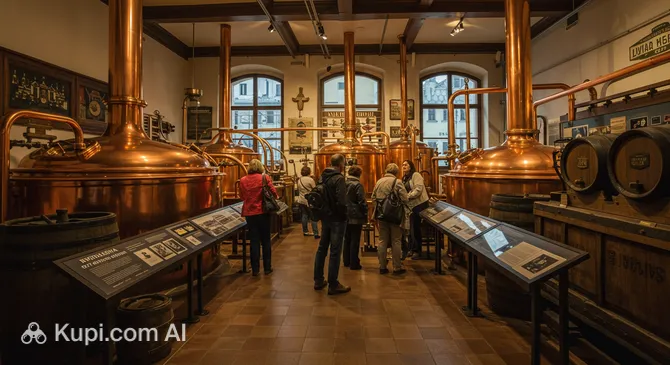
Lviv is also famous for its obsession with coffee. The local coffee culture dates back to the Austrian era, and today, the city is dotted with cozy kaviarnias (coffee houses) where the aroma of freshly roasted beans fills the air. To accompany your cup, locals often enjoy a slice of strudel or handmade chocolate. If you are looking for something stronger, the city has a centuries-old brewing tradition. You can dive deep into this history at the Lvivarnya Beer Museum, an interactive space that celebrates the art of brewing.

Lvivarnya Beer Museum. Source: Kupi.Binoculars

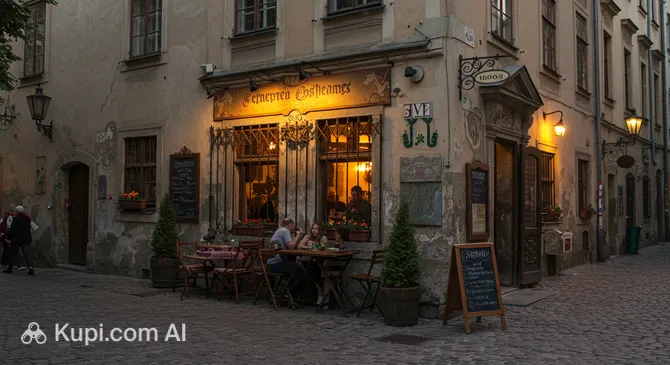
Dining in Lviv is often about more than just food; it is about the experience. The city is renowned for its themed restaurants that turn a meal into a show. A prime example is the Ribs Restaurant at Arsenal. Located in the historical complex of the city arsenal, this medieval-style venue serves succulent ribs grilled over an open fire, which guests are encouraged to eat with their hands in a lively, communal atmosphere.

Ribs Restaurant at Arsenal. Source: Kupi.Binoculars

For those seeking a bit of mystery, the city offers hidden venues like Kryivka, a restaurant designed like a secret bunker. Tucked away in a basement on Rynok Square, it is one of the most visited spots in the city, famous for its military-themed decor and hearty portions of local fare served in mess tins. Beyond the themed venues, the city's nightlife is vibrant, with places like the Hash Rest & Bar offering a modern setting to enjoy creative cocktails and socialize.

Finally, no gastronomic tour is complete without tasting the local liqueurs. Lviv is known for its sweet fruit tinctures, particularly the famous "drunken cherry" drink (Piana Vyshnia), which can be found in various spots around the center. Whether you are sipping a herbal tincture or enjoying a craft beer, the warmth of Lviv's hospitality makes every meal memorable.

Travel Tips

Visiting Lviv is like stepping into a living fairy tale, but a little preparation goes a long way to ensure your trip is smooth and enjoyable. Here is some practical advice to help you navigate the city’s unique rhythm and customs with ease.

  1. Clothing and Gear: The most important item to pack is a pair of sturdy, comfortable walking shoes. The historic center is paved with uneven cobblestones that can be challenging for high heels or thin soles. Since the weather can be unpredictable, bringing a compact umbrella and layers is wise regardless of the season. If you plan to visit the many beautiful churches, remember to dress modestly; covering shoulders and knees is expected.
  2. Transportation: The city center is best explored on foot, as most major attractions are within walking distance. For longer distances, the tram network is an atmospheric and affordable way to travel, though you must punch your ticket immediately after boarding. Ride-hailing apps like Uklon, Bolt, or Uber are widely available and reliable. Renting a car is generally unnecessary and can be frustrating due to limited parking in the central zone.
  3. Finances: The local currency is the Ukrainian Hryvnia (UAH). While credit cards and contactless payments (Apple Pay, Google Pay) are accepted in nearly all restaurants, shops, and even some market stalls, it is good to carry some cash for small purchases or tips. You can exchange currency at numerous exchange points (labeled "Obmin valyut") or withdraw cash from ATMs. A tip of about 10% is standard in restaurants if you are happy with the service.
  4. Health and Safety: Lviv is generally a very safe city for tourists, but standard precautions apply; keep an eye on your belongings in crowded areas like Rynok Square to avoid pickpocketing. Pharmacies (marked as "Apteka") are plentiful, and many operate 24 hours a day. Note that tap water is not recommended for drinking; it is better to buy bottled water or use filtered sources.
  5. Communication: The official language is Ukrainian. While English is widely spoken by younger people and staff in the hospitality industry, learning a few local phrases like "Dobryi den" (Good day) and "Dyakuyu" (Thank you) is greatly appreciated. Prepaid SIM cards from providers like Kyivstar or Vodafone are cheap and easy to buy at kiosks or official stores to ensure you have mobile data.
  6. Local Etiquette: Ukrainians are hospitable but can be somewhat reserved initially. A handshake is a standard greeting. In public transport, it is an unwritten rule to offer your seat to elderly people, pregnant women, or parents with small children. When entering a home, always ask if you should remove your shoes, as this is the common custom.
  7. What to Avoid: Do not refer to the country as "the Ukraine"; simply use "Ukraine." Additionally, avoid drinking alcohol on the streets or in public parks, as this is prohibited by law and can attract fines.
  8. Coffee Culture: In Lviv, coffee is not just a drink; it is a ritual. Do not rush your cafe experience. Locals often spend hours talking over a single cup. Take your time to savor the atmosphere, as the "coffee house culture" is an integral part of the city's identity.

With these tips in mind, you are ready to immerse yourself in the charm and hospitality of this magnificent city. Enjoy every sip of coffee and every step along the historic cobblestone streets of Lviv!

Entertainment & Nightlife

As the sun sets over the historic cobblestones, Lviv transforms from a relaxed coffee capital into a vibrant hub of evening entertainment. The city's nightlife is famous for its creativity and diversity, offering everything from hidden speakeasies and craft beer pubs to sophisticated jazz clubs. Unlike many other European cities, the nightlife here is concentrated compactly within the Old Town, making it easy to hop from one venue to another on foot.

The beating heart of the evening scene is undoubtedly Rynok Square and its surrounding web of streets. Lesi Ukrainky Street is particularly renowned among locals and tourists alike, often referred to as a "bar street" due to its high density of pubs and outdoor terraces that buzz with conversation until late at night. Virmenska Street offers a more bohemian vibe, attracting artists and musicians to its cozy corners.

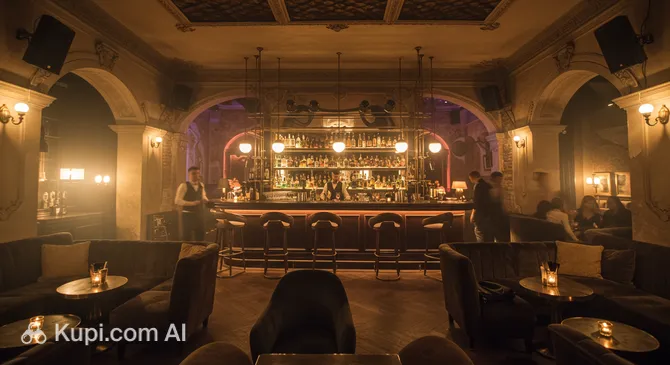
For those seeking a unique atmosphere, the Moment Confectionery Cocktail Bar is a delightful stop. True to Lviv's love for "concept" venues, this place combines the charm of a sweet treat with the sophistication of expert mixology. It is a perfect example of the local style: intimate, stylish, and full of character. The dress code in most Lviv bars is smart casual; you will feel comfortable in jeans and a nice shirt, though some upscale clubs may expect a dressier look.

Moment Confectionery Cocktail Bar. Source: Kupi.Binoculars

If you prefer a more laid-back environment with a focus on local brews, the Dobryi Druh 5 Pub is an excellent choice. It is part of a popular local chain known for its friendly service and extensive selection of craft beers and snacks. The atmosphere here is typically lively and unpretentious, making it a great spot to meet friends or mingle with locals. Prices in Lviv's nightlife sector remain very attractive by European standards, allowing visitors to enjoy high-quality drinks and food without breaking the bank.

Culture lovers should not miss the Dzyga Art Center. Located at the end of Virmenska Street, this legendary venue is a cultural landmark that hosts art exhibitions, literary evenings, and, most notably, fantastic jazz concerts. It is a place where the intellectual elite and curious travelers gather to soak up the city's artistic spirit over a glass of wine or tea.

Dzyga Art Center. Source: Kupi.Binoculars

While the nights are for socializing, Lviv offers plenty of entertainment during the day as well. Families and active travelers will enjoy the Pliazh Aquapark, one of the largest indoor water parks in Western Ukraine, providing fun slides and pools year-round. For a calmer experience, the Lviv Oceanarium offers a fascinating glimpse into underwater worlds right in the city center.

When planning your night out, keep in mind that weekends can be quite busy, so booking a table in advance at popular restaurants or gastro-pubs is recommended. In terms of safety, the city center is well-lit and generally safe for walking at night. However, standard precautions apply. When you are ready to return to your accommodation, it is best to use ride-hailing apps like Uklon, Bolt, or Uber, which are reliable and overcome any language barriers with drivers.

Parks & Museums

Parks and Museums:

While Lviv is renowned for its architectural density, the city also breathes through its magnificent green spaces and preserves its heritage in a variety of fascinating museums. Beyond the bustling market square, visitors can find tranquility in centuries-old parks or dive deeper into history within the walls of former palaces and armories. Exploring these spots offers a perfect balance to the urban energy of the city center.

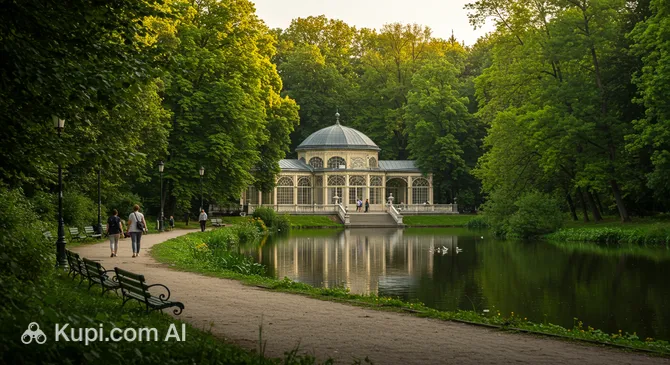
One of the most beloved green sanctuaries in the city is Stryiskyi Park. Often cited as one of the most beautiful parks in the country, it was designed in the late 19th century and retains an air of aristocratic elegance. Tourists love it for its diverse collection of trees, the picturesque pond with swans, and the greenhouse containing exotic plants. It is an ideal place for a leisurely promenade or a picnic, offering a lush escape just a short distance from the downtown area.

Stryiskyi Park. Source: Kupi.Binoculars

For those who prefer a more rugged and natural landscape, Znesinnia Park offers a unique experience. Historically known as the "Kaiserwald" or Emperor's Forest, this regional landscape park features hilly terrain, hiking trails, and panoramic views of the city. It feels surprisingly wild for being so close to the center, making it a favorite spot for hikers and those looking to connect with nature without leaving the city limits.

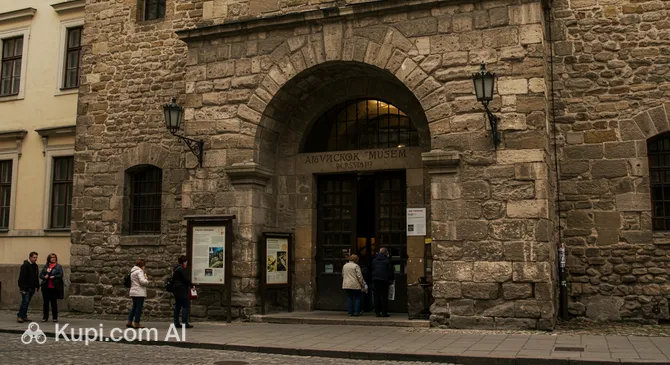
Lviv's museums are as diverse as its history, often housed in buildings that are attractions in themselves. The Lviv Arsenal Museum is a prime example. Located in a 16th-century fortification that was once part of the city's defensive walls, it houses an impressive collection of historical weaponry from over 30 countries. Visitors can admire medieval swords, armor, and cannons, all set within the authentic atmosphere of a Renaissance fortress.

Lviv Arsenal Museum. Source: Kupi.Binoculars

Another architectural gem that functions as a cultural venue is the House of Scientists. Originally built as a noble casino, this Neo-Baroque building is famous for its stunning carved wooden staircase and opulent interiors. It is a photographer's dream and provides a glimpse into the luxurious social life of Lviv's elite in the early 20th century. Although it is often used for events, it is open for tours and is well worth a visit for its aesthetic beauty alone.

Right in the heart of Rynok Square lies a piece of Italy known as the Italian Courtyard. Part of the Korniakt Palace, this Renaissance-style arcade is strikingly similar to courtyards found in Florence or Rome. It is a quiet, romantic spot where you can escape the noise of the street, enjoy a coffee on the terrace, and view the historical sculptures displayed along the loggias. It is also a popular venue for classical music concerts during the summer.

For a lesser-known but charming experience, consider visiting the Lviv University Botanical Garden. While it has limited opening hours, catching it during the blooming season of magnolias or lilacs is a magical experience. It is one of the oldest gardens of its kind in Eastern Europe and offers a quiet, colorful retreat for botany enthusiasts.

Getting Around

Navigating Lviv is relatively easy and affordable, thanks to a comprehensive public transport network that connects the historic center with outlying districts. The system primarily consists of trams, trolleybuses, and buses. It is important for visitors to know that Lviv does not have a metro (subway) system, despite some local internet jokes suggesting otherwise. Instead, the tram network serves as the city's main artery and is often the most convenient and scenic way for tourists to get around.

The city's trams are not just a mode of transport but part of its charm. Some routes pass through the heart of the UNESCO-listed Old Town, offering lovely views of the architecture. In addition to trams and trolleybuses, yellow minibuses known as marshrutkas serve routes that larger vehicles cannot reach. While they are faster, they can be quite crowded and are generally less comfortable than the electric transport options.

Payment methods have modernized significantly in recent years. You can pay for your fare using contactless bank cards, smartphones (via Apple Pay or Google Pay), or the local transport card, LeoCard, directly at the validators inside the vehicle. Alternatively, you can purchase paper tickets from the driver immediately upon boarding (cash only) or at kiosks near stops. If you buy a paper ticket, you must validate it by punching it in the mechanical device or scanning it, depending on the ticket type, to avoid a fine.

Another popular way to pay is by scanning the QR codes found on stickers inside trams and trolleybuses using Ukrainian banking apps, though this requires a local bank account or compatible app. For tourists, using a contactless bank card or buying a ticket from the driver are the most straightforward options. Transport typically operates from around 6:00 AM until 10:30 PM or 11:00 PM. Be aware that services become less frequent late in the evening.

For those who prefer more comfort or need to travel late at night, taxis and ride-hailing apps are widely available and affordable. Services like Uklon, Bolt, and Uber operate reliably in the city, allowing you to track your ride and pay via the app without worrying about language barriers. Additionally, the city center is very pedestrian-friendly, and for shorter distances, you can easily rent electric scooters or bicycles through various mobile apps scattered around the downtown area.

Accommodation

Finding the perfect place to stay in Lviv is part of the experience, as the city offers a diverse range of accommodation options to suit every preference and budget. Visitors can choose from charming boutique hotels located in restored historic buildings, modern international chains, and a vast selection of cozy apartments that allow you to live like a local. For backpackers and solo travelers, the city is famous for its vibrant and high-quality hostel culture, often providing unique themes and central locations.

For the most immersive experience, staying in the heart of the Old Town, particularly near Rynok Square or Prospekt Svobody, is highly recommended. This area places you within walking distance of the main architectural landmarks, coffee houses, and museums, keeping you close to the city's energetic pulse. However, if you prefer a quieter environment, the neighborhoods surrounding the university or near the lush green spaces, such as the area around Stryiskyi Park, offer a more peaceful retreat while still being accessible by a short tram ride.

Lviv is a popular tourist destination year-round, but it gets especially busy during the Christmas holidays and major cultural festivals like the Leopolis Jazz Fest. Therefore, it is a smart travel tip to book your accommodation well in advance if you plan to visit during these peak periods. Prices are generally very competitive compared to other European cities, offering excellent value for money whether you are looking for luxury or economy stays. Most travelers rely on major online booking platforms to secure their rooms, though direct booking is also common for smaller local establishments.

Nearby Cities

For those looking to explore the surroundings, Lviv serves as an excellent base for day trips to several interesting nearby locations. The region is dotted with historic towns that offer a quieter, yet equally fascinating experience compared to the bustling city center.

Drohobych is a must-visit for culture enthusiasts, renowned for its UNESCO-listed wooden St. George's Church and one of the oldest continuously operating salt plants in Europe. Another charming destination is Sambir, which boasts an elegant market square and an organ hall; it is also famous for the Church of the Nativity of the Theotokos, where relics attributed to St. Valentine are kept. For those interested in industrial history, Boryslav offers a glimpse into the 19th-century oil boom that shaped the region's economy and literature.

City Population Distance (km)
Drohobych 124,269 65
Chervonohrad 82,395 62
Stryi 59,325 65
Boryslav 37,093 75
Sambir 34,444 69

These nearby destinations offer a glimpse into the diverse culture and landscapes of the region, making them perfect for a short getaway.

Shopping & Souvenirs

Shopping:

Shopping in Lviv is a delightful experience that combines the hunt for modern brands with the discovery of authentic local treasures. The city is less about high-end couture and more about unique, handmade items, artistic goods, and gastronomic souvenirs that reflect its rich cultural heritage. Whether you are looking for a new wardrobe or a special keepsake, the city's diverse retail scene offers something for everyone.

The heart of the shopping action lies in the historic center. The area around Rynok Square and its connecting cobblestone streets is packed with souvenir shops, art galleries, and concept stores selling everything from handmade candles to designer ethnic clothing. For a pleasant stroll lined with boutiques, jewelry stores, and bookshops, Shevchenka Avenue and the streets surrounding Prospekt Svobody are prime destinations where you can enjoy the architecture while you browse.

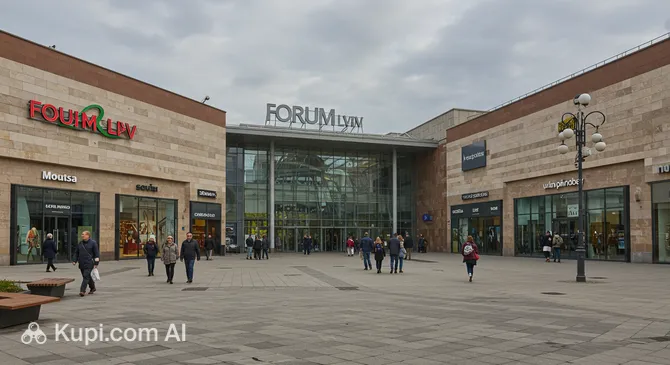
For a more conventional shopping experience featuring well-known international brands, the city offers several modern centers. Forum Lviv is the most popular choice among tourists and locals alike. Located just a short walk from the Opera House, it houses a wide variety of clothing brands, a cinema, and a food court, all within a stylish building that blends well with the urban landscape.

Forum Lviv. Source: Kupi.Binoculars

Another convenient option is New Point, situated very close to the city center. It offers a range of shops and services, making it a practical stop for quick purchases. These malls provide a comfortable environment to shop for fashion, electronics, and cosmetics, especially if you want to take a break from the weather outside.

You cannot speak of shopping in Lviv without mentioning the Vernissage Market. Located near the Lviv National Opera, this open-air flea market is the best place to find traditional Ukrainian crafts. Here, you can buy authentic vyshyvankas (embroidered shirts), wooden trinkets, intricate beadwork, and paintings by local artists. It is a vibrant spot where you can chat with the artisans and find truly one-of-a-kind gifts.

When it comes to souvenirs, visitors are spoilt for choice. Lviv is famous for its coffee and handmade chocolate, which can be purchased in numerous themed workshops and cafes throughout the Old Town. Another popular gift is the local fruit liqueurs (nalyvkas), particularly the famous cherry variety. For a lasting memory, consider buying unique ceramics or a book from one of the city's many atmospheric bookstores, as Lviv is a designated UNESCO City of Literature.

Most shopping malls operate daily from 10:00 AM to 10:00 PM. Smaller boutiques and street shops in the center typically open around 10:00 AM and close by 8:00 PM or 9:00 PM. Credit and debit cards, as well as contactless payments like Apple Pay and Google Pay, are widely accepted even in small kiosks. However, carrying some cash (hryvnias) is recommended if you plan to visit the open-air markets.

Ukraine offers a Tax-Free system for foreign tourists. If you make a purchase over a certain amount in a single day at a participating store (usually marked with a Tax-Free logo), you may be eligible for a VAT refund upon departure. Be sure to ask the staff for the necessary forms and keep your receipts if you intend to claim this benefit at the border or airport.

Reached the end of the page?

That means the route is fully explored