Support

Tithe Barn

About

Imagine a majestic stone structure that has preserved the spirit of medieval rural England for seven centuries. The Tithe Barn, located near the city of Bath, is one of the most impressive and well-preserved examples of 14th-century agricultural architecture in Great Britain.
Tithe Barn
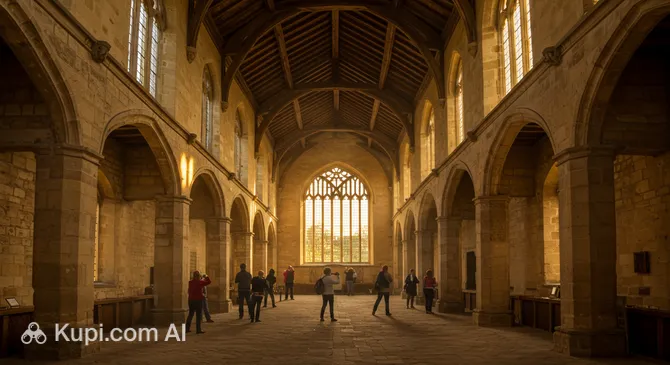
Tithe Barn. Иллюстрация. Источник: Kupi.com AI

This monumental building, over 50 meters long, was built from local limestone and impresses with its neat masonry and powerful buttresses. Inside, the barn is a grand single space divided into 14 bays. The main architectural highlight of the interior is the massive oak cruck trusses, which rise from the base to the roof peak, creating the feeling of being in a medieval cathedral rather than a grain store.

Today, this historic site is managed by English Heritage and is a Grade I listed building. The Tithe Barn is part of the ancient Barton Grange farmstead, where other 15th–18th-century buildings have been preserved, forming a unique architectural ensemble frozen in time.

Contacts

To check up-to-date information before your visit, you can use the official contact channels. Please note that the site is managed by English Heritage.

How to contactContact
AddressPound Lane, Pound Ln, Bradford-on-Avon BA15 1LF, UK
Phone+44 370 333 1181
Websitewww.english-heritage.org.uk

What to Do

The main impression visitors come for is the scale and authenticity of the barn's interior. Once inside, be sure to look up at the complex system of oak timbers that have held up the heavy stone roof for over 600 years. Here you can literally touch history, examining the ancient masonry and ventilation slots designed by medieval craftsmen to preserve the harvest.

After exploring the building itself, stop by the visitor center located in the restored West Barn. It features exhibits about farm life and the history of the region. The area around the barn is also worth exploring: the old farmstead buildings have been converted into cozy art studios, galleries, and small shops where you can purchase unique handmade items.

Complete your visit with a walk through Barton Farm Meadows or along the picturesque Kennet and Avon Canal. This is a perfect spot for photos against the backdrop of the Wiltshire countryside. The high rating of this attraction confirms that it is equally interesting for history and architecture buffs and those simply looking for a quiet spot for a walk away from the city bustle.

Getting There

Getting to this historic site from the city of Bath is quite simple. The fastest way is by train: the journey to Bradford-on-Avon station takes just 10–15 minutes. From the station, you can reach the barn on foot in 15–20 minutes by following Pound Lane or enjoying a walk along the picturesque Kennet and Avon Canal.

If you prefer to travel by car, the drive from Bath via the A363 takes about 20 minutes. Parking can be found directly at Barton Farm or in the town of Bradford-on-Avon itself. GPS coordinates: 51.3426841, -2.2552423.

For those choosing public transport, buses run regularly between Bath, Trowbridge, and Bristol. The stop is in the town center, from where the attraction is a fifteen-minute walk. You can also always use a taxi from the train station or the town center.

Ближайший город: Bath

History & Facts

The history of this grand structure began around 1340. It was built by order of the nuns of the wealthy Benedictine Shaftesbury Abbey. At that time, the barn served as a central collection point for "tithes"—a tax consisting of one-tenth of the harvest that local farmers were required to give to the church. This building stands as a silent witness to the power of the church economy in medieval England.

After Henry VIII's Dissolution of the Monasteries in 1539, the lands and buildings passed into private ownership. Remarkably, the barn continued to serve its direct agricultural purpose for centuries—right up until the early 20th century. Despite the changing eras, its walls and roof remained almost in their original state, preserving unique construction techniques of the past.

In 1914, the building's fate hung in the balance: the owner at the time planned to sell the plot, which could have led to the monument's destruction. However, the Wiltshire Archaeological Society, led by architect Harold Brakspear, initiated a large-scale restoration that continued even during the years of the First World War. Since the 1950s, the site has been under state protection and is recognized as a monument of exceptional historical importance.

Time Needed

To leisurely explore the building and soak in its atmosphere, most tourists need between 1 and 2 hours. This is plenty of time to study the roof construction, take beautiful photos, and browse the information in the visitor center.

If you plan to supplement your visit with a walk through the Barton Farm grounds, a break at the local cafe, or a hike along the canal to neighboring villages, you should allow for half a day. The surroundings are perfect for contemplative relaxation and quiet strolls in the fresh air.

Working Hours

You can visit the Tithe Barn throughout the week. The site is open daily according to the following schedule:

  • Monday — Sunday: 10:30 AM – 4:00 PM

It is recommended to plan your visit during daylight hours to fully appreciate the building's architectural details. Please note that opening hours may vary slightly depending on the season, so it's worth checking the official English Heritage website before your trip.

10:30 – 16:00

Nearby

A visit to the barn can easily be combined with exploring other interesting places in the vicinity. Visiting ancient manors and walking along the waterways will help you dive deeper into the atmosphere of historic Wiltshire and enjoy the charm of the English countryside.

NameDistance
Avoncliff Aqueduct1.9 km
Iford Manor Gardens2.7 km
Farleigh Hungerford Castle3.6 km
Great Chalfield Manor and Garden4.6 km
Fairfield Animal Centre4.8 km
Warleigh Weir4.9 km
Bath Skyline7.2 km

Reached the end of the page?

That means the route is fully explored