Support

Ibrox Stadium

About

Ibrox Stadium is not just a sports arena, but a true legend located in the city of Glasgow, in the heart of Scotland. As part of the United Kingdom, this stadium serves as the home ground for one of the country's most successful football clubs, Rangers. This place is steeped in history and sporting spirit, attracting fans from all over the world.

Built back in 1899, Ibrox is one of the oldest and most significant stadiums in the United Kingdom. Over its long history, it has been rebuilt and modernized several times but has retained its unique architecture and atmosphere. The stadium's Main Stand, designed by the famous architect Archibald Leitch, is a category B listed building, highlighting its cultural value.

Ibrox accommodates over 50,000 spectators, making it one of the largest stadiums in Scotland. The atmosphere during matches here is truly electric, and even if you are not a die-hard football fan, a visit to the stadium can be an unforgettable experience. For those wishing to dive deeper into the history of the club and the arena, guided tours are available.
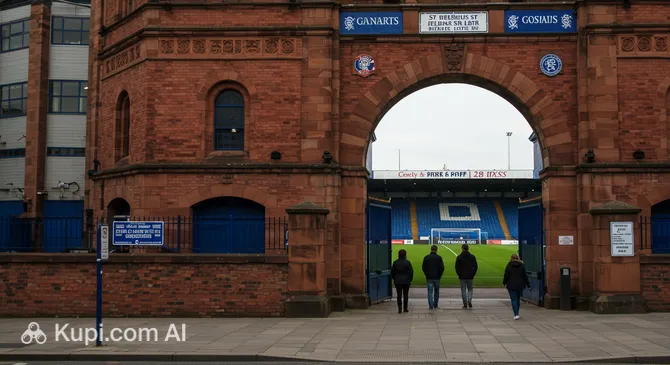
Ibrox Stadium. Illustration.
Source: Kupi.com AI

Traveler photos:

Visiting Ibrox is a great opportunity to get in touch with the sporting culture of Glasgow and see one of the city's most iconic landmarks. It is a place where history meets modernity, and the passion for football unites thousands of people.

Contacts

Ibrox Stadium is the home ground of the famous Rangers Football Club. To get the most up-to-date information on tickets, match schedules, stadium tours, and other events, it is recommended to consult the club's official sources. The most reliable way to find out all the details is to visit the official Rangers FC website.

How to contactContact
Address150 Edmiston Dr, Glasgow G51 2XD, UK
Phone number+44 141 580 8500
Websitewww.rangers.co.uk

What to Do

The main reason to visit Ibrox Stadium is, of course, the football matches. As the home arena for the legendary Rangers club, the stadium comes alive during games when tens of thousands of dedicated fans create an incredible atmosphere. Even if you don't consider yourself a die-hard fan, the energy of the stands and the passion for the game will give you an unforgettable experience and allow you to feel the true sporting spirit of Glasgow.

For those who want to peek behind the scenes, regular guided tours are held at the stadium. During the tour, you can walk through the same corridors as famous players, visit the home and away dressing rooms, see the impressive Trophy Room, and even walk out through the tunnel to the pitchside. Guides share interesting facts and stories, revealing the more than century-long history of this iconic venue.

Beyond the sporting element, Ibrox is also of interest to history and architecture enthusiasts. The red-brick facade of the Main Stand is a recognized architectural landmark. Be sure to visit the Rangers Museum, which houses unique exhibits telling the story of the team's glorious past. After the tour, you can visit the official shop to buy souvenirs or relax in one of the local cafes.

Getting There

Ibrox Stadium is conveniently located in the Ibrox district in the southwest of Glasgow, making it easily accessible for visitors. There are several ways to reach the arena, including public transport and by car, so you can easily plan your route from any part of the city.

The most convenient and fastest way to get to the stadium is to use the Glasgow Subway. The nearest station, Ibrox, is literally across the road from the arena, making the journey as comfortable as possible. The trip from the city center takes only a few minutes, and the short walk from the subway exit to the stadium entrance is no more than five minutes.

In addition to the subway, city buses regularly run to Ibrox Stadium, with routes passing through various parts of the city. For those who prefer to travel by private transport, parking zones are provided near the stadium. However, it is worth noting that parking may be limited on match days, so it is recommended to arrive early or use public transport.

Nearest city: Glasgow

History & Facts

The history of Ibrox Stadium is a chronicle full of both triumphs and tragedies. The arena was officially opened on December 30, 1899, under the name "Ibrox Park." It became the first permanent home for the famous Rangers Football Club, which until then had played its home matches on various pitches across Glasgow. The original stands were built of wood and could accommodate up to 40,000 fans, which was an impressive figure for that time.

Unfortunately, the stadium's early history was marred by tragedy. In 1902, during an international match, one of the wooden stands collapsed, resulting in the deaths of 25 people and injuring more than 500. This event was one of the first in football history to force a serious review of safety standards at sports facilities and served as an impetus for replacing wooden structures with more reliable ones.

However, the most tragic event in Ibrox history occurred many years later. On January 2, 1971, after a match, a terrible crush occurred on one of the stairways, resulting in the deaths of 66 fans and injuring more than 200. This disaster was a turning point for the stadium and all of British football. Following the tragedy, a massive reconstruction of the arena was launched, aimed at radically improving safety levels. Staircases and exits were widened and improved, and the stadium was gradually rebuilt into the modern and safe arena we know today.

Time Needed

When planning a visit to Ibrox Stadium, you should allow approximately 2–3 hours. This time will be enough to fully immerse yourself in the atmosphere of the legendary arena. According to recommendations, this is how long a full visit takes, which includes not only a tour of the stadium itself but also a visit to the Rangers Museum. During this time, you will have enough time to explore the dressing rooms without rushing, walk through the players' tunnel, and see the famous Trophy Room.

Of course, the duration of your visit may vary depending on your interests. A standard guided tour usually lasts about 90 minutes. If you are short on time, you can simply walk around the stadium to appreciate its impressive architecture and stop by the club shop—one hour is enough for this. However, attending a football match is a completely different experience, for which you should set aside at least half a day, considering travel time and the pre-match atmosphere.

Working Hours

Ibrox Stadium does not have standard opening hours like a museum, as visiting depends directly on the schedule of guided tours and football matches. Tours that offer a behind-the-scenes look at the arena are typically held during the day on Fridays, Saturdays, and Sundays. For the most accurate information on available dates and times, as well as for booking tickets, it is highly recommended to visit the official Rangers FC website.

It is important to note that tours are not held on match days, and access to the stadium grounds is exclusively for those with match tickets. Since the tours are very popular and group sizes are limited, it is recommended to book them in advance, especially during the peak tourist season or ahead of major matches.

Nearby

A visit to Ibrox Stadium is undoubtedly a highlight for any guest in Glasgow, but exploring the surrounding area can make your trip even more fulfilling and interesting. The district around the arena offers many other attractions that allow for a deeper immersion into the culture and atmosphere of this multi-faceted Scottish city.

In the immediate vicinity of the stadium, there are parks, museums, and entertainment centers that are easily accessible on foot or by public transport. This is a great opportunity to combine a passion for football with educational leisure, discovering new fascinating places located just a few steps from the legendary arena.

NameDistance
House for an Art Lover0.7 km
Glasgow Ski & Snowboard Centre0.8 km
Glasgow Science Centre1.1 km
Waterworld Aquatics1.3 km
Riverside Museum1.3 km
Soft Play Inflatable Park Glasgow1.7 km
Kelvin Hall2 km

Have you reached the end of the page?

So the route has been studied inside and out