Support

Glasgow Science Centre

About

The Glasgow Science Centre is one of the most vibrant and modern attractions in Glasgow and the entire United Kingdom. Located on the south bank of the River Clyde, this complex immediately draws attention with its futuristic glass and metal design. The center was created to popularize science and technology in a fun and accessible way, making it an ideal place for the whole family to visit.
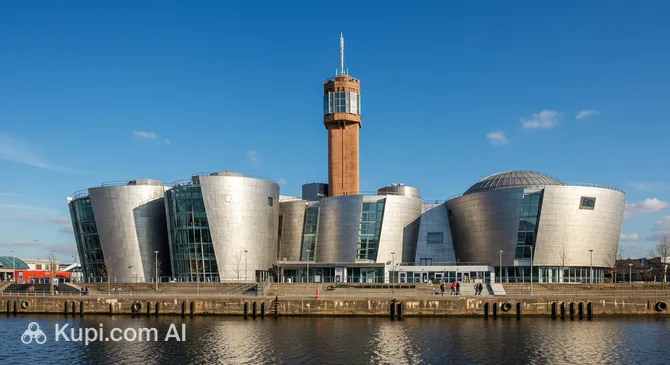
Glasgow Science Centre. Illustration.
Source: Kupi.com AI

Traveler photos:

The main feature of the center is its interactivity. Here, visitors don't just look at exhibits but actively interact with them, conducting experiments and discovering the laws of physics, chemistry, and biology. The complex consists of several key buildings: the main three-story Science Mall, housing hundreds of interactive exhibits, a state-of-the-art planetarium, and the famous Glasgow Tower.

In the Science Mall, you can dive into the study of the human body, explore the mysteries of space, or learn about the principles of renewable energy. The planetarium offers breathtaking journeys through stars and galaxies, while the Glasgow Tower, being the tallest fully rotating structure in the world, gives visitors an unforgettable panoramic view of the city and its surroundings. A visit to the Glasgow Science Centre is not just an excursion, but a true adventure into the world of knowledge and discovery.

Contacts

To get the most up-to-date information on opening hours, ticket prices, and special events at the Glasgow Science Centre, it is recommended to visit the official website. There, you can also find precise contact details, including a phone number and email address, which may be helpful for planning your visit.

How to contactContact
Address50 Pacific Quay, Glasgow G51 1EA, UK
Phone number+44 141 420 5000
Websitewww.glasgowsciencecentre.org

What to Do

The Glasgow Science Centre is a true paradise for curious minds of all ages. Across the four floors of this modern complex, there are hundreds of interactive exhibits that explain the laws of physics, the mysteries of biology, the latest technological achievements, and the secrets of space in an engaging way. The main feature of the center is the opportunity not just to look, but to touch, experiment, and conduct scientific tests with your own hands. This makes the visit especially exciting for children and teenagers, allowing them to feel like real researchers.

In addition to the main exhibition, the science center offers several unique attractions. Be sure to check out the modern planetarium, which hosts breathtaking shows taking viewers on a journey through the universe. Another gem of the complex is the Glasgow Tower. It is the only structure of its kind in the world capable of rotating 360 degrees. After ascending to its observation deck, you can enjoy a stunning panoramic view of Glasgow.

The center's program is constantly updated, offering visitors something new. Spectacular science shows, informative workshops, and temporary exhibitions on a wide variety of topics are held regularly. Thanks to this variety, every visit to the Glasgow Science Centre provides fresh impressions and discoveries, making science accessible, understandable, and incredibly interesting.

Getting There

The Glasgow Science Centre is conveniently located on the south bank of the River Clyde, close to the center of Glasgow, making it easily accessible for visitors. There are several ways to get there. The simplest is to use public transport. Numerous bus routes pass near the center, and the nearest subway station, Cessnock, is just a 10–15 minute walk away. This allows for quick travel from various parts of the city without transfers.

If you are arriving in the city by train at the Central Railway Station, you can take a taxi, which will take you there in a few minutes, or catch one of the buses heading towards the Clyde waterfront. For those who prefer walking, a stroll along the river is a pleasant addition to the excursion, allowing you to enjoy views of modern architecture. Travelers arriving by car don't need to worry about parking — there is a dedicated car park on the premises.

Nearest city: Glasgow

History & Facts

The Glasgow Science Centre, which opened its doors in 2001, became a striking symbol of the new millennium and the regeneration of Glasgow. This ambitious project was part of a large-scale program to transform former industrial docks on the River Clyde into a modern cultural and educational space. The futuristic design of the buildings, developed in line with the latest architectural trends, immediately made the center one of the most recognizable landmarks on the city's waterfront and throughout the United Kingdom.

Since its founding, the center has aimed to make science accessible and engaging for all ages. Over the years, it has received numerous prestigious awards for its contribution to the popularization of science and innovative educational programs. Special attention is paid to interactivity here: most exhibits can and should be touched, explored, and experimented with. Thanks to this approach, the center has become a favorite spot for family leisure and an important part of Glasgow's educational infrastructure.

One of the complex's most remarkable features is the Glasgow Tower. It is the only structure in the world capable of rotating 360 degrees from its base, earning it a place in the Guinness World Records. Although the tower is known for its technical features and is sometimes closed for maintenance, it remains a unique engineering marvel. The center also includes a three-story Science Mall with hundreds of interactive exhibits and an IMAX cinema, making a visit here truly multifaceted and memorable.

Time Needed

To fully enjoy all the exhibits and opportunities offered by the Glasgow Science Centre, it is recommended to set aside at least 3–4 hours. This will be enough time to explore the main interactive exhibitions without rushing, get acquainted with scientific concepts, and participate in experiments that will be interesting for both children and adults.

If you want to get the maximum experience from your visit, you should plan for half a day. Extra time will be needed to watch the fascinating science shows regularly held at the center, visit the modern planetarium with its captivating space programs, and ascend the famous Glasgow Tower, which offers panoramic views of Glasgow and its surroundings. Such a comprehensive approach will allow you to explore every corner of this amazing place at your leisure.

Working Hours

The Glasgow Science Centre is generally open to visitors daily from 10:00 AM to 5:00 PM. It is important to remember that opening hours can vary depending on the season, days of the week, or special events. To avoid any misunderstandings, it is highly recommended to check the current schedule on the center's official website immediately before your visit.

To guarantee your visit, especially during school holidays or on weekends, it is best to book tickets online in advance. This will not only help you avoid long queues but also ensure entry for your chosen date and time. Often, advance booking also allows you to take advantage of special offers or discounts.

10:00 – 17:00

Nearby

A visit to the Glasgow Science Centre is an exciting adventure in itself, but you shouldn't stop there. Exploring the surrounding area will allow you to dive deeper into the atmosphere of Glasgow and discover even more interesting spots. Often, the brightest impressions of a trip come from unexpected finds located just steps away from your main destination.

The area around the science center is rich in various attractions — from cultural sites to sports arenas and unique entertainment venues. A walk nearby can be a great addition to your day, filling it with new discoveries and emotions. Below is a list of places located very close by.

NameDistance
Waterworld Aquatics0.8 km
Soft Play Inflatable Park Glasgow1.1 km
Ibrox Stadium1.1 km
Golf Fang Glasgow1.1 km
Kelvingrove Art Gallery and Museum1.1 km
Riverside Museum1.1 km
Kelvin Hall1.2 km

Have you reached the end of the page?

So the route has been studied inside and out