Support

Lune Aqueduct

About

The majestic Lune Aqueduct is an outstanding Georgian civil engineering monument located in the city of Lancaster. This monumental structure is considered the largest all-stone aqueduct in Great Britain, and today it still proudly carries the waters of the Lancaster Canal over the River Lune.
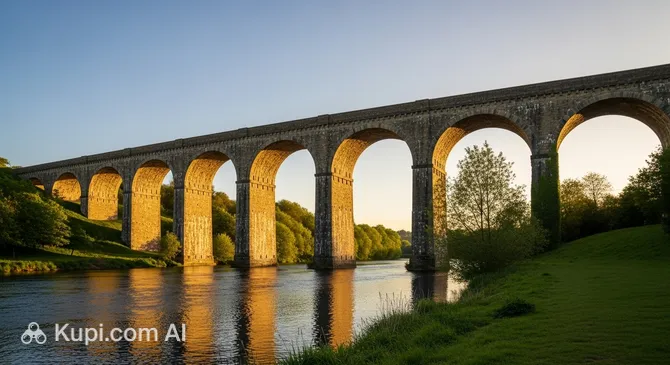
Lune Aqueduct
Lune Aqueduct. Иллюстрация. Источник: Kupi.com AI

This engineering marvel rises 16 meters above the river, representing a magnificent example of late 18th-century craftsmanship. The aqueduct consists of five massive semi-circular arches made of local sandstone. The total length of the structure is an impressive 202 meters, and its piers reach deep into the riverbed, resting on piles made of Russian timber specially imported for this project.

Often referred to as one of the "Seven Wonders of the Waterways," the Lune Aqueduct holds Grade I listed status. It combines austere classical beauty with incredible power, remaining one of the most recognizable and significant landmarks in the region.

Contacts

To plan your visit and obtain up-to-date information about the site's facilities, you can use the official data. The aqueduct is managed by the Canal & River Trust.

How to contactContact
AddressЛанкастер LA2 6BN, Великобритания
Websitecanalrivertrust.org.uk

What to Do

The main pleasure here is walking along the water's edge. You can walk across the top of the aqueduct, which offers breathtaking panoramic views of the Lune Valley. Incidentally, these landscapes inspired the great British artist J.M.W. Turner to create his masterpieces. The flat terrain of the canal banks makes this an ideal spot for a peaceful stroll with the whole family.

For those who want to experience the scale of the structure to the fullest, boat cruises are available. Traveling by boat across the aqueduct provides a unique sensation—you are literally sailing on a bridge at a great height above the river. This is a great opportunity to see architectural details that are inaccessible from the shore.

The Lancaster Canal is also famous for having the longest lock-free stretch in England (over 65 kilometers), making it a popular destination for water tourism enthusiasts. Don't forget to bring your camera: the Lune Aqueduct is one of the most photogenic spots in the area, especially in the glow of the setting sun.

Getting There

Finding this masterpiece of engineering is easy: it is located on the eastern outskirts of Lancaster. For those who prefer walking, the route from the city center to the aqueduct will be a pleasant addition to the excursion, as the site is within walking distance.

If you are traveling by car, follow the M6 and A590 motorways, which pass nearby. For the most accurate route, it is best to use GPS navigation with the postcode LA2 6BN. Parking spaces are available near the attraction.

For public transport users, regular bus services serve this area of Lancaster. You can also use taxi services from the railway station or the city's central square, which will take only a few minutes.

Ближайший город: Lancaster

History & Facts

The history of this grand structure began in January 1794. The project was designed by the famous engineer John Rennie, while the architect Alexander Stevens was responsible for the construction itself. To complete the work on time, about 150 laborers worked around the clock on the site. Their efforts resulted in the 1797 completion of a bridge that eliminated the need for boats to pass through locks.

The engineering solutions of the time are staggering: to allow the mortar to set underwater, the builders used a special volcanic pozzolana imported from abroad. However, technical perfection came at a high price. The original estimate was just over £16,000, but the total cost of the project eventually soared to £48,320. The foundation alone cost the treasury an amount equal to the initial budget for the entire aqueduct.

This colossal overspend had historical consequences: due to a lack of funds, the construction of another important aqueduct over the River Ribble had to be canceled. This prevented the Lancaster Canal from being connected to the country's main waterway network. Commemorative inscriptions can still be seen on the walls of the aqueduct. On the north side, "To Public Prosperity" is carved, and on the south side, a Latin inscription about how art joins rivers and opens new horizons for trade.

Time Needed

For a standard viewing of the aqueduct itself and a short photo session, 1 to 2 hours is usually sufficient. This gives you enough time to appreciate the scale of the stone masonry and enjoy the views from the height of the structure.

If you plan a full walk along a circular route by the canal or want to go on a river cruise by boat, you should allow 2 to 4 hours for your visit. This will allow you to leisurely explore the picturesque banks and fully experience the tranquil atmosphere of old England.

Working Hours

The attraction is accessible to visitors 24 hours a day, daily. The absence of strict opening hours allows tourists to plan their visit at any convenient time—whether it's early morning to catch the sunrise or the evening hours to contemplate the sunset views.

Nevertheless, to check for information on potential maintenance work on the canal or the schedule of tour boats, we recommend visiting the official website of the management company before your trip.

Круглосуточно

Nearby

Exploring the surroundings of the aqueduct allows you to dive deeper into the atmosphere of Lancashire and discover its rich heritage. A walk along the canal or the banks of the River Lune will reveal many historical and natural spots that harmoniously complement a visit to the aqueduct itself.

NameDistance
Ryelands Park1.6 km
Quite Simply French1.9 km
The Quarterhouse2.2 km
Journey Social2.3 km
Butterfly House2.6 km
Toll House Inn2.7 km

Reached the end of the page?

That means the route is fully explored