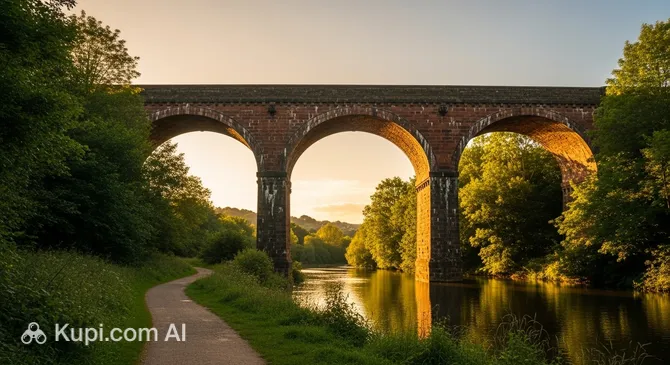
The Marple Aqueduct, also known as the Goyt Aqueduct, is a majestic engineering feat located near Manchester. This historical landmark, a point of pride for the United Kingdom, holds the title of the highest stone arch aqueduct in the country and stands as an outstanding monument of the late 18th-century industrial era.
Marple Aqueduct. Illustration.
Source: Kupi.com AI
Traveler photos:
The structure was built to carry the Peak Forest Canal across the picturesque River Goyt. The water level difference between the river and the canal is an impressive 27 metres, making this site a true marvel of engineering for its time. With a total length of 112 metres, the construction consists of three massive semi-circular arches that rise above the valley, creating a breathtaking sight.
In addition to its functionality, the aqueduct boasts exceptional architectural aesthetics. Its walls feature distinctive circular openings designed to lighten the structure's weight, while the masonry itself is decorated with ashlar stone pilasters and cornices, turning an industrial facility into a true work of art.
Contacts
For those planning a visit to this historic site, the following information regarding its location and contact details for the governing organisations will be useful.
The main reason to visit is to witness first-hand this grand triumph of past engineering. You can take a leisurely stroll along the Peak Forest Canal, walking directly across the top of the aqueduct, which offers panoramic views of the dense woodlands and the Goyt Valley.
Viewing the structure from the side is particularly worthwhile. Experienced travellers recommend going onto the parallel railway viaduct — it is from there that you get the most impressive and large-scale view of the aqueduct's stone arches. It is an ideal spot for photography, where the industrial power of Victorian architecture blends harmoniously with natural beauty.
You can also head down to the river to appreciate the grandeur of the arches from below. While walking through the surrounding areas, you will find information boards detailing the history of the region's transport system, and you can enjoy the peace and quiet away from the city noise.
Getting There
The easiest way to reach this historic location is from the centre of Manchester, which is approximately 20–25 kilometres away. If you are planning to travel by car, follow the A626 road towards Marple. It is worth noting that the aqueduct is tucked away in a densely wooded area, so look for signs directing you to the Peak Forest Canal.
For those who prefer public transport, the best option is a suburban train to the railway stations in the Marple area. Upon arrival, a scenic walk will lead you to the structure itself. You can also take a taxi directly from the city centre or from the nearest major station for maximum comfort.
Nearest city: Manchester
History & Facts
Construction of the Marple Aqueduct began in May 1794 and lasted for six years. The project was led by the preeminent engineers of their time — Benjamin Outram and Thomas Brown. Although the canal was filled with water as early as May 1800, all construction work was only fully completed by the end of 1801. Unfortunately, the massive project was not without loss of life: seven workers are known to have died during construction.
The design is notable for its use of different materials: the lower section is built from red sandstone quarried at Hyde Bank, while the upper section is faced with white stone from Chapel Milton. Due to its uniqueness and engineering significance, the site was added to the Grade I listed buildings register in 1966.
An interesting fact: in January 1962, the structure was under threat of destruction. Due to a leak and severe frost, one of the arches partially collapsed. The aqueduct was only saved thanks to the personal intervention of the Minister of Public Building and Works, Geoffrey Rippon, who secured the necessary funding for a major restoration that was completed in 1964.
Time Needed
For a detailed look at the structure and a walk around the surrounding area, 1–2 hours is sufficient for most visitors. This is enough time to examine the architectural details of the masonry, enjoy the views from the top, and take high-quality photos from various angles.
If you plan to combine your visit to the aqueduct with a longer hike along the banks of the Peak Forest Canal or a relaxing break in the Goyt Valley, it is worth setting aside half a day. The surrounding nature is perfect for long walks and a slow exploration of the region's industrial heritage.
Working Hours
As the Marple Aqueduct is an open engineering structure located in a public space along a water canal, it is accessible 24/7, seven days a week. No special tickets are required for access.
However, to fully appreciate the architectural beauty and scale of the building, and to ensure a safe walk, it is recommended to plan your visit during daylight hours. Before your trip, you can also check the National Transport Trust website for up-to-date information on the condition of the footpaths.
Open 24 hours
Nearby
Exploring the area around the aqueduct can significantly enrich your trip, as Greater Manchester offers a variety of locations, from nature parks to historical monuments.