Support

Oxford University Museum of Natural History

About

The Oxford University Museum of Natural History is a prominent scientific museum located in Oxford, United Kingdom. Its collections are housed in a magnificent Neo-Gothic building designed by Irish architects Sir Thomas Newenham Deane and Benjamin Woodward. This place attracts not only scientists but also curious tourists from all over the world wishing to touch the mysteries of nature.
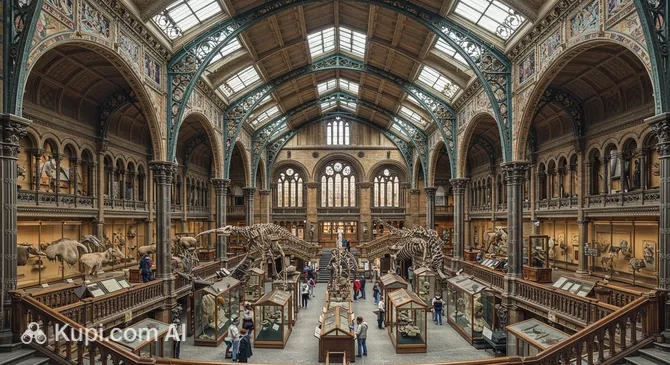
Oxford University Museum of Natural History. Illustration.
Source: Kupi.com AI

Traveler photos:

The museum was founded with the ambitious goal of uniting all aspects of natural history in one place. Besides exhibition halls, it houses important research and teaching centers, and stores Oxford University's richest scientific collections. This makes it more than just a museum, but a true center of science and education.

The museum's collections are structured into three main thematic sections. Earth Collections will introduce you to paleontological treasures, minerals, and rocks. Life Collections reveal the amazing world of zoology and entomology, showcasing an incredible variety of life forms. And the Archive Collections carefully preserve valuable historical documents and materials related to the development of natural sciences.

Contacts

For the most up-to-date information on opening hours, special exhibitions, and potential schedule changes at the Oxford University Museum of Natural History, it is recommended to visit its official website. Useful information can also be found at Oxford's tourist information centers.

How to contactContact
AddressParks Rd, Oxford OX1 3PW, UK
Phone number+44 1865 272950
Websitewww.oumnh.ox.ac.uk

What to Do

Immerse yourself in the world of natural sciences by exploring the rich exhibitions of the Oxford University Museum of Natural History. Here, you can see impressive paleontological finds firsthand, including dinosaur skeletons that tell the story of ancient life on Earth. The collections of minerals and rocks will amaze you with their variety of shapes and colors, while the zoological and entomological exhibits showcase the wonderful world of animals, from the smallest insects to large mammals. Each display case is a window into our planet's complex and fascinating ecosystem.

The museum building itself is of no less interest than the collections. Stroll through its spacious halls, designed in a magnificent Neo-Gothic style, and feel the atmosphere of scientific inquiry. On the ground floor, pay attention to the statues of prominent scientists—Aristotle, Euclid, Roger Bacon, Charles Darwin, and Carl Linnaeus. These sculptures are not just a tribute to great minds but also part of a unique atmosphere that inspires discovery and knowledge.

One of the pleasant bonuses of your visit is the opportunity to easily expand your cultural program. The Pitt Rivers Museum, dedicated to archaeology and ethnography, is adjacent to the main building of the Museum of Natural History. This means you can easily move from one fascinating world to another, seeing the exhibitions of two significant Oxford museums in a single visit. This combination makes the trip particularly rich and educational.

Getting There

The Oxford University Museum of Natural History is conveniently located in the central part of Oxford, making it easily accessible for visitors. Finding it is straightforward, as it is situated on Parks Road, surrounded by other colleges and departments of Oxford University. Thanks to its location, you can reach the museum in various ways, depending on your preference and starting point in the city.

One of the most popular ways to get around Oxford is by public transport. Numerous bus routes pass through the city center and have stops within walking distance of the museum. It is recommended to check current routes and schedules on local transport companies' websites or use online maps. A bus ride is not only convenient but also allows you to see more of the city life.

If you are in central Oxford or staying nearby, a walk to the museum can be a pleasant alternative. Oxford is a city rich in history and beautiful architecture, and the path to the museum can turn into a fascinating tour. For those who prefer a faster and more direct method, taxi services are always available. Taxis can be called by phone, through a mobile app, or found at designated ranks in the city. The trip from the city center to the museum usually takes very little time.

Nearest city: Oxford

History & Facts

The idea for the Oxford University Museum of Natural History originated in the 1840s. At that time, there was a pressing need for a dedicated building to consolidate Oxford University's extensive scientific collections and serve as a base for research and teaching centers. The goal was to concentrate knowledge about nature and its diversity in one place, creating an institution covering all aspects of natural history.

The realization of this ambitious idea began in the mid-19th century. Construction of the magnificent Neo-Gothic museum building, which became its hallmark, started in 1855 and was completed by 1860. The design of this architectural masterpiece was developed by talented Irish architects—Sir Thomas Newenham Deane and Benjamin Woodward. They managed to create more than just a storage facility for exhibits, but a true work of art that inspires the study of the surrounding world.

An interesting fact is the further development of the museum complex. In 1885-1886, another building was added to the main one, specifically designed to house the ethnographic and archaeological collections of the Pitt Rivers Museum. Notably, the project for this wing was designed by Thomas Newenham Deane Jr., the son of one of the original building's architects, thus continuing the family's involvement in creating this scientific hub. Oxford University itself, of which the museum is a part, has an incredibly long history—while the exact date of its founding is unknown, the first mentions of teaching by monks at this site date back to 1096, highlighting the centuries-old scientific and educational traditions the museum continues.

Time Needed

It is usually recommended to set aside 2 to 3 hours to visit the Oxford University Museum of Natural History. This time is generally sufficient to see the main exhibits, admire the impressive dinosaur skeletons, and the architecture of the building itself. Of course, if you wish to study specific collections in more detail or read all the information stands, more time may be required.

It is important to consider that if your interest in natural sciences is particularly deep, or if you are traveling with children who might get captivated by certain exhibits, the duration of the visit may increase. Additionally, do not forget that the Pitt Rivers Museum is adjacent to the Museum of Natural History. If you plan to visit both museums, you should allow at least half a day, or even more, to enjoy all the treasures they offer without rushing.

Working Hours

The Oxford University Museum of Natural History is usually open to visitors daily, though exact opening hours may vary depending on the season or special events. Generally, entry to the museum is free, but some temporary exhibitions or special programs may require advance booking or a ticket purchase. To get the most up-to-date information on opening hours, potential schedule changes, and booking requirements, it is highly recommended to visit the museum's official website before planning your visit.

The museum operates year-round, offering guests the chance to immerse themselves in the world of natural sciences at any time of the year. However, it is always useful to verify information on official resources or at Oxford tourist centers, especially if your trip coincides with public holidays, as schedules may be subject to change during these times.

10:00 – 17:00

Nearby

Visiting the Oxford University Museum of Natural History is an exciting adventure in itself. However, to make your trip to Oxford even more fulfilling and memorable, it is worth paying attention to nearby attractions. Exploring the surroundings will allow you to dive deeper into the unique atmosphere of this historical city and discover new interesting places.

Oxford is famous for its rich history and culture, and many of its gems are within walking distance of each other. Don't miss the opportunity to expand your itinerary and get to know other iconic landmarks that will complement your impressions of visiting the Oxford University Museum of Natural History and its surroundings. Below is a list of some interesting places located nearby.

NameDistance
Pitt Rivers Museum0 km
Bodleian Library0.5 km
Turf Tavern0.5 km
Ashmolean Museum0.5 km
Sheldonian Theatre0.5 km
Radcliffe Camera0.6 km
The Covered Market0.7 km

Have you reached the end of the page?

So the route has been studied inside and out