Support

Tree Hill Nature Center

About

Imagine 50 acres of pristine green oasis hidden within an urban landscape. This is exactly what Tree Hill Nature Center is—a unique preserve and educational complex in the city of Jacksonville, USA. This place serves as a living shield, protecting rare flora and fauna from urban development, and invites guests to immerse themselves in the atmosphere of Florida's untouched nature.
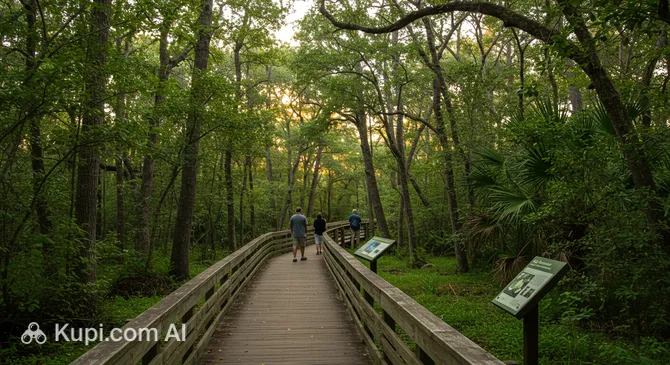
Tree Hill Nature Center. Source: Kupi.com AI

The center's grounds span diverse ecosystems: from rolling hardwood forests to wet prairies and freshwater swamps. As a non-profit organization, Tree Hill focuses on environmental education, offering visitors more than just walks, but a true scientific adventure with interactive exhibits, a biology lab, and outdoor learning stations.

One of the center's main highlights is the butterfly house and extensive wildflower gardens that attract explorers of all ages. Here, you'll find a harmonious blend of wild nature and thoughtful infrastructure, including an amphitheater for events and a network of well-maintained trails, making the preserve an important cultural and natural asset for the region.

Contacts

To contact the center's administration or for information about events, you can use the following contact details:

Address 7152 Lone Star Rd, Jacksonville, FL 32211, USA
Phone +1 904-724-4646
Official website treehill.org
Google Maps View on map

What to Do

The main pleasure of visiting the center is hiking along a network of scenic trails that pass through various natural zones. Here, you can arm yourself with binoculars for bird watching or simply enjoy the silence among ancient trees. Educational stations are set up along the way, telling the story of the local ecosystem's features, turning a simple stroll into an informative excursion.

Be sure to stop by the indoor nature center, which features interactive exhibits and animals undergoing rehabilitation. A particular favorite for visitors is the "Flight of Fancy" butterfly house—where you can get an up-close look at vibrant winged beauties surrounded by blooming plants. For those who prefer more organized leisure, the Joseph A. Strasser Amphitheater frequently hosts outdoor lectures and performances.

If your visit coincides with the spring season, you might catch the famous Butterfly Festival—a large-scale event featuring a butterfly release that has been held here since 2002. For children, there are summer camps and science programs that let them feel like real biologists as they explore forest and swamp life in their natural habitat.

Getting There

The easiest way to reach this natural getaway is by car. The center is located in the northeast part of the city on Lone Star Road. The drive from downtown Jacksonville takes about 15–20 minutes via I-95 or local roads. Free parking is provided on-site, though keep in mind that space may be limited during major festivals.

If you prefer public transport, you can take JTA buses serving the Arlington area. However, be aware that you will need to walk or take a taxi for about 2–3 kilometers from the nearest stop to the park entrance. Given the natural setting of the location, a personal vehicle or taxi service would be the most comfortable option for a visit.

History & Facts

The history of this remarkable place began in 1971, when a group of proactive Arlington residents joined forces to save a piece of wilderness from development. They formed the PATH (Preservation Association for Tree Hill) and raised the first $10,000 to secure a purchase option on the land. Their efforts were successful: with the support of the State of Florida and the personal involvement of Governor Reubin Askew, the first 22 acres were purchased.

The center's development progressed rapidly: a biology lab was added in 1977, and a modern environmental center opened its doors in 1985. A major milestone was the 1990 donation of 160 acres of land by philanthropist Martin E. Stein, some of which later formed the basis for other city parks. This highlights the center's role as a key link in preserving the region's natural heritage.

The preserve took on its modern appearance in the early 2000s. During this time, the annual Butterfly Festival was launched, the 300-seat Joseph A. Strasser Amphitheater was built, and the unique "Flight of Fancy" butterfly house was opened. Today, the center continues the traditions of environmental education started more than half a century ago.

Time Needed

To leisurely explore all the center's main locations, you usually need about 2–3 hours. This is plenty of time to walk the main trails, observe the inhabitants of the forests and swamps, and visit the interactive exhibits in the indoor pavilion.

If you plan to participate in educational programs, attend a workshop in the lab, or are visiting for the annual festival, it is worth setting aside half a day. Families with children are also recommended to allow extra time for relaxing in the picnic areas and detailed exploration of the butterfly house.

Working Hours

Tree Hill Nature Center welcomes guests six days a week. Please note the current operating hours:

  • Monday – Saturday: 08:00 – 16:30
  • Sunday: Closed

It is recommended to arrive in the morning to have time to explore all the trails before closing, as entry to the grounds stops shortly before the center's official closing time.

Nearby

Exploring the surrounding area after a walk along the preserve's trails will give you a more complete impression of the variety of entertainment in this part of the state. Nearby, you will find both memorial sites and places for active family fun.

Name Distance (km)
Academy Sim Racing 3.5
Jacksonville Veterans Memorial Wall 5.6
Rex, the Beach Blvd Dinosaur 6.1
San Marco “Train Station” 7.3
Splash 9.5
The Gray House 11.2
TanksRUs 11.6
Lane-Towers House 12.6
Van Zant House 15.5
Speedway Park 16

Reached the end of the page?

That means the route is fully explored