Support

John Day

About

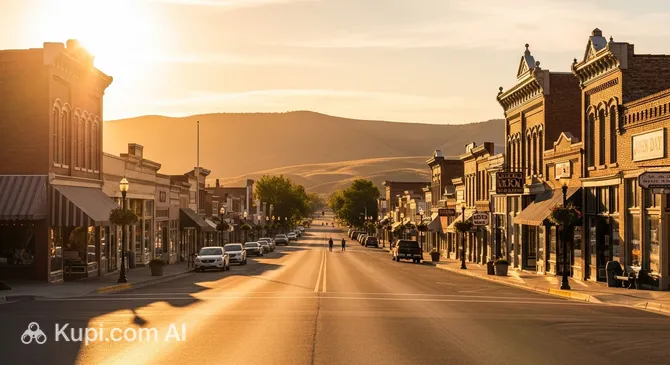
John Day is a small yet atmospheric city nestled in the picturesque valley of the river of the same name in eastern Oregon. Located in the Pacific Northwest of the USA, this community attracts travelers with its tranquility, authentic rural American spirit, and stunning landscapes. With a population of about 1,700, the city offers a cozy stopover for those exploring the region's natural wonders.

John Day. Illustration.
Source: Kupi.com AI

The past of this place is inextricably linked to the era of Western expansion. The fascinating history of John Day includes periods of the gold rush, cattle ranching, and logging. A unique testament to that era is the Kam Wah Chung State Heritage Site. This miraculously preserved building, which once served as a Chinese herbal apothecary and general store, is now a world-class museum chronicling the lives of Chinese immigrants in the 19th century.

The city also serves as the main gateway to one of the state's most impressive natural attractions—the John Day Fossil Beds National Monument. Tourists come here to see the famous Painted Hills, whose layered, colorful slopes create an otherworldly landscape that changes hues depending on light and moisture.

The valley's climate is semi-arid, with warm sunny summers and cool winters, making it ideal for outdoor activities. Fishing on the river, hiking, and scenic driving routes make John Day a wonderful place for those looking to escape the city bustle and connect with century-old history and nature.

Weather Overview

The climate in this corner of Oregon features pronounced seasonality, offering travelers different conditions depending on the time of year. To make your trip as comfortable as possible, it is worth checking the expected weather in John Day in advance, as conditions can range from snowy chill to true heat.

Winters here are quite cold and damp. In January and February, the average temperature stays around -1.8°C, and at night, the mercury can drop to -6.4°C. This time of year is also characterized by frequent precipitation: rain or snow falls about 15–16 days a month. Spring arrives gradually: while March is still cool, by May the air warms up to comfortable daytime highs of 16.7°C.

Summer is the driest and warmest time, perfect for exploring natural attractions. In July and August, rain becomes rare (sometimes only 1 day a month), and daytime temperatures often reach 29.4°C. Expect a warm sunny summer with clear days and cool, dry winters, which is typical for this region.

Average monthly temperature

Average monthly precipitation

Interesting Facts

In addition to its main attractions, John Day holds many fascinating secrets and historical curiosities that reveal themselves only to the most inquisitive travelers.

  • The Irony of the Name: The city and river are named after John Day, a member of the Astor Expedition who, oddly enough, never visited the site of the modern city. His name became attached to the river after an incident in 1812 when, at the mouth of the river (hundreds of kilometers to the west), he was attacked and completely stripped by local Native Americans, leaving him to wander naked until he was rescued.

  • Treasure Under the Bed: When the historic Kam Wah Chung building was reopened after decades of neglect, it turned out to be a true "time capsule." Under the bed of one of the owners, the legendary Chinese doctor Doc Hay, a box was discovered containing uncashed checks worth more than $23,000—a colossal fortune during the Great Depression that he chose not to collect from his poor patients.

  • Mammals, Not Dinosaurs: While many tourists expect to find Tyrannosaurus bones here, the region's paleontological value is different. Local fossils represent one of the world's most complete records of the Cenozoic Era (the epoch after the dinosaurs went extinct), allowing scientists to track the evolution of mammals, such as ancient horses and saber-toothed cats, over 40 million years.

  • Free-Flowing: The John Day River is unique because it is one of the longest free-flowing rivers in the continental United States. The absence of dams along its entire length not only preserves natural migration routes for wild salmon and steelhead but also makes the river incredibly popular among rafting and scenic float enthusiasts.

How to Get There

John Day is located in a secluded part of Oregon, far from bustling metropolises, so the journey here is a small adventure in itself. Since there are no direct flights to the city, travelers usually have to combine a flight with a car trip. To plan your route as efficiently as possible, we recommend exploring all ways to get to the city and choosing the most convenient option for you.

There is no commercial airport in the city of John Day itself. The closest convenient option is Roberts Field Redmond Airport (RDM), located in the city of Redmond. It is approximately 176 km to the west. The drive from there by rental car or transfer will take about 3 hours, passing through the scenic landscapes of Central Oregon. This is a regional hub receiving flights from major West Coast hubs.

A popular alternative with more connection options is Boise Airport (Gowen Field) (BOI), located in the neighboring state of Idaho. The distance to John Day is about 237 km. This is a larger transportation hub, and travel time by land is approximately 3.5–4 hours. Choosing this airport makes sense if you are planning an extensive road trip through the region and want a wider selection of flights.

For clarity, here is summary information on the main airports used to reach the region:

AirportPassenger trafficDistance
Eastern Oregon Regional Airport13 630142 km
Roberts Field Redmond Municipal Airport1.3 mln176 km
Tri-Cities Airport949 110206 km
Boise Air Terminal (Gowen Field)5.0 mln237 km
Lewiston-Nez Perce County Regional Airport82 000265 km

Given the lack of rail service directly to the city, a car remains the primary mode of transportation. Most travelers rent a car at one of the arrival airports. The drive along US-26 or US-395 will treat you to unforgettable views of the mountains and valleys of Eastern Oregon, turning the transfer into an exciting part of your vacation.

Main Attractions

Despite its modest size, John Day and its surroundings offer travelers a rich cultural and natural program. The city serves as an ideal base for exploring Oregon's geological wonders and historical heritage. Here are the places you should definitely include in your itinerary.

The undisputed crown jewel of the city is the Kam Wah Chung State Heritage Site. This is not just an old building, but a unique time capsule preserved from the late 19th century. It once housed a trading post and a traditional Chinese medicine apothecary run by two Chinese immigrants—Lung On and Ing Hay. Today, visitors can step inside and see thousands of artifacts, from ancient medicinal herbs to general goods, left untouched on the shelves. Tours here provide a deep dive into the region's multicultural history.

Just a few minutes' drive west of the city is the Thomas Condon Paleontology Center. This is the primary visitor center for the John Day Fossil Beds National Monument. The modern museum building houses an impressive collection of fossils found in the area, ranging from giant sloths to saber-toothed cats. Interactive exhibits and viewing platforms overlooking the valley make this place interesting for both adults and children curious about science and Earth's history.

Fans of the Wild West atmosphere should visit the Grant County Historical Museum, located in the neighboring town of Canyon City (which is practically adjacent to John Day). The museum is famous for its extensive collection dedicated to the 1860s Gold Rush era. Here, you can see vintage mining equipment, photographs of early settlers, and even visit a preserved jail cell from those times, steeped in the spirit of the frontier.

For a relaxing break in nature, the Clyde Holliday State Recreation Site is perfect. Located along the banks of the John Day River, this park is an oasis with tall cottonwood trees providing pleasant shade on hot summer days. It is an excellent spot for a picnic, birdwatching, or a leisurely walk by the water, where you can enjoy the peace and beauty of Eastern Oregon's landscapes.

Local Cuisine

The gastronomic scene in John Day is a reflection of the Eastern Oregon spirit: honest, hearty, and free of pretension. You won't find fine dining restaurants with microscopic portions here, but you can enjoy real American comfort food. Since the city is located in the heart of cattle-rich Grant County, the foundation of the local menu is high-quality meat. Travelers should definitely try the steaks (especially ribeye) or burgers made from beef raised on local ranches.

Berries hold a special place in the region's culinary culture. Oregon is famous for its unique varieties, and John Day is no exception. For dessert, be sure to order a slice of warm pie with marionberries (a blackberry hybrid, the "king of berries" in Oregon) or blueberries. On hot summer days, huckleberry (wild blueberry) flavored milkshakes and ice cream are popular and can be found in local roadside diners.

As for drinks, even in such a small town, the influence of the state's famous beer culture is felt. Oregon is considered one of the centers of craft brewing in the USA, so local establishments will offer an excellent selection of local ales, IPAs, or stouts. The local brewery often becomes a social hub where you can not only have a pint of fresh brew but also chat with the locals. Among non-alcoholic drinks, coffee has cult status—quality espresso or americano is prepared even in small kiosks.

The dining culture in John Day is very informal. Locals and tourists typically eat in cozy family diners and cafes where a relaxed atmosphere prevails. It is customary to come in comfortable clothes after a walk in the hills or fishing. Street food is represented by seasonal fairs and food trucks that may appear during city holidays, offering everything from tacos to classic hot dogs.

Travel Tips

A trip to John Day is an immersion into the atmosphere of the true Wild West and Oregon's unique nature. To ensure your journey to this secluded corner goes smoothly and leaves only pleasant impressions, we have prepared a list of important recommendations tailored to the local infrastructure and climate.

  1. Clothing and Gear. The climate here is sharply continental: even in hot summers, nights can be cool. Use the layering principle: bring a fleece sweater or a windbreaker that is easy to remove. For visiting the John Day Fossil Beds National Monument, sturdy closed-toe shoes (sneakers or hiking boots) are a must, as the trails can be rocky. Don't forget a hat and sunglasses—the sun is very intense in the high desert.

  2. Transport and Getting Around. Renting a car in this region is not just recommended, but vital. Public transport within the city is virtually non-existent, and taxi services like Uber or Lyft do not work here. Distances between attractions are large, so a car will give you the necessary freedom. Always keep an eye on your fuel level: gas stations can be few and far between, especially on highways outside of town.

  3. Finances and Payment. The official currency is the US dollar. Most shops, cafes, and gas stations accept credit cards, but having $50–$100 in small cash bills is very desirable. They will be useful for small purchases or tips. The tipping culture here is standard for America: it is customary to leave 15–20% of the bill in cafes and restaurants.

  4. Connectivity and Navigation. Be prepared for mobile service and mobile internet (4G/5G) to be unstable or disappear entirely as soon as you drive outside the city toward the canyons. We strongly recommend downloading offline maps of the region to your smartphone in advance. Wi-Fi is usually available in hotels and some cafes, but its speed may be low.

  5. Health and Safety. There are no 24-hour pharmacies in John Day; most close in the evening (around 6:00–7:00 PM) and may not be open on weekends, so pack a personal first-aid kit beforehand. In summer, it's important to stay hydrated and protect yourself from the sun while outdoors. Also, rattlesnakes live in this area: watch your step carefully while hiking and do not stray from established trails.

  6. Local Etiquette. People in Eastern Oregon are very friendly and open. It is customary to greet clerks, waiters, and even passersby on the street. A simple smile and the phrase "How are you?" will help establish rapport. Life here moves slowly, so don't rush the staff in cafes—relax and enjoy the moment.

  7. What to Avoid. The main taboo for a tourist is violating private property boundaries. Much of the land around the city consists of private ranches; never climb over fences or enter fenced areas without permission. Also, when visiting the Painted Hills, it is strictly forbidden to walk on the colored clay—it destroys the fragile landscape that took millions of years to form.

  8. Tip for Photographers. If you plan to visit the famous colored hills, aim for the "golden hour"—the time before sunset. It is in the low rays of the sun that the red, gold, and black layers of soil appear most contrasting and vivid, creating those "Martian" landscapes that people travel from all over the world to see.

John Day is a place where you can escape the city bustle and touch eternity. By following these simple tips and respecting local traditions, you guarantee yourself a safe and unforgettable adventure in the heart of Oregon.

Entertainment & Nightlife

Entertainment and nightlife in John Day have their own special, unhurried rhythm, fully in line with the spirit of the American heartland. Do not look for noisy nightclubs with DJs, neon signs, or red-light districts here. Evening leisure in this small town primarily revolves around cozy gatherings, lively conversation with locals, and enjoying quality drinks in atmospheric bars. All social activity after sunset centers along the city's main artery—Main Street.

The center of attraction for residents and tourists alike is the 1188 Brewing Company. This establishment sets the tone for the city's evening life. It boasts a friendly atmosphere where cowboys from local ranches and hiking tourists might sit at the same table. The bar serves excellent house-made craft ales and hearty snacks. Periodically, they host live music nights where local musicians play country or folk, turning dinner into a real concert.

Another popular spot to spend an evening is The Outpost Pizza, Pub & Grill. This is a classic American bar and restaurant, perfect for watching sports or playing a game of pool. The atmosphere here is highly democratic and relaxed. A dress code in John Day establishments is non-existent: jeans, flannel shirts, and comfortable shoes are appropriate everywhere.

When planning your evening, it is important to consider local business hours. "Nightlife" here ends quite early by big-city standards. Most kitchens close by 8:00–9:00 PM, and bars may stay open until 10:00 PM or midnight on Fridays and Saturdays. On weekdays, the city goes to sleep even earlier. Prices will pleasantly surprise you: the average check for dinner with drinks will be significantly lower than in major coastal cities.

Safety in John Day is practically a non-issue—it is a very quiet place where you can walk through the center after dark without fear. However, streets are not brightly lit everywhere, so a phone flashlight might come in handy. The main challenge is transport. As mentioned, there are no taxis or services like Uber here. If you plan to drink, agree in advance on who in your party will be the sober driver, or choose accommodation within walking distance of Main Street.

By day, entertainment is more educational and active. In addition to the already mentioned natural monuments, cultural life thrives at the Grant County Fairgrounds. In the summer, it often hosts rodeos, festivals, and exhibitions that are the quintessence of local culture. History buffs will enjoy simply walking through town, admiring the old buildings, or visiting local antique shops that resemble small museums of past centuries' daily life.

Parks & Museums

John Day harmoniously combines the rugged beauty of Oregon's high desert with carefully preserved cultural heritage. Despite its small size, the city offers guests well-maintained green spaces for outdoor relaxation and museums that tell amazing stories of the lives of early settlers, gold miners, and cowboys.

Among the natural areas, the Clyde Holliday State Recreation Site deserves special attention. Located on the banks of the John Day River, this park is a true oasis amid the arid landscape. Tall cottonwood trees provide dense shade, offering relief from the summer heat, while comfortable lawns are ideal for picnics. Tourists appreciate this spot for the chance to observe wildlife and the easy access to the water for fishing.

Within the city, the 7th Street Complex is a popular spot. This multi-functional recreation area is a local favorite. It features a scenic pond where you can fish, walking paths, and playgrounds. The park is an excellent place for a quiet evening stroll with views of the surrounding hills, allowing you to feel the steady pace of life in the local community.

The city's main cultural treasure is the Kam Wah Chung State Heritage Site. This museum is unique because it has preserved the interiors of a Chinese herbal apothecary and store from the late 19th century in virtually their original form. The exhibit immerses visitors in the life of the Chinese diaspora in the Wild West, displaying thousands of artifacts—from ancient medicines to the owners' personal belongings, which remained untouched for decades.

For those interested in cowboy culture, the Grant County Ranch & Rodeo Museum will be of interest. It is located at the city fairgrounds and is dedicated to the history of cattle ranching in the region. The collection features vintage saddles, photographs of legendary rodeos, tools, and cowboy clothing. This place helps one understand the vital role that livestock farming has played and continues to play in the economy and culture of Eastern Oregon.

Insider Tip: If you want to enjoy peace and nature without traveling far from town, go for a walk on the Davis Creek Trail in the nearby Malheur National Forest. This is an easy route that is especially beautiful in spring when the slopes are covered with wildflowers and the air is filled with the scent of pine needles.

Getting Around

Given the compact size of the city with a population of about 1,700, the public transport system in John Day is arranged quite differently than in major tourist centers. You won't find subways, trams, or typical city shuttles running every five minutes here. The transport infrastructure is adapted to the measured pace of a small community, so getting around the city itself is most often done on foot, as most shops, cafes, and hotels are concentrated along the main street.

The primary and virtually only form of public transportation is the Grant County People Mover bus service. This is a system of regional shuttles connecting John Day with neighboring towns such as Canyon City, Prairie City, and Mt. Vernon. These buses are a "lifeline" for those traveling without a car; however, their route network is quite limited and designed more for moving between county communities than for trips within the city itself.

The fare payment system here is highly conservative. There are no validators for contactless cards or mobile apps for buying tickets on the buses. Travelers need to have cash (dollars) on hand, and it is strongly recommended to prepare small bills for the exact fare, as drivers often do not have change. The cost of a trip on local routes is quite nominal, and payment is made directly upon boarding.

When planning trips on the People Mover, it is important to study the schedule carefully. Buses run primarily on weekdays during business hours. In the evenings, on weekends, and on holidays, public transport may not operate at all. This is a critical point for tourists: do not rely on the bus to return from a late dinner or an excursion.

There are few alternatives to public transport. Common ride-hailing and car-sharing apps do not function here, so you won't be able to call a car through an app. Small local taxi services exist, but their fleet is limited, and a car must be ordered by phone in advance. Because of this, for comfortable exploration of the surroundings and trips to natural monuments, renting a car is not just a recommendation but a necessity. Within the historic city center, however, the most reliable and pleasant way to get around remains walking.

Accommodation

Accommodation in John Day perfectly matches its character—it is a cozy, no-frills stop for travelers exploring Oregon's wilderness. You won't find high-rise luxury hotels or massive resort complexes here. The lodging stock primarily consists of classic American motels, small family-run inns, and guesthouses offering clean rooms and basic comfort after a long day on the road.

From a geographical standpoint, choosing an area to stay is simple and obvious. Virtually all accommodation options are concentrated along the main transportation artery—Main Street, which is part of US-26. By staying here, you will be within walking distance of local cafes, grocery stores, and the city's only brewery. This is a strategically convenient location: in the morning, you can quickly head out toward the Painted Hills, and in the evening, you can walk to dinner without getting behind the wheel.

A special category of housing in the region is RV parks and campgrounds. Given the popularity of road trips through Eastern Oregon, many tourists prefer to bring their own "home." Local campgrounds are often equipped with everything necessary, including showers and laundries, and offer scenic views of the river valley or the surrounding mountains.

Booking Tip: Even though the city seems quiet and remote, demand for housing rises sharply during the tourist season (from late May to September). The number of rooms in the city is limited, so it is highly recommended to book your stay 2–3 months in advance. Attempting to find a room on the day of arrival in the summer may end in disappointment, forcing you to drive to neighboring towns tens of kilometers away.

Pricing in John Day remains very reasonable. Most options fall into the budget and mid-range price segments. You can find decent lodging for a fair price, making the trip accessible for families and students. Booking is available through popular online aggregators or directly by phone—in many small motels, owners appreciate personal contact and may offer better terms for a direct call.

Nearby Cities

For those looking to explore the surroundings, John Day serves as an excellent starting point for day trips to several interesting nearby locations:

One of the most attractive destinations is Bend. It is a dynamic city in Central Oregon, known as the capital of outdoor activities and craft brewing. Tourists go there to stroll along the Deschutes River, explore volcanic caves, or simply enjoy a great dinner at one of the many restaurants after a day in nature.

For mountain scenery lovers, Enterprise is an ideal choice. This town serves as the gateway to the Wallowa Mountains, often called the "Little Switzerland of America" for their picturesque alpine views. This place is suitable for those seeking peace, beautiful lakes, and the chance to see real wilderness away from the crowds.

If you want to change the setting to something more urban and sunny, head toward the Tri-Cities metropolitan area (which includes Kennewick and Pasco). Located at the confluence of three rivers, this region is famous for its world-class wineries, water sports, and waterfront parks.

CityPopulationDistance
Seneca8 73431 km
Burns3 00093 km
Baker City9 99897 km
La Grande13 212122 km
Pendleton16 861140 km

These nearby destinations provide a glimpse into the diverse culture and landscapes of the region.

Shopping & Souvenirs

General Overview: Shopping in the city of John Day is an experience far removed from the hustle and bustle of massive shopping centers and glossy windows. You won't find world-brand boutiques here, but that is precisely where the charm of local commerce lies. The city offers travelers an immersion into the atmosphere of the true American heartland, where every little shop has its own story and is often run by the same family for generations. The main focus here is on outdoor gear, antiques, and unique products from local artisans.

Main Shopping Areas and Streets: All the city's commercial life is concentrated along the main artery—Main Street, which is part of US-26. A walk along this street will allow you to visit most of the city's interesting shops. There are hardware stores, Western-style clothing shops, pharmacies, and cozy souvenir departments. The compactness of the center allows you to explore all retail outlets on foot while enjoying views of the surrounding hills.

Shopping Centers: Due to the city's small size, John Day lacks large shopping centers or malls in the traditional sense. Retail is represented by standalone buildings and small plazas. If you need a large-scale shopping trip with a wide selection of chain clothing and electronics stores, the nearest major shopping complexes are in the city of Bend, located about three hours away.

Markets: During the summer season (typically from June to October), the John Day Farmers Market becomes a hub for locals and tourists alike. It usually takes place on Saturdays. This is a great place to buy fresh seasonal fruits and vegetables grown in the valley, homemade baked goods, honey, and handcrafted items from local makers. Visiting the market is a wonderful way to support local producers and interact with residents.

Souvenirs: From a trip to this region of the USA, it is worth bringing back items that reflect the spirit of the Wild West and Oregon's unique nature. Look for high-quality cowboy gear: hats, belts, and boots, which are sold here as everyday wear rather than just souvenirs. Items made from juniper and myrtlewood (Oregon laurel) are also popular. Given the proximity of paleontological sites, shops carry beautiful fossil replicas or books on the region's ancient history. A sweet gift would be jam or syrup made from marionberries (a specific blackberry variety) or wild huckleberries.

Hours and Payment: Life in John Day moves at a measured pace, and shop hours reflect this. Most retail outlets are open from 9:00 AM to 5:00 or 6:00 PM on weekdays. On Saturdays, many close early, and Sunday is often a day off for small businesses, with the exception of large grocery supermarkets. Credit cards are accepted almost everywhere, though having a small amount of cash is welcomed, especially at the farmers market or when buying small souvenirs.

Tax Free and Taxes: Oregon is one of the few states with no sales tax. This makes shopping here particularly advantageous for tourists: the price you see on the tag is the final price. You do not need to fill out Tax Free refund paperwork at the airport, as you already save between 5% and 10% compared to purchases in other states.
Reached the end of the page?

That means the route is fully explored