Support

Red Rock Canyon National Conservation Area

About

Just a few dozen kilometers west of bustling Las Vegas, Nevada, USA, lies the wonderful world of red rocks—Red Rock Canyon National Conservation Area. This unique natural wonder is a belt of impressive hills and rock formations in a deep red color, creating a striking contrast with the bright blue desert sky. The rocks owe their scarlet hue to iron oxide, which became visible after an ancient ocean left the area millions of years ago.
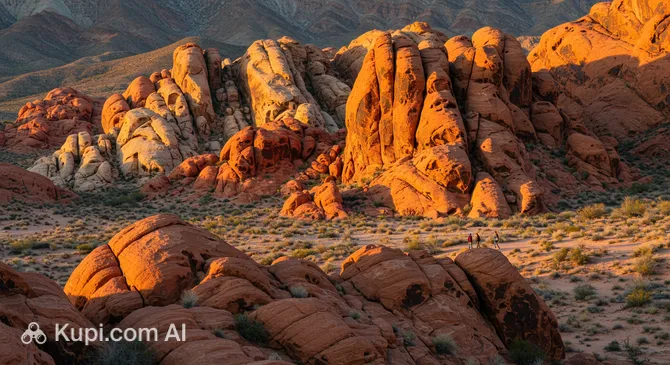
Red Rock Canyon National Conservation Area. Illustration.
Source: Kupi.com AI

Traveler photos:

Red Rock Canyon is Nevada's first National Conservation Area and is federally protected, making it an important center for wildlife preservation. Here, you can encounter various desert fauna, including bighorn sheep, rabbits, and even the endangered desert tortoise. Visitors can explore the area via numerous hiking trails or take the 13-mile (about 21 km) Scenic Drive that passes through the park's most beautiful spots.

Every year, about two million people come here to enjoy the breathtaking scenery and take a break from the city bustle. Easy accessibility from Las Vegas makes Red Rock Canyon an ideal location for a day trip, offering visitors an unforgettable experience and a chance to connect with the wild.

Contacts

To plan your visit and get the most up-to-date information on trail conditions, operating hours, and park regulations, it is recommended to consult official sources. The primary contact details for the conservation area are provided below.

How to contactContact
AddressMountain Springs, NV 89161, USA
Phone number+1 702-515-5350
Websitewww.blm.gov

What to Do

Red Rock Canyon National Conservation Area offers guests a variety of activities to fully enjoy its unique desert landscapes. One of the most popular activities here is rock climbing. The Aztec Sandstone cliffs attract both beginners and experienced athletes from all over the world thanks to a vast variety of routes—ranging from simple scrambles to complex multi-hour climbs. For those who prefer to stay on the ground, dozens of hiking trails of various lengths and difficulties lead through picturesque canyons and to panoramic overlooks.

For a more comfortable introduction to the park, you can take the 13-mile (about 21 km) paved Scenic Drive. This one-way route passes through the most impressive parts of the conservation area and has many stops where you can get out, take stunning photos of the colorful mountains, and simply admire the views. It’s worth noting that some parts of the canyon itself are only accessible via unpaved roads, for which an SUV is recommended. Additionally, Red Rock Canyon is an ideal spot for wildlife viewing, picnics, or just escaping the hustle and bustle of nearby Las Vegas.

Getting There

Red Rock Canyon National Conservation Area is located just 15-17 miles (about 24 km) west of Las Vegas, making it exceptionally accessible for a day trip. The most convenient and popular way to reach the conservation area is by car. The drive from the famous Strip takes about 20-30 minutes. Public transportation does not run directly to the canyon, so renting a car is the best solution. You can also use taxi services or book an organized tour, many of which include hotel transfers.

Driving to Red Rock Canyon is an adventure in itself. As you leave the tourist center, you'll see a completely different side of Las Vegas—a peaceful, primarily single-story residential city. This contrast offers a better understanding of local life beyond the glowing lights of the casinos and hotels. The road to the conservation area is well-marked; the main route follows Highway SR 159 (Charleston Boulevard), which leads directly to the entrance.

Upon arrival, visitors can navigate the famous 13-mile (21 km) Scenic Drive, which is a one-way road. This paved loop passes through the most spectacular landscapes and is equipped with numerous parking lots at overlooks and trailheads. Any passenger car is suitable for this drive. However, if you plan to explore more remote corners of the canyon, keep in mind that some routes follow unpaved roads where a high-clearance vehicle, such as an SUV, is recommended.

Nearest city: Las Vegas

History & Facts

The history of Red Rock Canyon National Conservation Area stretches back hundreds of millions of years to a time when this territory was the floor of an ancient ocean. The oldest rocks visible today are sedimentary rocks formed during the Paleozoic era, about 600 million years ago. The canyon owes its famous scarlet color to the oxidation of iron and other minerals, a process that began after the ocean receded, exposing the rocks.

Approximately 180 million years ago, long-term climate changes transformed this region into a vast desert. Over time, the endless sand dunes that covered the area were compressed under pressure into Aztec Sandstone—the conservation area's primary geological feature. These formations are what attract climbers from all over the world today and create the unique, Mars-like landscapes.

In more modern history, as neighboring Las Vegas grew, the need arose to protect this unique natural area. In 1967, Red Rock Canyon was designated a recreation area, which was a crucial step for its preservation. This decision allowed for the restriction of urban development and the protection of the fragile desert ecosystem, and in 1990, its status was elevated to National Conservation Area, providing additional funding and protection.

Time Needed

When planning a visit to Red Rock Canyon National Conservation Area, you should consider how much time you want to spend exploring it. For a basic introduction, which includes the 13-mile (21 km) Scenic Drive, stops at key overlooks for photos, and a visit to the visitor center, you will need approximately 2–3 hours. This is enough time to drive the main route without rushing and get a general sense of the canyon's beauty.

If you want to immerse yourself more deeply in the atmosphere and explore its natural trails, you should set aside half a day or even a full day. The conservation area offers more than 26 hiking trails of varying difficulty and length. Short walks, such as the one to the petroglyph wall, take about 30 minutes, while more challenging and longer hikes like Calico Hills or Ice Box Canyon can last two hours or more. Thus, the duration of your visit depends directly on your interests: whether it's a leisurely drive or active hiking.

Working Hours

Red Rock Canyon National Conservation Area is open to visitors year-round, although hours of operation vary by season. The 13-mile Scenic Drive operates on the following schedule: November to February, 6:00 AM to 5:00 PM; March and October, 6:00 AM to 7:00 PM; and April to September, 6:00 AM to 8:00 PM. The Visitor Center at the park entrance is open daily from 8:00 AM to 4:30 PM. On holidays such as Thanksgiving and Christmas, hours may be reduced.

It is important to remember that during peak season—from October 1st to May 31st—between 8:00 AM and 5:00 PM, mandatory advance timed entry reservations are required for vehicles on the Scenic Drive. You must reserve a ticket in advance on the official Recreation.gov website, even if you have an annual or lifetime pass. During the summer months (June 1st to September 30th), advance reservations are not required. Given the high demand, especially on weekends and holidays, it is highly recommended to plan your visit and book tickets in advance to guarantee entry.

8:00 – 17:00

Nearby

A visit to Red Rock Canyon National Conservation Area is undoubtedly a vibrant and memorable event. However, to make your journey truly complete, it's worth exploring other nearby attractions. The surroundings of Las Vegas are rich not only in natural wonders but also in other interesting sites that can diversify your itinerary.

Exploring nearby locations will allow you to see different sides of this amazing region—from sports arenas to other unique natural parks. It is a great opportunity to combine contemplating the majestic landscapes of Red Rock Canyon with other forms of leisure, rounding out your travel experience.

NameDistance
Aquatic Treasures16.9 km
Tule Springs Fossil Beds National Monument21.3 km
Herbs and Rye22.8 km
AREA1524 km
The Forum Shops at Caesars24.9 km
Caesars Palace25 km
Bellagio25.1 km

Have you reached the end of the page?

So the route has been studied inside and out