Support

Fox Theater

About

The Fox Theatre, which once stood majestically on Market Street in San Francisco, USA, was not just a cinema but a true palace of motion picture art. It went down in history as one of the most impressive movie palaces of its era, famous for its unsurpassed splendor and atmosphere of luxury.
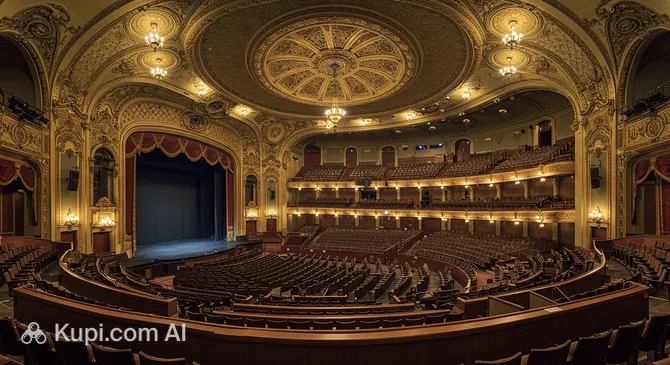
Fox Theater. Illustration.
Source: Kupi.com AI

Traveler photos:

Designed by the prominent theater architect Thomas W. Lamb, the Fox Theatre seated 4,651 spectators. While it wasn't the largest in size, its unique combination of scale, grace, elegance, and what Ben Hall aptly called "staggering magnificence" made it, in many people's eyes, the greatest movie palace of its time.

The theater was one of five grand venues built by film pioneer William Fox in the late 1920s. Along with the Fox theaters in Brooklyn, Atlanta, Detroit, and St. Louis, it served as a magnificent showcase for Fox Film Corporation movies and a stage for large-scale theatrical shows, turning every trip to the cinema into an unforgettable event.

Contacts

The Fox Theatre in San Francisco is a significant historical site that, unfortunately, has not survived to the present day. Because of this, there are no direct contact details for it as an active venue.

To learn more about its rich history and architectural heritage, we recommend visiting the San Francisco historical archives, checking online resources dedicated to film history, or exploring materials on the cultural heritage of the USA.

How to contactContact
Address1807 Telegraph Ave, Oakland, CA 94612, USA
Phone number+1 510-302-2250
Websitewww.thefoxoakland.com

What to Do

Visitors to the Fox Theatre in San Francisco were immersed in an atmosphere of unparalleled luxury while enjoying motion pictures. It wasn't just a trip to the movies, but a true event where every element of the interior and service emphasized the grandeur of the moment. Additionally, the theater served as a venue for impressive stage performances, offering audiences a diverse cultural program.

The Wurlitzer 4/36, Opus 2012 organ, equipped with an additional console, was a point of particular pride and an integral part of the cinematic experience. Its powerful and multifaceted sound filled the auditorium, creating a unique atmosphere before screenings and during intermissions. In the lobby, guests were also greeted by the music of a Moller 3/12, Opus 5497 organ, which featured an Artiste automatic player, adding another touch to the theater's refined setting.

In its final years, the Fox Theatre sought to attract audiences with new formats. For instance, starting March 5, 1960, a popular series of midnight organ concerts was held on Saturdays. The theater also celebrated its milestones in grand style. On June 28, 1959, a gala celebration was held for the theater's 30th anniversary, featuring a screening of the 20th Century-Fox film "Say One for Me" with stars of the time, Bing Crosby and Debbie Reynolds, in attendance.

Getting There

The Fox Theatre was once located on the famous Market Street in San Francisco, making it easily accessible from various parts of the city. This street has always been one of the metropolis's main transportation arteries, so reaching the spot where this magnificent movie palace once shone would have been quite simple using various modes of transport.

The primary and most convenient way to reach the Market Street area where the theater stood is traditionally San Francisco's extensive public transport system. Numerous MUNI bus routes, MUNI Metro light rail lines, and the famous historic F-line streetcars pass along Market Street. The nearest public transport stops would likely have been just a few minutes' walk from the former theater, providing easy access for visitors.

An alternative for those who would have preferred a more direct and personal way to travel has always been taxis or the ridesharing services popular in San Francisco. A car ride from the city center, hotels, or other tourist attractions to the former location of the Fox Theatre on Market Street usually wouldn't have taken much time, though one should always account for potential traffic in the busy downtown area.

Nearest city: San Francisco

History & Facts

The Fox Theatre in San Francisco was the brainchild of film pioneer William Fox and opened its doors to the public on June 28, 1929. The grand opening was marked by the premiere of "Behind That Curtain" — a Charlie Chan mystery film produced by William Fox's company, directed by Irving Cummings, and starring Warner Baxter and Lois Moran. This moment marked a brilliant start for a theater that promised to become one of the city's cinematic hubs.

Despite its grand beginning, the theater's history proved short-lived. Shortly after opening, the Fox Theatre faced financial difficulties, leading to a temporary closure from October 20, 1932, to April 1, 1933. Despite efforts to preserve this magnificent building through special events and concerts, the theater lasted only 34 years. In 1963, it was finally closed and subsequently demolished, much to the regret of architecture and film history enthusiasts. This fate, unfortunately, befell many such "movie palaces" of that era, whose architectural and cultural value could not save them from destruction.

Interestingly, the building that housed the theater was originally constructed for Bank of America, with the Fox West Coast company acting as the tenant. Furthermore, initial development plans for this massive complex included the idea of building a hotel as part of it. However, these ambitious plans never came to fruition, leaving only a mark on the design history of this once-famous theater.

Time Needed

Since the Fox Theatre in San Francisco was unfortunately demolished in 1963, a physical visit and tour of the building itself is impossible. Therefore, "exploring" this once-magnificent movie palace involves studying its rich history and architectural heritage.

The time needed to learn about the history of the Fox Theatre depends on your level of interest. If you want a general overview, reading the basic facts and looking at archival photos may take 1–2 hours. For this, you can use online resources dedicated to the film and architectural history of San Francisco.

For a deeper dive — such as studying architectural plans (if available in archives), contemporary memoirs, or a detailed analysis of its impact on the city's cultural life — you might need half a day or even more. However, for most tourists simply wishing to learn about this iconic, albeit lost, landmark in the USA, spending about an hour with available information will be quite sufficient.

Working Hours

Since the Fox Theatre in San Francisco, USA, was demolished in 1963, it is unfortunately no longer operational and has no working hours. This means it is impossible to visit it in the traditional sense or check a performance schedule, as the physical building no longer exists.

Consequently, information regarding ticket bookings or reservations is also not applicable. Instead of looking for opening hours, history enthusiasts can turn to archival materials, San Francisco historical societies, or specialized online resources to learn more about the former splendor and rich history of this once-famous movie palace.

Nearby

Although the Fox Theatre in San Francisco remains only in memories and historical records, the area where it once shone is still packed with interesting sites. Exploring the surroundings will allow you to dive deeper into the city's atmosphere and discover its other facets, complementing your impressions of the legendary movie palace.

Near the former site of the theater, you will find many attractions to diversify your cultural program and make your trip to San Francisco even more memorable. Below is a list of some of them, along with approximate distances:

NameDistance
Children's Fairyland0.9 km
USS Hornet Sea, Air and Space Museum4.8 km
Exploratorium11.2 km
San Francisco Museum of Modern Art11.7 km
Coit Tower11.9 km
Aquarium of the Bay12.2 km
PIER 3912.2 km

Have you reached the end of the page?

So the route has been studied inside and out