Support

Taos

About

Taos is a true oasis of inspiration and harmony, nestled at the foot of the Sangre de Cristo Mountains in northern New Mexico. This town possesses a unique energy, where majestic nature meets a rich cultural heritage, creating an atmosphere that simply cannot be found anywhere else.

Geographically, the town sits at an elevation of about 7,000 feet (2,100 meters) above sea level, surrounded by picturesque canyons and wide valleys. Despite its modest population of just over 6,800 people, Taos plays a significant role in the region and is one of the brightest gems of the USA. It maintains a cozy, almost village-like setting that surprisingly blends with a vibrant cultural life.
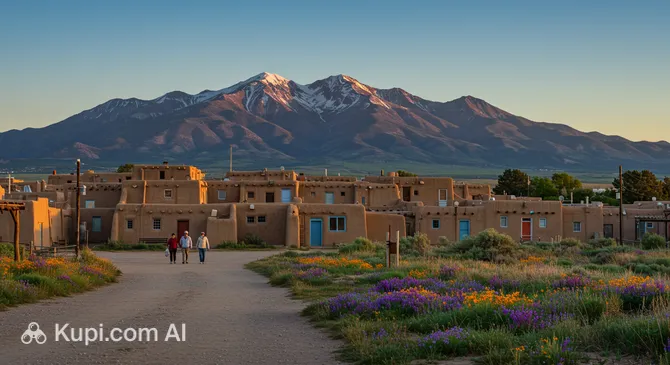
Taos. Illustration.
Source: Kupi.com AI

The town's unique character is shaped by a harmonious intertwining of indigenous traditions, Spanish colonial architecture, and modern art. Walking through the ancient streets feels like traveling through time. To better understand the origins of this cultural phenomenon, it is worth exploring the history of Taos, which transformed a small settlement into a world capital for artists and mystics.

Among the main magnets for tourists, the legendary Taos Pueblo stands out—an ancient multi-story settlement where life has continued uninterrupted for over a thousand years. Equally impressive is the giant Rio Grande Gorge and the bridge spanning it, offering breathtaking views. The town's numerous galleries and museums will also captivate any art lover.

Taos is the perfect place for those who want to slow down the pace of life, enjoy the famous Southwest sunsets, and feel the true magic of this land. Come here for inspiration, new discoveries, and unforgettable experiences.
Weather Overview

The climate of Taos is defined by its high-altitude location, giving the town four distinct seasons. Winters are truly cold, with an average temperature in January around 24°F (-4.5°C) and nighttime frosts sometimes reaching 12.5°F (-10.8°C). With the arrival of spring, the air gradually warms up, and by May, average temperatures reach around 54°F (12.1°C), creating pleasant conditions for travel.

Summer months bring comfortable warmth, but generally without exhausting heat: in July and August, daytime temperatures warm up to 77–79°F (25–26°C). Expect a warm summer with periodic precipitation, which peaks in July (up to 15 rainy days), and cold winters with bracingly crisp air. In the fall, temperatures drop smoothly, providing cool and clear days in September and October.

To choose the perfect time for a visit and get your gear right, we recommend checking in advance what the weather in Taos is expected to be during your trip dates. Given the significant temperature swings between day and night at any time of year, layered clothing will be your best ally on this journey.

Average monthly temperature

Average monthly precipitation

Interesting Facts

Behind the colorful adobe facades of Taos lie amazing stories and phenomena that attract adventure seekers and mystics from all over the world. Here are a few facts that will allow you to look at this town from a completely new perspective.

  • The Taos Hum. The town is famous for an unexplained acoustic phenomenon. Approximately 2% of local residents and visitors hear a persistent low-frequency noise, resembling the sound of a distant diesel engine. Scientists have conducted numerous studies, but the exact source of this sound has never been found, giving rise to many theories—from geological features to secret experiments.

  • Houses made of trash. Located near Taos is the world's largest community of "Earthships." These are fully autonomous, futuristic-looking eco-homes built from recycled materials: old car tires, glass bottles, and aluminum cans. They generate their own electricity, collect water, and maintain a comfortable temperature without heating, even in winter.

  • A thousand-year history. Taos Pueblo is considered one of the oldest continuously inhabited places in North America. People have lived in these multi-story clay structures for over 1,000 years. Surprisingly, electricity and running water are still prohibited in the historic part of the pueblo to preserve the sacred atmosphere and ancestral traditions.

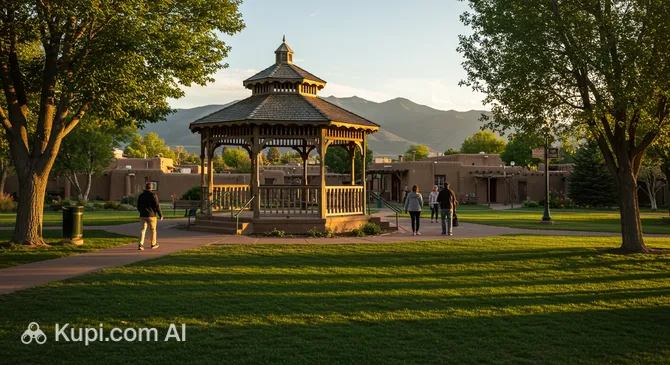
  • Legacy of a legendary scout. The town is closely associated with the name of the famous Wild West explorer Kit Carson. Located in the town center is the picturesque Kit Carson Park, which houses a historical cemetery with the pioneer's grave. This place serves as a reminder of the turbulent times of frontier exploration.

Kit Carson Park. Illustration.
Source: Kupi.com AI

Traveler photos:

How to Get There

Planning a trip to this picturesque corner of New Mexico requires attention to logistics, as the town is located in a remote mountainous area. The most popular way to get here is to fly to one of the major nearby cities and continue the journey by land. You can find out more about how to get to Taos to choose the most convenient route for you.

There is no major civilian airport in the town of Taos itself that accepts regular passenger flights, so travelers usually use aviation hubs in the surrounding areas. The most convenient and closest option is Santa Fe (SAF). It is located in the city of Santa Fe, about 61 miles (99 km) from Taos. It is a regional airport with moderate passenger traffic, receiving flights from Dallas, Denver, and Phoenix. Travel time by car from here is approximately 1.5 hours.

For those looking for more flight options, the main gateway is Albuquerque International Sunport (ABQ). This large airport is located in the city of Albuquerque, 110 miles (178 km) from Taos. It serves millions of passengers annually and accepts flights from most major airlines. The drive from the airport to Taos by rental car or a special shuttle takes approximately 2.5–3 hours.

For clarity, here is a summary of the main airports:

AirportPassenger trafficDistance
Santa Fe400 00099 km
Alamosa Municipal Airport22 981117 km
Albuquerque International Sunport5.5 mln178 km
Durango-La Plata County Airport499 110211 km
Pueblo Memorial Airport12 000230 km

There is no direct rail service to the town of Taos, as the terrain makes it difficult to lay tracks directly to the town. The nearest Amtrak train stations, where the famous Southwest Chief stops, are in the town of Lamy (near Santa Fe) and in Albuquerque. Travelers who prefer the romance of trains usually travel to one of these stations and then transfer to an express bus or rent a car to cover the remaining distance, enjoying views of the desert and mountains.

Main Attractions

Exploring Taos is impossible without visiting its main symbols, which create the town's unique identity. The absolute highlight is the ancient Taos Pueblo—a unique architectural complex and a UNESCO World Heritage site, where multi-story adobe houses have stood for a thousand years. Equally impressive is the Rio Grande Gorge Bridge, one of the highest in the USA, offering a dizzying panorama of the river and rocky cliffs.

In the heart of the town lies Kit Carson Park, which serves not just as a green space for relaxation, but also as an important historical site. Here, you can stroll along shaded paths, enjoy the tranquility, and visit the historic cemetery where the legendary scout himself and other famous Wild West figures are buried. It is a great place to catch your breath after a busy sightseeing schedule.

Kit Carson Park. Illustration.
Source: Kupi.com AI

Traveler photos:

Taos is famous not only for its history but also for its gastronomic culture, which is an attraction in its own right. A prime example is Orlando’s. This colorful establishment attracts guests with its cozy patio and authentic New Mexican cuisine. Tourists come here to experience the true taste of the region, trying dishes with signature red and green chili in an atmosphere of local hospitality.

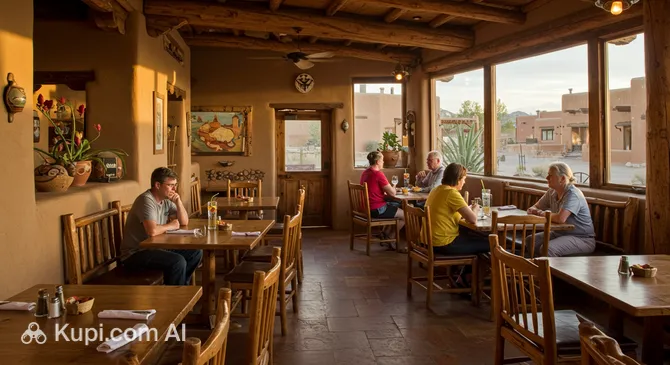
Another culinary gem worth noting is La Cueva Cafe. This small but very popular spot is known for its homey atmosphere and excellent enchiladas. Visiting these establishments allows you to gain a deeper understanding of Taos culture through its flavors and traditions, making your journey truly complete and memorable.

Local Cuisine

The culinary palette of Taos is a true feast of flavors, where Native American, Spanish, and Mexican traditions are harmoniously intertwined. The main hero of the local table remains the chili pepper, grown on neighboring farms. In any establishment, you might be asked: "Red or green?", referring to the sauce. If you can't decide, feel free to answer "Christmas"—and you'll be served a dish smothered in both types of sauce, allowing you to experience the full New Mexican gastronomic flavor.

Among the essential dishes to try are enchiladas (often made with blue corn flour), hearty tamales, and burritos filled with fresh local ingredients. For dessert, be sure to order sopapillas—lightly fried puffs of dough traditionally eaten drizzled with local honey. This simple yet incredibly tasty treat is the perfect way to finish a spicy meal.

The town is famous for its cozy establishments where a homey atmosphere prevails. For example, the popular La Cueva Cafe is known for its attention to detail and use of only fresh ingredients, making it a great place to get acquainted with authentic cuisine. Tourists are also invariably drawn to Orlando’s—a colorful restaurant where you can sample the best examples of New Mexican cooking surrounded by vibrant decor.

La Cueva Cafe. Illustration.
Source: Kupi.com AI

Traveler photos:

The food culture in Taos is not limited to restaurants. Farmers' markets play a huge role, where you can buy organic vegetables, homemade cheeses, and artisanal products. Culinary festivals and harvest days take place here regularly, turning food tasting into a real adventure. Additionally, it's worth stopping by local bakeries like Michael’s Kitchen, famous for their pies and fresh baked goods.

As for drinks, the undisputed regional favorite is the margarita, prepared here in dozens of variations, often with the addition of local fruits or even jalapeño peppers. Beer lovers should pay attention to products from local craft breweries, which have been growing rapidly in recent years, offering varieties with the unique character of the high-desert highlands. Among non-alcoholic beverages, horchata—a refreshing rice-based drink with cinnamon—is popular.

Travel Tips

A trip to Taos promises to be an unforgettable adventure, but to ensure nothing distracts you from the magic of this place, it is worth preparing for local characteristics in advance. We have gathered some important recommendations to help make your trip as comfortable, safe, and fulfilling as possible.

  1. Clothing and Climate. The main rule in Taos is layering. Due to its high-altitude location (over 7,000 feet), the weather here is changeable: even after a hot summer day, the evening can bring a chill. Be sure to bring comfortable closed-toe shoes for walking on the dirt paths of Taos Pueblo and mountain trails, as well as sunglasses and a hat—the sun at this altitude is very intense in any season.
  2. Transportation Accessibility. While the historic center is easy to navigate on foot or via the colorful Chile Line buses, for a full exploration of the surroundings (such as trips to the Gorge Bridge or the mountains), renting a car is highly recommended. Taxi services and apps like Uber operate here, but the number of cars is limited, and wait times can be long.
  3. Finance and Tipping. Credit cards are accepted in most places, but always have cash dollars in small bills with you. You will need them to buy souvenirs from local artisans, pay for entry to certain parts of the Pueblo, or for tips. In the USA, it is customary to leave a tip of 15–20% of the check amount in restaurants and taxis.
  4. Health and Altitude. Taos is located high above sea level, so tourists should keep the risk of altitude sickness in mind. Drink more water than usual, use moisturizer (the air is very dry), and don't forget sunscreen even in winter. Major pharmacy chains are in town, but there are few 24-hour points, so it's better to have a basic first-aid kit with you.
  5. Communication and Language. The main language of communication is English, but many locals speak Spanish, and knowing a couple of greeting phrases will be received warmly. Wi-Fi is available in most hotels and cafes, however, in canyons and the national forest, mobile connection often drops—download offline maps in advance.
  6. Local Etiquette. When visiting Taos Pueblo, remember that it is a living settlement with a thousand-year history, not just a backdrop. Show respect: always ask permission before photographing local residents and do not enter areas marked with "Restricted" signs, as they may have sacred significance.
  7. What to Avoid. Don't rush things or demand instant service. A special concept of time prevails here—"Taos Time"—implying a more measured and relaxed pace of life. Attempts to rush staff in a restaurant or store may be perceived as rudeness.
  8. Useful Hack. In winter and early spring, mountain roads can be difficult. If you plan a trip during this period, make sure your rental car is equipped with four-wheel drive or you have snow chains, especially if you are heading to the ski resort.

Taos is a place where it is worth slowing down and trusting the flow of life. By following these simple tips, you can easily blend into the town's unique atmosphere, avoid minor mishaps, and take home only the warmest memories of New Mexican hospitality.

Entertainment & Nightlife

Nightlife in Taos is significantly different from that of noisy metropolises. You won't find neon signs for massive nightclubs or 24-hour discos here. Instead, the town offers a cozy, bohemian atmosphere where evening entertainment is centered around live music, craft cocktails, and soulful conversations under the New Mexico starlit sky. The main activity thrives in the historic center, around Taos Plaza and its adjacent streets.

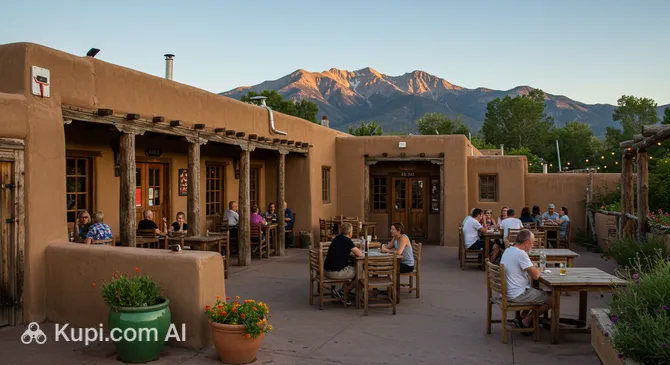
An evening in Taos usually begins with a leisurely dinner. One of the most colorful places, perfect for starting your nightly route, is Orlando’s restaurant. This establishment is famous not only for its food but also for its lively patio atmosphere, where both tourists and locals often gather. Here, you can enjoy an excellent margarita and get into the town's relaxed rhythm.

Orlando's. Illustration.
Source: Kupi.com AI

Traveler photos:

For those who prefer a quieter and more intimate setting, La Cueva Cafe is an excellent choice. This spot is suitable for a romantic evening or a quiet meeting with friends before heading out to listen to music. The Taos music scene is the heart of its nightlife. In many bars and historic hotels (such as the famous Alley Cantina or the Adobe Bar at the Taos Inn), local bands perform almost every night, playing everything from blues and jazz to country and folk.

During the summer season, Kit Carson Park becomes a major hub. This venue regularly transforms into an open-air concert arena, hosting music festivals and performances by well-known artists. Attending such a concert at sunset is one of the best ways to feel the true magic of Taos.

Practical Tips and Safety:

  • Opening Hours: Nightlife here ends quite early. Most restaurants close their kitchens by 9:00 PM – 10:00 PM, and bars usually stay open until midnight or 1:00 AM. Plan your evening in advance.
  • Dress Code: "Taos casual" is the style here—think jeans, comfortable boots, and fleece jackets. Comfort and individuality are valued over pretense. You can wear casual clothes even in the most popular spots.
  • Transportation: This is the main nuance. It is impossible to hail a taxi on the street at night, and services like Uber can be unavailable or have very long wait times. If you plan to consume alcohol, arrange for a transfer in advance or choose accommodation within walking distance of the center.
  • Safety: The historic center of Taos is considered safe for evening walks; however, streets can be poorly lit. It is recommended to stick to the main paths and avoid walking alone in remote alleys.

If you are looking for daytime entertainment, Taos offers a rich cultural program. The town is saturated with art galleries, museums, and craft workshops that stay open until evening. Scenic walks in the surrounding areas and visits to historic pueblos are also popular, allowing for a harmonious blend of educational activities by day and relaxed fun by night.

Parks & Museums

Despite the desert landscapes of New Mexico, Taos surprises travelers with its green spaces and an incredibly high concentration of cultural sites. The town and its surroundings offer a perfect balance between outdoor walks and immersion in the region's rich artistic heritage, where Indigenous, Spanish, and Anglo-American traditions intertwine.

The heart of outdoor urban life is Kit Carson Park. This cozy space in the town center features shaded paths, sports fields, and picnic areas. Tourists come here not only for relaxation but also to touch Wild West history: the grounds include an old cemetery where the legendary scout Kit Carson himself is buried. For lovers of wilder nature, the Carson National Forest surrounding the town will be a true discovery. These are millions of acres of forests and mountains, offering endless opportunities for hiking, bird watching, and enjoying the silence away from civilization.

The museum scene in Taos deserves special attention, as the town has long held the status of a world-class art colony. Be sure to visit the Taos Art Museum at Fechin House. This place is unique not only for its collection of paintings by the Taos Society of Artists but also for the building itself: the house was built by the Russian-American artist Nikolai Fechin and decorated with stunning wood carvings created by his own hands. Another important stop is the Millicent Rogers Museum, which houses an impressive collection of turquoise jewelry, pottery, and textiles reflecting the aesthetics and crafts of Native American and Hispanic settlers.

Among the historical sites, the Hacienda de los Martinez stands out. It is one of the few surviving examples of Spanish colonial period architecture, functioning as a living museum. Walking through its rooms and courtyards allows one to imagine the harsh daily life of the first settlers on the frontier at the beginning of the 19th century.

If you are looking for an unusual experience, head just outside the town to the famous "Earthships." Although not a classic museum, this colony of autonomous, whimsical eco-homes built from recycled materials makes an indelible impression and demonstrates an alternative view of future architecture in harmony with nature.

Getting Around

The public transportation system in Taos is quite compact and primarily focused on bus services. The main operator within the city is the Chile Line. These buses run along key routes, connecting the historic center, shopping areas, and popular tourist spots. In the winter season, special routes are launched connecting the town with the Taos Ski Valley resort, making them indispensable for skiers and snowboarders who do not wish to drive.

A unique feature of the region is the NCRTD bus network, which locals call the "Blue Buses." They provide connections not only within the district but also link Taos with neighboring settlements and even the city of Santa Fe. The main advantage for travelers is that fares on all NCRTD routes are completely free. This makes them an excellent option for budget trips around the area.

Fares on the Chile Line city buses (if the route is not a promotional or free one) are paid in cash upon boarding. The cost of a single trip is symbolic, and all-day passes are also available. It is important to remember that drivers do not give change, so tourists need to prepare small bills and coins in advance for exact change. Tickets can be purchased directly on the bus.

For comfortable use of transportation, we recommend downloading schedules in advance from the official websites of the carriers or picking up paper brochures at tourist centers. Buses do not run as frequently as in large cities, and many routes end quite early in the evening. Stops are marked with special signs, but "flagging down" a bus on the road is not customary here—boarding takes place only at designated locations.

As an alternative to public transport, many tourists choose to rent a car. This is the most reliable way to reach remote natural attractions, such as the Rio Grande Gorge Bridge. Taxi services and apps like Uber or Lyft operate in the town, but the number of cars is limited, and wait times can be significant. In the warm season, bike rentals are popular, allowing you to explore the compact historic center at a convenient pace.

Accommodation

Staying in Taos is not just a place to spend the night, but an extension of the immersion into the unique atmosphere of the Southwest. The town's hotel scene is notable for its lack of faceless skyscrapers; instead, travelers are offered cozy historic inns, colorful pueblo-style boutique hotels, bed and breakfasts (B&Bs), and eco-lodges. The range of options is wide: from budget motels along the main roads to world-class luxury spa resorts.

When choosing an area to stay, it is important to consider the purpose of your visit. Most tourists prefer to stay in the historic center, within walking distance of Taos Plaza. This allows you to visit museums, galleries, and restaurants without needing to get behind the wheel every time. If your primary goal is winter sports or mountain trekking, it is wiser to choose accommodation in the Taos Ski Valley area, located about a 30-minute drive from the town, directly in the mountains.

A feature of the local housing stock is the architectural style. Many hotels are located in restored adobe buildings with centuries of history, where guest rooms may feature traditional "kiva" fireplaces and ceilings with wooden beams (vigas). This creates a unique coziness rarely found in chain hotels.

Booking Tip: Taos is a popular destination year-round, but peak loads occur during the summer months (art festivals) and the ski season (winter). During these times, the best value-for-money options are snapped up months in advance. We strongly recommend booking your accommodation early, especially if you plan a trip for the Christmas holidays or during the fall foliage season.

Price ranges in the town vary from budget (inexpensive motels and hostels) to premium (luxury eco-resorts). Booking is available through all popular international online platforms; however, many small family-owned hotels offer better rates or special packages when booking directly through their own websites.

Nearby Cities

For those looking to explore the surroundings, Taos serves as an excellent starting point for day trips to several interesting nearby places. Its unique location in the state of New Mexico, USA, allows for easy access to cities with rich history and vibrant culture.

Just an hour and a half away is Santa Fe, the state capital, known for its distinctive Pueblo-style and Spanish Colonial architecture, as well as a thriving art scene. Slightly further away is Albuquerque, New Mexico's largest city, offering a mix of modern entertainment and the historic charm of Old Town.

CityPopulationDistance
Angel Fire1 30026 km
Espanola10 49265 km
Santa Fe99 43986 km
Los Alamos13 27088 km
Raton6 000115 km

These nearby destinations allow for a deeper dive into the diverse culture, history, and picturesque landscapes of this unique region of America.

Shopping & Souvenirs

General Overview: Shopping in Taos is not just a trip to the stores, but a true cultural adventure. Unlike metropolises with their standardized shopping malls, this town in the USA offers a unique experience of immersion into the world of arts and crafts. Taos is world-famous as an art colony, so the main points of interest here are art galleries, local artist studios, and shops with authentic goods. You will find everything here: from fine art to cozy souvenirs steeped in the spirit of the Southwest.

Main Shopping Areas and Streets: The heart of the town's commercial life is the historic Taos Plaza and its adjacent blocks. Here, in historic buildings, you'll find dozens of shops selling jewelry, clothing, and souvenirs. A stroll along charming Bent Street, located just a block from the Plaza, is a must. It is famous for its boutiques, bookstores, and art salons, where a particularly cozy atmosphere prevails. Ledoux Street, known for its galleries, is also worth noting.

Shopping Centers: If you are looking for large malls with international chain brands, Taos might disappoint you—there are practically none here, which allows the town to maintain its original charm. Trade is concentrated in small shopping rows and individual stores. However, for essential goods, you can visit the Cruz Alta Plaza area, where supermarkets and more conventional stores are located, though they rarely represent tourist interest.

Markets: One of the most vibrant attractions is the Taos Farmers Market, which usually operates on Saturdays during the warm season at Taos Plaza. It is the perfect place to buy fresh local produce, honey, baked goods, and handmade crafts. The atmosphere here is always festive, often with live music. The town also periodically hosts flea markets and art fairs where you can find vintage items and unique crafts.

Souvenirs: From Taos, it is worth bringing back items that reflect the rich history of the region. First, look for sterling silver jewelry with turquoise made by Native American artisans—this is a hallmark of New Mexico. Traditional Pueblo pottery and handmade rugs are also popular. For food lovers, it is essential to purchase red or green chili (powdered or dried), pinon nuts, and local coffee. Art connoisseurs will find paintings and sculptures here to suit any taste and budget.

Hours and Payment: Most shops and galleries in the town center open around 10:00 AM and work until 5:00 PM or 6:00 PM. On Sundays, many shops may close earlier or not open at all. Credit cards (Visa, MasterCard, AmEx) are accepted almost everywhere; however, at markets and when buying small souvenirs, cash dollars will come in very handy. Apple Pay and Google Pay are becoming more popular, but a card or cash is more reliable.

Tax Free: In the United States, there is no federal VAT refund system (Tax Free) for tourists common in Europe. Sales tax in New Mexico is added to the cost of the goods at the checkout and is not refundable upon departure from the country. Keep this in mind when planning your shopping budget.

Reached the end of the page?

That means the route is fully explored