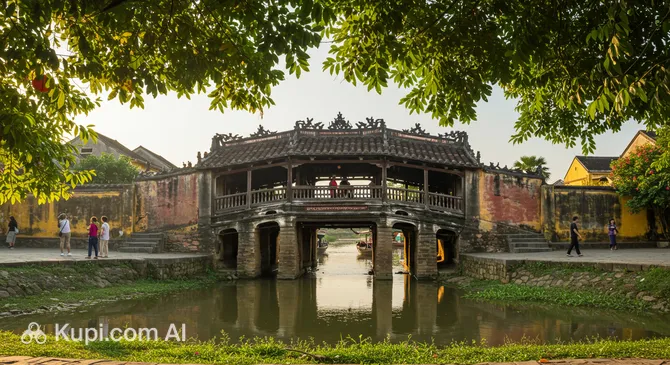
The Japanese Covered Bridge (Chua Cau) is more than just a crossing; it is a true symbol of Hoi An and one of the most recognizable landmarks in Vietnam. Built in the late 16th century, this unique structure connects streets that once housed Japanese and Chinese merchant communities. The bridge has become an embodiment of the cultural fusion and harmony that still define the atmosphere of this ancient port city today.
Constructed over 400 years ago, the bridge is a magnificent example of architecture, blending Japanese, Chinese, and Vietnamese styles. The structure is made of wood, and its curved tiled roof provides reliable shelter from the sun and rain. Both ends of the bridge are guarded by pairs of sculptures: dogs on one side and monkeys on the other. According to legend, construction began in the Year of the Monkey and was completed in the Year of the Dog according to the lunar calendar.
Traveler photos:
Inside the bridge, there is not only a covered gallery but also a small temple dedicated to a deity believed to control the weather and protect sailors. This makes the Japanese Bridge not just an engineering feat but an important spiritual center. Today, as it was centuries ago, it remains a magnet for visitors, where you can feel the breath of history and take some of the most beautiful photos in Hoi An. Its image even graces the Vietnamese 20,000 dong banknote.