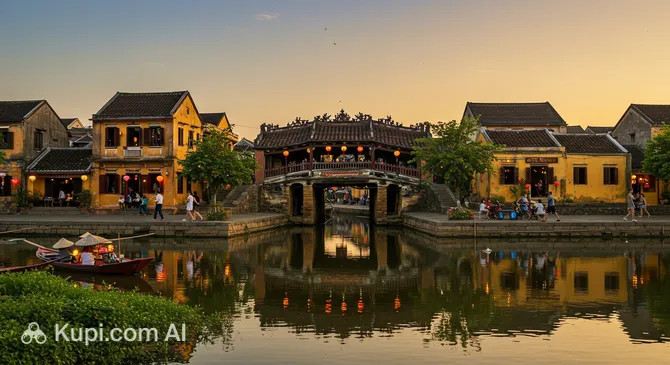
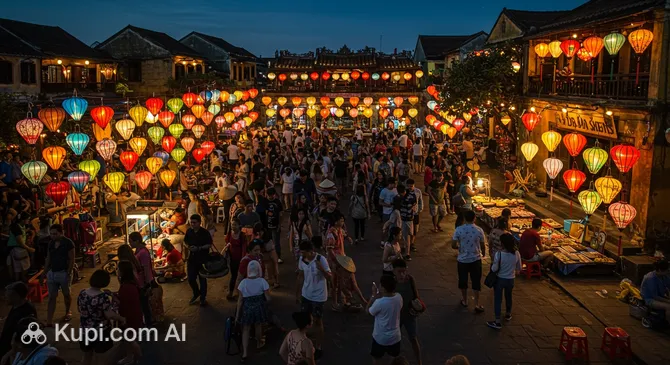
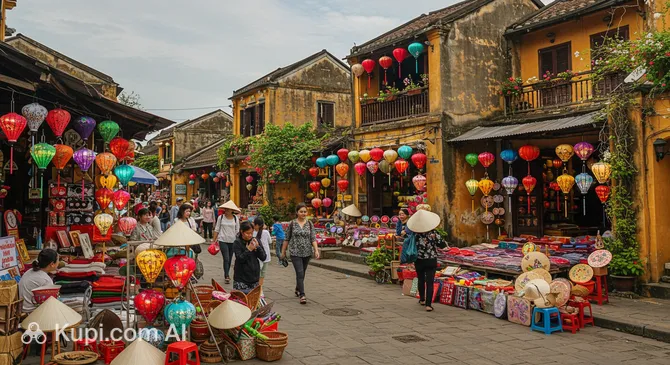
Hoi An is a charming ancient city located in central Vietnam, in Quang Nam province. Once a bustling Southeast Asian trading port (15th–19th centuries), today Hoi An attracts travelers from all over the world with its unique atmosphere, beautifully preserved architecture listed as a UNESCO World Heritage site, and tranquil pace of life. The city stretches along the banks of the Thu Bon River, near its confluence with the South China Sea. The population of Hoi An is approximately 120,000 people.
Hoi An. Illustration.
Source: Kupi.com AI
The heart of the city is its Ancient Town, where every corner breathes history. Here, you can wander for hours through narrow streets, admiring old houses with tiled roofs, Chinese temples, and French colonial buildings. One of Hoi An's hallmarks is the famous 16th-century Japanese Covered Bridge (Chua Cau). The city is also famous for its numerous tailor shops, where you can order custom-made clothing in as little as 24 hours. In the evening, Hoi An is transformed as hundreds of colorful silk lanterns are lit, creating a truly magical atmosphere.
Hoi An is not just a museum city; it is a place where you can slow down, enjoy delicious local cuisine, take a boat ride on the river, or go on a bike ride through the surrounding rice fields and villages. A visit to Hoi An will leave you with the warmest and most unforgettable impressions.
You can find more interesting facts on the Hoi An history page.
Weather Overview
When planning a trip to Hoi An, you should consider the characteristics of its tropical monsoon climate. Expect hot summers with temperatures often exceeding 30–33°C, especially from May to August (for example, the average June high is 33.8°C), and milder winters from December to February, when average temperatures stay around 22–24°C (the average January temperature is 21.9°C). The pattern of precipitation is also distinct: the main rainy season falls in the autumn months, while spring is the driest period.
The highest amount of rainfall occurs from September to December, with peaks in October (18 mm, 27 rainy days) and November (16 mm, 24 rainy days). During these months, you should be prepared for frequent rain. In contrast, February and March are the driest months of the year, with minimal rainfall (only about 2 mm) and a small number of rainy days (10–12), making them an ideal time to visit Hoi An. You can learn more about weather conditions in different seasons on the Hoi An Climate page.
Average monthly temperature
Average monthly precipitation
Interesting Facts
In addition to its famous lanterns and ancient architecture, Hoi An hides many surprising details and stories that not all travelers know. This city is full of charming secrets that make it even more alluring.
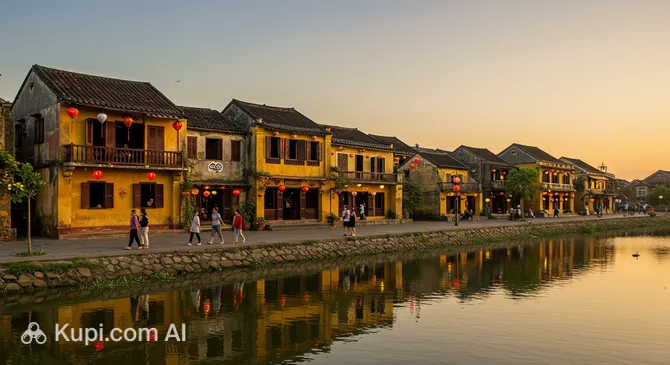
A City in Yellow: Most buildings in Hoi An's Ancient Town are painted in a distinctive warm yellow color. This is not just an aesthetic choice: in Vietnam, yellow is traditionally considered the color of royalty, symbolizing luck, wealth, and prosperity.
The Secret of Cao Lau Noodles: The unique taste of Hoi An's signature dish, Cao Lau noodles, is legendarily attributed to the use of water from the ancient Ba Le well and ash from special trees on the nearby Cham Islands to create the lye solution. It is believed that this is why authentic Cao Lau is almost impossible to perfectly recreate outside of Hoi An.
"Eyes" of the Houses: Look closely at the facades of old merchant houses: above the main entrances, you can often spot "mat cua" or "house eyes." These architectural elements, usually in the form of wooden circles or carved patterns, are believed to protect the residents from evil spirits and bring good luck.
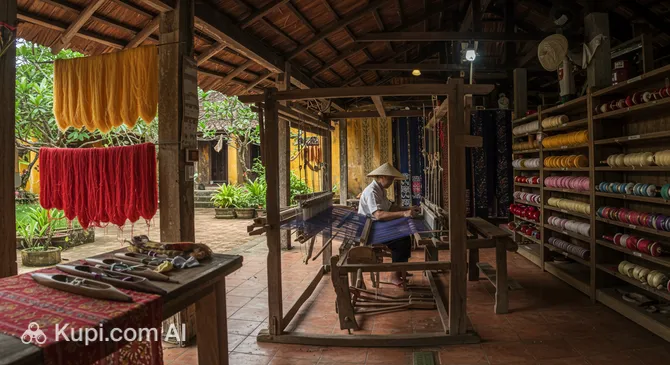
Living Heritage of Silk Weaving: Hoi An was an important port on the ancient Silk Road. Today, you can still witness the traditional silk-making process, from raising silkworms to producing the finished fabric, at places like the Hoi An Silk Village. This ancient tradition is carefully passed down from generation to generation.
Hoi An Silk Village. Illustration.
Source: Kupi.com AI
Traveler photos:
How to Get There
There are several ways to reach the charming city of Hoi An. The most popular and convenient method for most tourists is flying to one of the nearest airports, followed by a transfer by taxi, bus, or rental car. Hoi An itself does not have its own airport or a major railway station, so the neighboring city of Da Nang serves as the primary transportation hub for arrivals.
The main and most convenient option is a flight to Da Nang International Airport (DAD). This large international airport is located in Da Nang, approximately 23 km north of Hoi An. A taxi ride or a pre-booked transfer from the airport to Hoi An usually takes about 45–60 minutes. Da Nang Airport handles many international and domestic flights, making it the main transport hub for visiting central Vietnam.
Smaller but also accessible airports are located further away. Chu Lai International Airport (VCL) is located in Tam Ky, about 66 km south of Hoi An (about 1.5–2 hours drive). Phu Bai International Airport (HUI) in Hue is about 88 km to the north, which will take approximately 2–2.5 hours to reach Hoi An. These airports mainly serve domestic flights and some international routes.
For convenience, here is a summary of the airports you can use to reach Hoi An:
In addition to flying and transferring, you can also reach Hoi An by intercity bus from major cities in Vietnam, such as Da Nang, Hue, or Nha Trang. This is generally a more budget-friendly option, but it takes longer. There is no direct rail connection to Hoi An; the nearest major railway station is in Da Nang, from where Hoi An is easily reached by taxi or bus.
Main Attractions
Hoi An, with its rich history and unique atmosphere, offers many interesting places to explore. Several key attractions stand out and are must-sees when exploring this charming Vietnamese city.
The heart of Hoi An is undoubtedly the UNESCO World Heritage-listed Hoi An Ancient Town. It is a perfectly preserved example of a Southeast Asian trading port from the 15th to 19th centuries. Visitors are drawn to the narrow winding streets, traditional wooden houses with tiled roofs, Chinese temples, ancient wells, and the unique aura of the past. A walk through the Ancient Town is a true immersion into history, where every corner tells its own legend and charms with its authenticity.
Hoi An Ancient Town. Illustration.
Source: Kupi.com AI
Traveler photos:
One of Hoi An's most recognizable symbols is the famous Japanese Covered Bridge (Chua Cau). Built in the early 17th century by the Japanese community, it was intended to connect the Japanese and Chinese quarters of the city. The bridge is unique for its graceful architecture and a small temple dedicated to the deity of weather, located right inside it. It is not just a crossing, but a valuable historical monument embodying cultural fusion and is a mandatory spot for visiting and photography.
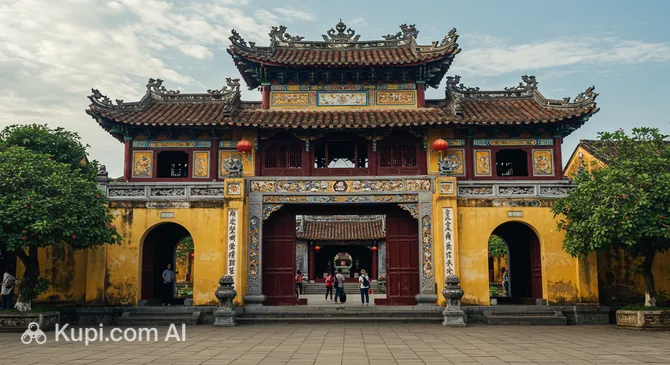
Among the many Chinese assembly halls in Hoi An, the Fujian Assembly Hall (Phuc Kien) particularly stands out. Originally built as a meeting place for Chinese merchants from Fujian province, it was later converted into a temple dedicated to the sea goddess Thien Hau, the protector of sailors. The hall impresses with its bright, richly decorated architecture, intricate wood carvings, ceramic sculptures, and peaceful courtyards with fountains and plants. It is a wonderful place to experience Hoi An's Chinese cultural heritage.
Fujian Assembly Hall. Illustration.
Source: Kupi.com AI
Traveler photos:
To better understand the lifestyle of wealthy merchants of the past, it is worth visiting the Tan Ky Old House. This house, built over two centuries ago, belonged to a Vietnamese merchant and has been perfectly preserved, passed down through generations. Its architecture is a harmonious blend of Vietnamese, Chinese, and Japanese styles, reflecting Hoi An's multicultural past. Inside, you can see antique furniture, household items, family heirlooms, and learn about the family history and the city's trade relations.
As darkness falls, Hoi An is transformed, and one of the most vibrant and atmospheric places becomes the Hoi An Night Market. Located on An Hoi Island, just across the river from the Ancient Town, it beckons visitors with hundreds of colorful silk lanterns that create a truly magical atmosphere. Here you can buy a variety of souvenirs, local crafts, silk and linen clothing, and, of course, try Hoi An's famous street food. It is an excellent place for an evening stroll, shopping, and soaking up the local flavor.
Hoi An Night Market. Illustration.
Source: Kupi.com AI
Traveler photos:
Local Cuisine
The gastronomy of Hoi An is a true journey for the taste buds, attracting tourists with its authenticity, fresh ingredients, and unique dishes that are hard to find anywhere else in Vietnam. The city's cuisine reflects its rich history as a trading port, absorbing Chinese, Japanese, and European influences while maintaining its own distinct local flavor. Everyone will find something to their liking here: from exquisite restaurant dishes to aromatic street food.
Be sure to try the famous local specialties. The hallmark of Hoi An is Cao Lau – hearty noodles with pork slices, fresh herbs, crispy croutons, and a special sauce, the secret of which, according to legend, lies in using water from the local Ba Le well. Equally popular is Hoi An Chicken Rice (Com Ga Hoi An) – tender rice cooked in chicken broth, served with boiled or fried chicken, herbs, and a savory sauce. Also worth noting are Mi Quang – wide turmeric rice noodles with shrimp, pork, and peanuts, and the delicate "White Rose" (Banh Bao Banh Vac) – steamed rice flour dumplings filled with shrimp or pork, shaped like flowers.
As for drinks, traditional Vietnamese coffee (ca phe sua da) is popular in Hoi An – strong, aromatic, and often served with condensed milk and ice. On a hot day, fresh exotic fruit juices, smoothies, or nuoc mia (sugarcane juice) are very refreshing. Beer lovers can try local brands like Bia Saigon or Larue. Many cafes and restaurants also offer a variety of teas and cocktails.
The dining culture in Hoi An is very diverse. Many authentic dishes can be tasted right on the street at numerous food stalls, which are especially lively in the evenings. You can immerse yourself in the atmosphere of local life and try the freshest products at the Hoi An Market, which also houses small eateries. In addition to street food, the city has many restaurants for every taste and budget – from cozy family establishments like MẸT Hoi An, offering traditional dishes with a modern presentation, to more refined restaurants. For those who want to get to know the local cuisine more deeply, numerous cooking classes are available.
Hoi An Market. Illustration.
Source: Kupi.com AI
Traveler photos:
Travel Tips
Planning a trip to amazing Hoi An? To make your journey through this ancient city in Vietnam as comfortable and memorable as possible, we have gathered some practical tips for you.
Clothing and Essentials:Hoi An has a tropical climate, so choose light, breathable clothing made from natural materials. The rainy season lasts from September to December, so a raincoat or umbrella will be useful. Be sure to bring comfortable shoes for long walks on the cobblestone streets of the Ancient Town, sunscreen, a hat, and repellent. Visiting temples and pagodas will require clothing that covers your shoulders and knees. Don't forget a universal power adapter.
Transport: The historical center of Hoi An is best explored on foot or by bicycle – this is the most authentic way to feel the city's atmosphere. Bicycles can often be rented from your hotel or at numerous rental points. Motorcycle taxis (xe om) are also popular for short trips, as are regular taxis. The Grab app (similar to Uber) also works here. Renting a car to get around the city itself is usually not necessary.
Finances: The local currency is the Vietnamese Dong (VND). You can exchange money at banks, official exchange offices, or some jewelry stores (sometimes they offer a favorable rate). Hotels, large restaurants, and shops often accept bank cards, but it's better to have cash for purchases in markets, small shops, and from street vendors. ATMs are quite common. An approximate daily budget (excluding accommodation) can range from 700,000 to 1,500,000 VND per person. Tipping is not strictly mandatory but is always welcomed for good service (usually 5–10% in restaurants if a service charge is not included in the bill).
Health and Safety: There are pharmacies in Hoi An where you can buy basic medications, but not all of them operate 24/7. In case of serious health problems, it is better to seek medical facilities in neighboring Da Nang, where the level of service is higher. The city is considered quite safe for tourists; however, standard precautions should be taken: watch your belongings in crowded places, especially in markets. Drink only bottled water.
Communication: The official language is Vietnamese. In the tourist areas of Hoi An, many locals, especially the youth and service workers, speak English. Learn a few simple phrases in Vietnamese, such as "Xin chào" (Hello) and "Cảm ơn" (Thank you) – it is always appreciated. You can buy a local SIM card with internet access upon arrival at the airport or in the city. Wi-Fi is available in most hotels, cafes, and restaurants.
Local Etiquette: Vietnamese people are friendly and hospitable. A smile and a polite manner will help you connect. When visiting temples and pagodas, behave respectfully and do not talk loudly. It is customary to bargain in markets, but do so with a smile and without aggression. Always ask permission before taking photos of local residents.
What to Avoid: You should not touch the heads of local residents, especially children, as the head is considered a sacred part of the body in Vietnamese culture. Also, avoid public displays of strong negative emotions or raising your voice – it is considered impolite.
Additional Tip:Hoi An is famous for its tailors. If you have a few days, be sure to take the opportunity to have custom clothes or shoes made – the quality and prices will pleasantly surprise you. And if your trip coincides with the full moon, don't miss the Lantern Festival, when the Ancient Town is lit up by thousands of flickering lights, creating a truly magical atmosphere.
We hope these tips help you better prepare for your trip and fully enjoy every moment in charming Hoi An, a city of ancient traditions, bright lanterns, and a unique atmosphere!
Entertainment & Nightlife
When the sun sets, Hoi An transforms as its famous lanterns illuminate the ancient streets, creating a truly magical atmosphere. The nightlife here is unlike that of bustling metropolises; it is more refined, relaxed, and centered around charming bars, cozy restaurants, and, of course, the famous night market. The main centers of evening entertainment are concentrated in the Ancient Town, along the Thu Bon River waterfront, and on An Hoi Island, reached by a lantern-decorated bridge.
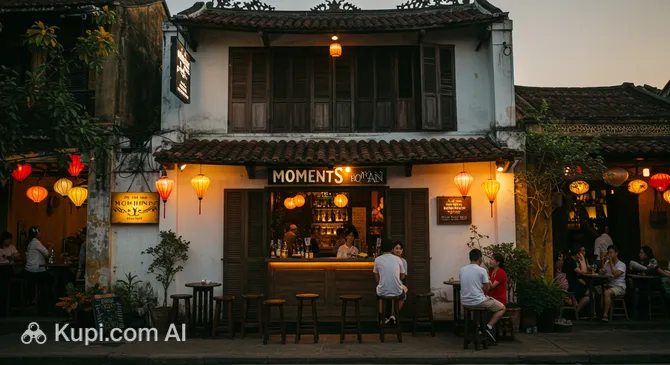
In Hoi An, you will find many bars to suit every taste: from quiet establishments overlooking the river, where you can enjoy a cocktail to the sound of live music, to livelier spots where younger crowds gather. Many bars offer happy hours and interesting signature drinks. Popular venues include Moments Hoi An, known for its pleasant atmosphere, or Mezcal Cocteleria, where you can try unusual cocktails. The atmosphere in most places is casual, and the dress code is usually informal. Bars and restaurants are generally open until late evening, with some working until midnight or slightly later, but there are few loud nightclubs that stay open until dawn.
Moments Hoi An. Illustration.
Source: Kupi.com AI
Traveler photos:
A mandatory item on the evening program is a visit to the Hoi An Night Market on An Hoi Island. Here you can not only buy souvenirs, local crafts, and silk lanterns but also try a variety of street food. The market comes alive at dusk and operates until approximately 10:00 PM – 11:00 PM. It is a great place for walking and immersing yourself in the local vibe.
Practical tips: The best time for evening walks and visiting bars is after 7:00 PM – 8:00 PM, when the daytime heat subsides and the city fills with lights. Prices in Hoi An's bars and restaurants are generally moderate. Moving around the Ancient Town at night is most convenient on foot, as many streets become pedestrian-only. For longer distances, you can use taxis or motorcycle taxis (Grab works well). Hoi An is considered a safe city for tourists, especially its central part. Nevertheless, you should always take basic precautions, especially after dark, and use official taxis or trusted apps.
While the main emphasis in Hoi An is on its evening charm, there is also plenty to do during the day. You can visit interesting museums, such as the Precious Heritage Art Gallery Museum or the Thanh Ha Terracotta Park. For family fun and vivid impressions, the Hoi An Memories Land theme park is a great choice, featuring colorful shows that tell the story of Vietnam's history and culture. During the day, you can also join cooking classes, take bicycle tours of the countryside, or relax on An Bang Beach.
Parks & Museums
Hoi An offers its guests not only an immersion into history through its famous architecture but also opportunities for outdoor relaxation and a glimpse into its rich cultural heritage through unique museums and galleries. This city skillfully combines ancient charm with vibrant modern cultural spaces and picturesque corners of nature.
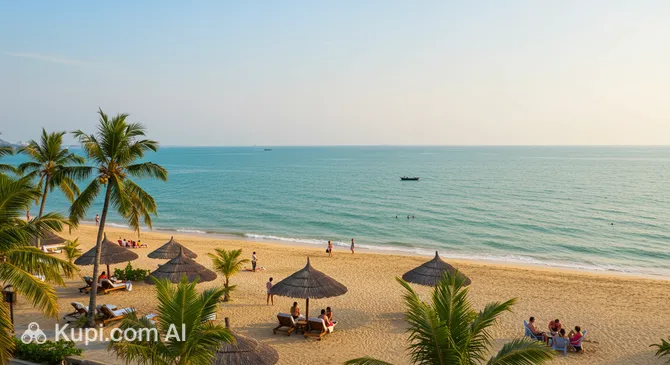
Although Hoi An is primarily known for its historical center, there are also wonderful places for outdoor recreation. One of the most popular is An Bang Beach, located just a few kilometers from the city center. This long sandy beach with clear water and a gentle slope into the sea is ideal for swimming, sunbathing, and water sports. Many cozy cafes and restaurants are located along the beach, where you can enjoy fresh seafood. For those seeking a more secluded holiday, the outskirts of Hoi An offer picturesque rice fields and coconut groves, perfect for cycling and experiencing rural life in Vietnam.
An Bang Beach. Illustration.
Source: Kupi.com AI
Traveler photos:
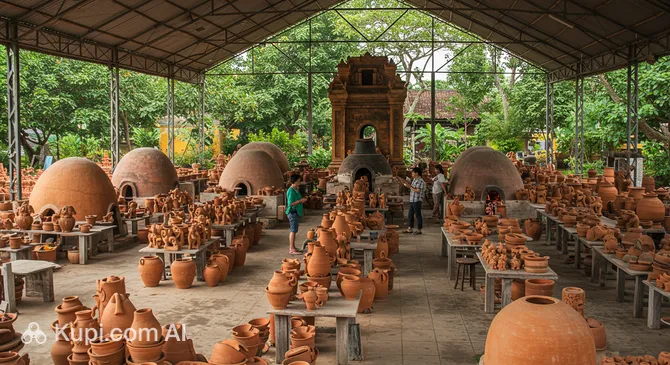
To gain a deeper understanding of Hoi An's culture and history, it is worth visiting its museums. A unique site is the Thanh Ha Terracotta Park, located in the pottery village of the same name. This open-air museum showcases impressive terracotta sculptures depicting world architectural masterpieces and scenes from Vietnamese life, and also tells the history of the pottery craft that has flourished in this region for centuries. Visitors can not only see the exhibits but also try their hand at pottery, making the visit particularly interactive and memorable.
Thanh Ha Terracotta Park. Illustration.
Source: Kupi.com AI
Traveler photos:
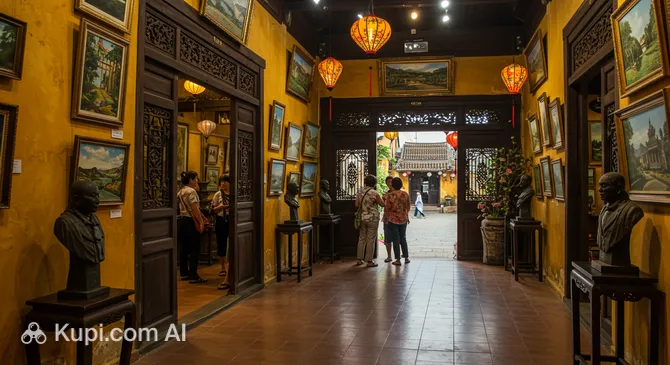
Another gem is the Precious Heritage Art Gallery Museum by photographer Réhahn. It features a stunning collection of photographs, costumes, and stories of Vietnam's ethnic minorities. The exhibition provides a glimpse into the unique culture and traditions of the country's various peoples, many of whom are on the verge of extinction. This place will not leave those interested in ethnography and authentic culture indifferent, offering a deep and touching immersion into the diversity of Vietnamese heritage.
Precious Heritage Art Gallery Museum. Illustration.
Source: Kupi.com AI
Traveler photos:
The Hoi An Ancient Town itself can be considered a vast open-air museum. Its old merchant houses, assembly halls of Chinese communities, and, of course, the famous Japanese Covered Bridge are living witnesses to the city's rich history. Many of these buildings are open to the public and function as small museums, showcasing the daily life and culture of past centuries, allowing tourists to literally touch history.
For those looking for vivid impressions and cultural shows, pay attention to the Hoi An Memories Land theme park. It hosts grand performances telling the story of the history and culture of Hoi An and Vietnam as a whole, using modern technology, impressive sets, and hundreds of performers. It is a great place for family leisure and immersion into the atmosphere of Vietnamese legends, offering an unforgettable spectacle.
For an authentic experience, take a bicycle ride through the rural outskirts of Hoi An, exploring rice fields, vegetable gardens, and small villages. This will allow you to see the daily life of locals and enjoy the tranquility of the Vietnamese countryside. Also, do not miss the opportunity to visit one of the craft villages, such as the Thanh Ha Pottery Village (where the Terracotta Park is located) or the Hoi An Silk Village, to learn about traditional crafts and perhaps purchase unique handmade souvenirs.
Getting Around
Getting around Hoi An is quite simple, especially in its compact historical center. The city does not have an extensive public transport system like a metro or trams, which is typical for small historic towns. The main emphasis here is on eco-friendly and leisurely ways to get around, allowing you to fully enjoy the atmosphere of the ancient port.
The main "modes of transport" in Hoi An Ancient Town are your own feet and bicycles. Most of the historic center is a pedestrian zone or a limited traffic zone, especially during certain hours, making walking and cycling the most convenient and pleasant ways to explore. Bicycles can be rented at many hotels, guest houses, and specialized rental points throughout the city. Rental costs are usually low, and it's a great way to reach more distant attractions or beaches like An Bang. No special passes are required – payment is made on a daily or hourly basis.
For longer trips or if you are traveling with luggage, taxis and motorcycle taxis (xe om) are at your service. Taxis can be found at stands or called by phone; most are equipped with meters. The Grab app is also popular in Hoi An for hailing taxis, allowing you to know the trip cost in advance. A motorcycle taxi (xe om) is a more budget-friendly and faster way to travel short to medium distances, especially in heavy traffic. It is customary to agree on the price with the motorcycle taxi driver in advance. Payment in both cases is usually made in cash, although some taxis may accept cards.
There are also local buses that connect Hoi An with neighboring cities, primarily Da Nang. This is the most economical way to get to Da Nang, but it may not be the most comfortable or fastest. The bus station in Hoi An is located slightly away from the tourist center. Tickets are usually bought directly from the conductor on the bus for cash. Buses are rarely used by tourists for travel solely within Hoi An itself.
Practical tips for tourists:
Be aware that in Hoi An Ancient Town, there are restrictions on motorized traffic during certain hours (usually morning and evening), when it becomes fully pedestrianized or accessible only to bicycles. Check this schedule upon arrival. Moving on foot or by bicycle through the narrow streets of the Ancient Town is not only convenient but also allows you to better see the architectural details and soak up the atmosphere. For trips to the beaches or the surrounding area, a bicycle is also an excellent choice, but if the distance is long, a taxi or Grab will be more comfortable. Always carry small amounts of cash to pay for fares, especially for motorcycle taxis and local buses.
Accommodation
Hoi An offers a wide range of accommodation options to suit the needs and budget of any traveler. You can find everything here: from budget hostels and cozy family homestays, where you can get a deeper look at local life, to stylish boutique hotels, many of which are located in beautifully restored historic buildings, mid-range hotels with a good range of services, and luxury resorts with pools and spas. Renting apartments and villas is also popular, especially for families or groups planning a long stay.
Choosing an area to stay in Hoi An depends on your preferences. Many tourists aim to stay directly in the Ancient Town or in its immediate vicinity to be within walking distance of the main attractions, restaurants, and shops. Staying here allows you to fully immerse yourself in the unique atmosphere of the ancient port. However, keep in mind that the heart of the Ancient Town can be noisier and accommodation prices are slightly higher. Quieter options can be found a bit further from the center, for example, in areas along the Thu Bon River or on the way to the beach. For beach lovers, the An Bang or Cua Dai beach areas are ideal choices, where resort hotels and villas with sea access are concentrated.
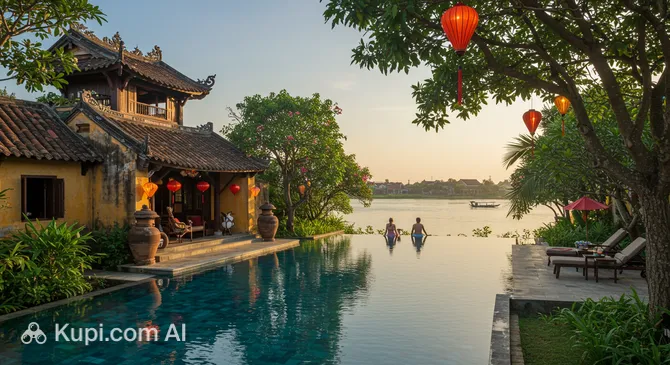
RiverTown Hoi An Resort & Spa. Illustration.
Source: Kupi.com AI
Traveler photos:
The price range for accommodation in Hoi An varies from very affordable to premium. Budget travelers can easily find a bed in a hostel or a room in a guest house, while those who appreciate comfort can choose from many mid-range and high-end hotels. Notable options include resort hotels such as RiverTown Hoi An Resort & Spa or Legacy Hoi An Resort. It is recommended to book your accommodation in advance, especially if your trip falls during the peak tourist season (usually the dry season from February to August) or during local holidays. The most common booking methods are popular online platforms (such as Booking.com, Agoda) or direct booking through hotel websites.
Nearby Cities
For those looking to explore the surrounding area, Hoi An serves as an excellent starting point for day trips to several interesting nearby locations. For example, you can head to bustling Da Nang, known for its modern bridges, beautiful beaches, and the Marble Mountains, or visit the ancient imperial capital of Hue with its majestic tombs and Citadel. These and other cities in the region offer unique experiences and are easily accessible from Hoi An.
These nearby destinations allow for a more complete picture of the diverse culture, history, and landscapes of central Vietnam, complementing the experience of Hoi An itself.
Shopping & Souvenirs
Hoi An is a true paradise for shopping lovers, especially those looking for unique handmade items, high-quality silk, and custom tailoring. This charming city is famous for its numerous tailor shops where you can have clothes made to your measurements, as well as colorful shops offering traditional souvenirs and handicrafts. Shopping in Hoi An is not just about buying things; it is a fascinating immersion into local culture and traditions.
Hoi An's main shopping arteries are concentrated in its heart – the Ancient Town. Walking along streets like Tran Phu, Nguyen Thai Hoc, and Le Loi, you will discover countless shops offering silk, clothing, shoes, leather goods, paintings, ceramics, and, of course, the famous Hoi An lanterns. The Thu Bon River waterfront is also brimming with shops and galleries where you can find interesting souvenirs and works of art.
While Hoi An is better known for its boutiques and markets, modern retail outlets can also be found here. For example, the Hoi An Pharmacy Shopping Center offers a more familiar shopping format with fixed prices, where you can purchase a variety of goods, including cosmetics, health products, and some souvenirs.
Pharmacy Shopping Center Hoi An. Illustration.
Source: Kupi.com AI
Traveler photos:
An integral part of the Hoi An shopping scene is its colorful markets. The central Hoi An Market is a bustling and lively place where you can buy fresh produce, spices, local delicacies, as well as clothing, fabrics, and souvenirs at affordable prices. In the evening, be sure to visit the Hoi An Night Market on An Hoi Island. It is famous for its huge selection of silk lanterns in all shapes and colors, as well as souvenirs, jewelry, and street food. The atmosphere here is truly magical, especially when hundreds of lanterns are lit.
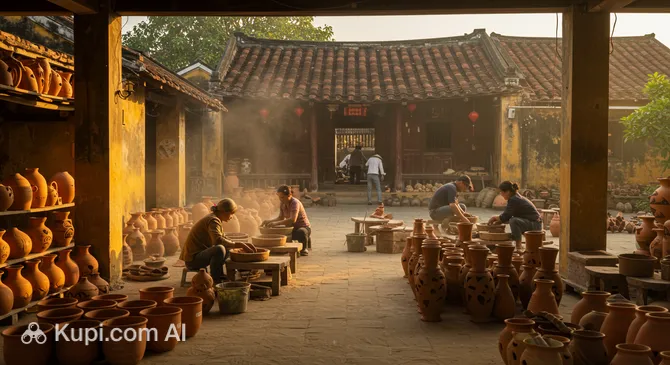
From Hoi An, it is worth bringing back something special that reflects the local flavor. Custom-made clothing is the city's hallmark; numerous tailor shops will sew you a suit, dress, or a traditional Vietnamese "ao dai" in just a couple of days. Silk products such as scarves, shawls, robes, and paintings can be found in the Hoi An Silk Village or in many shops in the Ancient Town. Of course, don't forget the silk lanterns – the symbol of Hoi An. Ceramic lovers will enjoy items from the Thanh Ha Pottery Village. Also popular are wood carvings, paintings by local artists, Vietnamese coffee and tea, spices, and traditional "non la" conical hats.
Thanh Ha Pottery Village. Illustration.
Source: Kupi.com AI
Traveler photos:
Most shops in Hoi An's Ancient Town are open from approximately 9:00–10:00 AM to 9:00–10:00 PM; some tailor shops may stay open longer. The Central Market starts early in the morning around 6:00 AM and closes in the afternoon, while the Night Market comes alive at dusk, from about 5:00 PM, and operates until 10:00–11:00 PM. The main currency for transactions is the Vietnamese Dong (VND). Cash is preferred in markets and small shops where bargaining is common. Larger shops, tailor shops, and hotels often accept credit cards (Visa, Mastercard). ATMs are quite common throughout the city.
For tourists in Vietnam, there is a VAT Refund system for goods purchased in shops participating in this program. If you plan on making major purchases, check with the seller about the possibility of arranging tax refund documents. This usually requires a certain minimum purchase amount and compliance with a number of conditions. Don't forget to keep your receipts and completed forms to present at the airport when leaving the country.