Support

Kon Tum

About

Kon Tum is a true emerald of Central Vietnam, nestled comfortably on the banks of the Dak Bla River. Surrounded by thick jungles, picturesque hills, and majestic mountain peaks, the city creates an atmosphere of seclusion and natural beauty. It serves as the administrative center of the province of the same name and a vital cultural crossroads of the region, where traditions blend harmoniously with modern life.

Kon Tum. Illustration.
Source: Kupi.com AI

Located in the heart of the Kon Tum province in the country's central highlands, the city is characterized by its high-altitude terrain. Thanks to this, it remains pleasantly cool even during the hottest months, and the air is filled with the freshness of the forests. With a population of about 140,000 people, Kon Tum remains an intimate and welcoming city where it is easy to feel the authentic spirit of the country.

Kon Tum attracts travelers with its unique atmosphere and opportunities for exploration. Here, you can visit ancient wooden churches built by French missionaries, learn about the culture of local ethnic minorities in their traditional villages with rong houses, or go on exciting treks through the surrounding jungles and coffee plantations. The city is also famous for its scenic landscapes and opportunities for ecotourism.

If you are looking for a place to escape the hustle and bustle of big cities, enjoy the beauty of nature, and get acquainted with an original culture, Kon Tum is an excellent choice. This city enchants with its slow pace, the warmth of the local residents, and a wonderful combination of history and modernity, inviting every guest to discover its unique charm.

You can find more interesting facts on the Kon Tum city history page.
Weather Overview

The weather in Kon Tum is characterized by a warm climate year-round. The average monthly temperature ranges from 21.5°C in December to 26.3°C in April. The rainy season is well-defined and occurs from May to October, with peak rainfall in July and September (up to 10 mm per month and up to 30 rainy days). The winter months, from December to February, are the driest, with minimal rainfall (0-1 mm) and only a few rainy days. Overall, expect hot and humid summers with heavy rainfall and drier, comfortably warm winters. You can learn more about weather conditions on the Kon Tum Climate page.

Average monthly temperature

Average monthly precipitation

Interesting Facts

Beyond its well-known attractions, Kon Tum hides many amazing stories and unique features. This city in the Central Highlands of Vietnam can surprise even the most seasoned traveler with its distinctive character.

Saint Mary's Cathedral of Kon Tum. Illustration.
Source: Kupi.com AI

Traveler photos:

  • Unique "Rong" Houses: Kon Tum and its surroundings are famous for traditional communal houses called "rong," belonging to the Bahnar and other ethnic minority groups. These tall wooden structures with characteristic thatched roofs are not just dwellings but the true centers of cultural and social life in the villages, where important ceremonies and festivals are held.

  • A Wooden Masterpiece Without a Single Nail: One of the city's most famous landmarks is the Kon Tum Cathedral, often called the Wooden Church. This impressive structure from the early 20th century is built of rare woods entirely without the use of nails, and its interior is decorated with intricate carvings and stained glass.

  • Mountain of Legendary Ginseng: Near Kon Tum rises Mount Ngoc Linh, the highest point in Southern Vietnam (2,598 m). These areas attract not only trekking enthusiasts but also those interested in rare flora—it is here that the famous Ngoc Linh ginseng grows, which is considered a national treasure of Vietnam due to its healing properties.

  • A Melting Pot of Cultures: Kon Tum is home to more than twenty different ethnic groups, each carefully preserving its unique traditions, language, and customs. This cultural diversity makes the city a center for colorful ethnic festivals and fairs, where you can immerse yourself in the authentic atmosphere of the region.

How to Get There

Getting to the city of Kon Tum, located in the central highlands of Vietnam, is most convenient by air followed by a land transfer, as Kon Tum itself does not have its own airport. Several regional and international airports are located within a reasonable distance, from which you can continue your journey by bus or taxi.

The closest option is Pleiku Airport (PXU), located in the city of Pleiku, just 39.8 km from Kon Tum. This is a small regional airport serving domestic flights. A trip from Pleiku Airport to Kon Tum by taxi or local bus will take approximately 1 hour to 1 hour 20 minutes.

Another significant option is Chu Lai International Airport (VCL), located in the city of Tam Ky, at a distance of about 139 km from Kon Tum. This airport serves both domestic and some international destinations. The journey from Chu Lai Airport to Kon Tum will take roughly 3.5-4 hours by car.

For travelers arriving from more distant countries, the main hub may be Da Nang International Airport (DAD). This is a large international airport with a high volume of flights, located in the city of Da Nang, about 189 km northeast of Kon Tum. The road from Da Nang to Kon Tum by bus or taxi can take about 4.5-5 hours, but this option provides more flexibility due to the wide network of flight connections.

For clarity, here is a summary of the main airports through which you can reach Kon Tum:

AirportPassenger trafficDistance
Pleiku Airport600 00040 km
Phu Cat Airport1.6 mln121 km
Chu Lai International Airport1.7 mln139 km
Phung-Duc Airport1 mln186 km
Da Nang International Airport13.4 mln189 km

There is no direct rail connection to Kon Tum, as there is no major railway station in the city itself. Travelers who prefer trains should consider traveling to the nearest major cities in Vietnam that have rail connections, such as Da Nang, and then continue to Kon Tum by bus or taxi. Intercity buses are a popular and affordable way to travel around Vietnam and connect Kon Tum with many cities in the region. You can also use taxi services or rent a car for more flexibility in your movements.

Main Attractions

Kon Tum, a charming city in the Central Highlands of Vietnam, offers travelers a unique blend of cultural heritage, natural beauty, and an authentic atmosphere. Here you will find several notable places worth including in your itinerary.

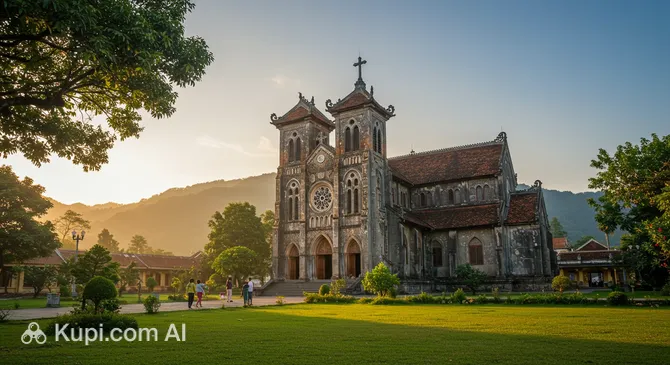
One of the city's main gems is the Kon Tum Cathedral, also known as the Wooden Church. This impressive structure was built by French missionaries in the early 20th century and represents a unique fusion of Romanesque architectural style with traditional techniques of local ethnic groups. The church was built entirely of wood without a single nail, and its walls are made of a mixture of straw and clay. The majestic appearance and intricate wood carvings in the interior make the cathedral a must-visit.

Saint Mary's Cathedral of Kon Tum. Illustration.
Source: Kupi.com AI

Traveler photos:

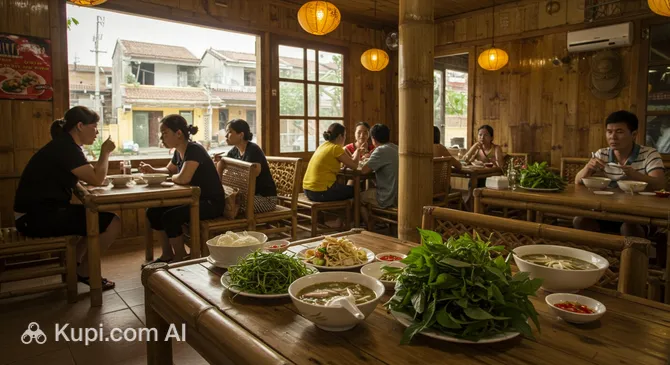
For a gastronomic immersion into the local culture, stop by the Yen Vy Leaf Salad Restaurant. Here you can try the region's famous dish – "goi la" (gỏi lá). This is an assortment of dozens of types of fresh forest herbs and leaves served with special sauces, pieces of pork, and fermented shrimp paste. This is not just a meal, but a true culinary ritual and an opportunity to discover the unusual flavors of Vietnam.

Yen Vy Leaf Salad Restaurant. Illustration.
Source: Kupi.com AI

Traveler photos:

Another iconic site in Kon Tum is the former Kon Tum Prison (Nhà ngục Kon Tum). This historical monument served as a place of detention for political opponents during the French colonial era. Today, it houses a museum whose exhibition tells the story of the harsh conditions of the prisoners and their struggle for independence. A visit to the prison allows for a deeper understanding of Vietnam's complex history.

You should also certainly see the Kon Klor Suspension Bridge (Cầu treo Kon Klor), which is one of the longest and most beautiful suspension bridges in the Central Highlands region. The bridge spans the Dak Bla River and connects the city with Kon Klor village, home to the Bahnar ethnic group. A walk across the bridge offers breathtaking views of the river and surrounding landscapes, as well as an opportunity to get acquainted with the life and culture of the local people by visiting their traditional communal house – the Rong.

Local Cuisine

The gastronomy of Kon Tum is an amazing journey into the world of flavors of the Central Highlands of Vietnam, where culinary traditions are closely intertwined with the bounty of local nature. One of the most iconic dishes that you should definitely try is "com lam" (cơm lam). This rice, cooked in bamboo stalks over an open fire, has a unique smoky aroma and delicate texture, serving as a true signature of the region.

Kon Tum's cuisine is rich in dishes made from the gifts of the forest. A special place is held by dishes made from wild vegetables, forest mushrooms, and the meat of wild animals. Be sure to try the aromatic wild boar or deer soup, as well as fried or stewed fish caught in the purest mountain rivers. All dishes are generously seasoned with local herbs, giving them a unique taste and aroma.

Street food in Kon Tum is a separate gastronomic adventure. In busy markets and small street stalls, you can taste crispy rice pancakes with various fillings, and sweet desserts made from bananas and coconut. Popular drinks include freshly squeezed tropical fruit juices, as well as local varieties of aromatic tea and coffee, which can be found at farmers' markets. These markets are an attraction in themselves, offering guests exotic fruits and fragrant spices.

Local residents prefer to eat both in small family establishments and right on the street, enjoying freshly prepared dishes. Tourists can also dive into this atmosphere by visiting local markets or choosing one of the restaurants serving traditional dishes. For example, to get acquainted with the variety of local products, including fresh vegetables and herbs, you can stop by the Yen Vy Leaf Salad Restaurant. The food culture here is very hospitable, and it is not uncommon to witness or even participate in local culinary festivals where ethnic groups share their unique recipes.

Travel Tips

Welcome to Kon Tum! To make your journey to this charming city in the Central Highlands of Vietnam as comfortable and memorable as possible, we have prepared a few practical tips. They will help you navigate better and enjoy every moment of your stay.

  1. Clothing and Essentials: The climate in Kon Tum is warm and humid, so choose light, breathable clothing made from natural fabrics. The rainy season lasts from May to October, so a raincoat or umbrella will be very useful. For evening walks or trips to mountain areas, a light jacket or windbreaker might come in handy. Comfortable shoes are an absolute necessity for exploring the city and its surroundings. Don't forget sunscreen, a hat, insect repellent, and a universal adapter (types A, C, and F sockets are used in Vietnam). When visiting religious sites, such as the famous Wooden Church, dress modestly, covering your shoulders and knees.

  2. Transport in Kon Tum: The most convenient way to get around the city is by taxi or motorbike taxi (xe om). Be sure to agree on the cost of a motorbike taxi ride in advance or ensure the meter is on in a regular taxi. Popular ride-hailing apps may be less common here than in larger cities. Renting a motorbike is a great option for independently exploring the surroundings of Kon Tum, but it is advisable to have an international driving permit and always wear a helmet. Public transport within the city is poorly developed.

  3. Finance – Dong and Cards: The official currency is the Vietnamese Dong (VND). You can exchange money at banks or some authorized exchange points. Credit cards (mainly Visa and Mastercard) are accepted in large hotels and some restaurants, however, cash remains the main means of payment, especially in markets, small cafes, and for transport. ATMs are available in the city. Tipping is not mandatory but is always welcome for good service (usually 5-10% in restaurants). An approximate daily budget can range from 600,000 to 1,200,000 Dong (about $25-50) per person, excluding accommodation.

  4. Health and Safety: Kon Tum is considered a fairly safe city for tourists. Nevertheless, always take basic precautions: keep an eye on your personal belongings, especially in crowded places, and avoid walking in poorly lit areas after dark. Pharmacies (nhà thuốc) are available in the city, but not all of them may work around the clock or have English-speaking staff. It is highly recommended to take out medical insurance before your trip. Drink only bottled water and be selective when choosing street food, preferring busy and clean stalls.

  5. Language and Communication: The official language is Vietnamese. English is common in the tourism sector (hotels, some restaurants, travel agencies), but not everyone knows it in everyday communication. Learning a few basic phrases in Vietnamese, such as "Xin chào" (Hello), "Cảm ơn" (Thank you), and "Bao nhiêu tiền?" (How much does it cost?), will significantly ease your communication and earn you the goodwill of the locals. You can easily purchase a local SIM card with internet access (e.g., from operators like Viettel, Vinaphone, Mobifone); it is inexpensive and convenient. Wi-Fi is available in most hotels, guesthouses, and cafes.

  6. Local Etiquette: Vietnamese people are very friendly and hospitable. When communicating, smile and greet people with a slight nod of the head or the word "Xin chào." Show special respect to the elderly. When visiting ethnic minority villages, temples, or pagodas, behave with restraint, dress appropriately, and always ask permission before photographing people or the interior of shrines. Avoid loud talking and intense displays of emotion in public places.

  7. What to Avoid: Try not to raise your voice or engage in conflicts, as this is considered a sign of extreme disrespect. Refrain from criticizing local traditions, customs, or food, even if something seems unusual to you. It is also not customary to touch people's heads, especially children's, as in Vietnamese culture the head is considered a sacred part of the body.

  8. Special Tip – Culture and Coffee: Kon Tum is a gateway to the unique cultures of the Central Highlands ethnic minorities, such as the Bahnar, Sedang, or Jarai. Be sure to visit their villages to see the impressive communal houses (Rong houses) and get to know their way of life. For a deeper and more respectful immersion into the local culture, it is recommended to use the services of a local guide. And, of course, don't miss the opportunity to enjoy real Vietnamese coffee, which this region is so famous for—try it in one of the local coffee shops!

We hope these tips help you plan an unforgettable journey to Kon Tum. We wish you bright impressions and pleasant discoveries in this amazing corner of Vietnam!

Entertainment & Nightlife

Kon Tum offers its guests a quiet and authentic atmosphere for evening relaxation, which differs from the noisy nightlife of major metropolises. Here you won't find large nightclubs or districts with neon bar signs, but you can enjoy peaceful evenings, local cuisine, and conversation.

Evening entertainment in Kon Tum is mainly centered around dinner at local restaurants and cafes. One such place to spend a pleasant evening is the Yen Vy Leaf Salad Restaurant, which offers local specialties. Many establishments stay open until late evening, allowing you to enjoy your meal without rushing. The atmosphere in such places is usually relaxed and family-oriented. Street cafes are also popular, where you can drink Vietnamese coffee or freshly squeezed juice while watching the slow pace of city life. Night markets, when active, may offer local delicacies and souvenirs, but their operation depends on the season and the day of the week.

For those looking for a more vibrant nightlife, Kon Tum may seem quite quiet. Specialized nightclubs are few and far between, and they are usually oriented towards local youth. Instead, the evening can be spent in one of the small bars or cafes with live music, if available, or simply by taking a walk along the Dak Bla riverbank, enjoying the coolness and tranquility. Most activity winds down relatively early compared to major tourist centers.

Practical tips for an evening in Kon Tum:

  • Timing: It is best to start your evening walk or dinner around 7:00 PM - 8:00 PM. Most establishments close by 10:00 PM - 11:00 PM.
  • Transport: Getting around the city at night is most convenient by taxi or by using ride-hailing apps for motorbike taxis (e.g., Grab). Public transport is poorly developed.
  • Safety: Kon Tum is considered a relatively safe city. However, as everywhere, basic precautions should be taken, especially after dark: avoid poorly lit and deserted streets, and keep an eye on your belongings. Calling a taxi through an app or asking hotel/restaurant staff to do so is a reliable way to get around.
  • Prices: Prices in the restaurants and cafes of Kon Tum are quite affordable, especially compared to Vietnam's larger cities.

During the day, Kon Tum also offers interesting leisure options. You can visit historical and cultural attractions, such as the famous Kon Tum Cathedral, built of wood. It is also worth walking through local parks, exploring the surrounding scenic nature, or visiting local markets to immerse yourself in the daily life of the city.

Parks & Museums

Kon Tum, nestled in the Central Highlands of Vietnam, offers travelers both peaceful corners of nature and the opportunity to touch the rich cultural heritage of the region. Although the city may not boast extensive urban parks in the traditional sense, its surroundings and cultural sites more than compensate for this.

Nature lovers will appreciate the scenic landscapes around Kon Tum. The Dak Bla River flowing through the city and the surrounding hills create excellent conditions for leisurely walks and enjoying the fresh air. While there are no formal botanical gardens or large national parks within the city limits, the very atmosphere of the region invites a connection with nature. Many tourists head to nearby villages to see coffee plantations and rubber forests, which are an integral part of the local landscape.

The main architectural and historical gem of the city is undoubtedly the Kon Tum Cathedral, also known as the Wooden Church. This unique structure, built in the early 20th century by French missionaries, combines Romanesque features with traditional local architecture. The church was built entirely of wood without a single nail, making it a true masterpiece of engineering and craftsmanship. Inside, you can see stained glass and intricate wood carvings. This place is a must-visit to appreciate its beauty and historical significance.

For a deeper immersion into the history and culture of the region, it is worth visiting the Kon Tum Museum. The museum's exhibitions tell the story of the life, traditions, and beliefs of the numerous ethnic minorities inhabiting Kon Tum province. Here you can see household items, national costumes, musical instruments, and artifacts related to the history of the region. This is a great place to better understand the cultural diversity of the Central Highlands.

In addition to the cathedral, in Kon Tum and its surroundings, you can see traditional communal houses called "rong" (nhà rông)—tall and impressive structures on stilts that are the center of social life for many local ethnic groups. These houses are a vivid example of the original architecture and cultural heritage of the region.

For a truly authentic experience, head to one of the nearby ethnic minority villages, such as those of the Bahnar people. This will allow you not only to see the traditional way of life but also to interact with local residents, learn about their crafts, and perhaps taste local dishes.

Getting Around

Navigating Kon Tum and its surroundings is possible using several modes of transport. Although the city cannot boast an extensive metro or tram system like large metropolises, it has its own convenient ways for tourists to get around.

The main form of public transport in Kon Tum is buses. They run on the main urban and suburban routes. The fare is usually low, and payment is made in cash directly to the conductor or driver upon entry. Schedules may not always be strictly followed, and information at stops is predominantly in Vietnamese, so it is useful to have the name of your destination written in Vietnamese or use offline maps on your phone. Buses typically start running early in the morning and finish by evening.

A very popular and flexible way of moving around, especially for short distances or through narrow streets, are motorbike taxis (known as "xe om"). The price of the trip should be agreed upon in advance, before boarding. This is an authentic and fast way to get to your destination. Taxi services also operate in the city. It is recommended to use official companies and ensure the driver turns on the meter, or agree on a fixed cost for longer trips. In some cases, ride-hailing apps like Grab may be available, which simplifies ordering and determining the cost.

As an alternative to public transport, especially for exploring the central part of Kon Tum, you can consider walking—many interesting places are compactly located. For more independent travelers, there is the possibility of renting a motorbike or bicycle. This will allow you to explore the city and its scenic surroundings at your own pace. Ensure you have the necessary driving skills and an international license if you plan to rent a motorbike.

Accommodation

In the city of Kon Tum, travelers can find a fairly wide range of accommodation options to suit various preferences and budgets. There are budget guesthouses and hostels ideal for economical tourists, as well as mid-range hotels offering more comfort. You can also consider renting rooms or small apartments, which is especially convenient for those planning a longer stay or traveling with a family.

Most tourist accommodation options are concentrated in the central part of Kon Tum or in close proximity to major transport arteries and attractions. Choosing to stay in these areas provides convenient access to cafes, restaurants, and local markets. Some travelers also prefer the quieter outskirts, where you can immerse yourself more deeply in the local atmosphere.

Regarding the price range, options from budget to mid-range predominate in Kon Tum. Finding luxury resorts here can be difficult, but comfortable and clean rooms at a reasonable price are quite accessible. It is recommended to book accommodation in advance, especially if your trip coincides with the peak tourist season or local holidays. The most common booking methods are popular international online platforms, as well as the possibility of contacting the hotel or guesthouse directly.

Nearby Cities

For those who want to explore the surrounding area, Kon Tum serves as an excellent starting point for day trips to several interesting nearby locations:

CityPopulationDistance
Pleiku218 76542 km
Da Loi256 01944 km
Duc Pho150 927115 km
Ayun Pa53 720116 km
Quang Ngai260 252123 km

Among these cities, Da Nang stands out, a major port city known for its magnificent beaches such as My Khe, the Marble Mountains with their caves and temples, and modern architectural wonders including the famous Dragon Bridge. A trip here allows you to enjoy both nature and urban dynamics.

If you are attracted to history, Hue, the former imperial capital of Vietnam, offers an immersion into the past. Here you can explore the majestic Imperial City (Citadel), visit the tombs of the ancient emperors of the Nguyen dynasty, and walk along the scenic Perfume River. Quy Nhon, in turn, attracts travelers with its secluded beaches, such as Ky Co and Eo Gio, as well as ancient Champa towers that testify to the region's rich history.

These nearby destinations provide an insight into the diverse culture and landscapes of the region. Each trip promises new discoveries and impressions, complementing your journey to Vietnam.

Shopping & Souvenirs

Shopping in Kon Tum is an immersion into local flavor rather than a chase after global brands. The city is not famous for huge shopping centers, but here you can find authentic goods reflecting the culture of the Central Highlands of Vietnam. The main focus is on handmade items, local products, and souvenirs that tell the story of the region's traditions.

Main shopping spots are concentrated in the central part of the city, especially around the local market. There are no specialized shopping streets in the European sense, but walking along main streets such as Phan Đình Phùng or Trần Hưng Đạo, you will find many small shops, stalls, and workshops offering a variety of goods.

You most likely won't find large modern shopping malls in Kon Tum. Shopping here is more traditional, centered on local markets and small private shops. This gives it a special charm and allows you to get closer to the daily life of the citizens.

The Kon Tum Central Market (Chợ Kon Tum) is the main place for shopping and the true heart of the city's commercial life. Here you can find everything from fresh fruit, vegetables, meat, and seafood to clothing, shoes, household goods, and, of course, souvenirs. The market is not only a place for shopping but also a great opportunity to observe local life and try street food.

As souvenirs from Kon Tum, it is worth bringing back items made by local ethnic minorities—these can be unique textile products with traditional embroidery, woven baskets, wooden figurines, and jewelry. Coffee grown on the plantations of the Central Highlands is particularly popular, as well as local tea and spices. You can also look for silk products and ceramics.

Most shops in Kon Tum open early in the morning (around 8:00-9:00 AM) and work until evening (6:00-8:00 PM). Markets start their work even earlier, at dawn, and are also active until evening. In small shops and markets, payment in cash (Vietnamese Dong) is preferred. In some larger stores, bank cards may be accepted, but it is better to always have a sufficient amount of cash with you. Bargaining in markets and small souvenir shops is quite appropriate and even expected.

The possibility of a tax refund (Tax Free) in Vietnam is usually provided at major international airports and authorized stores in large tourist cities when purchasing goods for a certain amount. In Kon Tum, finding stores participating in the Tax Free system is unlikely, so when planning purchases with a tax refund in mind, it is better to target large retail outlets in cities like Hanoi or Ho Chi Minh City.

Reached the end of the page?

That means the route is fully explored