Support

Sen Monorom

About

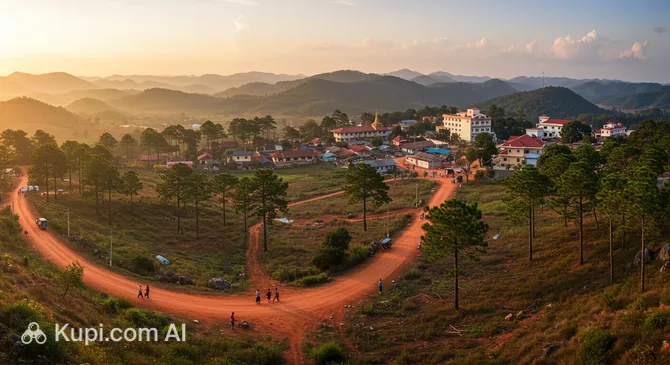
Sen Monorom is a true oasis of tranquility and green harmony, nestled among the hills and dense tropical forests of the country's east. As the capital of Mondulkiri Province, this city offers travelers a completely different experience than the hot plains that usually greet tourists in Cambodia. A peaceful atmosphere reigns here, and time seems to slow down, allowing you to enjoy unity with nature.

Sen Monorom. Illustration.
Source: Kupi.com AI

The city's high-altitude location accounts for its main feature—a pleasant, cool climate often described as "eternal spring." Sen Monorom is surrounded by endless jungles, coffee plantations, and picturesque waterfalls. With a population of about 80,000, the city uniquely blends modernity with a traditional way of life.

The city's ethnic diversity adds a special flavor. In local markets, you can meet representatives of the Bunong people and other small tribes, whose culture and the history of Sen Monorom are inextricably linked to these lands. This destination is perfect for those seeking authentic experiences: from learning about the daily life of highland residents to breathtaking walks to waterfalls and observing elephants in their natural habitat.

If you dream of seeing a "different" Asia, full of freshness and natural beauty, Sen Monorom is an excellent choice for your journey. Cozy eco-lodges, the hospitality of the locals, and the majestic landscapes of Mondulkiri Province will leave you with the warmest memories.

Weather Overview

The climate of this region differs noticeably from the rest of Cambodia due to its elevated terrain, offering travelers a welcome cool breeze. If you are interested in detailed weather in Sen Monorom, you should know that the year here is clearly divided into dry and wet seasons. The temperature regime remains quite comfortable all year round: average values range from 24.3°C in December to 28.0°C in April.

The dry season, lasting from November to April, is considered the ideal time to visit. In January and February, rain is a great rarity (from 0 to 1 mm of precipitation), and the sky remains clear. During this period, nights can be quite fresh, with temperatures around 20°C, so a light jacket won't hurt. The hottest month is April, when the thermometer can rise to 32–33°C during the day.

From May to October, the rainy season dominates the province, turning the surrounding jungle into a lush green carpet. The peak of humidity occurs in July, August, and September: during these months, precipitation falls almost daily (up to 30 rainy days), but the temperature remains pleasant, around 25–26°C. Expect warm days with a high probability of downpours in summer and sunny, dry weather in the winter months.

Average monthly temperature

Average monthly precipitation

Interesting Facts

Beyond its picturesque landscapes, Sen Monorom holds many unique traits that offer a different perspective on life in the province. Here are a few facts to help you better understand this distinctive city:
  • Keepers of ancient traditions. The city is considered the gateway to the world of the Bunong people—one of Cambodia's ethnic minorities. Local residents have preserved their traditional lifestyle and belief in nature spirits (animism). In nearby villages, you can still see craftsmen handmade machetes and weave household utensils from rattan.

  • Friendship with elephants. In the surroundings of Sen Monorom, elephants are an important part of the culture and community life. Ethical tourism is well-developed here: instead of traditional riding, travelers are invited to walk with the giants through the jungle, feed them wild bananas, and even bathe them in cool mountain rivers.

  • "Ocean of Forest." This is the name given to the panorama opening from the local highlands. Sen Monorom serves as the starting point for trekking to viewpoints where the endless green jungles of Mondulkiri resemble frozen ocean waves stretching to the horizon.

  • The market as a social hub. The city market serves as the region's main social hub. Life bustles here as representatives of various ethnic groups meet, allowing tourists to immerse themselves in authentic local color far from staged shows.

How to Get There

Sen Monorom is located in the beautiful but remote Mondulkiri Province, so planning your route here requires attention to detail. Since the city is in the eastern part of the country, logistics often involve combined routes. You can find out more about how to get to Sen Monorom and choose the most suitable option for you on a separate page.

There is no airport in Sen Monorom itself, so travelers often use the air hubs of neighboring Vietnam, located relatively close to the border, or travel by land from the Cambodian capital. If you are considering a flight, take note of Tan Son Nhat (SGN)—Vietnam's largest international airport. It is located in Ho Chi Minh City, approximately 191 km from Sen Monorom. This is a massive transport hub with huge passenger traffic, receiving flights from all over the world. The journey from there by taxi or bus (including border crossing) takes about 5 hours.

Another option is the regional Phung-Duc Airport (BMV), located in the city of Buon Ma Thuot. This is the nearest air gateway, situated just 108 km from Sen Monorom. Despite its smaller size and status as a domestic airport, it can be convenient for those already traveling in the region. The drive from there to the city takes roughly 3 hours.

For your convenience, here is summary information on the main airports located within reach:

AirportPassenger trafficDistance
Phung-Duc Airport1 mln108 km
Lien Khuong Airport2.5 mln155 km
Tan Son Nhat International Airport41 mln191 km
Pleiku Airport600 000193 km
Cam Ranh International Airport7 mln231 km

There is no rail link to Sen Monorom, so roads remain the primary way to travel by land. Most tourists arrive here by bus or minivan from Phnom Penh (the capital of Cambodia) or Siem Reap. The road from Phnom Penh takes about 5–6 hours and passes through scenic landscapes, making the trip part of the adventure.

Main Attractions

The main magnet for travelers in this region is its incredible nature, and the first place on the must-visit list is rightfully held by Bousra Waterfall. This is one of the country's most majestic and beautiful waterfalls, located about 40 kilometers from the city. The water thunders down two tiers, creating a mesmerizing sight, especially during the rainy season. Tourists come here to feel the power of the elements, have a picnic in the shade of trees, and take impressive photos against the backdrop of the churning cascades.

It is impossible to imagine a trip to Mondulkiri Province without meeting its most famous inhabitants—elephants. Various eco-projects and elephant sanctuaries, such as the Elephant Valley Project, operate around Sen Monorom. These are not zoos but rehabilitation centers where animals live in their natural jungle environment. Visiting such places provides a unique experience: you can observe the giants as they walk, bathe in the river, or forage for food, while learning touching stories of their rescue. It is an ethical way to connect with wildlife without disturbing the animals' peace.

For those seeking tranquility and breathtaking panoramas, the "Sea Forest" (Samut Cheur) viewpoint is an ideal spot. From the top of the hill, you can see vast green expanses that truly resemble the frozen waves of an ocean. This spot is particularly popular at sunset, when the sun paints the jungle in golden tones. Here, you can truly feel the scale and ancient beauty of this mountainous region, enjoying the silence and the fresh breeze.

Another iconic landmark is Phnom Doh Kromom hill, located very close to the city center. At its summit is a small wooden pagoda offering an excellent view of Sen Monorom itself and the runway of the old airfield. This is a popular spot for both tourists and locals, who come here to admire the sunset and enjoy the evening cool after a hot day.

Local Cuisine

The local cuisine of Sen Monorom is a gastronomic reflection of Mondulkiri Province's wild nature. Here, culinary traditions are closely intertwined with the gifts of the forest, so the menu often features dishes made from wild vegetables, roots, forest mushrooms, and bamboo. The staple is rice, grown on picturesque terraces around the city, along with fish caught in clean mountain rivers. Local chefs masterfully use aromatic herbs, creating simple yet incredibly fragrant and hearty treats.

Exotic food lovers should head to the markets, where you can try unusual snacks like fried insects or pickled roots with spicy homemade sauces. For those who prefer more traditional flavors, the region offers a true abundance of fruit. Thanks to the cool climate, excellent avocados, sweet mangosteens, passion fruit, and durians are grown here. These fruits, ripened on neighboring plantations, are distinguished by their rich taste and freshness.

Speaking of drinks, one cannot fail to mention the local coffee. Mondulkiri Province is famous for its coffee plantations, and in Sen Monorom, you can enjoy a cup of this drink—strong, thick, and very aromatic. It is often served with condensed milk and ice, which is very refreshing on a hot afternoon. Freshly squeezed juices and herbal infusions, which locals prepare from plants gathered in the mountains, are also popular.

The dining culture in the city is casual and centered around street food. The tastiest and most authentic dishes can be found at the central market and in small street stalls. Here, in an atmosphere of lively conversation, meat and vegetables are grilled over coals, and fragrant soups are simmered in huge pots. Dinner in such a place is not just a meal but an opportunity to immerse yourself in the daily life of the locals. During harvest festivals, the streets are filled with the scents of baking, and the city turns into one big tasting ground.

Travel Tips

Traveling to Sen Monorom requires slightly different preparation than a trip to hot beaches or ancient temples, as cool weather prevails here and civilization gives way to wild nature. This list of practical recommendations will help you plan a comfortable and safe holiday in the heart of Mondulkiri Province.

  1. Clothing and Equipment. Unlike the rest of the country, it can get chilly here, especially in the evenings and at night, so be sure to bring a light jacket, fleece, or hoodie. For trekking in the jungle and to waterfalls, closed, broken-in trekking shoes with non-slip soles are essential. In the rainy season, a rain poncho and special leech socks won't go amiss if you plan deep excursions into the forest.

  2. Transport. There is no public transport (buses or shuttles) within the city. The most popular way to get around is by renting a scooter (motorbike) or using moto-taxi services (motodops). Be prepared for the fact that roads outside the center can be unpaved: dusty in the dry season and washed out in the rainy season. Renting a car without a driver is difficult here; it's easier to hire a local driver with a jeep for longer trips.

  3. Finances. Two currencies are in use: the Cambodian riel and the US dollar (for larger purchases). Bank cards (Visa, Mastercard) are accepted only in large hotels and some restaurants, so cash is vital. There are ATMs in the city, but they may not work or may charge a high fee, so it's better to withdraw money in advance. Tipping is not mandatory, but rounding up the bill or a $1–$2 thank-you to a guide is always appreciated.

  4. Health and Safety. Sen Monorom is a peaceful city, but medical facilities are basic. Pharmacies sell basic medicines, but it's better to bring specific medications with you. The main precaution is protection against insects: use strong repellents, as there is a risk of mosquito bites in the jungle. Also, carry a flashlight with you: street lighting may be absent, and it gets dark early.

  5. Communication. In tourist spots (guesthouses, cafes, elephant tours), staff speak English, but at the market or in villages, you'll have to explain yourself with gestures or an interpreter. It is recommended to buy a local SIM card (Metfone or Smart operators have the best coverage in the mountains). Wi-Fi is available in almost all hotels and cafes, but the speed may be lower than in the capital.

  6. Local Etiquette. When meeting, locals use the traditional "Sampeah" greeting (palms pressed together at the chest), although they often shake hands with tourists. If you visit Bunong villages, always ask permission before taking photos of people or their homes. Be sure to remove your shoes when entering a home or temple.

  7. What to Avoid. Categorically avoid offers to ride elephants. Ethical tourism is actively promoted in Mondulkiri Province, and riding is considered animal cruelty; instead, choose walks alongside them. Also, do not buy souvenirs made from wild animals or rare wood species to avoid supporting poaching.

  8. Important Detail ("Red Earth"). The soil in the region has a rich red color due to high mineral content. This red dust (or mud in the rain) is very persistent and difficult to wash out. Tip: do not wear white clothes or your favorite light-colored sneakers on trips to the surrounding areas—they risk permanently changing their hue.

Following these simple rules will allow you to focus on the main thing—the incredible beauty of the hills and the hospitality of the locals. May your adventure in Cambodia, in the land of elephants and waterfalls, go smoothly and leave only vivid impressions!

Entertainment & Nightlife

If you expect to see bright neon streets like Pub Street in Siem Reap or trendy rooftop bars like in Phnom Penh, Sen Monorom will surprise you. The nightlife of the Mondulkiri capital perfectly matches its spirit: it is quiet, ends early, and is incredibly soulful. Entertainment here is not about dancing until dawn but about relaxed gatherings with fellow travelers after a long trek, sharing impressions to the sound of cicadas, and gazing at the starry sky, which seems particularly close in the mountains.

The center of evening activity is the area around the Kouprey Statue (wild ox) roundabout and the adjacent streets leading to the old airfield. This is where most guesthouses and small establishments are concentrated. The atmosphere in local bars and cafes is homey and cozy, with wooden furniture, dim lighting, and soft music. The crowd mostly consists of backpackers, eco-tourists, and volunteers, so the dress code is very casual: comfortable clothes and trekking sandals are appropriate everywhere.

A unique feature of "nightlife" in Sen Monorom is the tradition of watching the sunset at the Old Airfield. Although it is not a bar or a club, this is where tourists and locals alike flock around 5:30 PM. The runway turns into the city's main social hub: people bring drinks and snacks, have picnics on the grass, and socialize as the sun sets behind the jungle. It is the best place to make new friends and feel the rhythm of local life.

Among specific venues for a pleasant evening, a few popular spots stand out. Cinnamon Bar (or the cafe at the guesthouse of the same name) is famous for its valley views and relaxed atmosphere, perfect for a glass of wine or beer at sunset. Another well-known spot is The Hangout, which lives up to its name: large groups of travelers often gather here to play board games or simply chat. For a taste of local flavor, it is worth visiting traditional Khmer BBQs (restaurants with grills on the tables), which stay open late and offer a hearty dinner in a noisy, lively atmosphere.

Practical tips for evening walks in Sen Monorom are essential. The city goes to sleep early: most restaurant kitchens close by 9:00 PM, and bars empty out by 10:00 or 11:00 PM. After sunset, the streets (especially away from the center) are barely lit, so a flashlight is a must-have accessory. Additionally, there are many stray dogs on the streets at night that can be aggressive; try not to walk alone in dark alleys or carry a stick to deter them.

Transport at night can be tricky. Tuk-tuks and moto-taxis do not operate 24/7 as they do in the capital. If you stay late at a bar far from your hotel, it is better to arrange a pickup with a driver in advance or ask the staff to call transport for you. Prices for evening rides may be slightly higher than daytime rates but usually remain within $1–$3 for a trip around town.

During the day, entertainment in the city is more educational. There are no theaters or amusement parks, but you can visit small art galleries of local artisans or stop by eco-tourism information centers, which often host lectures on nature conservation. The main daytime leisure activity is preparing for treks and exploring the colorful markets of the province.

Parks & Museums

Sen Monorom offers travelers a unique approach to cultural and natural leisure: here, wild groves and protected areas play the role of manicured city parks, and instead of traditional museum halls with display cases, the region's history unfolds in folk craft centers and right under the open sky. The city is harmoniously integrated into the landscape, so the boundaries between the urban environment and nature are practically blurred.

Although Sen Monorom is surrounded by endless jungle, there are several organized green zones in the city itself and its immediate surroundings where it is pleasant to stroll without needing to put on trekking boots. The main spot for an evening promenade is the Sen Monorom Lakes. These are two reservoirs located almost in the city center, bordered by green lawns and trees. Locals come here for picnics and jogs, while tourists appreciate this place for the opportunity to admire the calm water at sunset without traveling far from their hotel.

Another surprising natural area is the Pine Plantation, located just a few kilometers from the city. For a tropical country like Cambodia, rows of tall coniferous trees are a real exoticism. This forest was planted artificially, and today it resembles a corner of Europe in the middle of Asia. Pine needles carpet the ground, and the air here is especially fresh and fragrant. It is an ideal location for photo shoots and a peaceful rest in the shade, particularly popular among Khmer tourists on weekends.

Regarding museums, you won't find large state galleries or historical complexes in Sen Monorom. The region's culture lives in the present moment, and its keepers are the Bunong craft centers. Small shops and workshops scattered around the city display samples of traditional weaving and wickerwork. Here, you can not only see unique patterns and tools used by the ancestors of the local residents but also purchase authentic souvenirs, supporting the community. These places effectively function as ethnographic mini-museums.

The role of natural science museums is taken on by eco-tourism information centers (for example, the offices of organizations for the protection of elephants and wildlife). Such centers often feature small exhibits about the flora and fauna of Mondulkiri Province, deforestation issues, and the history of human-elephant interaction. Visiting such a place provides deep educational context before heading into the jungle and helps to better understand the value of the ecosystem you are in.

If you are looking for a truly authentic experience, stop by one of the local coffee farms open to visitors. These are a kind of open-air "museums of taste." Owners often give tours, showing the entire journey of the bean from the tree to the cup and telling the history of coffee's appearance in the region during the French protectorate. A walk among the coffee bushes with a tasting of the fresh harvest will tell you more about the life of the province than any guidebook.

Getting Around

The public transport system in Sen Monorom is fundamentally different from the usual setup of large metropolises. Here you won't find a metro, trams, trolleybuses, or even a system of regular city buses with schedules and stops. The city is quite compact, and its transport infrastructure is simple and informal, fully adapting to the needs of locals and travelers.

The main means of transport for those without their own vehicle are moto-taxis, which locals call "motodops." These are scooter drivers stationed at intersections, the central market, and near guesthouses. This is the fastest and most budget-friendly way to get to any point in the city. For small groups or trips with luggage, tuk-tuks (covered carriages attached to a motorcycle) are available, although there are significantly fewer of them here than in popular tourist centers on the plains. Finding them is easiest in the center, near the roundabout with the wild ox statue.

The payment system here is exclusively cash and negotiable. There are no transport cards, transit passes, mobile apps for payment, or validators. It is customary to pay in local currency (riels) or small dollar bills. A critical rule: the price of the trip must be agreed upon with the driver clearly and before getting on. Haggling is appropriate, but usually, town prices are standard and equivalent to $1–$2 for a short ride.

Taxi aggregators and ride-hailing apps popular in Asia (like Grab or PassApp) practically do not function or work very inconsistently in this mountain province. You shouldn't rely on your smartphone here. If you need transport early in the morning or for a trip to remote attractions, it's most reliable to ask your hotel staff to call a trusted driver or arrange with someone on the street in advance, exchanging phone numbers.

The most popular and convenient alternative to public transport is renting a scooter (motorbike). This gives you freedom of movement and allows you to independently explore waterfalls and viewpoints scattered around the city. Rental points are available at many hotels and in the center. The average rental cost is about $5–$8 per day. However, be careful: roads outside the paved center are often dirt roads covered in red dust or mud, so confident driving skills are required.

For those not ready to get behind the handlebars of a two-wheeled vehicle, there is an option to rent a car with a driver (usually reliable SUVs). This is the most comfortable and safest way to travel around the region, especially during the rainy season, though it is also the most expensive. There is no classic car-sharing or car rental without a driver in Sen Monorom. Bicycles can also be found for rent, but due to the hilly terrain, riding them requires good physical fitness.

Walking is only practical within the compact city center—between the market and the lakes. Sidewalks aren't everywhere, and street lighting ends fairly quickly as you move away from the main streets, so walking long distances along highways, especially after dark, is not recommended.

Accommodation

The choice of accommodation in Sen Monorom will pleasantly surprise travelers with its authenticity and proximity to nature. You won't find the usual international hotel chains or high-rise hotel complexes here. The accommodation stock mainly consists of cozy guesthouses, eco-lodges, and wooden bungalows harmoniously integrated into the landscape. Options range from simple rooms for backpackers to very comfortable resorts with swimming pools and panoramic terraces.

Geographically, the accommodation can be divided into two main zones. The first is the city center, located around the market and the main roundabout. Budget guesthouses and small city-style hotels are concentrated here. Staying here is convenient for those arriving on a late bus, wanting to be within walking distance of cafes and shops, or planning an early departure. However, keep in mind that the center can be a bit noisy due to the early morning market activity.

The second, and more popular zone among tourists, is the surrounding hills, located 1–3 kilometers from the central part. This is where the best eco-resorts and bungalow complexes are found. The main advantage of these places is the stunning views of the "green sea" of the jungle, the silence, and the fresh air. It is best to get here by rented bike or tuk-tuk, but the atmosphere of complete seclusion is well worth it.

When choosing a hotel, it's important to consider the region's climate. Since Cambodia in this part features cool nights, a powerful air conditioner in the room is not always necessary, whereas the availability of hot water is a critical factor. In budget options (especially eco-huts), walls may be made of natural materials, creating a full immersion into the sounds of the forest, but this requires some getting used to.

The price range in Sen Monorom is quite affordable. A simple room in a guesthouse can be rented for the equivalent of $5–$10. A comfortable private bungalow with a sunset view and an en-suite bathroom will cost on average $20–$40. "Comfort plus" options (with a pool and a large, well-maintained territory) start from $50–$60.

Regarding booking, in the low season (summer and early autumn), accommodation is easy to find upon arrival by checking out a couple of places you like. However, in the dry season (winter) and especially during national holidays, demand increases sharply. During these periods, it is strongly recommended to book your stay in advance through popular online platforms, as the best cabins with views are the first to be taken.

Nearby Cities

For those wishing to explore the surroundings, Sen Monorom serves as an excellent starting point for trips to several interesting nearby locations. Although Mondulkiri Province is quite isolated, neighboring regions offer a contrasting change of scenery—from the great Mekong River to the bustling capital.

One of the most convenient destinations to visit is Kampong Cham. This city, located on the banks of the Mekong, attracts visitors with its relaxed atmosphere and colonial architecture. Here, you can see the famous bamboo bridge (during the dry season) and ancient temples, providing a great contrast to the wild jungles of Sen Monorom. This is the nearest large urban center where you can dive into the life of riverine Cambodia.

A bit further away is Prey Veng—a quiet and non-touristic city that allows you to see the authentic, rural side of the country. This destination is suitable for those interested in agricultural traditions and who want to see endless rice fields and the calm life of a province untouched by mass tourism.

Of course, the region's main magnet remains the capital—Phnom Penh. Although the journey there is long, it is a key transport and cultural hub connecting the east of the country with the rest of the world. The city offers a rich excursion program: from the Royal Palace to bustling markets and museums telling the kingdom's complex history.

CityPopulationDistance
Phuoc Long60 00073 km
Gia Nghia61 41378 km
Buon Trap23 86397 km
Buon Ma Thuot340 00099 km
Binh Long105 520104 km

These nearby destinations provide an insight into the region's diverse culture and landscapes, complementing the experience of Mondulkiri's mountain cool.

Shopping & Souvenirs

Shopping in Sen Monorom is fundamentally different from what Asia's large metropolises offer. Here you won't find multi-story shopping malls, global brand boutiques, or air-conditioned galleries. Instead, Cambodia reveals itself here through authentic stalls, bustling morning bazaars, and small family shops. Shopping in the capital of Mondulkiri Province is primarily an opportunity to purchase unique local products and handicrafts while supporting the local population.

The entire commercial life of the city is concentrated in the compact center, within a radius of a few hundred meters from the main landmark—the roundabout with the Kouprey wild ox statues. The main streets radiating from this ring are lined with small shops, pharmacies, and stalls selling essential goods. A walk around this area won't take long, but this is where you can find everything a traveler needs: from sunscreen to trekking shoes.

There are no large shopping centers or Western-style supermarkets in Sen Monorom. Their role is played by small minimarkets selling drinks, snacks, and basic household items. If you need to buy something specific, it's better to do so in advance in Phnom Penh, as the assortment in local shops is limited to the basic needs of a small town's residents.

The heart of commerce and the main point of attraction is the Central Market (Phsar Sen Monorom). This place is a must-visit, even if you don't plan to buy anything. Life here bustles from dawn. At the market, you can find the freshest exotic fruits, vegetables, meat, fish, as well as clothing and household utensils. The aisles between the rows are narrow, and the atmosphere is as colorful as it gets: farmers, traders, and representatives of local tribes in traditional clothing meet here.

As for souvenirs, Sen Monorom is famous for its gastronomic and artisanal products. Here is a list of what's worth bringing back from your trip:

  • Mondulkiri Coffee: This is the region's hallmark. Local beans are considered the best in the country, possessing a rich chocolatey undertone. You can buy it at the market or in specialized coffee shops.
  • Wild Honey: Collected in the jungle, it is known for its thickness and special aroma.
  • Pepper and Spices: Although Kampot is more famous for pepper, Mondulkiri also grows excellent spices.
  • Bunong Handicrafts: Look for traditional woven back-baskets (worn like backpacks) and bright hand-woven scarves (krama) with unique patterns specific only to this region.
  • Avocados and Passion Fruit: If you have a short journey ahead, be sure to buy local fruit—it's cheap and incredibly tasty here.

Opening hours for shops and the market follow the rhythm of provincial life. The market opens very early, around 6:00 AM, and by 4:00–5:00 PM, most vendors are already packing up. Small private shops in the center may stay open until 7:00–8:00 PM. Regarding payment, cash is king here. Credit cards are accepted only in a few expensive hotels and perhaps a couple of tourist cafes. At the market and in stalls, payment is exclusively in cash: Cambodian riels are used for small purchases, while US dollars (small bills in good condition) are used for larger ones.

The Tax Free system (tax refund) is not applicable in Sen Monorom. This is a privilege of large stores in international airports or capital malls that can issue the corresponding receipts. Here, trade is conducted under a simplified scheme, and receipts are generally not issued at all, so you should not count on a VAT refund.
Reached the end of the page?

That means the route is fully explored