Support

Bao Loc

About

Bao Loc is a true emerald valley in southern Vietnam, nestled among green hills and fragrant with the scents of freshly picked tea and coffee. Not yet overwhelmed by tourists, this city has preserved the authentic atmosphere of the Vietnamese hinterland, where time flows slowly and nature and tradition are harmoniously intertwined.

Bao Loc. Illustration.
Source: Kupi.com AI

Perched at an altitude of over 1,100 meters above sea level in Lam Dong province, Bao Loc enjoys a pleasant coolness and freshness even during the hottest months. With a population of about 170,000 people, it is the second-largest city in the province and an important regional center. Its surroundings are famous for picturesque landscapes: endless tea and coffee plantations give way to lakes, waterfalls, and dense tropical forests.

Bao Loc attracts travelers with its natural and cultural treasures. Highlights include majestic waterfalls, peaceful Buddhist pagodas, and the opportunity to visit vast tea and coffee plantations to learn about the production of these famous beverages. The city also offers ethnic museums and colorful local markets where you can dive deeper into the local culture.

If you are looking for seclusion, clean mountain air, and peaceful scenery far from noisy metropolises, Bao Loc will be a real discovery for you. This city is an ideal place for those who appreciate the harmony of nature, authenticity, and a slow pace of life; it will surely make you fall in love with it at first sight.

You can find more interesting facts on the Bao Loc city history page.
Weather Overview

The climate in Bao Loc is characterized as tropical monsoon, with relatively stable high temperatures throughout the year and two distinct seasons: dry and wet. This creates comfortable conditions for visiting the city at different times, though it is important to consider seasonal features when planning your trip.

In Bao Loc, warm weather awaits you all year round. The average annual air temperature ranges from 22°C to 25°C. The hottest months are considered March and April, when the average temperature reaches 24.6–25.2°C, with maximums potentially rising to 30.4°C. The highest amount of precipitation falls between May and October, peaking in July (with about 12 mm of rain and almost every day being rainy). January and February are the driest months, when precipitation is minimal (about 1 mm) and there are only about 6 rainy days.

To get more detailed information about weather conditions, including monthly data, we recommend visiting the weather in Bao Loc page.

Average monthly temperature

Average monthly precipitation

Interesting Facts

In addition to its picturesque landscapes and peaceful atmosphere, Bao Loc hides many interesting features that not all travelers know about. Here are just a few of them:

  • Tea and Coffee Capital: Bao Loc is rightfully considered the heart of Vietnam's tea and coffee industry. Local plantations supply products of exceptional quality, famous for their rich taste and aroma far beyond the country's borders.

  • Record-breaking Dambri Waterfall: Not far from the city is the impressive Dambri Waterfall, recognized as one of the highest in Vietnam—its waters plunge from a height of about 60 meters. A beautiful local legend about eternal love is associated with this place.

  • Center of Silk Craftsmanship: The city is known for its long traditions of silk weaving. Local artisans create unique silk products that attract connoisseurs of this art and are popular souvenirs.

  • Cultural Heritage: Bao Loc carefully preserves its cultural and spiritual heritage. In addition to the ethnology museum introducing the traditions of local peoples, the city has significant religious sites, such as the Thanh Mau Church, reflecting the diversity of beliefs in the region.

Thanh Mau Church. Illustration.
Source: Kupi.com AI

Traveler photos:

How to Get There

The most convenient way to reach the city of Bao Loc, located in the Lam Dong province of Vietnam, is via one of the nearest airports, from where you can continue your journey by land transport. Although Bao Loc does not have its own airport, several air hubs are located within a reasonable distance.

The closest option is Lien Khuong Airport (DLI), located in Da Lat, about 61.5 km from Bao Loc. This is a regional airport primarily handling domestic flights. A trip from Lien Khuong Airport to Bao Loc by taxi or bus takes about 1 hour and 50 minutes. This is a good choice if you are already in Vietnam or plan to visit Da Lat.

For international travelers, the main hub is Tan Son Nhat (SGN) in Ho Chi Minh City. This is Vietnam's largest international airport, receiving flights from all over the world. It is located about 153.8 km from Bao Loc. The journey from Tan Son Nhat to Bao Loc takes approximately 4 hours and 10 minutes by car or bus. Despite the greater distance, this is the most likely arrival point for many foreign tourists.

Another significant option is Cam Ranh International Airport (CXR), serving the popular resort of Nha Trang. It is located approximately 158.1 km from Bao Loc. This major international airport also handles many flights. The route from Cam Ranh to Bao Loc can take about 4 hours and 20 minutes. This may be a convenient option if you plan to combine a visit to Nha Trang with a trip to Bao Loc.

For convenience, here is a summary of the main airports:

AirportPassenger trafficDistance
Lien Khuong Airport2.5 mln61 km
Phung-Duc Airport1 mln125 km
Tan Son Nhat International Airport41 mln154 km
Cam Ranh International Airport7 mln158 km
Tuy Hoa Airport620 000231 km

Upon arrival at any of these airports, you can use taxi services, rent a car, or find bus routes heading to Bao Loc. It is recommended to check schedules and transfer costs in advance.

Main Attractions

The city of Bao Loc and its surroundings offer tourists several interesting sites that combine natural beauty and cultural heritage. Here you can find both peaceful corners for contemplation and impressive natural landmarks.

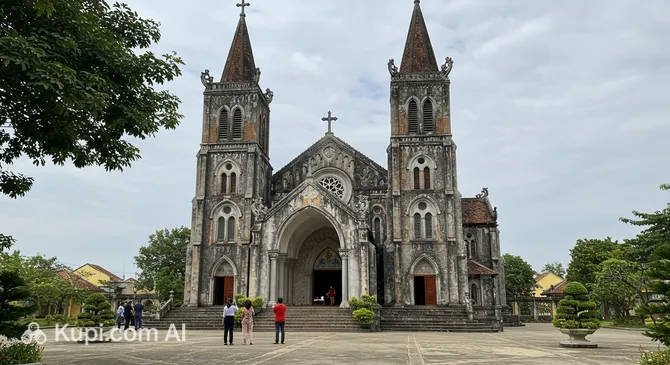
One of the notable religious attractions is the Thanh Mau Church. This is an active Catholic church that draws attention with its architecture and well-maintained grounds. For tourists, it is an opportunity to see one of the city's spiritual centers and appreciate its calm atmosphere.

Thanh Mau Church. Illustration.
Source: Kupi.com AI

Traveler photos:

Undoubtedly, the main natural gem of the region is Dambri Waterfall. Located a few kilometers from Bao Loc, this powerful and tall waterfall leaves a lasting impression. Surrounded by lush greenery, it offers not only breathtaking views but also opportunities for active recreation: there is a cable car and other attractions nearby. This place is perfect for nature lovers and photographers.

Another place worth visiting is the Bat Nha Pagoda. This Buddhist monastery is known for its peaceful atmosphere, beautiful gardens, and traditional architecture. The pagoda is a place for pilgrimage and meditation, offering visitors a chance to get acquainted with the spiritual side of Vietnam and enjoy silence and tranquility.

For those who prefer relaxing by the water within the city limits, Nam Phuong Lake is a great choice. This artificial lake, located in the center of Bao Loc, is a popular spot for walks and relaxation among both locals and tourists. Here you can enjoy the fresh air, picturesque views—especially at sunset—and simply take a break from the city bustle.

Local Cuisine

The gastronomy of Bao Loc is a true aromatic adventure centered around the region's two main treasures: tea and coffee. Here, these drinks do more than just quench thirst; they are part of the culture and even ingredients for desserts and certain dishes. Travelers can explore numerous tea and coffee plantations where they can learn about the growing and processing methods and taste dozens of tea varieties—from delicate jasmine to astringent green tea and rich oolong.

The coffee plantations of Bao Loc are famous for their Robusta variety, which has a dense, chocolatey flavor. Vietnamese-style brewed coffee is especially popular: thick, strong, and often served with condensed milk—a drink that provides energy for the whole day. Local residents often hold coffee ceremonies right in the fresh air among the picturesque plantations, where the aroma of freshly brewed coffee mixes with the scents of herbs and flowers.

Street food in Bao Loc is a kaleidoscope of tastes and aromas. Be sure to try traditional pho soup, which is warming and filling, as well as delicate rice pancakes with various fillings. At every turn, you'll find stalls with fresh vegetables, meat, and fish skillfully prepared on the grill or in fragrant broths. Don't miss the chance to enjoy exotic fruits grown on local farms—their taste and juiciness will be remembered for a long time.

Local markets are another place to immerse yourself in the gastronomic culture of Bao Loc. Here you will find farm honey, various nuts, fragrant spices, and dried herbs that make excellent edible souvenirs. The city is also known for its tea and coffee festivals, which attract guests from all over Vietnam. During these holidays, you can not only taste the region's best drinks but also participate in fascinating workshops on tea brewing and coffee roasting.

Travel Tips

Planning a trip to charming Bao Loc? Wonderful! To ensure your journey goes smoothly and leaves only pleasant impressions, we've prepared some practical tips.

  1. Clothing and Gear:

    Bao Loc is located in a mountainous region of Vietnam, so the weather can be changeable. It is usually warm during the day, but evenings and early mornings can be chilly. Bring light clothing for daytime walks and something warmer (a sweater, light jacket) for the evenings. A waterproof jacket or umbrella will come in handy, especially if your trip falls during the rainy season (usually May to October). Comfortable shoes are a must for walking around the city and its surroundings. Sunscreen, a hat, and sunglasses will also be useful. For visiting temples and pagodas, choose modest clothing that covers your shoulders and knees. Don't forget a universal adapter for electrical devices (Vietnam uses Type A, C, and F outlets).

  2. Getting Around the City:

    The central part of Bao Loc can be explored on foot. For longer trips, motorbike taxis (xe om) are popular. Agree on the price in advance. Regular taxis are also available. Ride-hailing apps like Grab may work, but it's best to check their availability upon arrival. Renting a motorbike is a good option for independent exploration of the area, but ensure you have an international driving permit and experience driving in Asian traffic.

  3. Financial Matters:

    The local currency is the Vietnamese Dong (VND). You can exchange currency at banks or official exchange offices. Avoid street money changers. Credit cards are accepted in large hotels, some restaurants, and shops. However, cash remains the primary means of payment, especially in markets and small establishments. There are ATMs in the city, but check with your bank for possible fees for foreign cash withdrawals. Tipping in Vietnam is not mandatory but is always appreciated for good service. You can round up the bill in a restaurant or leave a small amount for a guide.

  4. Health and Safety:

    Pharmacies (nhà thuốc) are easy to find in Bao Loc and offer basic medications. However, there may be few 24-hour pharmacies. If you need medical assistance, contact local clinics or hospitals. It is highly recommended to take out travel medical insurance before your trip. Bao Loc is considered a relatively safe city. Follow standard precautions: keep an eye on your belongings, especially in crowded places, and avoid walking in poorly lit areas after dark.

  5. Communication:

    The official language is Vietnamese. English is common in the tourism sector (hotels, some restaurants), but overall English proficiency among the local population may be limited. Learn a few basic phrases in Vietnamese: "Xin chào" (Hello), "Cảm ơn" (Thank you), "Bao nhiêu?" (How much?). This will greatly help with communication and will be appreciated by the locals. A local SIM card with internet access can be purchased at mobile phone shops. The main operators are Viettel, Mobifone, and Vinaphone. Wi-Fi is available in most hotels, cafes, and restaurants.

  6. Local Etiquette and Traditions:

    When greeting, a slight nod of the head and a smile with the words "Xin chào" are sufficient. In public places, try to behave with restraint and do not speak too loudly. Vietnamese people are generally very friendly and hospitable. A smile and polite address will help establish contact. Always ask permission before taking photos of local residents. When visiting pagodas and temples, behave respectfully; do not turn your back to altars or Buddha statues.

  7. What to Avoid:

    Try not to show excessive emotion or anger in public, as this is considered impolite. Do not touch the heads of local residents, especially children, as the head is considered a sacred part of the body. Also, do not point your feet at people or religious symbols.

  8. Bao Loc Specialty:

    The city of Bao Loc and its surroundings are famous for their tea and coffee plantations. Be sure to visit one to learn more about the growing and production process, and to taste fresh tea or coffee. This is a unique experience that will allow you to dive deeper into the region's culture. Also, the impressive Dambri Waterfall is located near the city and is well worth your attention.

We hope these tips help you better prepare for your trip and enjoy every moment of your stay in hospitable Bao Loc. We wish you an unforgettable journey!

Entertainment & Nightlife

Bao Loc, cozily situated in Lam Dong province, offers its guests a more quiet and authentic evening experience rather than the boisterous nightlife of major metropolises. Here you can immerse yourself in the measured atmosphere of a Vietnamese city after sunset, enjoying the local flavor.

The core of evening entertainment in Bao Loc consists of numerous cafes and restaurants where you can taste local dishes or simply enjoy a cup of famous Vietnamese coffee. Some establishments stay open late, offering a cozy setting for conversation. While the choice of bars and nightclubs in the classic sense might not be as wide as in the big cities, Bao Loc offers its own authentic options for evening leisure. Instead of noisy discos, you are more likely to find popular karaoke bars where locals love to spend time, small local beer stalls (bia hoi) offering fresh draft beer in a casual setting, and street food stalls open late where you can try authentic dishes. Night markets, when operating, can also be an interesting place for an evening stroll to buy souvenirs or local delicacies.

The center of evening activity is usually the main city streets and the areas around the central market. Most cafes, eateries, and the aforementioned beer stalls are concentrated here. You likely won't find specialized "nightlife districts" with neon club signs in Bao Loc, but this is compensated for by the overall friendly atmosphere.

The atmosphere of evening Bao Loc is, above all, one of tranquility and the chance to observe the daily life of locals. The crowd in these establishments is predominantly local, which adds to the authenticity. There is generally no dress code—comfortable casual clothes are appropriate. Prices in cafes, beer stalls, and restaurants are quite affordable. The best time for evening walks and dinner is from dusk until about 10:00–11:00 PM, as many places may close relatively early.

For getting around the city in the evening, you can use taxis or motorbike taxis (xe om), which are easy to find in the central areas. Bao Loc is generally considered a safe city. However, as with any other place, it is worth taking basic precautions in the evening: keep an eye on your belongings and avoid poorly lit, deserted streets. If you plan to return to your hotel late, it is better to arrange a taxi in advance or use trusted ride-hailing apps if they are popular in the region.

During the day, there is also plenty to do in Bao Loc. The city and its surroundings are rich in natural beauty, tea plantations, and waterfalls. For cultural leisure, you can visit local temples and pagodas. For example, one of the notable landmarks is Thanh Mau Church. While there may not be many museums or large amusement parks in the city itself, exploring the local culture and nature will be an excellent addition to your journey.

Thanh Mau Church. Illustration.
Source: Kupi.com AI

Traveler photos:

Parks & Museums

Bao Loc, nestled among the tea hills and coffee plantations of Vietnam, offers its guests not only picturesque landscapes but also a chance to connect with local culture. Although the city is not famous for an abundance of large museums in the traditional sense, it charms with its green corners and authentic landmarks reflecting its unique character.

For nature lovers and those who enjoy quiet walks, Bao Loc offers several pleasant spots. One of the central green oases is Ho Dong Nai Park. This is a popular spot among locals for relaxation, morning exercises, and evening strolls around the lake. Here you can enjoy the fresh air and take a break from the city bustle. Furthermore, the entire surrounding area of Bao Loc is essentially a vast natural park with emerald tea plantations where you can take stunning photos and learn more about the tea-growing process.

As for museums, there are few in Bao Loc. The city's cultural heritage is reflected more in its temples, churches, and the local way of life. One of the significant architectural and spiritual sites is the Thanh Mau Church. This beautiful building draws attention with its architecture and is an important religious center for the local Catholic community. Visiting the church allows you not only to appreciate its exterior but also to feel the peaceful atmosphere of the place.

Besides the church, several picturesque pagodas can be found in the vicinity of Bao Loc, which are also part of the region's cultural landscape. Although they may not have "museum" status, they preserve the history and traditions of Buddhism in Vietnam. For a more authentic immersion into local life, it is worth visiting the central market of Bao Loc. Here you can see a variety of local products and crafts, and simply observe the daily life of the townspeople, which is a cultural experience in itself.

For those seeking off-the-beaten-path experiences, we suggest heading to one of the many tea plantations in the city's outskirts. Some of these are open to visitors, where you can not only enjoy the views but also taste fresh tea straight from the factory. Also, don't miss the chance to have a cup of aromatic Vietnamese coffee in one of the local coffee shops—it is an essential part of Bao Loc's culture and a truly authentic experience.

Getting Around

When planning your travel around Bao Loc, it is important to understand that it is not a massive metropolis, and the local transport system has its own characteristics. For tourists and residents alike, the primary modes of transportation are buses, bicycles, as well as taxis and motorbike taxis for specific needs.

Buses are the most common and economical form of public transport in Bao Loc. They run on major city and suburban routes, connecting central areas with the outskirts and nearby settlements. Main bus routes usually start from the central bus station or key stops in the city. Fares on Bao Loc buses are traditionally paid in cash directly to the conductor or driver upon boarding. It is recommended to have small bills, as change from large ones can be difficult. Specialized passes or transport cards for tourists are generally not available in the city bus system. You can check the current fare for a specific route with the conductor before boarding or in advance at the bus station. Buses typically start running early in the morning and end by evening; however, the exact schedule, especially on less popular routes, can vary and intervals can be irregular. The most up-to-date information on routes and schedules is best obtained at the Bao Loc central bus station or from your hotel staff. A bus ride is not only an affordable way to reach your destination but also a chance to observe the daily life of the townspeople.

For leisurely rides through the center of Bao Loc and the nearby picturesque surroundings, a bicycle is an excellent choice. You can rent one at some hotels or specialized rental points. This is an eco-friendly and pleasant way to get to know the city at your own pace, especially if you plan to explore narrow streets that aren't always convenient to reach by other transport.

If you need more comfort or are traveling with luggage, you can use taxi services. This is a more expensive option compared to the bus, but it provides door-to-door service. It is recommended to use official services or trusted mobile apps for calling a car, if available in the city. Motorbike taxis (xe om) are a quick way to travel short distances, especially convenient in heavy traffic. Always agree on the price of a motorbike taxi ride in advance. For those seeking maximum freedom to explore the surroundings, there is the possibility of renting a motorbike, though this requires a valid license and driving experience.

Walking is also a great way to explore the central part of Bao Loc, its markets, and cafes. However, for longer trips or visiting attractions outside the center, it is better to choose one of the transport options. Overall, the city's transport system is quite simple. The main thing is to be prepared for local specifics, have cash for fares, and don't hesitate to ask locals, bus station staff, or hotel employees for current information.

Accommodation

In the city of Bao Loc, travelers will find a variety of accommodation options for every taste and budget. There are budget-friendly guesthouses and hostels, as well as mid-range hotels offering comfortable stays. You can also consider renting apartments or rooms, which is particularly convenient for families or those planning a longer stay in the city.

When choosing accommodation in Bao Loc, it is worth looking at areas closer to the city center, from where it is easy to reach major infrastructure, cafes, and markets. Some tourists also prefer staying in more secluded spots closer to natural beauty, such as the tea plantations or waterfalls that Bao Loc's surroundings are famous for.

The price range for accommodation in Bao Loc is quite wide: from very budget options in small family-run hotels and guesthouses to mid-range offers in larger and more well-equipped hotels. You can book a stay through popular international online booking platforms or by contacting the chosen hotel or guesthouse directly, which sometimes allows you to find better deals.

When planning a trip to Bao Loc, especially during popular tourist seasons or local holidays, it is recommended to book accommodation in advance. This not only guarantees the availability of rooms but also gives you the opportunity to choose the best option in terms of price-to-quality ratio and location.

Nearby Cities

For those who want to explore the surrounding area, Bao Loc serves as an excellent starting point for day trips to several interesting nearby locations.

Among the closest and most noteworthy destinations are Phan Thiet, known for its coastal scenery, sandy beaches (including the nearby Mui Ne area), and unique red and white sand dunes. Equally attractive is Da Lat, often called the "City of Eternal Spring" due to its pleasant climate, picturesque French colonial architecture, lakes, and waterfalls. For those interested in a more authentic local atmosphere, a trip to Long Khanh can offer an introduction to provincial life and the region's agriculture. These cities provide an interesting contrast and diverse experiences.

CityPopulationDistance
Di Linh27 64525 km
Gia Nghia61 41351 km
Phan Thiet299 68077 km
Da Lat210 00079 km
Ap Phu Hai12 62479 km

These nearby destinations allow for a more complete understanding of the diverse culture, history, and landscapes of the Central Highlands region and the coastal areas of Vietnam.

Shopping & Souvenirs

Bao Loc, a picturesque city in Vietnam's Lam Dong province, offers tourists an authentic shopping experience rather than the glitz of major shopping metropolises. The city is famous primarily for its tea and silk, so shopping here is an opportunity to purchase high-quality local products and goods directly from producers or in specialized shops.

The main shopping spots in Bao Loc are concentrated around the central market and on adjacent streets. Here you will find many small stores offering a variety of goods—from food and clothing to household items. Specialized tea and silk shops are also frequently located in these areas.

There are few, if any, large modern shopping malls in the Western sense in Bao Loc. Shopping here is more traditional, centered on local markets and small private stores. This allows for a deeper immersion into local culture and the discovery of unique items.

The central market of Bao Loc (Cho Bao Loc) is the heart of the city's commerce. This is a lively place where you can buy fresh fruits, vegetables, local delicacies, and spices, as well as clothing, fabrics, and souvenirs. Visiting the market is not just about shopping, but also a chance to observe the daily life of the residents.

From Bao Loc, you should primarily bring home the famous local tea—oolong, green, or artichoke. Bao Loc silk is also highly valued, and you can buy both ready-made clothing and fabric. Additionally, popular souvenirs include coffee, bamboo and wood crafts, and traditional Vietnamese sweets.

Shops in Bao Loc are usually open from early morning (around 8:00–9:00 AM) until evening (6:00–8:00 PM), though some may close for a lunch break. In the markets, trade starts even earlier. The primary method of payment, especially in markets and small shops, is cash (Vietnamese Dong). In some larger stores or hotels, bank cards may be accepted, but it is always best to have enough cash on hand.

The possibility of a Tax-Free refund for tourists in Bao Loc is unlikely, as this system usually operates at major international airports and large department stores in capital cities for purchases above a certain amount. It is recommended to check this directly at the store when making large purchases, but one should not rely on it heavily.

Reached the end of the page?

That means the route is fully explored